Following the American Civil War Sesquicentennial with day by day writings of the time, currently 1863.

April 2012

April 4.—General Burnside at Newbern, N. C, issued the following order: —

Dr. J. H. Thompson, Brigade Surgeon, First division, is hereby relieved from duty with the First division, and will report without delay to the Surgeon-General at Washington, with the recommendation to the President of the United States that he be dismissed the service as an alarmist.

It is expected that all important and reliable information should be duly reported through proper channels, but the stern realities of active warfare rob the soldier of quite sufficient of his rest and sleep without the aggravations of senseless rumors and imaginary dangers, and those who create or report them will be at once expelled from this department

—Gen. Magruder, in command of the rebel lines near Lee’s Mills, Va., issued the following general orders, to be read to each command in his army: “The enemy is before us—our works are strong—our cause is good—we fight for our homes, and must be careful. Every hour we hold out, brings us reenforcements.”—Richmond Whig, April 10.

—At Cincinnati, Ohio, a public reception was given to Parson Brownlow, who was introduced to the audience by Joseph C. Butler, President of the Chamber of Commerce, in a few appropriate remarks.

Mr. Brownlow, in reply, made a speech thanking the vast audience for their warm and friendly reception, relating his experience of the operations of the rebellion in East-Tennessee, and giving an account of the sufferings of himself and of other Union men while he was imprisoned at Knoxville. Speeches were also made by General S. F. Carey and Lieutenant-Governor Fisk, of Kentucky, and resolutions were adopted demanding a vigorous and unceasing prosecution of the war, and the punishment of traitors. — Cincinnati Times, April 5.

—The War Department of the United States this day ordered:

First. That the portion of Virginia and Maryland lying between the Mountain Department and the Blue Ridge shall constitute a military department, to be called the Department of the Shenandoah, and be under the command of Major-General Banks.

Second. That the portion of Virginia east of the Blue Ridge and west of the Potomac, and the Fredericksburgh and Richmond railroad, including the District of Columbia and the country between the Potomac and the Patuxent, shall be a military district, to be called the Department of the Rappahannock, and be under the command of Major-General McDowell.

—This morning the gunboats Benton, Cincinnati, and Pittsburgh, with three boats, opened and continued for more than an hour a fire on the rebel heavy floating battery at Island No. Ten, when the latter, having received several shells from the rifles and mortars, cut loose from her moorings and drifted two or three miles down the river. The shells were thrown from the flotilla into different parts of the island, and into the rebel batteries lining the Tennessee shore. The return fire produced no effect on the National squadron. No more men than were actually necessary to man the batteries were visible.—Com. Foote’s Despatch.

—At Pittsburgh Landing, Tenn., this evening, the National troops were attacked by two regiments of rebel infantry, with two pieces of artillery and a strong force of cavalry. The Nationals immediately got into line of battle, when the rebels fired one volley and commenced to retreat The Nationals returned the fire, killing several and taking ten prisoners. The Union loss was one killed.—Chicago Tribune, April 1.

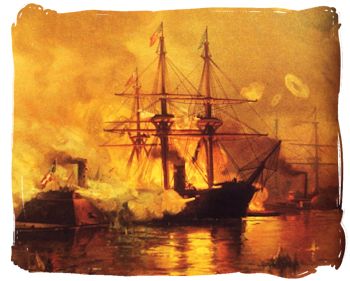
—A successful expedition was this day made from Ship Island to Pass Christian,[1] Miss., by the National gunboats New-London, Jackson, and Lewis. When off Pass Christian they were attacked by the rebel steamers Oregon, Pamlico, and Carondelet, but succeeded in driving them off, seriously damaging them.—(Doc. 117.)

—The schooner Resolution, having on board a party of rebels, attempting to escape into the confederate lines, was captured in Back River, Md., this day.—Baltimore American.

—This morning a spirited cannonade took place between some of the Union batteries near Point Pleasant, Mo., and a rebel one on the opposite shore. After an hour’s firing, a shell fell inside a large warehouse near the confederate battery, and the building was soon wrapped in flames. The rebels then ceased answering from their guns, and after shelling the position awhile, the Point Pleasant batteries stopped also.—St. Louis Republican.

—Governor Curtin issued a general order congratulating the Eighty-fourth and One Hundred and Tenth Pennsylvania regiments for gallant conduct at Winchester, Va., and directed that Winchester be inscribed on their flags, and the order be read at the head of all Pennsylvania regiments.

—Lieut. Fitz-James O’Brien, of Gen. Lander’s staff, died at Cumberland, Md., from the effects of the wound received in the fight at Blooming Gap, Va.— Baltimore American, April 7.

—A battle between the National gunboat Kinco and the flag-ship of the rebel flotilla, a few miles above the Passes of the Mississippi River, resulting in the defeat of the rebel vessel. —(Doc. 118.)

—At New-Orleans, La., all masters of steamboats engaged in trade were inhibited from taking white men as deck-hands, and were required to discharge at once such as might be employed by them. The captains, clerks, mates, carpenters, pilots, and engineers were the only white men to be employed on such boats.—New-Orleans Delta, April 4.


[1] Pass Christian is a post-village of Harrison County, Mississippi. It is located on a pass of its own name, near the entrance to St. Louis Bay. It la situated one hundred and sixty-five miles to the south-south-east of Jackson. It is fifty miles from New Orleans, thirteen miles from Mississippi City, and twenty-five miles from Biloxi. It is thirty miles from the eastern portion of Ship Island, and eighty miles from the mouth of Pass-a-l’Outre of the Mississippi River.
Thursday 3d

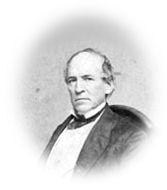
Today obtained and sent the Photographs to Thos [Bourne?]. They were finished while I was in the Gallery. I sent them by Adams Express. I was in the “National,” saw a number of my friends there. Went to the Festival with wife & Julia, staid till near 11. They had a Negro Band, four or five. It seemed like a Ball but there was no dancing. The place abounded [in] awkward men & Homely women the latter teasing for ones money.

______

The three diary manuscript volumes, Washington during the Civil War: The Diary of Horatio Nelson Taft, 1861-1865, are available online at The Library of Congress.

APRIL 3D.—Congress is investigating the Roanoke affair. Mr. Benjamin has been denounced in Congress by Mr. Foote and others as the sole cause of the calamities which have befallen the country.

I wrote a letter to the President, offering to show that I had given no passport to Mr. Dibble, the traitor, and also the evidences, in his own handwriting, that Mr. Benjamin granted it.

Thursday, 3d—We had drill as usual today and also general review, by General McClernand. We have no guard duty at this camp, but the troops of the front camps have to keep out a strong picket line.

April 3d. The Connecticut arrived from home with mails and fresh provisions for the squadron, all of which were acceptable, and many a sailor’s heart was gladdened by a letter from home.

3rd. Camp moved to better ground for defense.

Headquarters 2d Brigade, S. C.

Beaufort, S. C. April 3d, 1862.

My dear Mother:

The steamer has not yet gone, so I seat myself once more to write you a few lines. With regard to getting myself a new suit of clothes I have changed my mind for the present, having been fortunate enough to obtain a light flannel suit for every day wear, from one of the officers just returning from the North. This will be fully sufficient with my old suit, until I shall have an opportunity to return home — a thing not to be anticipated for the present — when I wish to appear as fine as possible. Mrs. Gen. Stevens returns by the “Atlantic,” it having been thought best by our new Commander to send home all officers’ wives. The order has not yet been issued, but Mrs. Stevens wishes to leave in time to anticipate it. On arriving at New-York, she will stop at the St. Nicholas Hotel for two or three days. If you can manage to see her, you will be much pleased with her, as she is extremely lady-like and agreeable.

I told Alfred Rockwell of your congratulations, at which he seemed much pleased. Love to all.

Affec’y.,

Will.

3rd.—To Newport News again to-day, to take some of my sick to General Hospital. For the first time during this war met Gen. Mansfield. Rode about three miles into the beautiful country with Brigade Surgeon Curtis. Picked up on the beach some relics from the wreck of the Congress, which I shall value highly. On return to camp found that my insubordination turned to good account. My old dispenser, who had been taken from me, is made Hospital Steward, and I shall again open my hospital and bring back my scattered family of sick. Found also an order to move to-morrow at six A. M. Our Brigade Surgeon O― . relieved to-day, and I, being next in rank, succeed him. I should have preferred to remain with my Regiment, but cannot.

Raleigh, Virginia, Thursday, April 3. — The rain last night was merely an April shower. It has cleared off bright and warm. The grass looks fresh and green. I have one hundred and fifty dollars in treasury notes. Last night Lieutenant Hastings with Company I started for the Marshes of Cool to protect the election and if possible catch the Trumps….
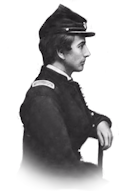
Election day for West Virginia. One hundred and eight votes polled here, all for the new Constitution. I doubt its success. Congress will be slow to admit another slave State into the Union. The West Virginians are blind to interest as well as duty, or they would abolish slavery instantly. They would make freedom the distinguishing feature of West Virginia. With slavery abolished the State would rapidly fill up with an industrious, enterprising population. As a slave State, slaveholders will not come into it and antislavery and free-labor people will keep away.

(April 3rd)

On the 25th, we marched to Warrenton Junction, meeting with no resistance, the cavalry alone doing a little skirmishing. Blenker’s division of Germans marched with us, and appeared to be a bad lot of fellows, without order or discipline; they spread all over the country, capturing everything within their reach. They loaded themselves down with pigs, chickens, turkeys, and whatever else suited their taste, deliberately shooting the pigs, sheep, etc., keeping up a regular fusilade. The officers seemed to have no control over their men. We have never seen anything like this before, and it reminds me forcibly of the Spanish and Portuguese troops during Wellington’s campaign in the peninsula. Foreign organizations, exclusively as such, seem to be a mistake in our army especially if they are to be under no better control than this division of Blenker’s. This advance to Warrenton has been a regular romance, brilliant weather, enemy running away, plenty to eat, and as we are now accustomed to sleeping in the open air, we all feel well, and enjoyed it immensely. We remained in and about Warrenton until the 1st of April, having our headquarters at a fine large mansion house, still occupied by the ladies of the family. We spent the evenings in the parlor, with the young women, who entertained us with rebel songs and music. They were very rebellious, but quite delighted with the attention they received from so many of us; besides we stocked their larder, supplied them with coffee, tea, sugar, placed guards over their barns and stock, and in many other important respects, greatly benefited them. Nearly all the inhabitants had fled, those remaining being exclusively women and superannuated men. These Southern men, although heaping most outrageous abuse upon the Northern armies, seem to have no fear for their wives and daughters, whom they leave behind in charge of their property with apparent confidence, which proves that they do not really believe what they say about us. A little politeness on the part of these women invariably brings safety to their fences, horses, and barns, and a full supply of coffee, sugar, and tea, which in the confederacy are already an expensive luxury.

On April 1st, we received instructions to return to our old winter quarters, Camp California, and about noon broke camp and marched to the rear, reaching Manassas the following day. We were just getting ready to march again when a long train of cattle cars arrived, and we put the troops on board forthwith. This was the first time we had traveled by cars since our arrival in Washington, and we took very kindly to this comfortable form of locomotion. We were soon on board and arrived at the camp about five P. M., found everything had been more or less disturbed, but were delighted to get back again to what seemed more like home to us now than any other place.

The campaign just ended, although without results, (which is not the fault of the troops) has been most severe on both officers and men. It lasted just twenty-four days, during which time we were without a change of clothing of any kind, and without camp equipage, sleeping in the open air, except while in Manassas, and exposed to an unusual amount of rainy weather; notwithstanding the exposure, the command, upon the whole, is in better condition physically than when it started out. The first luxury I enjoyed was a bath and general good scrubbing; my old half barrel was quickly filled with water, and with Seth as master of ceremonies, I soon got rid of the twenty-four days’ accumulation. Our underwear had to be thrown away as unfit for further use, and the rest of our clothing hung up for ventilation. Arrayed in clean clothes and clean skin, we speedily resumed our former smart appearance.

The day following we received orders to prepare for active service immediately. Officers’ baggage was limited to a small valise, and the men required to leave everything behind but the regulation kit. Brigade headquarters were limited to one wagon and three wall tents; all the rest of the accumulated baggage and impedimenta were to be boxed and sent in charge of the regimental quartermaster to Alexandria, there to be stored in care of the quartermaster’s department until further orders. Our twenty-four days’ campaign had at least taught the men one important lesson, namely, to limit to the minimum their loads. The regulations required two pairs of socks, drawers, and undershirt, and one pair extra shoes and trousers. The men very cheerfully complied with the order, eliminating all their winter accumulation. In the evening the brigade was inspected by different officers of our staff, and every man’s knapsack carefully investigated. The following morning, April 3d, the brigade formed on the old color line, and immediately afterwards withdrew. As the column countermarched gracefully by the right flank and withdrew to the main road, cheer after cheer rang out from lusty throats, in honor of the dear old spot we never expected to see again.