Following the American Civil War Sesquicentennial with day by day writings of the time, currently 1863.

April 2012

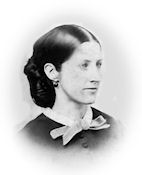
Eliza’s journal.

Headquarters of the 16th Regiment,
In the field, April 3.

We were on the point of driving out here yesterday when a telegram came from Joe saying he was coming in. It was with his camp wagon this time, to carry out various things—new guide colors for the regiment, stationery, etc., and his new Colonel’s uniform “with the birds on it,” as Moritz says. Suddenly it occurred to me to come out to camp too. So I put up my things hastily and J. drove me out, sending James ahead on “Scott” to order another mess tent put up for me and have the fire made. It was our first drive together since Joe entered the service nearly a year ago. “Fairfax,” the pony, jogged along at his ease and we didn’t reach here till after dark. Camp-fires along the road and over the hill-sides burned brightly and picturesque groups of men gathered round them, cooking and smoking. The 16th, when we reached it, seemed like a little village of lighted and well-kept streets. James soon got supper for us and when the fire was burning we felt as serene and comfortable as possible. The “Evening Star” and the printing of a lot of postmarks with the new regimental stamp, filled the evening, and then, building up a good fire and getting under the piles of blankets Surgeon Crandall had sent in, I slept soundly and warm till “reveille” just after sunrise. After reveille came roll-call, then the sick-call on the bugle, then breakfast for the men, then guard-mounting at eight, then our breakfast. After this J. went out to drill the battalion and I wrote letters, had a call from General Slocum, and sent General Franklin the flowers I had brought him; by which time the drill was over. The day was delicious, warm, soft, spring-like, and fires were oppressive. The evening parade was an uncommonly nice one. General Slocum, Colonel Bartlett and J. reviewed them and the men looked finely. The white gloves and gaiters Joe has given them greatly increase the neat appearance, and the band is quite another thing. “Coming through the rye” is no longer played as a dirge.

The new colors were all brought out and the effect was very pretty, as they were escorted out and back and saluted by all the officers and men. After parade came a game of base-ball for the captains and other officers, and in the sweet evening air and early moonlight we heard cheerful sounds all about us as the men sang patriotic songs, laughed and chatted, or danced jigs to the sound of a violin. There is a nice little band of stringed instruments in the regiment, and Joe sent for them to come and play for me in the tent, and then it was proposed to adjourn to General Franklin’s Headquarters and give him a serenade. This with a call on Col. Bartlett in his patriotic tent, hung with American flags, finished the evening. We went to bed, tired, but as peaceful and unwarlike as could possibly be. . . . At 3 A. M. we were suddenly roused. The brigade was again under marching orders, to leave at ten o’clock for Manassas once more! This was the meaning of the vague rumors we had heard that our division was not to sail after all.

I built up the fire and dressed and after a cup of tea at 5.30 said good-bye. Our peaceful little time was over.
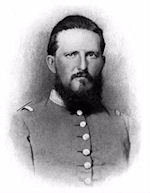
April 3. —Albert Sidney Johnston, Major-General C.S.A., at Corinth, Miss., issued the following address:

“Soldiers of The Army of the Mississippi: I have put you in motion to offer battle to the invaders of your country, with the resolution and discipline and valor becoming men, fighting, as you are, for all worth living or dying for. You can but march to a decisive victory over agrarian mercenaries sent to subjugate and despoil you of your liberties, property and honor.

“Remember the precious stake involved, remember the dependence of your mothers, your wives, your sisters, and your children, on the result Remember the fair, broad, abounding lands, the happy homes, that will be desolated by your defeat. The eyes and hopes of eight million people rest upon you. You are expected to show yourselves worthy of your valor and courage, worthy of the women of the South, whose noble devotion in this war has never been exceeded in any time. With such incentives to brave deeds, and with the trust that God is with us, your general will lead you confidently to the combat, assured of success.”

Accompanying this address were general orders, dividing “the Army of the Mississippi” into three corps d’armee. Gen. Beauregard was proclaimed second in command of the whole force.

The first corps d’armee was assigned to Gen. Polk, and embraced all the troops of his former command, less detached cavalry and artillery and reserves, detached for the defence of Fort Pillow and Madrid Bend.

The second corps d’armee was assigned to Gen. Bragg, and was to consist of the Second division of the Army of the Mississippi, less artillery and cavalry hereafter detached.

The third corps d’armee was assigned to Gen. Hardee, and consisted of “the Army of Kentucky.” Gen. Crittenden was assigned a command of reserves, to consist of not less than two brigades.

— The United States Senate, by a vote of twenty-nine to fourteen, passed the bill abolishing slavery in the District of Columbia.

—The telegraph line was to-day discovered to be cut in a dozen places, between New-Madrid and Sykeston, Mo. Gen. Pope immediately issued a special order to the residents along the route, that he would hold them responsible for the safety of the telegraph line, and that if any damage was done to it near their houses and farms, he would have their houses burned and themselves and families arrested and brought to camp, and visited with the severest punishment

—Apalachicola, Fla., surrendered to a party of National seamen, of the gunboats Mercedita and Sagamore, under the command of Commander Stellwagen, without making any resistance. It was almost entirely deserted by the male population, its fort or sand battery dismantled, and the guns removed. Two schooners were captured in Alligator Bayou, near the town, and then the launch of the Sagamore, under charge of Lieut. Bigelow, with the second cutter, under charge of Acting Master Fales, proceeded up Apalachicola River, about seven miles, where they found several vessels lying at anchor, and captured them. One was a large schooner, partially laden with cotton, which was cut out from the wharf and towed down the river by the crew of the Sagamore’s launch. She had forty bales of cotton on board. A sloop was captured, which had recently arrived from Havana, with a load of coffee, running the blockade. She had also cleared again for Havana. Great efforts were made by Lieutenant Bigelow, Acting Master Fales and Engineer Snyder, to get four other captured schooners down the river. The officers and the crews worked long and laboriously, during many hours, to get the schooners free, but without avail. They were finally obiged to apply the torch to them, which they did so effectually as to make them a mass of flames, burning them to the water’s edge. They afterward succeeded in capturing two sloops, and then returned down the river.

Commander Stellwagen, of the Mercedita, and Lieut. Commanding A. J. Drake, of the Sagamore, administered the oath of allegiance to a few of the inhabitants, and preparations were made to take formal possession of the town.

—Early this morning the rebels at Island No. Ten, near New-Madrid, Mo., made an attempt to tow their floating battery to a position from which it could command the National mortar-fleet A rapid fire was opened upon it, and in the course of half an hour the battery was struck several times, splinters being thrown in all directions, and several beams displaced. One shell exploded directly inside the battery, when it was immediately submerged to the water’s edge, and towed out of range. The rebel steamer Winchester, which was sunk some time since to obstruct the channel north of Island No. Ten, and used by the rebels as a point from which to watch the movements of the National forces, was shelled to-day and burned to the water’s edge.—St. Louis Republican, April 5.

—This evening a meeting was held in Chicago, Ill., at the instance of the Chicago Laborers’ Association, at which it was resolved that a subscription should be opened throughout the United States for the purpose of procuring a permanent homestead for Major-General Franz SigeL, to be located in the State of Illinois, and that the balance of the fund to be raised, after purchasing the estate, should be paid over to him. A committee was appointed to collect subscriptions, and to organize sub-committees in all proper places. —Boston Transcript, April 8.

Mount Jackson, April 2, 1862.

I stopped here on yesterday with the news that the enemy were advancing, and very soon got an order to move. We are now settled four miles north of New Market. Verily, it is a moving life we lead.

April 2 — This morning we went on picket one mile from the Yankee line, which is established along the north bank of Stony Creek. However, some of their cavalry were on this side of the creek early this morning, but they did not tarry long. We had a lively and interesting little game of shelling with the Yanks this morning. We came back to camp at Red Banks this evening.

Wednesday April 2nd

There is a great dearth of news here now, but a great looking for of great events about this time, but few soldiers are here now compared with what there has been. The forts over the River are all maned and probably 50,000 men besides. There must now be about 200,000 tending towards Richmond now in Virginia. Fortress Monroe seems to be the great rendezvous. I expect it will be Norfolk first, and then Richmond. “Bud” has had a fever all day and we fear he is going to have chill fever. All the rest of us are quite well. Wife rcd letters today from Mrs Brownson (Lyons) and from Bd Hamton. Geo S Griswold of Lyons called upon me at the office. He is Lieut in the 2nd Regt NY Artillery stationed at Fort Ward over the R.

______

The three diary manuscript volumes, Washington during the Civil War: The Diary of Horatio Nelson Taft, 1861-1865, are available online at The Library of Congress.

APRIL 2D.—Gen. Wise is here with his report on the Roanoke disaster.

Wednesday, 2d—It rained all day and we had no drill. The men remained in the tents, reading the Bible, magazines and papers, or writing letters home.

2nd. Messenger came in and reported Indians coming north. A scouting party was sent out.

2nd. Camp No. 4, in the field.—Our Brigade was reviewed to-day by Gen. Keyes, to ascertain if it was in order to fight. Verily, it seemeth to me that our Generals have reviewed us enough to know whether we are in fighting condition. All are anxious to be reviewed on the battle field, and to lay aside this silk glove war.

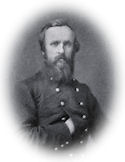
Camp Hayes, Raleigh, Virginia, April 2, 1862.

Dear Mother: — I received your letter yesterday, just one day after it was written. Very glad you are so well and happy. You do not seem to me so near seventy years old. I think of you as no older than you always were. I hope you may see other happy birthdays.

Our men stationed here, nine companies, were paid for the third time yesterday. They send home about thirty thousand dollars. Many families will be made glad by it. A small proportion of our men have families of their own. The money goes chiefly to parents and other relatives. . . .

I send you two letters showing the business [we] are in. General Beckley is the nabob of this county; commanded a regiment of Rebels until we came and scattered [it]. He is now on his parole at home. The other is from an old lady, the wife of the Baptist preacher here. Her husband preached Secession and on our coming fled South.

We are all in the best of health. Love to Sophia and Mrs. Wasson. Your affectionate son,

Rutherford.

P. S. — The total amount sent home from our regiment figures up thirty-five thousand dollars.

Mrs. Sophia Hayes.