Following the American Civil War Sesquicentennial with day by day writings of the time, currently 1863.

April 2012

April 2. Wednesday. — A windy day; roads drying rapidly. Rode out with Avery. Saw the companies drill skirmish drill. The militia called out to be enrolled in this county on the Union side. About a hundred queer-looking, hollow-chested, gaunt, awkward fellows in their tattered butternut garments turned out. A queer customer calls our scouts “drives,” another calls it “drags.” A fellow a little sick here calls it “trifling.” He says, “Yes, I feel ‘trifling,'” meaning unwell.

Sent Captain Zimmerman with Company E and Lieutenant Bottsford, Company C, the scout Abbott, and two or three citizens out towards Wyoming. Will be gone two or three days.

Fort Barnard, Va., April 2, 1862.

Dear Mother, Sister and Brothers:

You will see by this heading that we are still in Old Virginia.

The four companies which garrisoned this fort left this morning, and the Regt. Heavy Arty, like this one, started for Alexandria, to go down the river.

They left an immense pile of rubbish, bed-ticks, beds, stools, boards, stoves. I should judge they left at this place $150 worth of property. I am sitting before one of the stoves; it sends the heat out gay. I am writing on a book in my lap.

Another company of our Regt. came up to-day to help garrison the place.

I will give you a little idea where we are. We are three miles from Fort Albany; it mounts 10 Heavy guns. The Alexandria Rail Road runs about 150 rds. from us in the hollow; it is considered a place of much importance. The boy has not got here yet. Give my respects to the Boys and Gals on Pleasant Valley; mark you, I say gals. Well, to tell the truth, I have not seen one but Aunt Betsy. She shed a tear when she left, for Co. B.

Yours truly,

Leverett Bradley, Jr.

April 2d.—Dr. Trezevant, attending Mr. Chesnut, who was ill, came and found his patient gone; he could not stand the news of that last battle. He got up and dressed, weak as he was, and went forth to hear what he could for himself. The doctor was angry with me for permitting this, and more angry with him for such folly. I made him listen to the distinction between feminine folly and virulent vagaries and nonsense. He said: “He will certainly be salivated after all that calomel out in this damp weather.”

To-day, the ladies in their landaus were bitterly attacked by the morning paper for lolling back in their silks and satins, with tall footmen in livery, driving up and down the streets while the poor soldiers’ wives were on the sidewalks. It is the old story of rich and poor! My little barouche is not here, nor has James Chesnut any of his horses here, but then I drive every day with Mrs. McCord and Mrs. Preston, either of whose turnouts fills the bill. The Governor’s carriage, horses, servants, etc., are splendid— just what they should be. Why not?

April 2.—At Washington, D. C, the Committee on Political Prisoners ordered that Mrs. Greenhow, Mrs. Rosanna Augusta Heath, and Mrs. Morris, be sent beyond the Union lines. Mrs. Greenhow made a full confession, admitting that she was engaged in forwarding letters, papers and information to the rebels. She refused to tell what source of communication she kept up, and gave no names of her spies in Washington. But other information gives the names of several; two ex-Senators and several members of Congress, one of whom still retains his seat. Mrs. Morris also made a confession, admitting her treason in aiding the rebels by forwarding information. They all refused to take the oath of allegiance, or even give a parole of honor not to aid the enemy.— Philadelphia Inquirer.

—The United States Senate passed the House resolution—ayes thirty-two, nays ten—suggested by the President, declaring that the United States ought to cooperate, by giving pecuniary aid, with any State which may adopt the gradual abolition of slavery.—The bill for the abolition of slavery in the District of Columbia was discussed, but no vote taken.

—A party of Colonel Ashby’s rebel scouts made their appearance early this morning on the high wooded ridge on the opposite side of Stony Creek, near Edenburg, Va. They were fired on by some of the Twenty-ninth Pennsylvania, when Ashby unmasked four guns and threw several shells into the Union camp. The rebels subsequently retreated.— Baltimore American, April 8.

—Cavalry pickets of Gen. Lew. Wallace’s division, at Crump’s Landing, on the Tennessee River, were driven in this evening. A sharp skirmish occurred, in which company I, Fifth Ohio cavalry, lost three men, taken prisoners, namely, Sergeant E. F. Cook and privates Wm. Tidwell and John Lilly.—Cincinnati Gazette.

—Major Donaldson, Chief of the Quartermaster’s Department, in New-Mexico, arrived at Washington to-day. He brings much important information in regard to the rebel raid into that territory. He says the rebels hold every position of value, except Fort Craig and Fort Union. The latter, which is the most important Fort in the far West, containing millions of dollars’ worth of government stores, is now safe beyond peradventure. It is garrisoned by one thousand five hundred soldiers, has water within the fortification, and provisions for an almost unlimited siege. It will be the rallying-point for the ample Union forces now marching to expel the invaders.

Major Donaldson says the march of the Colorado Volunteers, a regiment of nine hundred and sixty men, organized by Gov. Gilpin, from Denver City, to the succor of Fort Union, exceeds anything on record. They traversed forty miles a day during the last four days, when they heard the Fort was in danger of falling. Their timely arrival secured its absolute safety. Major Donaldson relates many incidents of the battle near Fort Craig, and says that Major Lockridge, of Nicaragua filibuster fame, fell dead at the head of the Texas rangers in their last charge upon Captain McRea’s battery.—.N. Y. Commercial, April 3.

— Early yesterday morning, a regiment of picked men, belonging to the Excelsior Brigade, under the command of Brig.-Gen. Sickles, left Liverpool Point for Stafford Court-House, Va., on a reconnoissance. The troops landed at Shipping Point Batteries, and marched from thence past Dumfries through Aquia to Stafford Court-House. There was skirmishing between a body of six hundred rebel cavalry and the advanced corps of Gen Sickles’s command, six miles from Stafford, and firing on both sides was continued until the Nationals reached that place to-day. The rebels in their retreat set fire to the town and all the stores. The Union forces promptly stopped the conflagration as soon as they entered. A number of prisoners, horses, stores, etc., fell into their hands. After remaining three hours in Stafford, camp-fires were built on the hills to deceive the rebels, while the National forces withdrew from the place. The casualties of General Sickles’s troops were two wounded and a few missing.—N. Y. Commercial, April 5.

— A rebel force of seven regiments of infantry, two regiments of cavalry, and three batteries, were thrown across the Rapahannock River to cut off Col. Geary’s command at White Plains, Va. By a forced march they reached Salem, within five miles of the Union band, last evening, with the intent of attacking Col. Geary’s command in two columns, cutting off his retreat, and then seizing the formidable Gap, to intercept the progress of reconstructing the Manassas Gap Railroad. The attack was to be made at daybreak this morning. Their movements were made secretly, with the intention of making a dash, and cutting the Union command to pieces. Col. Geary became apprized of their presence and designs, and moved his whole command off quietly during the night, and battled with the mountain roads, wading streams and rivers of mud for five miles, and by daylight occupied Thoroughfare Gap,[1] where he prepared for a resolute and determined stand in the mountain defiles. The movement was a most important one, frustrating a design to accomplish a victory by the destruction of a much-dreaded command, to revive the drooping feelings of the rebels in Virginia. The calls were beaten in the evening, and the camp-fires left burning as usual, after the command marched.

One of the Union scouts was killed, and three of the rebels were taken prisoners.—Philadelphia Inquirer.

—The schooner Kate, of Nassau, N. P., attempted to run the blockade at Wilmington, N. C, when she was pursued. The rebels, finding they could not save their vessel, ran her aground and set fire to her. A boat’s crew from the steamer Mount Vernon extinguished the fire on board of her, before it had burned long, or done much damage. Her cargo was examined, and found to consist of four hundred and fifty sacks of salt, consigned by Addersly & Co., of Nassau, N. P., to John P. Frazer & Co., of Charleston, S. C, or Wright & Co., of St John’s, N. B. After repeated efforts to pull her off, which were all unsuccessful, as she was run well up on shore, it was determined to burn her, which was effectually accomplished—N. Y. Times, April 20.


[1] Thoroughfare Gap is a station on the Manassas Gap Railroad, fourteen miles west of Manassas, Va. It is a gap in the Bull Run Mountain.
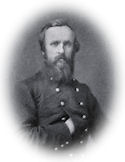
Bivouac near Woodstock, April 1, 1862.

Last Thursday I received an order from Gen. Jackson to take charge of four companies and report to Col. Ashby for duty on the advance-guard. I go down occasionally to take a view of the enemy’s pickets, but most of the time have been lying idle. The enemy are encamped around Strasburg and for some four miles this side, where they seem disposed to remain quiet for the present. The whole country here bears the appearance of a funeral, everything is so quiet. In a ride yesterday along our lines, I scarcely saw any person moving about, and all work on the farms seemed suspended; many of the houses seemed to be deserted. The soldiers alone seem to exhibit the appearance of contentment and happiness. A mode of life which once seemed so strange and unnatural habit has made familiar to us, and if peace ever comes many of them will be disqualified for a life of industry.

I have seen, in a Baltimore paper, a list of the prisoners taken from the battle at Winchester. It is very gratifying to find that some are captured whose fate was involved in doubt. Among them I am pleased to find the name of Charley Rollins, whom I saw upon the field behaving very gallantly. Send word to his mother if you have an opportunity. Capt. Morrison and Lieut. Lyle of the College Company are on the list. Two captains and one lieut. were captured from our regiment. Our loss in killed and wounded and captured, I expect, will reach 500. I do not think we had over 2500 men engaged, whilst the enemy probably had four times the number, consisting, for the most part, of troops which have been in service for the last year under Rosecrans in Western Virginia, than whom they have no better troops in the field. I never expect to see troops fight better than ours did. Our force is rapidly increasing from the militia who are coming in and will be used in filling up the volunteer companies. Many of those sick and absent on furlough are returning, and with all, I think, we will have a force sufficient to meet the enemy with success. Until our force is increased and reorganized, I think we shall continue to retreat without another battle.

April 1 — A few hours after sunrise the report reached camp that the Yanks were again on the advance. We were ordered to pack up double-quick and start our wagons up the Valley. We started down the pike with the battery, but before we got to Woodstock the Yanks had already made their appearance in sight of town. We halted on the hill at the south end of town a few minutes, then fell back to Narrow Passage, three miles south of Woodstock. When we started back a Yankee battery in position on a hill north of town fired some shell at us, but they all fell short.

One gun of Pendleton’s battery was in position at the south end of town and fired at the advancing skirmishers, but the Yanks had a four-gun battery in position on the hill north of town, which opened with all four guns on Pendleton’s piece and it retired under fire.

On the hill south of Narrow Passage we went in position and fired at the advancing enemy as it came in range. Their four-gun battery replied to our fire and we played ball with them a while with two guns to four, then fell back to a hill a little south of Edenburg. Edenburg is a little village on the north side of Stony Creek, five miles from Woodstock.

The Yanks followed our retreat and put their battery in position on the hill at the north end of Edenburg. Their position was higher and consequently commanded the one we occupied. Here we had a repetition of what we have been doing from nearly every hilltop between here and Winchester. We shelled the Yanks and the Yanks shelled us. The firing was rapid for a while, and right across the center of town. Our cavalry burned the railroad and pike bridge at Stony Creek. When that was fully accomplished we retired from our position, as the fire from four guns on a commanding elevation was getting too hottish for two on a lower and exposed altitude.

We fell back to Red Banks, eight miles from Woodstock, on the north fork of the Shenandoah, and camped.

Tuesday April 1st 1862

A fine pleasant day. Went down to the Ave in the morning, got Draft of $20, sent to Mrs Barnes Phila. Called at McClees Photograph Rooms. He told me that he had mounted 2300 pictures the day before. The call for Photographs by Army officers has been unprecedented the past six months. My wife and Julia called upon me at the office today. I went this evening with Julia down to the Church Festival, did not attend or go in tonight, intend to go tomorrow. I was in at Willards, about as many officers there as usual and the Ave is crowded afternoons. Ed Dickerson gave us a call this evening. Holly has been to the Festival, has just come home. 11 o’clock. Julia is not yet in. “Bud” has gone to bed long ago, sick. The Fair was too much for him last night.

______

The three diary manuscript volumes, Washington during the Civil War: The Diary of Horatio Nelson Taft, 1861-1865, are available online at The Library of Congress.

Note: Shiloh has not occurred yet, so this diary entry is dated wrong.

APRIL 1ST.—Gen. Sydney Johnston having fallen in battle, the command in the West devolved on Gen. Beauregard, whose recent defense at Island No. 10 on the Mississippi, has revived his popularity. But, I repeat, he is a doomed man.

Tuesday, 1st—Our Division, the First, was reviewed this forenoon by General Grant and Maj. Gen. J. A. McClernand. While the review was in progress three men were seen on the roofs of two small log houses at the southern end of Jones’ Field, taking notes on our maneuvers, the number of men in line, etc. They were dressed in butternut suits although, it is said, they had claimed to be Union men; yet when the review was ended no trace of them could be found.

1st. The “Long Roll” was sounded at the Ninth Wisconsin headquarters for an April Fool. Another dark rainy day. Read “Ivanhoe” and issued rations.