
3d.—It is distressing to see how many persons are leaving Richmond, apprehending that it is in danger; but it will not—I know it will not—fall. It is said that the President does not fear; he will send his family away, because he thinks it is better for men, on whom the country’s weal is so dependent, to be free from private anxiety. General Johnston is falling back from Yorktown, not intending to fight within range of the enemy’s gun-boats. This makes us very anxious about Norfolk.
May 2012

MAY 3D —I fear there is something in the rumor that Norfolk and Portsmouth and Yorktown and the Peninsula will be given up. The Secretaries of War and Navy are going down to Norfolk.

Saturday, 3d—We struck our tents and at 7 a. m. started in the direction of Corinth. After marching eight miles we pitched our tents for camp number 4. All of the sick boys have been sent to the hospital set up at camp number 2, which we left a few days ago. General Pope has taken Farmington, out to the left of our army. There was some very heavy cannonading this afternoon.
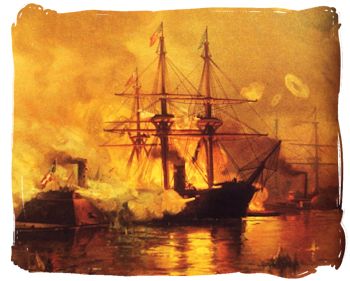
May 3d. A serious accident occurred this evening, resulting in wounding more than twenty men. The men were heaving up anchor when the ship swung off with the current, bringing up on the cable with such violence as to whirl the men from the bars, breaking the pawls of the capstan, and the bars throwing the men in all directions. The injuries were one dislocated shoulder, one fractured fore-arm, one do. finger, one do. skull, one do. jaw, and many jammed, bruised and bleeding.
 Letter from Wm. P. Lyon to Isaac Lyon.
Camp twelve miles southwest of Hamburg, in Miss., May 3, 1862.—Here we are in the State of Mississippi, only ten miles from Corinth. The whole army is advancing slowly and surely upon that place, and in a very few days the rebels there must either fight us or run.
We moved six miles to this place day before yesterday and expect to move on still further in a day or two. The caution with which the advance is made inspires us with confidence in General Halleck. There will be no more surprise here.
We have a better, if not a larger army, than the rebels, and are better off for artillery than they are. I think the heaviest fighting will be with the artillery. I have not seen Sperry but that one time when we first arrived. He must be three or four miles from where we are.
This is a fine country to look at, but where cultivated seems worn out. The timber is light, much like our openings. On our march out here I saw corn large enough to be hoed, and cherries nearly full size. Crops, what little there are, look very poor.
We see no signs of energy, enterprise, or taste among the few people we encounter. The days are usually warm, but the nights are very cool and pleasant.
I received news today of the death at Sikeston of John H. Lowe, of Springfield. We left him there very sick.
3rd. Saturday. Ninth Wisconsin, two companies, came in. Lieutenant-Colonel Orff. Major Purington under arrest for saying that he should obey the order of Curtiss. He went to Lamar. Sent returns for six days’ rations. Played chess with Lt. Nettleton.
 3rd.—Considerable firing, all day, towards Yorktown. Increases towards night. I learn that the heavy firing is mostly by the enemy. Can it be possible that they contemplate an evacuation, and that this firing is to cover their intention? The camp ground we left yesterday is being shelled to-day.
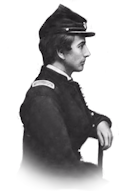
May 3d. Weather fine and warm again. The colonel and I rode over to Sumner’s headquarters and had a chat with Captain Taylor, the assistant adjutant-general. He is a very pleasant fellow, a swell, a nephew of ex-President Taylor. He told us he thought the bombardment would open the day after to-morrow all along the line, and that the water battery which opened on the first had done much injury to the docks and town and was a great success. He told us also of the landing below Gloucester, on the opposite side of the river, of Franklin’s division. It seems they have been on board transports since the 20th of April and only landed yesterday. The delay, he says, was due to lack of facilities for landing, the engineer corps having more than they can possibly attend to, but there must be some mistake about this, as we landed without engineers, and amongst these regiments there are scores of men familiar with every phase of engineering, and wood choppers, boatmen, and carpenters can be had by simply asking for them in any number. A little less style and more business would be very useful just now to the country. The landing of this division ought to insure the capture of the works on that shore and help our gunboats and vessels immensely. Enjoyed the visit and also the ride home. In the evening sat outside out tents watching the flashes from the enemy’s guns, which were unusually active. To bed late, but not to sleep much, on account of the heavy firing.
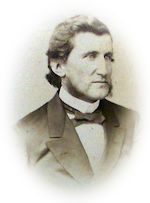
Hugh Lenox Hodge writes:
Ship Point, May 3, ‘62.
Dear Georgy: The 8th Illinois Cavalry arrived several days ago. They are disembarking today. Cannot the Daniel Webster take the sick off from Ship Point? They will be doing a great service if they can.
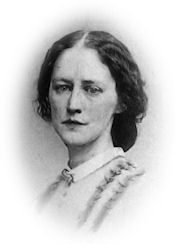 Jane Stuart Woolsey to Joe Howland.
8 Brevoort Place, 3d May, Chi Alpha night.
So you three have met again, Georgy, Eliza and the Colonel. . . . It must have been a jolly meeting for you all on the floating Hospital, and Eliza says you showed symptoms of illness immediately on seeing the comfortable beds. But it is rather a perilous position for the girls. It is no longer visiting, but living, in an atmosphere of infection, day and night, typhoid, rubeola, gangrene, and what not. They will be in for anything going, and the service in a crowded transport will make terrible draughts on the sympathies of all concerned. We hear surmises that the Daniel Webster will come round to New York. If so, I sincerely hope the girls will come in her if possible, if it is only for a day. What an excellent thing to have these boats systematically provided, and to have ladies on board. It will go far to humanize the horrid vehicles. Heavy reproaches belong somewhere for the want of foresight and humanity in the government arrangements of the kind. I have seen it. Send your sick men, if you have any, on a Sanitary Commission transport. Fully half the complaints about the Vermonters of Lee’s Mills are strictly correct, and half are half too many for toleration. The men are in comparative paradise now in “our” (!) hands, though one or two will die in consequence of careless treatment,—Government doings. Somebody says of the barbarisms of the Chinese Tae-Pings: “if you want to complete the picture, transfer them to America and prefix the adjective Red.”
We have been having a Chi Alpha (the Clergymen’s Social Club) for Mr. Prentiss, while he was moving. I say “we” although our participation was through the key-hole alone. The last of the mild elderly gentlemen has taken his hat and cane, and the family have rushed down and wildly consumed vast quantities of sandwiches, chicken salad, and the loveliest fried oysters! Don’t you wish you had some? . . .
One of the entertainments, not edible, was a “James Projectile,” weight 58 lbs., brought in the self-sacrificing and gallant hat box of Chas. Johnson, sent by Frank Bacon as a receipt in full, I suppose, for the few little matters we have sent him from time to time,—filled and covered with the red brick dust made by the great breach.[1]

“The slave shouts in the barracoon
As through the breach we thunder!”
But never, Chas. Johnson says, never was there such a disgusted set of men as the Connecticut Seventh, when the white flag went up; they had set their hearts on storming the place, and everything was ready. He went through the casemates with F. B. (Francis Bacon) on his rounds among the patients, his own and those left to his care by Colonel Olmsted, and gave us a very interesting picture of the scene, too long and circumstantial to write out in a letter. He was very much pleased with Dr. Bacon, “so exactly the man for the place,” he said; so utterly cool, so gentle, and so untiring in care and patience. One young fellow they came to, had lost his leg, and the Doctor was trying to soothe him to sleep without an anodyne—“What part of Connecticut are you from?” asked Charles J.; “I’m a Georgian, sir. Yes, sir (kindling up), I fired the last gun from this fort, sir!” “Yes,” said the Doctor quietly, in his mesmeric way, “he stood by his gun till a shot dismounted it and hurt him. But try now to go to sleep, and if you find you cannot, I’ll give you something to help you.” “O, if I could have one drink of milk, Doctor!” “I’ll see; perhaps I can get you a little.” So he gave the candle (in a bottle) to Charles, and was gone for a quarter of an hour, coming back with a little milk in the bottom of a cup, which the young Georgian eagerly swallowed. The story is getting too long—and there were two or three others to match—but what I observe is, that a man of less fine fibre, instead of taking up the talk of the poor Georgian, would have “ improved the occasion” to him.
Did you notice that to-day, in the transactions of the Board of Brokers, when the “Government Sixes touched par,” for the first time since the rebellion, that the brokers were all on their feet in a minute giving three tremendous cheers? . . . Mother seriously announces just here, that two of the tea spoons, used by the clergymen this evening, are missing, and mentions the name of Rev. Dr. _______!
[1]On the newel post at your uncle Frank’s house in New Haven stands this projectile, fired from the battery by which he stood during the attack on Fort Pulaski. It went through the wall, and was taken out of the rubbish inside the fort by him and sent North to your grandmother.
Apropos of your Uncle Frank’s “improving the occasion” at Fort Pulaski—he did improve it in giving the rebel surgeon a merited rebuke. “Good-bye, my poor fellows,” the surgeon had said, “I don’t know what will happen to you now, I shall have to leave you to this gentleman.” “You need not have any apprehensions, sir,” F. B. answered; “these are not the first wounded Georgians I have had to care for;” and then he told him of the wounded rebels he had looked after at the battle of Bull Run. The fellow melted at once and said those men and Colonel Gardner came into his hands directly from F. B.’s, and he had heard of the kindness shown them.


