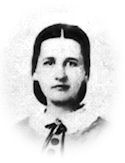
May 27th, 1862.—They have gone. It is bad enough to give up the sisters but it is even worse to let the children go. Mother says I love them too well. But she loves them as well as I do if the truth was known. The girls have promised to write us every day, that is, if the writing paper holds out; nearly everything is scarce and hard to get. At last I am growing taller, and pretty soon my dresses will all be too short. Mother is having a piece of checked homespun woven and she is going to make me some dresses for next winter from that; the dresses she made me last fall for the trip to Raleigh are getting too small as well as too short. A growing girl in these days doesn’t stand a ghost of a chance.
May 2012
May 27.—The schooner Andromeda, from Sabine Pass, was captured off Mariel, Cuba, this day.—A portion of Gen. Fitz-John Porter’s corps engaged and defeated the rebels at Hanover Court-House, on the Pamunkey River. Five hundred rebels were made prisoners and a hundred dead were left on the field.—(Doc. 16.)
—Six men of the First Missouri cavalry, under command of Lieut. Pruette, in advance of a foraging party on the northern road from Searcy, Arkansas, were fired upon by about forty rebels, concealed in the adjoining bush, mortally wounding two or three of their number. The foraging party coming up, succeeded in killing four of the rebels and taking some prisoners.—St. Louis Democrat.
— The steamer Gordon, (Nassau,) whilst attempting to run the blockade of Wilmington, N. C, was captured by the gunboats State of Georgia and Victoria. — The bombardment of Fort Pillow on the Mississippi was resumed after nearly a week of quiet on the part of the Union troops.—Baltimore American, June 3.
—A fight took place near Corinth, Miss., between a force of Union troops under the command of Col. Purcell of the Tenth Iowa regiment and a brigade of rebel infantry, resulting in the defeat of the rebels with considerable loss.
—The Speaker of the House of Representatives at Washington laid before the House a message from the President, referring to the history of the commencement of hostilities, and his exercise of the broad powers of the Constitution to preserve the capital of the country during the absence of Congress. Incidentally with this, he referred to the arrangements with Gov. Morgan, Alexander Cummings and others, with a view to speedy and efficient protective measures. By these means he believed the Government was prevented from overthrow. He had no knowledge that even a dollar was lost or wasted. The President quoted the House resolution censuring Mr. Cameron, and said that not only himself, but all the heads of departments, were responsible with Mr. Cameron for whatever error, wrong or fault had been committed.—(Doc. 47.)
—In New-York City the military excitement, occasioned by the calling out of the State Militia, continued, and the greatest bustle prevailed at the different armories —recruits applying to be admitted as members of the regiments, officers despatching the necessary business connected with their departure, and orders hourly arriving containing the instructions from headquarters.
—The schooner Lucy C. Holmes was captured by the United States gunboat Santiago de Cuba, on the coast of Georgia, having run the blockade of Charleston, S. C, the night previous.
—General Mcclellan sent the following despatch to the War Department:
I find some of the newspapers publish letters from their correspondents with this army, giving important information concerning our movements, position of troops, etc., in positive violation of your orders. As it is impossible for me to ascertain with certainty who these anonymous writers are, I beg to suggest that another order be published, holding the editors responsible for its infraction.
—The Sixty-first regiment of Ohio volunteers, left Columbus for Washington. — The Norfolk (Va.) Day Book, which was allowed to continue its issue by Gen. Viele, after the occupation of Norfolk, on condition that it should be respectful in its tone, was to-day suppressed in consequence of a communication in yesterday’s paper signed “Enquirer,” which in severe language assails those Union citizens who have taken the oath of allegiance to the United States. A meeting was held last night, in which the course of the paper was discussed, and a committee having waited upon Gen. Viele and stated their request that the paper should be stopped, he acquiesced, and the order was issued this morning.
—Governor Curtis of Pennsylvania issued a general order countermanding the order for enlisting three months’ volunteers, the emergency which seemed to require them having passed. He congratulated the people on the fact, and commended the alacrity shown in every part of the State in volunteering for the defence of the National capital.
—The gunboats Stepping-Stones and Cœur de Lion made a reconnoissance a short distance up the Appomattox River. When about a mile up the river, they were attacked by a party of rebels who were lurking among the houses. The gunboats returned the fire; and, after cannonading for about half an hour, completely riddling the houses, they returned to City Point, on the James River.—Baltimore American.
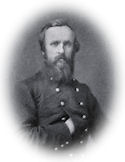
Camp Flat Top, May 26, 1862.
Dearest: — Your excellent letters of [the] 17th and 19th came this morning — only a week in getting to me. I wrote you yesterday by the soldiers, Corporal West and Harper, but I must give you another by the sutler who goes in the morning, just to show how much I think of you and your letters.
We are now at rest on a mountain top with no immediate prospect of anything stirring. We stand for the moment on the defensive, and are not likely to be disturbed. We have been having exchanges of wounded and prisoners with the enemy. They have behaved very well to our men, and were exceedingly civil and hospitable in our negotiations with them. They feel a good deal discouraged with the general prospect, but are crowding our small armies under Banks and Fremont pretty severely. All will be well if we carry the pivots at Richmond and Corinth. Enough of this.
I still feel just as I told you, that I shall come safely out of this war. I felt so the other day when danger was near. I certainly enjoyed the excitement of fighting our way out of Giles to the Narrows as much as any excitement I ever experienced. I had a good deal of anxiety the first hour or two on account of my command, but not a particle on my own account. After that, and after I saw we were getting on well, it was really jolly. We all joked and laughed and cheered constantly. Old Captain Drake said it was the best Fourth of July he ever had. I had in mind Theo. Wright singing “The Star-Spangled Banner.” “The bombs bursting in air” began before it was quite light, and it seemed to me a sort of acting of the song, and in a pleasant way, the prayer would float through my thoughts, “In the dread hour of battle, O God, be thou nigh!”
A happy thing you did for the sick soldiers, good wife![1] “I love you so much.” Well, that is all I wrote to tell you. I must repeat again, send the Commercial “for the war.” Tell Webb Lieutenant Kennedy was delighted with the picture, and will try to send his to Webb some day. Send me one of all the boys if you get them — Webb’s of course. I am much pleased that you are to stay in Cincinnati. Love to all the boys and Grandma. Send me by sutler Harper and Atlantic for June. Good-bye, dearest.
Affectionately ever,
R.
P. S. — I enclose you a letter which I wish Dr. Murphy [to read] or somebody to read to him. He behaves badly, I suspect. In short, darling, all men who manage to keep away from their regiments are to be suspected. They are generally rascals.
Mrs. Hayes.
[1] Mrs. Hayes, in her letter of May 19, had written: “Our hospitals are all full of sick and wounded. A great difference can be seen between the sick and [the] wounded. The sick appear low-spirited — downcast, while the wounded are quite cheerful, hoping soon to be well. I felt right happy the other day, feeling that I had made some persons feel a little happier. Going down to Mrs. Herron’s I passed four soldiers, two wounded and two sick. They were sitting on the pavement in front of the office where their papers are given to them. I passed them, and then thought, well, anyhow, I will go back and ask them where they are going. A gentleman who I saw then was with them, said he had just got in from Camp Dennison, and found they were too late to get their tickets for that evening. I asked, ‘Where will you take them?’ He said he did not know, but must get them to the nearest place, as they were very weak. I said, ‘Doctor, (the wounded man had told me he was his family doctor and had come to take him home), if you will take them to my house I will gladly keep them and have them taken to the cars. There is the street-car which will take you near my house.’ He was very thankful, and he put sick and wounded on, and I started them for Sixth Street, while I finished my errand, took the next car, and found my lame man hobbling slowly along. We fixed them in the back parlor. The doctor I asked to stay also, to attend to them. He said he could not thank me enough, that he was a stranger here and was almost bewildered as to what to do or where to take them. Mary was up early and we had a cup of coffee for them before five. I thought of you in a strange country, wounded and trying to get home. The cases were not exactly alike, but if anyone was kind to you, would I not feel thankful?”
Camp Flat Top Mountain, May 26, 1862. Monday. — Clear and cool. A private dispatch informs General Cox that General Banks has been driven back by the Rebel Jackson, probably to Harpers Ferry. This is a long move to the rear. If true, it indicates a pretty heavy disaster; places in jeopardy the Baltimore and Ohio Railroad, etc. So we go.
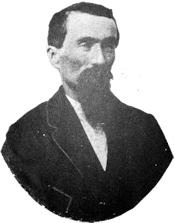
May 26—Marched to Martinsburg this morning without meeting with any obstacle in the shape of a blue enemy. The Yankees are all gone to the safe side of the Potomac. They left a goodly portion of provisions in the railroad depot here, such as bread, cheese, canvased beef, beef tongues, and cakes.
Camped at Martinsburg on east side of town.
 MAY 26TH.—Gen. Lee is still strengthening the army. Every day additional regiments are coming. We are now so strong that no one fears the result when the great battle takes place. McClellan has delayed too long, and he is doomed to defeat. The tobacco savers know it well, and their faces exhibit chagrin and disappointment. Their fortunes will not be made this year, and so their reputations may be saved.
Monday, 26th—It is very warm. Had company drill twice again today. There was very heavy cannonading off on the left flank.
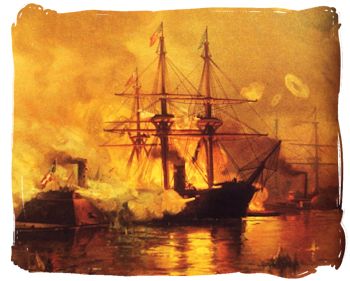
May 26th. Another reconnoissance took place yesterday, but although the gunboats went very near the rebel batteries no firing took place. This morning all hands were surprised with the intelligence that no attack was to be made on the city at present, and that our large ships would again drop down the river. This is said to be caused by the fact that the position of the rebel guns renders the attack dangerous to our large ships, and that we could not at present occupy the place, if taken. The Richmond started early down the river, followed by the Brooklyn and at ten o’clock we got under way with the gunboat Kennebec, leaving eight vessels behind in charge of Capt. Palmer of the Iroquois. We also had in company, or rather ahead of us, two steamers loaded with troops. Nothing transpired to check our rapid passage until the steamers, in passing Grand Gulf, were fired upon by rebel light artillery; we accordingly wheeled round, and in company with the Brooklyn went back for satisfaction. The troops were landed, and they drove the enemy out of the town with slight loss, while we proceeded down and passed the night a few miles above Natchez, where were four of our coal transports.
26th. Helped unload seven loads of provisions. Played ball a little while. Reminded me of old times.
26th.—To-day, was so far recovered that I reported myself for duty at the Liberty Hall Hospital.[1] I found there about four hundred sick, about one hundred of whom were crowded into the house. The rest were lying about in stables, alive with vermin—chicken houses, the stench of which would sicken a well man, on the ground, exposed alternately to beating rain and the rays of the scorching sun. There were no beds, no blankets, no straw, no cooking utensils and nothing to cook. The sick were lying on the bare floor, or on the bare ground, without covering, and this was the third day they had been in this situation without food, or without any one to look after them, except as they could mutually aid each other. All kinds of diseases prevail, from simple intermittent to the lowest camp typhus, complicated with scurvey; from simple diarrhœa to the severest of dysentery. My first effort has been to separate the simple from the infectious diseases. To pitch what few tents I have, and to get as many as I can under shelter, I have before me, in the organization of this hospital, a Herculean task for a man not quite recovered from a spell of sickness. But what I can, I will do.
[1] Liberty Hall is a large dwelling, the birth place and home, during his life, of Patrick Henry. It is about eight miles from Richmond.


