Following the American Civil War Sesquicentennial with day by day writings of the time, currently 1863.

November 2012

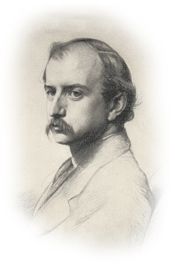
London, November 21, 1862

My work is now limited to a careful observation of events here and assistance in the manual labor of the place, and to a study of history and politics which seem to me most necessary to our country for the next century. The future is a blank to me as I suppose it is also to you. I have no plans nor can have any, so long as my course is tied to that of the Chief. Should you at the end of the war, wish to take my place, in case the services of one of us were still required, I should return to Boston and Horace Gray, and I really do not know whether I should regret the change. The truth is, the experience of four years has done little towards giving me confidence in myself. The more I see, the more I am convinced that a man whose mind is balanced like mine, in such a way that what is evil never seems unmixed with good, and what is good always streaked with evil; an object seems never important enough to call out strong energies till they are exhausted, nor necessary enough not to allow of its failure being possible to retrieve; in short, a mind which is not strongly positive and absolute, cannot be steadily successful in action, which requires quietness and perseverance. I have steadily lost faith in myself ever since I left college, and my aim is now so indefinite that all my time may prove to have been wasted, and then nothing left but a truncated life.

I should care the less for all this if I could see your path any clearer, but while my time may prove to have been wasted, I don’t see but what yours must prove so. At least God forbid that you should remain an officer longer than is necessary. And what then? The West is possible; indeed, I have thought of that myself. But what we want is a school. We want a national set of young men like ourselves or better, to start new influences not only in politics, but in literature, in law, in society, and throughout the whole social organism of the country — a national school of our own generation. And that is what America has no power to create. In England the Universities centralize ability and London gives a field. So in France, Paris encourages and combines these influences. But with us, we should need at least six perfect geniuses placed, or rather, spotted over the country and all working together; whereas our generation as yet has not produced one nor the promise of one. It’s all random, insulated work, for special and temporary and personal purposes, and we have no means, power or hope of combined action for any unselfish end.

One man who has real ability may do a great deal, but we ought to have a more concentrated power of influence than any that now exists.

For the present war I have nothing to say. We received cheerful letters from you and John today, and now we have the news of McClellan’s removal. As I do not believe in Burnside’s genius, I do not feel encouraged by this, especially as it shakes our whole structure to its centre. I have given up the war and only pray for its end. The South has vindicated its position and we cannot help it, so, as we can find no one to lead us and no one to hold us together, I don’t see the use of our shedding more blood. Still all this makes able men a necessity for the future, and if you ‘re an able man, there’s your career. I have projects enough and not unpromising ones for some day, but like most of my combinations, I suppose they ‘ll all end in dust and ashes.

We are very comfortable here in London fog. Some sharp diplomatic practice, but, I hope, not very serious. People don’t overwhelm us with attentions, but that is excusable.

NOVEMBER 21ST.—It rained all night, which may extinguish Burnside’s ardent fire. He cannot drag his wagons and artillery through the melting snow, and when it dries we may look for another rain.

The new Secretary is not yet in his seat. It is generally supposed he will accept.

President Davis hesitates to retaliate life for life in regard to the Missouri military executions.

Common shirting cotton, and Yankee calico, that used to sell at 12 ½ cts. per yard, is now $1.75! What a temptation for the Northern manufacturers! What a rush of trade there would be if peace should occur suddenly! And what a party there would be in the South for peace (and unity with Northern Democrats) if the war were waged somewhat differently. The excesses of the Republicans compel our people to be almost a unit. This is all the better for us. Still, we are in quite a bad way now, God knows!

The passengers by the cars from Fredericksburg this morning report that Gen. Patrick (Federal) came over under a flag of truce, demanding the surrender of the town, which was refused by Gen. Lee, in compliance with the unanimous sentiments of the people. Gen. Patrick, it is stated, said if it were not surrendered by 9 A.M. to-day, it would be shelled.

Mr. Dargan, M. C., writes to the President from Mobile that the inhabitants of that city are in an awful condition. Meal is selling for $3.50 per bushel, and wood at $15 per cord, and that the people are afraid to bring supplies, apprehending that the government agents will seize them. The President (thanks to him!) has ordered that interference with domestic trade must not be permitted.

Mr. Seddon has taken his seat. He has, at least, a manly appearance—his predecessor was said to look like a m___y.

The President has ordered our generals in Missouri, if the Yankee accounts of the executions of our people be true, to execute the next ten Federal officers taken in that State.

The Enquirer, to-day, publishes Col. Baylor’s order to execute the Indians in Arizona, coupled with Mr. Randolph’s condemnation of the act. Who furnished this for publication?

It is rumored that Fredericksburg is in flames, shelled by the enemy. We will know how true this is before night.

November 21st. Quartermaster Broom of the Fifty-seventh is now an acting aide-de-amp, whose special duty is to look after the mess, he having peculiar talents in this line, and is unequaled in providing the larder. We are now living on roast beef, pudding, pies, etc., and expect soon to resume our original sleekness, which continued campaigning has sadly impaired. The office is the general rendezvous, and here we meet together and enjoy each other’s society. Chaplain Dwight, of the Sixty-sixth New York, a most accomplished and agreeable gentleman, is one of our constant callers, and a most interesting companion. G___ calls, too, and airs his rebellious views, and makes a good deal of fun for us. One of our regimental commanders, an accomplished colonel, I am sorry to say, is under arrest for misbehavior before the enemy, on the occasion of our taking Falmouth. He is an excellent officer in camp, but like many another, when fighting is in order, he usually finds himself out of order, which is of course, most unlucky. His regiment is now commanded by the lieutenant-colonel, a first-class officer, peculiar, but full of courage, and always ready for a fight.

The enemy occupy the range of hills opposite, and are working night and day to make them impregnable. Apparently there are a series of hills running parallel to the river, or nearly so, in rear of each other, and the camps of Lee’s army are wholly sheltered in the intervening valleys. No better position for defense could be found, and Lee must thank his stars Burnside did not establish himself on that side when he had a chance to do so almost unopposed. It is strange how constantly we fall short in our endeavors at the very moment when we might succeed. Something is missing; this time, it was the pontoon train that failed us just at the critical point in the campaign.

November 21. [Chattanooga] —Another death occurred to-day—J. B. Little of the Eighth Mississippi Regiment.

The steward’s wife has gone; Mrs. Snow from Mobile has taken her place.

November 21.—General Patrick, Provost-Marshal-General of the army of the Potomac, this morning crossed the Rappahannock to Fredericksburgh, Va., under a flag of truce, conveying to the rebel authorities of that city a letter from Major-General Sumner, commanding right grand division of the army, demanding its surrender. —(Doc. 54.)

—A sharp skirmish took place at Bayou Bontouca, near Fort Pike, La., between a small detachment of Union troops commanded by Captain Darling, Thirty-first Massachusetts, and a band of guerrillas, numbering one hundred and fifty, under Captain Evans. The fight lasted about half an hour, and resulted in a rout of the rebels, with a loss to them of four killed and several wounded. The Union force had none killed and but one wounded.

—Charles A. Davis, a chaplain in the army of the United States, was this day expelled from the Methodist Conference of Virginia, by that body in session at Petersburg.—Salem, Va., was occupied by the rebels.

20th —A hard, cold rain all day. The regiment is out on picket. I wish those comfortably housed at home could realize what picket duty is, in such weather as this. To-day they stand from morning till night, on guard. Night comes, but with it no relief from the exposures of the day. In his thoroughly soaked clothes, with the snow flying and the wind whistling about him, without fire and without tents, he must stand; he must still stand and guard the lines till the coming of another day. However much nature may give way under the trial, however exhausted the man, should he be caught slumbering a single moment on his post—the penalty is death. The soldiers bear all this cheerfully, to the shame and disgrace of those disaffected, cowardly cavillers at home, who would sacrifice together these noble, self-denying men and the Government for which they fight. ‘Tis said that we go into winder quarters here. I cannot believe it. General Burnside has not been pushing us forward at such a rate for a week past, to winter us in this most gloomy and desolate country. We are forty miles from “any where,” in the midst of a pine forest, the roads in winter impassable, the people semi-civilized. Whugh! I shudder to think of it.

We reached Vicksburg that night and went to H.’s room. Next morning the cook he had engaged arrived, and we moved into this house. Martha’s ignorance keeps me busy, and H. is kept close at his office.

______

Note: To protect Mrs. Miller’s job as a teacher in New Orleans, the diary was published anonymously, edited by G. W. Cable, names were changed and initials were often used instead of full names — and even the initials differed from the real person’s initials.

Thursday, 20th—We had division drill by General McArthur this forenoon, and in the afternoon we had battalion drill under Lieutenant Abercrombie. Our drill ground proved to be poorly suited for division drill, on account of the ravines and washed-out gullies.

To Mrs. Lyon.

Fort Henry, November 20, 1862.—Four of our companies go up the river tomorrow on an expedition. I do not go. Do not be frightened about guerillas. They are great cowards and will not fight if they can help it. They are mere thieves, and a thief is always a coward. I do not at all fear being killed. Something constantly assures me that I am coming home to you safely. Now, don’t get up a presentiment the other way.

Thursday, 20th. Another pleasant day. Made a detail of 20 men, one sergeant, two corporals, picket, 15 for forage. Chicken broth and dumplings for dinner.