
Tuesday, 25th—Division drill in the forenoon and battalion drill in the afternoon, as usual. We had a practical demonstration during our division drill of the difficulty of drilling on uneven ground. While our column was advancing in line of battle by right flank, up hill and down hill, and across ravines and gullies, the line at times became badly broken; men occasionally fell into the gullies and had to be helped out; it became pretty exciting and even quite laughable, for there was always some one struggling to stay in his place in the line.
November 2012

Tuesday, 25th. Went over to see secesh but they had gone. Shattuck went on detail as chief of commissary. Capt. Seward said I must make out morning reports after this. Major Purington received orders to proceed at once with his command to Evansville. Blair’s Battery practised with artillery—shell. Major and detachment started out on a scout, an odd old genius on a white horse as guide. Went by a byroad. When 4 or 5 miles from Cincinnati, crossed a byroad where 400 or 500 had passed. I had charge of advance. Before going a half mile, saw two “butternuts.” Wheeled and ran like fun. Followed about a mile and learned from a family that 4 or 5 had passed not more than ten minutes before. Reported back. Followed most of the time at a trot. When we had gone two miles, we struck the main road and here the rebels fired at us from the brush. I had 20 men. All wheeled but 3 men. Soon rallied. Moved on a few rods and saw 15 or 20 in line by the bushes ready to fire. They fired and we in line fired in return. Soon Major sent word to reload. While reloading the rebels crossed the byroad to the main road. We followed a few hundred rods and were ordered to halt. Soon some of the 3rd Wis. came up, and passed dismounted. When 5 or 6 rods ahead a volley was poured into them, wounding two. Two days after, we heard that they were 400 of Quantrell’s men and that they ran to Cane Hill, also that 4,000 went over the mountains. Also that we killed two men. Bivouacked without fires.
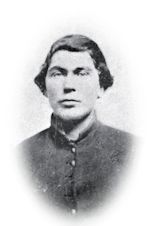
Moscow, Tuesday, Nov. 25. Orders were sent to Captain to have two best non-commissioned officers to report at Colonel Powell’s headquarters by 8 A. M. Sergt. A. J. Hood and Corporal Hauxhurst were sent, acting as orderlies. Tent moved back. The whole camp policed. 2 o’clock the howitzers (3rd and 5th pieces) were ordered out on picket duty without caissons, one extra horse.

NOVEMBER 25TH.—Fredericksburg is not shelled yet; and, moreover, the enemy have apologized for the firing at the train containing women and children. Affairs remain in statu quo—the mayor and military authorities agreeing that the town shall furnish neither aid nor comfort to the Confederate army, and the Federals agreeing not to shell it—for the present.
Gen. Corcoran, last year a prisoner in this city, has landed his Irish brigade at Newport News. It is probable we shall be assailed from several directions simultaneously.
No beggars can be found in the streets of this city. No cry of distress is heard, although it prevails extensively. High officers of the government have no fuel in their houses, and give nearly $20 per cord for wood for cooking purposes. And yet there are millions of tons of coal almost under the very city!
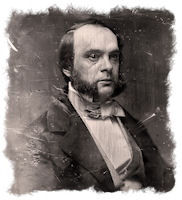
London.
New York, November 25, 1862.
The Arabia’s news from Liverpool to the 16th inst. is telegraphed from Cape Race, giving us the outline of M. Drouyn de l’Huys’ circular on mediation, and the reply of Lord Russell, declining for the present to join in any overtures of that nature to our government.
The course pursued by your government is the only wise and politic one at this moment, and it is to be regretted that the French cabinet should have adopted this public mode of calling upon the European governments to interfere in our affairs. It has the appearance of a determination to force mediation upon the American government and people whether they want it or not. This will, I fear, produce a bad effect, and make mediation very unacceptable hereafter.
From the tenor of the European advices in general, it is evident that there exists a misapprehension, both in England and France, with regard to the intentions of the conservative party of the North, which has just carried the elections.
This party, while opposed to the ultra and arbitrary spirit of the administration, and while willing to secure to the South her rights guaranteed by the Constitution, within the Union, will not accept of any compromise which has not the reconstruction of but one government over all the thirty-four States for its basis. I have seen Governor Seymour, and many of the leaders of the Democratic party, and I am sure that this is the general programme laid down as the guide of their future action.
A national convention for the purpose of modifying our Constitution, in order to take away from the ultra men, South and North, the power of future mischief, and by a better defined limitation of Federal and State power, prevent the re-occurrence of the calamities which have now befallen us, can alone restore lasting peace and prosperity to this country. Toward such a result the efforts of mediation of friendly powers might be directed—any other solution is impossible.
——————
Under the same date, a letter to the same purpose was written to Baron James de Rothschild of Paris.
November 25.— J. W. Shirk, of the gunboat Lexington, had a skirmish with a body of rebels at a plantation on the Mississippi River, twenty miles below Helena, Ark. The gunboat was fired upon by a party of infantry, assisted by a piece of artillery, without damage, however, except to the wood-work of the vessel. Captain Shirk brought his guns to bear on the attacking party, and soon compelled them to retreat, leaving behind several killed and wounded. He afterward landed a party of sailors, who captured and carried off twenty contrabands, and sixteen bales of cotton.—Official Report.
—James Buchanan, in the National Intelligencer of this day, closed a controversy between General Winfield Scott and himself, on subjects growing out of the rebellion.—The Eighth and Fifty-first regiments of Massachusetts volunteers, under the command of Colonels Coffin and Sprague, embarked from Boston for Newbern, N. C.
—This morning at daylight, a body of rebel cavalry entered Poolesville, Md., seized the government telegraph operators stationed there, paroled them, and then permitted them to telegraph to the authorities at Washington an account of what had befallen them.—Colonel Dodge, with two battalions of mounted rifles and one howitzer, had a spirited but short engagement with the rebels at Zuni, on the Backwater River, Va., resulting in the rout of the rebels, with the wounding of one private on the National side.
—Henderson, Tenn., was captured by the rebel cavalry, who burned the railroad station at that place, and made prisoners of a company of Union troops.—The rebel guerrilla Burke was killed at Shepherdstown, Md., by a party of the Second Massachusetts regiment, under the command of Captain Cogswell.—Baltimore American.
—A party of rebel guerrillas, who were making a raid in Crawford County, Mo., robbing the farmers of their fire-arms, horses, harness, clothing, negroes, etc., were to-day overtaken in the vicinity of Huzza River, Iron County, by a company of volunteers, under the command of Captain N. B. Reeves, and dispersed, with the loss of all their plunder, two of the party being killed.—(Doc. 69.)
Losses By Death—An Abortive Review.
Camp Vermont,
Fairfax Co., Va., Nov. 24, 1862.
Dear Free Press:
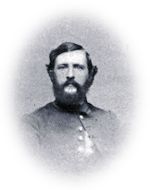
Death has again invaded the circle of our company and has taken one of our best. We miss William Spaulding much. We did not expect to bring back all we took away from Burlington, but if asked which would probably be of the first to yield to the exposures of army life, who would have pointed out that fine handsome boy? It seems hard that such should be sacrificed to the demon of rebellion. He had in him the making of a first rate soldier and a useful man. The regularity with which he performed all his military duties, from the day of his enlistment till disabled by sickness, was matter of remark; and his tall figure and pleasant face, in the first file of the company, was always a pleasant sight. He began to lose flesh and strength without any apparently sufficient reasons, and finally went into the regimental hospital; grew better, was placed on guard at a private house near here, where he had the shelter of a roof, caught cold, and died from congestion of the lungs. Captain Page, Lieutenant Wing, the chaplain and surgeon, did all they could for him. He received calmly the intelligence that he must die, said he was ready, sent words of parting remembrance and admonition to his friends, and passed away quietly. His death has cast a shadow over the company, and we ask ourselves, “who will be the next?”
One of the line officers of the regiment, Lieutenant Howard of the Northfield company, died in the hospital on Friday, from inflammation of the brain. The two deaths were made the occasion of some impressive remarks by Chaplain Brastow, at divine service yesterday.
Many as are the contrasts between our life in the army and that we lead at home, there is none greater than that between our Sabbaths there and here. As we stood at regimental service yesterday, our chapel a vacant spot before the colonel’s tent, our heads canopied only by the grey clouds drifting swiftly to the southwest, and the chill November wind blowing through our ranks, I could not but cast back a thought to the quiet and comfortable New England sanctuaries many of us have been wont to worship in. But we were better off than most of the regiments in the army, for but few of them, probably, had any Sabbath service at all.
We have had four days of rain and I have the facts for an essay on Virginia mud, whenever I get time to write it, and I assure you it is a deep subject.
Orders were out on Thursday for a grand review at Fort Albany, six miles from here, of all the forces on this side of the river. It was the third and hardest day of the storm. A countermand was expected; but none came, and the Twelfth, with three other regiments, took up its line of march. The mud varied from a thin porridge of one part red clay to three parts water, to a thick adhesive salve of three parts clay to one of water—there or thereabouts—I may not give the proportions exactly. It was a hard march. The foot planted in the red salve alluded to, is lifted with some difficulty, and comes up a number of sizes larger, and three or four pounds heavier. A mile or two of such marching tries the sturdiest muscles. The march of our boys was that of a host of conquering heroes. They took the whole country—along with them, on their soles. In the lack of any affection on the part of the inhabitants, it was delightful to find such a strong attachment on the part of the “sacred soil.” These were the only compensations. We couldn’t see, somehow, the connection between this tramp through the mud, and the business of crushing out the rebellion; and when, a mile beyond Alexandria, a courier met the column with orders to return to camp, the suspicion that all might just as well have staid in camp, became general. The substance of the proceeding was that four thousand men had a march of eight miles in a storm which made the bare idea of a review an absurdity—that was all. Perhaps “somebody blundered.”
The winter quarters of this regiment are to be long huts, one for a company, made of logs set endwise in the ground, on which a roof of boards will be placed. They make slow progress. The truth is this brigade has a good deal to do. Our regiments have a picket line of six miles to guard, the nearest point of which is five or six miles from camp. They furnish a thousand men daily, in good weather, to dig in the trenches of Fort Lyon. They have to cut the timber for their winter quarters and construct the same, and they have to fill up the interstices of time with drill. If Uncle Sam’s $20 a month is not pretty generally earned, so far, in this brigade, some of us are much mistaken.
The picket service is becoming arduous. The pickets are out 48 hours. At many of the stations no fire is allowed, and especial vigilance is enjoined, so that little sleep can be obtained; and with all precautions there is a chance of meeting a shot from some of the rebel spies and straggling guerrillas who hover around the outer circle of our lines. Saturday night a couple of the boys in our company were thus fired on. Add to these inconveniences the special discomforts of rain and deep mud, and picket service becomes anything but romantic.
A sad event occurred on Wednesday on the picket line. A corporal of the Fourteenth regiment while instructing a soldier how to halt and cover with his piece any suspected enemy approaching the station, fired off his gun, shooting the man through the breast. The wound was a terrible one, and I am told the man must die.
I noticed in a letter from the Thirteenth regiment, printed in the daily Times a week or more ago, a statement that but few of the articles sent from home for the comfort of sick soldiers ever reach them, owing to the fact that the officers appropriate them to their own use. There may be individual cases of that sort, take the army through; but that such theft from sick men, of the things they prize most, is customary down here, I do not believe. I know that in the hospital of the Twelfth the things sent in for the soldiers are put to their proper use. I am a frequent visitor at the hospital and have been glad to note the improvements added daily. Its area has been enlarged, while the number of patients has decreased. It is floored and boarded up on the sides. Neat iron bedsteads have been supplied, and the sick men sleep between sheets furnished by the Ladies’ Relief Association of Washington. It is to the credit of Surgeon Ketchum that his hospital is comfortable far beyond the average. Mr. S. Prentice, of the Committee of the Vermonters’ Relief Association, Washington, is a frequent visitor, and brings supplies of needed articles.
The visit of the Committee of the Ladies of Burlington, Mrs. Dr. Thayer and Mrs. Platt, to our camp yesterday, accompanied by Mrs. Chittenden and Dr. Hatch, was a most agreeable surprise. It was a double pleasure to see faces from home, and ladies’ faces, which are novelties in camp.
The weather has come off fine, clear and frosty after the storm.
Yours, B.
Monday, 24th.—Everything on train at 8 A.M. On our way to Tullahoma.
Monday, 24th—We draw rations now of equal parts of meal, flour and crackers, and in amount equal to a one-pound loaf of bread. We have no means for baking bread, so each man turns over his flour and corn meal to the company cook, who boils it into a mush. Then at the noon hour he calls out and the men go and get their portions. Some of us fry the mush with a little bacon, which makes a very palatable dish. But I cannot understand why it is, that with a railroad open to our base of supplies, the quartermaster cannot draw full rations of crackers for the men.
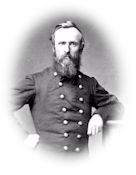
Cincinnati, November 24, 1862.
Dear Mother: — I took passage on a steamboat and left for my regiment at Gauley Bridge on Saturday, but after going a few miles, we got cast on a bar, and can’t get off until a rise of water. Luckily, I was in reach of the street railroad cars, and so came home to await the coming rise. It is expected tonight. I am sorry not to visit Columbus again, but we had a good visit with you, and we should not feel more reconciled to a separation if I were to stay a month. You will be glad to learn from Uncle that I am likely to stay in winter quarters where my arm can be cared for as well as if I were at home. You will direct letters to me at “Gauley Bridge, Virginia, via Gallipolis.”
The children were to see us yesterday and seemed very happy. They would like to go home before Christmas, but will not mourn much, as they suppose they are sure to be relieved then. We had an excellent visit from Uncle. I hope he enjoyed it as much as we did. Good-bye. Love to Ruddy.
Affectionately,
R. B. Hayes.
Mrs. Sophia Hayes.


