Monday, 24th. Read 15 or 20 pages in “Hastings.” Made the details. Got my horse shod during the afternoon. Rebel Captain and 25 men with flag of truce came in with sealed orders for Gen. Blunt. Some shrewd fellows they say.
November 2012
Moscow, Monday, Nov. 24. I felt rather unwell, having had a lusty old shake with the ague. In the night went to the doctor, had four pills and an excuse from duty. Foraging party brought in twenty-five bushels sweet potatoes, four hogs, a hive of honey and two loads of corn.

NOVEMBER 24TH.—Fredericksburg not shelled yet; but the women and children are flying hither. The enemy fired on a train of women and children yesterday, supposing the cars (baggage) were conveying military stores. The Northern press says Burnside is determined to force his way, directly from the Rappahannock to Richmond, by virtue of superior numbers. The thing Lee desires him to attempt.
The enemy are landing troops at Newport News, and we shall soon hear of gun-boats and transports in the James River. But no one is dismayed. We have supped on horrors so long, that danger now is an accustomed condiment. Blood will flow in torrents, and God will award the victory.
Another letter from Gen. Whiting says there is every reason to suppose that Wilmington will be attacked immediately, and if reinforcements (10,000) be not sent him, the place cannot be defended against a land assault. Nor is this all: for if the city falls, with the present force only to defend it, none of our men can escape. There is no repose for us!
November 24. [Chattanooga] —The small-pox is in town. We are all ordered to be vaccinated.
Have just received a letter from Mr. M—— ;he says provisions are so high in Mobile that it is almost impossible to live, and that speculators are making piles of money out of the misfortunes of their country. It will be a curse to them and their posterity after them, for it is the very blood of their fellow-mortals they are making it out of. I little thought, when we set out, that there was one man in the whole South who could be guilty of such a base act. How can they expect men to fight for them when they are taking the lives of their wives and children? They may shudder at the accusation, but in the eyes of God they are murderers. Butt there is a day of reckoning for them, and then may God have mercy on them! for if they only suffer one half the pangs of which they have been the cause, their case will be sad indeed.
This is a land flowing with milk and honey; enough of food in it to supply us if the blockade should last forever, and be much more effectual than it is. I trust, that good men—for we have many of them—will rise in their might, and drive these wretches from among us.
November 24.—General Kelley sent out a party of National scouts from New-Creek, who succeeded in capturing a rebel cavalry picket of twelve men, with horses and accoutrements, within four miles of Winchester, Va. The prisoners reported that Stonewall Jackson had left that vicinity with his command for Richmond, leaving only a regiment of cavalry, who were instructed to follow in a few days.—Notice was given to women desiring to go to their friends in the rebel States, that their applications would have to be presented in writing, and verified by oath, previous to the sixteenth day of December following.—The schooner Retribution ran the blockade of Wilmington, N. C. —General R. H. Milroy, commanding the Cheat Mountain (Va.) division of the Union army, issued an order suppressing the circulation of the Wheeling (Va.) Press within his lines.—General Orders, No. 86.
—At noon to-day, several hundred mounted guerrillas attacked a Federal supply train of forty-seven wagons, in Texas County, Mo., between Hartsville and Houston, about thirty miles south of Lebanon. The train escort consisted of fifty men of the Third Missouri cavalry. They made a vigorous resistance, had five of their number killed, and about a dozen wounded, and inflicted an equal if not greater loss upon the enemy. The latter succeeded in capturing only twenty of the wagons. The rest were brought off in safety, with their contents, by the escort and the teamsters.—Missouri Democrat.
—The schooner Agnes, and sloop Ellen, from Nassau, N. P., had run into Indian River, Fla., and discharged their cargoes, and when returning in ballast, were captured by a boat expedition from the United States gunboat Sagamore, some eight miles down the river.
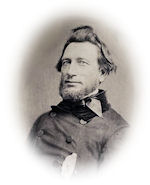
23rd.—’Tis too bad!For eight days, we have been without a mail, and to-day, when the big bag was opened, not a scratch for me! I feel shut out from home; but this is only one of the discomforts of a soldier’s life. The soldier, when he enters the field, is presumed to sever all ties of home. What an imagination it must require to presume that he can do any such thing! However, that is the rule, and the theory. But is it not bad, both as rule and theory? True, a man cannot have a home without a country; but what is country without a home, that centre of all his hopes and his affections! The soldier who enlists with the feeling that because he has a family, he has so much the more to fight for, is but poorly paid, when you remind him, that in entering the army he gave up his home and family for the good of his country. Strike from his affections that of home and family, and how much of country will be left? When I get back I’ll ask some old bachelor to tell me.
Through this journal I have freely expressed opinions as to our leading men. When I now look back at my entries, at and after the battle of Williamsburg, on my return from the Peninsula, on leaving Fort Monroe, and in reference to our trip to and from Centreville, in the latter part of August, relative to Generals McClellan, Franklin, Pope and Hancock, and of my fear of the jealousies amongst Generals, and when I compare these entries with revelations on investigation of the Harper’s Ferry surrender, I think my friends must be willing to recall much of the harsh judgment they passed on me for entertaining such opinions “of these great and good men.”
What are we going to do? I am of opinion that we are waiting here for the repair of docks and bridges at Acquia Creek, so that we can land our rolling stock for railroad. I hear some whispers that Burnside cannot advance, because of some disappointment in the arrival of pontoons. Can it be that there are parties already playing false to him. I confess to fears. It will do no harm to venture a prediction as to our course. So soon as we get the railroad repaired, and are running on it, with our bridges across the Rappahannock, we shall take Fredericksburg, at all hazards, then push forward to Saxton’s Junction, cutting off Richmond from all its northern connections, then rest for the winter. This can be done; and if treason can only be kept out of our ranks, I verily believe it will be done, and that before the 20th of December, we shall be in winter quarters, around Saxton’s.
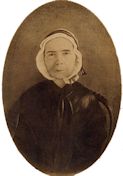
November 23.—Poor Fredericksburg! The enemy on the Stafford side of the river in force; their cannon planted on the hills. Day before yesterday they demanded the surrender of the town, which was declined by General Lee. They then threatened to shell it, at nine o’clock this morning; but it is now night and it has not been done. It is hourly expected, however, and women and children are being hurried off, leaving every thing behind, except what they can get off in bundles, boxes, etc. There is no transportation for heavy articles. The Vandals threw a shell at a train of cars filled with women and children. It burst very near them, but they were providentially protected. A battle is daily expected. In the mean time the sufferings of wandering women and children are very great.
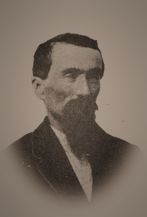
November 23 — We moved toward Winchester to-day. We are camped this evening on the south side of the Berryville pike, one mile from Winchester.
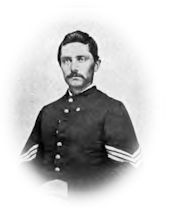
Sunday, 23d— Nothing of importance. We had general inspection this forenoon and in the afternoon the boys were permitted to remain in their tents—some were reading, some writing letters home, while others were mending their clothes.
Sunday, 23rd. In the morning commenced Macaulay’s “Warren Hastings.” Kept still during the day and commenced to feel like myself again. Had a good visit with A. B.


