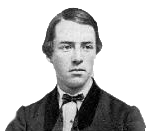
April 18. — Started from Stafford with my wagons a few minutes past six A.M. Reached General Howard’s quarters myself about 8. Asked him for a new detail of 100 men to relieve the 100 obtained early in the morning from the 82d Ohio. He was very pleasant and obliging, and ordered the men to meet me at Brook’s Station, where I arrived with train about 10 o’clock. Found my detail and pushed on to our headquarters, which I reached about 2.30 P.M., without meeting with any accident except having a team run away and tumble into Potomac Creek. We had a tough time getting up the hill near the creek, but after that everything went straight. There was a Captain Mensel of General McLean’s staff who had charge of the fatigue party of 100 men. He lunched here with me, and was very agreeable.
Thursday, April 18, 2013
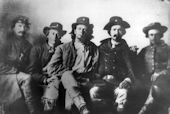
Saturday, 18th—Hermosa mañana. Nothing unusual occurred this morning. I passed most of my time reading; still gaining in strength.
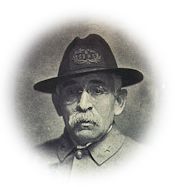
April 18—Left at 9 this morning, and got to Greenville at 5 o’clock—eleven miles. This is a fine country, but hilly and hard marching. This is the end of the siege of Washington. We were there sixteen days, but could not draw the enemy out of their works.

18th.—A letter from our son J. to-day; full of pleasant feeling at finding himself again in the Army of Northern Virginia. He is just established near General Jackson’s head-quarters, as Surgeon of the First Virginia Battalion; had just breakfasted with Stonewall, and is filled with enthusiastic admiration for the great Christian soldier and patriot.
The enemy seems to have left Charleston. The Northern papers, after much circumlocution, prevarication, and boasting of a successful reconnoissance, acknowledge that they were greatly injured by their last attack on it. “All quiet on the Rappahannock,” continues to be reported. God grant that it may continue so!
Yesterday spent-in the hospital; some of the men are very ill. I go back to-morrow.
by John Beauchamp Jones
April 18TH.—We have nothing more from the Peninsula, Suffolk, N. C., or South Carolina; but it is rumored that the enemy’s gun-boats (seven or eight) have passed down the Mississippi in spite of our batteries at Vicksburg, which sunk one of them. If this be true, it is bad news.
We have lovely weather now, and vegetation shows signs of the return of the vernal season. We shall soon have blossoms and roses in abundance, and table vegetables too, to dispel the fears of famine. But we shall also have the horrid sounds of devastating war; and many a cheerful dame and damsel to-day, must soon put on the weeds of mourning.
Gen. Jos. E. Johnston has assumed the command of the army of Tennessee. Gen. Howell Cobb is preparing for the defense of Florida. We do not hear a word from Lee or Jackson—but this is the ominous silence preceding their decisive action.
Bacon fell to-day from $2 to $1.50 per pound, and butter from $3.50 to $3.25; potatoes are $16 per bushel. And yet they say there is no scarcity in the country. Such supplies are hoarded and hidden to extort high prices from the destitute. An intelligent gentleman from North Carolina told me, to-day, that food was never more abundant in his State; nevertheless, the extortioners are demanding there very high prices.
This evening we have dispatches (unofficial) confirmatory of the passing of Vicksburg by the enemy’s gun-boats. One of them was destroyed, and two disabled, while five got by uninjured. This is not cheering. No doubt an attack by land will be made, by superior numbers, and blood will gush in streams!
It is now said that Longstreet has captured two gun-boats in the Nansemond, and taken 600 prisoners; and that the Yankees in Norfolk have been thrown into great commotion. The general in command there, Veillé, has adopted very stringent measures to keep the people sympathizing with our cause in subjection. Perhaps he fears an outbreak.
The weather continues fine, and we must soon have important operations in the field.
April 18.—The rebel side-wheel steamer St John was captured while endeavoring to run the blockade into Cape Romaine Inlet, by the National steamer Stettin.—A reconnoissance of Sabine Pass, Texas, was made by a party from the National gunboats Cayuga and New-London. On landing near the light-house they were fired on by concealed rebels, Captain McDermott of the Cayuga being killed, and his crew of five men captured. Captain Reed of the New-London was wounded, together with four of his men.— Fayetteville, Ark., garrisoned by a force of National troops under the command of Colonel Harrison, was this morning attacked by a strong body of rebels, but after a desperate contest of six hours’ duration, they were repulsed with considerable loss.—(Doc. 172.)
Millikens Bend, Saturday, April 18. Cloudy—indications of rain. Boys busy expressing their money home, paying debts and some investing in chuck-luck. Had battery drill in the afternoon of two hours.


