Bonfouca, Saturday, April
When I paused on Thursday to rest a few moments, how little idea I had that the rest I was taking would soon be required for another journey!
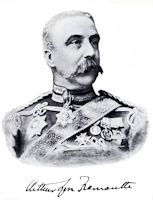
It was agreed among us, with our fellow travelers, Mrs. Bull and Mrs. Ivy, whom we met at Mrs. Greyson’s, endeavoring to reach the city like ourselves, that we would wait there until we could receive our passports from General Pemberton. When this journey was first seriously contemplated, Miriam wrote to Colonel Szymanski representing mother’s state of health and my unfortunate condition, the necessity of medical advice for both, and the impossibility of remaining in famishing Clinton, and asked him to apply to the General for a pass to go to Brother. The Colonel sent word through Eugene La Noue that we should obtain it in a few days, and advised us to go by way of Ponchatoula. Tired of delay, and hearing that we could pass as readily on General Gardiner’s order, we obtained one and started off without waiting for the other. The first news on arriving at Madisonville was that no one should pass except on General Pemberton’s order.
Pleasant intelligence for those who had come that far without! The other two ladies were in the same dilemma. They were told that they should have a pass if they would wait. Waiting at the expense of four dollars a day for each, — Mrs. Ivy with two very sick babies, Mrs. Bull with all her property in New Orleans at stake, Tiche with her broken foot, mother with a powerless hand, and I with an injured spine, — was anything but agreeable under the circumstances; though nothing could be more pleasant, apart from this sense of restriction, than our stay at Madisonville. General Pemberton took his leisure about the affair, which is not surprising, as our Generals have more weighty matters than women’s passports to attend to. Still, pleased as we were with our residence there, it was necessary to get on as soon as possible. So as I rested from labors about one o’clock on Thursday, Mrs. Bull came in to suggest a new plan to mother. It was to leave immediately for a plantation called Bonfouca, thirty miles off, where schooners came twice a week, and where we would be allowed to embark without a pass. Carriages that had just brought a party of ladies from Mandeville were waiting on the other side of the river, which could take us off immediately, for there was not a moment to lose.
Instantly we resolved to hazard the undertaking.
About three we got into the large scow to cross the Tchefuncta, in a party numbering five ladies, four children, and four servants. One of the devoted pickets, after setting me carefully in the most comfortable place, asked permission to accompany me as far as the carriage; he was sure he could assist me more carefully than the drivers. And without further parley, he followed. Before we turned the point, Mr. Worthington[1] . . . the dim distance, rowing up the stream in the direction of Madisonville. What if he had perceived us, and was hastening after us, deeming it his duty to arrest us for trying to get away without General Pemberton’s order? As the idea was suggested, there was rather a nervous set of ladies on board. The half-mile that we had to go before reaching our landing-place was passed over in nervous apprehension. At last the spot was reached. Mr. Worthington had not appeared, and we reached terra firma without being “nabbed,” as we confidently expected. The obliging picket put me into the carriage, bade me a most friendly adieu, and returned to the village, leaving us with every prospect of getting off without serious difficulty, in spite of our serious apprehensions.
With two little children and Tiche with me, our carriage started off some time before the others. Two or three miles from our starting-point, I perceived three gentlemen riding towards us, one of whom I instantly recognized as Dr. Capdevielle. Instantly I stopped the carriage to speak to him. His look of astonishment when satisfied of my identity rather amused me; but my amusement was changed to a slight feeling of disappointment when he commenced talking. Was it possible I was leaving Madison? Oh, how distressed he was! He was promising himself so much pleasure! And to leave so unexpectedly! He had just come with his friends from — somewhere. They had planned a surprise party at Mrs. Greyson’s for us that evening, and had been after the supper they had procured — somewhere, as I before observed, and were just now returning. And now we were deserting them! He had invited Monsieur Berger, Monsieur Pollock, Monsieur —— Mais enfin des Messieurs! he exclaimed with a comical emphasis and smile that brought vivid recollections of the other party before my eyes, by force of contrast, I suppose. And was n’t I sorry we had left! We fairly condoled with each other. Twenty minutes had elapsed before I had so far recovered from the disappointment as to bethink myself of the propriety of continuing my journey. And then with the assurance of being mutually désolé, we parted with a hearty good-bye, and he rode on to rejoin his companions, while I went the way he had come.
Two miles beyond, I met three others of the six gentlemen he had mentioned, riding in a little dogcart which contained champagne baskets in which the supper was evidently packed, each gentleman elegantly dressed, holding between them a little basket of bouquets that my prophetic soul told me was intended for Miriam and me. I was not personally acquainted with the gentlemen, or I should have told them of the disappointment that awaited them. It must have been a disappointment!
In the midst of profound reflections about fate, vanity of human wishes and calculations, friendships formed on the roadside in the journey through life (or from Clinton), I raised my eyes to behold Lake Ponchartrain, and to find myself in Mandeville, just seven miles from the Tchefuncta. Looking at the dreary expanse of water, which suggested loneliness and desolation, first recalled my own situation to me. Here I was in this straggling place, with Tiche, a cripple like myself, and two little children under my care, without an idea of where we were to go. Any one as timid and dependent as I to be placed in such a position as pioneer to such a tremendous company would feel rather forlorn. But some step had to be taken, so I consulted the driver as to where we could obtain board, and followed his suggestion. One house after the other we stopped at, and with my veil down and my heart beating as though I were soliciting charity, or some other unpleasant favor, I tried to engage rooms for the company, without success. At last we were directed to a Frenchman, who, after the usual assurance of “nothing to eat” (which we afterwards found to be only too true), consented to receive us. “Taking possession” seemed to me such a dreadful responsibility that for some time I remained in the carriage, afraid to get out before the others arrived. But there was still no sign of them; so I gathered my children and Tithe, and prepared to dismount with the Frenchman’s assistance.
I have read descriptions of such houses and people; but I have not often seen them. The man and his wife were perfect specimens of the low Canadian, speaking only French. No sooner had they discovered that I was “blessée,” as they supposed, than each seized an arm and with overwhelming exclamations of sympathy, halfway dragged me into the room, where they thrust me into a chair. Their family seemed to consist only of cats and dogs who seemed to agree most harmoniously, and each of whom conceived the liveliest affection for us. As we were leaving Mrs. Greyson’s, a stranger just from the city, brought to our room a paper of ham, tongue, and biscuits for “the sick young lady” (Heaven only knows how she heard of her), saying she had just traveled the road herself, and knew I would find nothing to eat; so she would insist on putting this in our basket. It was done in a manner that put all refusal out of the question; so it had to be accepted. I was feeding little Jenny Ivy and Minna Bull on this lunch for want of something else to do, when the affection of the cats and dogs became overpowering. Six of them jumped at us, licked Jenny’s face, eat Minna’s ham, and what with sundry kicks and slaps I had exercise enough to last a week, and was rapidly losing all my strength, when the woman came to my rescue and called her pets off just as the rest of the party drove up to find me almost exhausted.
Such a bedroom! There was a narrow single bed in which mother, Jenny, and I slept, a decrepit table on which stood a diseased mirror, a broken lounge without a bottom, and a pine armoir filled with — corn! In the centre stood the chief ornament, a huge pile of dirt, near which Miriam’s mattress was placed, while the sail of a boat flanked it in on the other side, arranged as a bed for Tiche. The accommodations in the other bedroom were far inferior to ours. Then the mosquitoes swarmed like pandemonium on a spree, and there was but one bar in the house, which the man declared should be only for me. I would rather have been devoured by the insects than enjoy comforts denied to the others; so I made up my mind it should be the last time.
Our supper was rare. “Nothing like it was ever seen in Paris,” as McClellan would say. It consisted of one egg apiece, with a small spoonful of rice. A feast, you see! Price, one dollar each, besides the dollar paid for the privilege of sleeping among dirt, dogs, and fleas.
[1] The torn edge of a page has obliterated several words, which might, to judge by the context, have been “was seen in.”