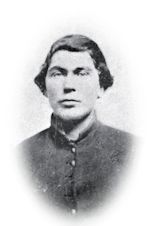
Millikens Bend, Monday, April 20. Drill two hours in the forenoon. Got sick and went to the tent before finishing. Nausea and vomiting. Very warm.
Saturday, April 20, 2013
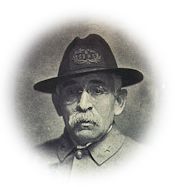
April 20—Went on picket this morning to the south side of the town, across the river, but did not go on picket. Our company and Company G supported two pieces of artillery. I was again refused permission by Morehead to go with my company, but I went all the same.
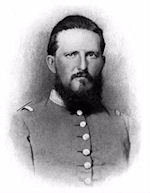
Camp Winder, April 20,1863.
I received your welcome letter of the 15th inst. on Saturday. I am very sorry to hear that Jack is still unfit for work, and that Phebe, too, has taken sick. Bear it all in patience, and do the best you can. I would be very glad, indeed, if you would hire another. Pay almost any price rather than not get one. If you get behindhand with the work, you will not soon get it up.
As to C, I can’t be far wrong. He is not as bad as you think he is; but even if he cheats me out of the whole crop, it would be better than to leave it idle. Somebody, and certainly the country, will get the benefit of the crop, if we do not. As to the pay for grazing Mr. ‘s cattle, you are right; say nothing to your father about it. I would rather lose the price than have an unkind feeling about it. I have a strong aversion to having any business transactions with my kin, as they are so often the cause of ill feeling.
I have been waiting for nearly a week for a fair day to change my camp, and moved this morning, hoping to have sunshine for one day at least to fix up. But I have been unfortunate. I had hardly reached the new camp before the rain commenced, and my men, I fear, being poorly provided with tents, have suffered much from it. My old camp, I thought, from the accumulation of filth during the winter, was the cause of an increase of sickness among the men. I hope now, as we have a good supply of spring water and clean ground, that the health of the men will be better. I have hardly ever known the army so quiet as now. We had every reason to believe that as soon as the spring opened the enemy would advance and we should have a great battle, in which I anticipated a splendid victory, but heavy loss. Three weeks of spring have passed, and so far from an advance, there is every indication that there will be none. So, too, all along the line. There seems no disposition on the part of the enemy to hazard an advance. How different the future now from this time last year! Then the enemy were pressing at every point, and all was gloomy for us. Now it is all bright and prosperous. If we wait for activity here from the enemy, we will, I think, remain in this camp all summer. The prospect is not so cheering when we look within our lines. Christian people have forsaken the God of their fathers for the sake of money, an idol worse than images of metal or stone.
The President’s patriotic appeal, I see, is answered by the committee of one county: “Hay, twenty cents per pound”; by that of another: “Wheat, $6.50 per bushel.” I do not believe there is such a scarcity as to justify such figures, but the famine is of Christian charity and public spirit. Men wish to grow rich upon the miseries of their country, and there is no limit to their extortions. All seem holding back what they have in the hope that a starving army will raise the price of bread and meat still higher. God will give us the blessing of independence and peace fully as soon as we deserve it; and our prayer should be now not so much for victory to our arms as for patriotism and charity to our people, wisdom and integrity to our rulers. The depravity of mankind is alike the great truth and the great wonder of the universe. These times seem to develop it in a degree of monstrosity which we could never have supposed it would obtain.
And now, darling, good-bye. Give my love to dear little Matthew and Galla, and kiss little Frank. May God bless and take care of you all!
by John Beauchamp Jones
APRIL 20TH.—We have nothing definite from Suffolk, or from Washington, N. C.
But we have Northern accounts of their great disaster at Charleston. It appears that during the brief engagement on the 7th inst., all their monitors were so badly damaged that they were unable to prolong or to renew the contest. They will have to be taken to New York for repairs; and will not go into service again before autumn. Thus, after nearly a year’s preparation, and the expenditure of $100,000,000, all their hopes, so far as Charleston is concerned, have been frustrated in a few brief hours, under the fire of Beauregard’s batteries. They complain that England furnished us with the steel-pointed balls that penetrated their iron turrets. To this there can be no objection; indeed it may be productive of good, by involving the Abolitionists in a new quarrel: but it is due to candor to state that the balls complained of were manufactured in this city.
It was a Federal account of the retaking the Queen of the West, reported by Mr. Benjamin; and hence, it is not generally believed.
It is thought by many that Hooker will change his base from the Rappahannock to the Pamunky, embarking his army in transports. If this be so, we shall again have the pleasure of hearing the thunders of battle, this summer, in Richmond.
Gen. Lee has been quite ill, but is now recovering.
April 20.—The Union forces under General Banks occupied Opelousas, La., when Colonel Thomas E. Chickering, of the Forty-first Massachusetts regiment, was appointed Military Governor and Provost-Marshal.—(Doc. 171.)
—A brisk cavalry skirmish took place near Helena, Ky., in which several rebels were killed and wounded.
—An engagement took place at Patterson, Mo. Colonel Smart, commanding the National forces, sent the following report of the affair to Brigadier-General Davidson:
“The line was cut off as soon as the engagement began, which was six miles from our post I had a scout out on Black River, who found the enemy early in the morning, but they succeeded in cutting them off, so that they could not communicate with me.
“The number of the enemy was between one thousand five hundred and three thousand. I think they had six pieces of artillery. I could not ascertain who commanded the enemy.
“The attack began about twelve o’clock, on the Reeve’s Station road, with a scout I had sent out in that direction. I then sent Major Wood on to reenforce with a battalion. He held them in check and skirmished them into town. This gave me time to load my trains and have them ready to move, if I had to retreat.
“Before I left the town I destroyed what stores I could not bring away; nothing fell into the hands of the enemy. The fight continued to Big Creek, about eight miles this side of Patterson. The engagement was severe in the extreme. After fighting hand to hand at Big Creek they got in my front and attempted to cut off my retreat, but I forced my way to the ford on this side of the creek. The enemy did not renew the engagement. My loss in killed, wounded, and missing in the action was about fifty.
“I had scouts on the Bear River, Greenwood Valley, and Bush Creek roads, also on the Reeve’s Station road, which I have not heard from.
“I will send you an official report as soon as I can learn all the details. Major McConnell was wounded and fell into the hands of the enemy. I think his wound was mortal. My regiment fell back in good order, and are now together, except the scout above mentioned. I had about four hundred men in the engagement.”
—Bute A La Rose, La., was captured by the National gunboats Estrella, Clifton, Arizona, and Calhoun, after a short engagement. An officer on board the Clifton gave the following account of the affair: “Just before we came to the fort there is it sharp bend in the river, and when we came round that bend we were only one quarter of a mile from the fort. The sailing order was that the Clifton and the Arizona should go ahead abreast, the Calhoun next, and the Estrella, Captain Cook, the senior officer, brought up the rear. The river being narrower than we expected, we could not sail two abreast, and the Clifton took the lead. We were all at quarters. As we came around the point we went ahead with full steam; as soon as we caught sight of the fort we fired our two bow nine-inch guns. No sooner had we fired than I saw the white smoke rolling out of the enemy’s guns. One of the balls came whistling over my head about two feet, and struck the walking-beam, and the way the cast-iron flew about the deck was a caution. It was a thirty-two-pound solid shot; it struck with such force that it split the ball in two, and a part of it glanced off and came down through the hurricane deck and brought up on the spar-deck, and another shot fell under our bow. As we came up nearer the fort, they fired over us. By this time we caught sight of the rebel gunboats, lying on the opposite side of the river, making a cross fire on us. The first shell that they fired burst on the port bow, and killed Richard Ribey, second captain of the broadside gun. He was in the act of firing the gun when he was shot. By this time the enemy was running pell-mell out of the fort, and had hauled down their flag and were waving a white one. The rebel gunboats escaped up the river after firing a few shots.”


