Monday, 20th.—Federals keep firing into town from their mortar batteries across the bend of the river.
April 2013
20th April (Monday). — I slept well last night in spite of the numerous prairie-wolves which surrounded us, making a most dismal noise.
The Jew was ill again, but both Mr Sargent and the Judge were very kind to him; so also was McCarthy, who declared that a person incapable of protecting himself, and sickly, such as this little Jew, is always sure of kind treatment and compassion, even from the wildest Texans.
We started at 5 A.M., and had to get through some dreadful mud—Mr Sargent in an awful bad humour, and using terrific language.
We were much delayed by this unfortunate rain, which had converted a good road into a quagmire. We detected a rattlesnake crawling along this morning, but there are not nearly so many of them in this country as there used to be.
We halted at 9 A.M., and, to make a fire for cooking, we set a rat-ranch alight, which answered very well; but one big rat, annoyed by our proceedings, emerged hastily from his den, and very nearly jumped into the frying-pan.
Two Texan rangers, belonging to Taylor’s regiment, rode up to us whilst we were at breakfast. These rangers all wear the most enormous spurs I ever saw.
We resumed our journey at 12.30, and reached a creek[1] called “Agua Dulce” at 2 P.M. McCarthy and I got out before crossing to forage at some huts close by. We got two dozen eggs and some lard; but, on returning to the road, we found that Mr Sargent had pursued his usual plan of leaving us in the lurch.
I luckily was able to get hold of a Mexican boy, and rode across the creek en croupe. McCarthy dismounted a negro, and so got over.
We halted at 5 P.M.
After dark McCarthy crossed the prairie to visit some friends who were encamped half a mile distant. He lost his way in returning, and wandered about for several hours. The Judge, with great presence of mind, kept the fire up, and he found us at last.
The heat from nine to two is pretty severe; but in Texas there is generally a cool sea-breeze, which makes it bearable.
[1] All streams or rivers are called creeks, and pronounced “criks.”
Monday, 20th—The Sixth Division received marching orders, and the First and Second Brigades started down the river. Our brigade, the Third, has orders to be ready to move at a moment’s notice. We heard some cannonading this morning down toward Vicksburg. Companies E and K went out on picket. I remained in camp to guard the company’s property. We have a fine camp at this place, but are glad to leave for the front, as staying in camp will not bring the war to a close.
April 20, Monday. Received Admiral Du Pont’s detailed report with those of his officers. The document is not such as I should have expected from him a short time ago, but matters of late prevent me from feeling any real disappointment. Fox went last night to New York in anticipation of such a report. The tone and views of the sub-reports have the ring, or want of ring, of the Admiral in command. Discouragement when there should be encouragement. A pall is thrown over all. Nothing has been done, and it is the recommendation of all, from the Admiral down, that no effort be made to do anything. [Du Pont] has got his subordinates to sustain him in a proceeding that his sense of right tells him is wrong.
I am by no means confident that we are acting wisely in expending so much strength and effort on Charleston, a place of no strategic importance, but it is lamentable to witness the tone, language, absence of vitality and vigor, and want of zeal among so many of the best officers of the service. I cannot be mistaken as to the source and cause. A magnetic power in the head, which should have inspired and stimulated them, is wanting; they have been discouraged instead of being encouraged, depressed not strengthened.
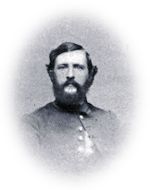
Headquarters Second Vermont Brigade, Wolf Run Shoals, Va., April 9, 1863.
Dear Free Press:
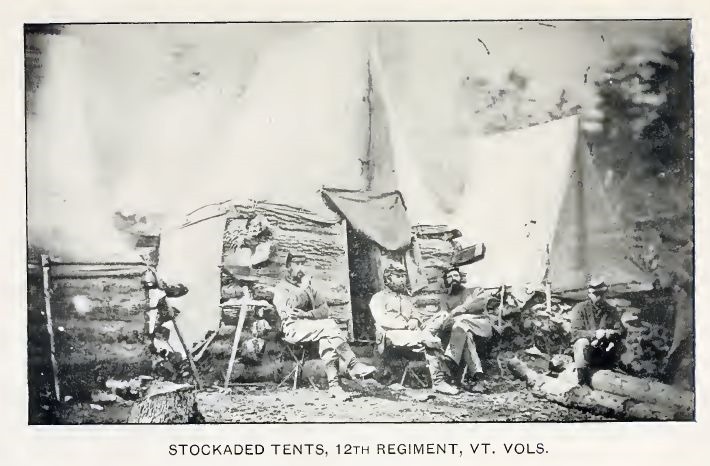
If I sometimes talk about the weather it is because it is a subject of prime importance in every camp. Upon the weather depend both the movements of armies and the health of the troops, to an extent which can hardly be realized by any one not connected with the army. The risks the soldier thinks most about when he first enlists, are commonly those of the battlefield. After he has been out a while, not wounds or death or capture, but sickness, is his great dread. As long as he is well, if he is a true man, he cares little about the rest. For a month past we have encouraged ourselves with the thought that the season of snows and mud was about over. The inhabitants hereabouts told us that they frequently commenced ploughing in February, and that such gardens as they have were always made or making by the middle of March. This may be so; but we have no evidence of the fact this year. If you could have heard the storm howl here last Saturday night, or seen the pickets wading to their posts next day through snow which frequently in the hollows was over boot tops, you would have come to the conclusion that winter was not “rotting in the sky” in Virginia. To-day the snow still lies upon the shaded hill-slopes, and the air is as chilly, in spite of the sunshine, as in any April day in Vermont. We have now done counting on the speedy return of mild and pleasant weather. It may come, when it pleases the kind Ruler of the sunshine and the storm; but our boys declare that they shall not be surprised to leave Virginia in a snow storm when our time is out next July. The sick list of the Twelfth is larger now than ever before, numbering not less than 120, besides a number who suffer from severe colds but are not sick enough to require the surgeon’s care. This diminution from the effective force of the regiment, while the details for picket duty are increased rather than diminished, tells sensibly upon the labors of the well and strong. But while there is some complaining, of course, all are ready to own that they had far rather do the work of the sick and feeble ones, than to take their places in the hospitals. There have been one or two more deaths since I wrote you last. The Twelfth, heretofore the healthiest, seems to be now the sickliest regiment in the brigade. Why this is so, it is hard to explain. Partly, perhaps, because the other regiments had their “sick spells” and got through the process of acclimation sooner; partly because the measles had a run in the winter and left many men in poor condition to resist the exposures of the spring; partly, perhaps mainly, owing to the unhealthy location of the camp. The last reason will not hold after this. This week the regiment has moved camp to a hard-wood knoll, a quarter of a mile from the old one. The location is higher and the ground much better than the old one. The men erected new stockades before they left the old ones, and when the mud dries will be very comfortable in their new quarters. I wish you could look into some of the new shanties, and see how comfortable. I have one of Company C’s in my eye— stockade of logs, split in halves, laid flat side in and hewed smooth, a good five feet high and closely covered by the canvas roof; door of boards in one side; good floor of pieces of hard tack boxes; bunks wide enough for two men, one over the other, made of smooth poles which make a spring bedstead; sheet iron stove; sofa of split white wood, without ends or back; gun rack filled with its shining arms—the principal ornament of the room; shelves, pegs to hang things on, and other conveniences too numerous to mention—why, it is good enough for the honeymoon palace of the Princess and Prince of Wales, good enough even for a soldier of the Army of the Union.
This brigade is now picketing twenty odd miles of line. The Fourteenth guards the lower Occoquan from the lowest ford at Colchester to Davis’s Ford, three miles below the Shoals. The Twelfth and Thirteenth picket from there to Yates’s Ford,. a couple of miles below Union Mills. The Fifteenth and Sixteenth take care of the rest of the line up to Blackburn’s Ford, on Bull Run, where the pickets of General Hays’ brigade meet our own.
The men of the Twelfth have been gratified by the recent removal of the headquarters of the brigade to the vicinity of the Shoals, thus bringing Colonel Blunt in a measure back to them, and the colonel is as glad to be near his regiment as they are to have him here.
Our pickets have been repeatedly fired on at night of late by bushwhackers. The consequence is stricter measures with the inhabitants within and near our lines. Brigade Provost Marshal, Captain William Munson, has been visiting all the houses in this region, searching for and confiscating all arms and property contraband of war, and registering the names and standing as to loyalty, of the citizens. It goes hard with some of these F. F. V’s, to give up the old fowling pieces, of which quite a collection is accumulating at headquarters, some of them nearly as long as Long Bridge, and old as the invention of gunpowder apparently, which have been handed down from father to son for generations; but they have to come.
It is one of the most embarrassing portions of the duty of a commanding officer in such a region as this, to deal properly with the noncombatant inhabitants. The innocent must often suffer with the guilty, from the nature of the case. Colonel Blunt is kind to the sincerely loyal, of whom there are very few, and to the inoffensive, of whom there are more, within our lines, and is looked up to by them as a protector; but the men whose influence contributed to bring about the present state of things, whose sons are in the rebel army, and whose sympathies are with that side, get little consolation when they come to Colonel Blunt to complain. They are informed that as they would have secession and war, and have sown the wind, they must take the consequences and reap the whirlwind. Such dialogues as the following are not infrequent: Citizen, “Good morning, Colonel,” Colonel, “Good morning, sir.”—Citizen, “My name is ——;your troops are stealing my rails; I’d like to save what I’ve got left, and wish you’d order them that ain’t burnt brought back, and stop them taking any more.” Colonel, “H’m, did you vote for secession?” Citizen, “Well,”(hesitating,) “Well I did, colonel, but it is too late to talk about that now.” Colonel, “Too late to talk about rails, too, sir. Good day, sir.” Exit citizen with a large flea in his ear and rage in his heart at “the d—d Yankees.”
But to return to the provost marshal’s operations, I was going to say that enough of information and arms have been obtained to fully warrant the search. Muskets have been found hid in the closets, and cartridges and percussion caps by thousands laid away in the women’s bureau drawers, the possession of which they relinquished with extreme reluctance. Some citizens have been sent in to Washington for safe custody, and it is hoped that this playing peaceful citizen by day and bushwhacker by night is measureably stopped, for the present. Captain Munson has performed his delicate duties, so far as I can learn, with great good judgment and efficiency.
We turn back now from our lines remorselessly all fugitives from Dixie, except contrabands and deserters from the rebel army. Three of them came in to-day, one of them a young man of 25, the other two good looking boys of 17, all of the Fifth Virginia cavalry. They are clothed in the coarse cotton and wool butternut colored jackets and trousers which commonly form the uniform of a rebel soldier when he has one; and tell the often repeated story of scanty rations, hard treatment, and poor pay. The twelve dollars a month which they are paid barely cover the cost of their clothes, at the rates at which they are charged to them, so that the rebel soldier in fact works for his food and clothing, and not over much of either. One of these was a Baltimore boy who joined the rebel army in a hurry, on its invasion of Maryland seven months ago, and has repented at his leisure. They brought their carbines with them, and tell straight stories. They say that an impression that the war is to continue indefinitely prevails now in the South, and is disheartening many who have hitherto held out strongly for the rebel cause.
This being fast day in Vermont, a general order from the colonel commanding directed the relief of the men from all unnecessary duties, and the observance of religious exercises appropriate to the occasion. The unsettled state of the camp of the Twelfth prevented our chaplain from preaching a sermon. I attended divine service in the camp of the Fourteenth and heard a patriotic and excellent sermon by Chaplain Smart of that regiment.
Yours, B.

April 20. – It rained to-day, and I had to start with Waterman’s train to go over to Major Spaulding’s. I moved it to a point a mile the other side from the railroad, where I was relieved by an officer from Major Spaulding. The Regular battery reported to General Benham, and had Captain Wood’s old train assigned them.
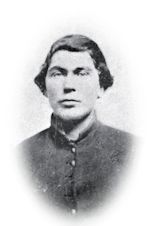
Millikens Bend, Monday, April 20. Drill two hours in the forenoon. Got sick and went to the tent before finishing. Nausea and vomiting. Very warm.
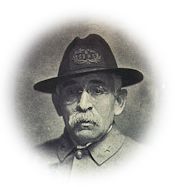
April 20—Went on picket this morning to the south side of the town, across the river, but did not go on picket. Our company and Company G supported two pieces of artillery. I was again refused permission by Morehead to go with my company, but I went all the same.
Camp Winder, April 20,1863.
I received your welcome letter of the 15th inst. on Saturday. I am very sorry to hear that Jack is still unfit for work, and that Phebe, too, has taken sick. Bear it all in patience, and do the best you can. I would be very glad, indeed, if you would hire another. Pay almost any price rather than not get one. If you get behindhand with the work, you will not soon get it up.
As to C, I can’t be far wrong. He is not as bad as you think he is; but even if he cheats me out of the whole crop, it would be better than to leave it idle. Somebody, and certainly the country, will get the benefit of the crop, if we do not. As to the pay for grazing Mr. ‘s cattle, you are right; say nothing to your father about it. I would rather lose the price than have an unkind feeling about it. I have a strong aversion to having any business transactions with my kin, as they are so often the cause of ill feeling.
I have been waiting for nearly a week for a fair day to change my camp, and moved this morning, hoping to have sunshine for one day at least to fix up. But I have been unfortunate. I had hardly reached the new camp before the rain commenced, and my men, I fear, being poorly provided with tents, have suffered much from it. My old camp, I thought, from the accumulation of filth during the winter, was the cause of an increase of sickness among the men. I hope now, as we have a good supply of spring water and clean ground, that the health of the men will be better. I have hardly ever known the army so quiet as now. We had every reason to believe that as soon as the spring opened the enemy would advance and we should have a great battle, in which I anticipated a splendid victory, but heavy loss. Three weeks of spring have passed, and so far from an advance, there is every indication that there will be none. So, too, all along the line. There seems no disposition on the part of the enemy to hazard an advance. How different the future now from this time last year! Then the enemy were pressing at every point, and all was gloomy for us. Now it is all bright and prosperous. If we wait for activity here from the enemy, we will, I think, remain in this camp all summer. The prospect is not so cheering when we look within our lines. Christian people have forsaken the God of their fathers for the sake of money, an idol worse than images of metal or stone.
The President’s patriotic appeal, I see, is answered by the committee of one county: “Hay, twenty cents per pound”; by that of another: “Wheat, $6.50 per bushel.” I do not believe there is such a scarcity as to justify such figures, but the famine is of Christian charity and public spirit. Men wish to grow rich upon the miseries of their country, and there is no limit to their extortions. All seem holding back what they have in the hope that a starving army will raise the price of bread and meat still higher. God will give us the blessing of independence and peace fully as soon as we deserve it; and our prayer should be now not so much for victory to our arms as for patriotism and charity to our people, wisdom and integrity to our rulers. The depravity of mankind is alike the great truth and the great wonder of the universe. These times seem to develop it in a degree of monstrosity which we could never have supposed it would obtain.
And now, darling, good-bye. Give my love to dear little Matthew and Galla, and kiss little Frank. May God bless and take care of you all!

by John Beauchamp Jones
APRIL 20TH.—We have nothing definite from Suffolk, or from Washington, N. C.
But we have Northern accounts of their great disaster at Charleston. It appears that during the brief engagement on the 7th inst., all their monitors were so badly damaged that they were unable to prolong or to renew the contest. They will have to be taken to New York for repairs; and will not go into service again before autumn. Thus, after nearly a year’s preparation, and the expenditure of $100,000,000, all their hopes, so far as Charleston is concerned, have been frustrated in a few brief hours, under the fire of Beauregard’s batteries. They complain that England furnished us with the steel-pointed balls that penetrated their iron turrets. To this there can be no objection; indeed it may be productive of good, by involving the Abolitionists in a new quarrel: but it is due to candor to state that the balls complained of were manufactured in this city.
It was a Federal account of the retaking the Queen of the West, reported by Mr. Benjamin; and hence, it is not generally believed.
It is thought by many that Hooker will change his base from the Rappahannock to the Pamunky, embarking his army in transports. If this be so, we shall again have the pleasure of hearing the thunders of battle, this summer, in Richmond.
Gen. Lee has been quite ill, but is now recovering.


