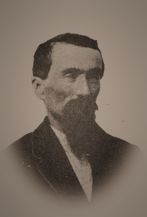
April 12 — Renewed our march early this morning, passing through Luray, and moved toward New Market. We crossed the Massanutten mountain and camped half a mile east of New Market.
April 2013
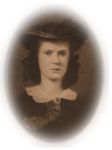
Madisonville, Sunday, April 12th, 1863.
We arrived here about five last evening, and, strange to say, the journey, fatiguing as it was, has not altogether disabled me. But I must go back to Clinton to account for this new change. It would never do to take more than a hundred miles at a single jump without speaking of the incidents by the way. Numerous and pleasant as they were, some way they have unaccountably paled; and things that seemed so extremely amusing, and afforded me so much pleasure during these four days, now seem to be absurd trifles half forgotten.
I now remember lying in state on Lilly’s bed Wednesday, talking to Mrs. Badger (who had been several days in town), Anna, Sarah Ripley, and the others, when Frank suddenly bolted in, just from Port Hudson, to say another good-bye, though I told him good-bye at Linwood Sunday. Presently the General entered, just from Linwood, to see us off; then Mr. Marston and his daughter, and Mr. Neafus, all as kind as possible, until a perfect levee was assembled, which I, lying all dressed with a shawl thrown over me, enjoyed all the more as I could take my ease, and have my fun at the same time. Frank, sitting by my pillow, talked dolorously of how much he would miss us, and threatened to be taken prisoner before long in order to see us again.
• • • • • • • • •
When we were finally left alone, I fancy there was very little sleep in the house. As to me, I lay by Lilly wide awake, thinking how lonely she would be without us, and perfectly désolée at the idea of leaving the Confederacy (the dear gray coats included); so when it was almost sunrise there was no necessity of rousing me to dress, as I was only too glad to leave my sleepless bed. Before I got dressed, Anna, her mother, and Sarah Ripley came in again; then Miss Comstock; and just as I had put the last touch to my dress, the gentlemen of the night before entered, and we had almost an hour and a half’s respite before the carriage, less punctual than we, drove to the door.
The General picked me up in his arms and carried me once more to the carriage. Then the servants had to say good-bye; then Lilly, very quiet, very red, and dissolved in tears, clung to me almost without a word, hardly able to speak, whilst I, distressed and grieved as I was, had not a tear in my eyes —nothing but a great lump in my throat that I tried to choke down in order to talk to Frank, who stood at the window by me, after she left. . . . How the distance lengthens between us! I raise up from my pillows and find myself at Camp Moore at four o’clock. Forty miles are passed over; good-bye, Frank!
From Camp Moore we had to go three miles back, to find Captain Gilman’s house where we were expected. The gentleman is a friend of Gibbes, though I had never seen any of them before. Such a delightful place, with everything looking so new, and cool, and such a hospitable hostess that I thought everything charming in spite of my fatigue. I had hardly a moment to look around; for immediately we were shown to our rooms, and in a very few minutes Miriam had me undressed and in bed, the most delightful spot in the world to me just then. While congratulating myself on having escaped death on the roadside, I opened my eyes to behold a tray brought to my bedside with a variety of refreshments. Coffee! Bread! Loaf-sugar! Preserves! I opened my mouth to make an exclamation at the singular optical illusion, but wisely forbore speaking, and shut it with some of the unheard-of delicacies instead. .. .
Early next morning the same routine was gone through as Thursday morning. Again the carriage drove to the door, and we were whisked off to Camp Moore, where the engine stood snorting with impatience to hurry us off to Ponchatoula. . . . Soon we were steaming down the track, I reclining on my pillows in an interesting state of invalidism, sadly abashed now and then at the courteous, wondering gaze of the soldiers who were aboard. Having very little idea of the geography of that part of the country, and knowing we were to take a carriage from some point this side of Ponchatoula, fancying how surprised Mr. Halsey would be to hear we had passed him on the way, I took a card from my traveling-case, and wrote a few words for “good-bye,” as we could not see him again. I sealed it up, and put it in my pocket to send to the first post-office we passed.
About twelve o’clock we stopped at Hammond, which was our place to disembark. Mother sent out to hire a negro to carry me off the platform; and while waiting in great perplexity, a young officer who had just seated himself before me, got up and asked if he could assist her, seizing an arm full of cloaks as he spoke. I got up and walked to the door to appear independent and make believe I was not the one, when mother begged him not to trouble himself; she wanted a man to assist her daughter who was sick. Calling a friend, the gentleman kindly loaded him with the cloaks, etc., while he hurried out after me. I was looking ruefully at the impracticable step which separated me from the platform. The question of how I was to carry out my independent notions began to perplex me. “Allow me to assist you,” said a voice at my elbow. I turned and beheld the handsome officer. “Thank you; I think I can get down alone.” “Pray allow me to lift you over this place.” “Much obliged, but your arm will suffice.” “Sarah, let the gentleman carry you! You know you cannot walk!” said my very improper mother. I respectfully declined the renewed offer. “Don’t pay any attention to her. Pick her up, just as you would a child,” said my incorrigible mother. The gentleman turned very red, while Miriam asserts I turned extremely white. The next thing I knew, by passing his arm around my waist, or taking me by my arms — I was so frightened that I have but a confused idea of it — I was lifted over the intervening gulf and landed on the platform!
Hammond boasts of four houses. One, a shoe manufactory, stood about twenty or thirty yards off, and there the gentleman proposed to conduct me. Again he insisted on carrying me; and resolutely refusing, I pronounced myself fully equal to the walk, and accepting his proffered arm, walked off with dignity and self-possession. He must have fancied that the injury was in my hand; for holding my arm so that my entire weight must have been thrown on him, not satisfied with that support, with his other hand he held mine so respectfully and so carefully that I could not but smile as it struck me, which, by the way, was not until I reached the house!
Discovering that he belonged to Colonel Simonton’s command, I asked him to take Mr. Halsey the note I had written an hour before. He pronounced himself delighted to be of the slightest service, and seeing that we were strangers, traveling unprotected, asked if we had secured a conveyance to take us beyond. We told him no. He modestly suggested that some gentleman might attend to it for us. He would be happy to do anything in his power. I thought again of Mr. Halsey, and said if he would mention we were in Hammond, he would be kind enough to see to it for us. “May I ask your name?” he asked, evidently surprised to find himself asking a question he was dying to know. I gave him my card, whereupon mother asked his name, which he told us was Howard. We had been talking for some ten minutes, when feeling rather uncomfortable at being obliged to look up at such a tall man from my low seat, to relieve my neck as well as to shade my face from any further scrutiny, I put down my head while I was still speaking. Instantly, so quietly, naturally, and unobtrusively did he stoop down by me, on one knee so that his face was in full view of mine, that the action did not seem to me either singular or impertinent —in fact, I did not think of it until mother spoke of it after he left. After a few moments it must have struck him; for he got up and made his parting bow, departing, as I afterwards heard, to question Tithe as to how I had been hurt, and declaring that it was a dreadful calamity to happen to so “ lovely “ a young lady.
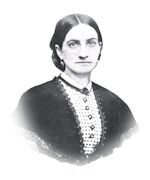
April 12.—My arm is fast getting better; I have put nothing on it but cold water, I believe that is a cure for almost every thing.
Mrs. W. is very busy, and goes about all the time in the wards.
Dr. Hunter has left for his home, in Mississippi, to bring his wife here. Dr. Patterson of Tennessee is now in charge. He is a perfect gentleman, and we are all much pleased with him.
I have been looking at some men working. I do not think that any of our negroes ever worked as hard. Our firewood is brought in in large logs. We have no saws, so the men have to cut it. There is one man now chopping away, who I am told is worth his thousands. He is dressed in grey homespun, and seems as much at home as if he had always been accustomed to that life. War is a great leveler, and makes philosophers of us, when nothing else will. It astonishes me to see how the men adapt themselves to circumstances. The men in the kitchen act as if that was their place, and always had been. I saw one of them receive a letter, this morning, from his wife, and as he read about her and his little ones the tears trickled down his cheeks. They were manly ones, and will never disgrace the bravest and best.
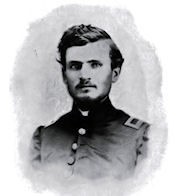
12th. After breakfast, Col. (Abbey) and I got a team and rode horseback to town for rations—got 3 days’ rations. These troops from the Potomac never received any company savings. Marched at noon after giving rations. Ordered to Stanford, 50 miles south of Lexington. Reached Winchester about dark. Got some eggs and biscuit. A darkey came in and had a good visit. Intelligent though uneducated.
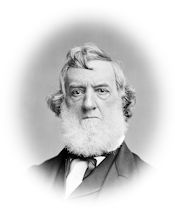
April 12, Sunday. An intense and anxious feeling on all hands respecting Charleston. Went early to the Department. About 11 A.M. a dispatch from the Navy Yard that the Flambeau had not arrived. The President and Stanton came in a little after noon and waited half an hour, but it was then reported the Flambeau was not yet in sight. I came home much dejected. Between 2 and 3 P.M. Commander Rhind of the Keokuk, Upshur, and Lieutenant Forrest called at my house with dispatches from Du Pont. They were not very full or satisfactory, — contained no details. He has no idea of taking Charleston by the Navy. In this I am not disappointed. He has been coming to that conclusion for months, though he has not said so. The result of this demonstration, though not a success, is not conclusive. The monitor vessels have proved their resisting power, and, but for the submarine obstructions, would have passed the forts and gone to the wharves of Charleston. This in itself is a great achievement.
Went to the Executive Mansion. Read the dispatches to and had full conversation with the President. Sumner came in and participated.
Rhind, an impulsive but brave and rash man, has lost all confidence in armored vessels. When he took command of the Keokuk his confidence was unbounded. His repulse and the loss of his vessel have entirely changed his views. It was, I apprehend, because of this change and his new appointment to armored vessels that he was sent forward with dispatches. He has, I see, been tutored. Thinks wooden vessels with great speed would do as well as iron-clads. I agreed that speed was valuable, but the monitors were formidable. In this great fight the accounts speak of but a single man killed and some ten or twelve wounded. What wooden or unarmored vessels could have come out of such a fight with so few disasters. No serious injury happened to the flagship, the Ironsides, which, from some accident, did not get into the fight. We had expected Du Pont and the ironclads would pass Sumter and the forts and receive their fire, but not stop to encounter them.
Du Pont has been allowed to decide for himself in regard to proceedings, has selected, and had, the best officers and vessels in the service, and his force is in every respect picked and chosen. Perhaps I have erred in not giving him orders. Possibly the fact that he was assured all was confided to him depressed and oppressed him with the responsibility, and has prevented him from telling me freely and without reserve his doubts, apprehensions. I have for some time felt that he wanted the confidence that is essential to success. His constant call for more ironclads — for aid —has been a trial. He has been long, very long, getting ready, and finally seems to have come to a standstill, so far as I can learn from Rhind, who is, if not stampeded, disgusted, demoralized, and wholly upset. It is not fear, for he has courage, — to daring, to rashness, — and his zeal, temperament, and ardor are by nature enthusiastic. But these qualities are gone. Why DuPont should have sent him home to howl, or with a howl, I do not exactly understand. If it was to strengthen faith in himself and impair faith in the monitors the selection was well made. Rhind had too much confidence in his vessel before entering the harbor, and has too little in any vessel now.
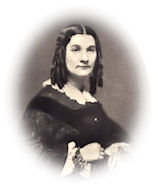
Mrs. Lyon’s Diary.
April 12, 1863.—The gunboats destroyed Palmyra on the 9th. Regiment returned all safe, did not see the enemy.
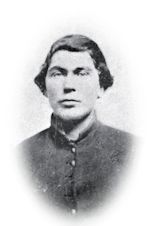
Near Helena, Sunday, April 12. A fine day. Expected to leave, but instead we took our horses off. Troops going down the river nearly all day, about twenty transports loaded. Took a ride in the afternoon, enjoyed it much, though all alone. On guard in the night. Quite cold.
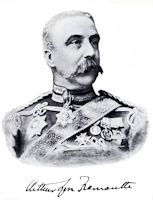
12th April (Sunday).—I took an affectionate leave of Don Pablo, Behnsen, Oetling, & Co., all of whom were in rather weak health on account of last night’s supper.
The excellent Maloney insisted on providing me with preserved meats and brandy for my arduous journey through Texas. I feel extremely grateful for the kindness of all these gentlemen, who rendered my stay in Matamoros very agreeable. The hotel would have been intolerable.
I crossed to Brownsville at 3 P.m., where I was hospitably received by my friend Ituria, who confesses to having made a deal of money lately by cotton speculations. I attended evening parade, and saw General Bee, Colonels Luckett, Buchel, Duff, and ——. The latter (who hanged Mongomery) improves on acquaintance. General Bee took me for a drive in his ambulance, and introduced me to Major Leon Smith, who captured the Harriet Lane. The latter pressed me most vehemently to wait until General Magruder’s arrival, and he promised, if I did so, that I should be sent to San Antonio in a first-rate ambulance. Major Leon Smith is a seafaring man by profession, and was put by General Magruder in command of one of the small steamers which captured the Harriet Lane at Galveston, the crews of the steamers being composed of Texan cavalry soldiers. He told me that the resistance offered after boarding was feeble; and he declared that, had not the remainder of the Yankee vessels escaped unfairly under flag of truce, they would likewise have been taken.
After the Harriet Lane had been captured, she was fired into by the other ships; and Major Smith told me that, his blood being up, he sent the ex-master of the Harriet Lane to Commodore Renshaw, with a message that, unless the firing was stopped, he would massaCREE the captured crew. After hearing this, Commodore Renshaw blew up his ship, with himself in her, after having given an order to the remainder, sauve qui peut.

Sunday, 12th—Eight gunboats went down the river today. The boys feel quite lively and are anxious to get into action again. We had company inspection in the morning and regimental inspection in the afternoon, with dress parade at 5 o’clock. Some of the men of our regiment were caught in a trap today. They went up into a pigeon house a short distance from camp and were having a game of “chuck luck” when someone informed the officer of the day, who took some guards, surrounded the house, entered and made a quick dive for the rubber poncho, taking all the money lying on the figures, almost $200, and arresting all the participants. He put the fellows in the guardhouse and turned over the money to the hospital steward.
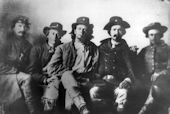
Sunday, 12th—Rained last night. Very pleasant this morning. I remained quiet to-day. Three or four soldiers came by; found our Brigade had come back about Spring Creek.


