Before Vicksburg, Friday, May 29. The day was opened with a general cannonading all along the line for thirty minutes, with as much rapidity as possible. It was a sublime and terrible scene, the powder smoke gathering in a dark heavy cloud overhead, with the shells exploding with a continual flash over their forts, and now and then a mortar (shell) high in air could be seen. A gentle rain fell in the afternoon. Received twenty-five new horses from the landing. A repetition at sundown of the morning’s work, then all was quiet. Wrote to John.
May 2013
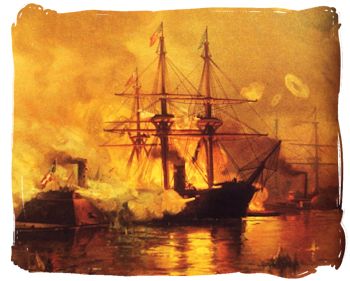
May 29th. The cessation of hostilities on both sides seems to have, in part, taken place, and our forecastle is not crowded with officers and blue jackets, like on the two previous days, straining their eyes almost out of their sockets in their anxiety to see where our shells and those of our armies fell in the rebels’ works, and what execution they do. Oh, the excitement caused by seeing two parties striving for the mastery! I presume that the almost abandonment of the siege to-day is for good reasons,—probably to rest and recover strength for an early renewal of the assault, and this time with a larger force, or else for the purpose of burying their dead, and giving the enemy an opportunity to care for theirs, the performance of which is a sacred duty, and so held by all civilized nations.
May 29 — Firing commenced after day dawned again this morning. 8 o’clock a.m. — heavy cannonading going on along our back line and continued an hour or two. Twelve transports and two gun boats came down today and have anchored out in line of battle above Vicksburg. One boat came up and shelled us awhile today but done no damage to us. 3 o’clock p.m. — All appears quiet along our back lines at present. It has the appearance of rain this evening cloudy and thundering. Gun boat shelled us a while tonight. W. R. C.

by John Beauchamp Jones
MAY 29TH.—A dispatch from Gen. Johnston, dated 27th inst., says fighting at Vicksburg had been in progress ever since the 19th instant, and that our troops have been invariably successful in repulsing the assults. Other dispatches say the unburied dead of the enemy, lying in heaps near our fortifications, have produced such an intolerable stench that our men are burning barrels of tar without their works.
But still all is indefinite. Yet, from the persistent assaults of the enemy it may be inferred that Grant is inspired with the conviction that it is necessary for him to capture Vicksburg immediately, and before Johnston collects an army in his rear. A few days may produce a decisive result.
Hon. E. S. Dugan, Mobile, Ala., writes that it is indispensable for our government to stipulate for aid from Europe at the earliest moment practicable, even if we must agree to the gradual emancipation of the slaves. He says the enemy will soon overrun the Southwestern States and prevent communication with the East, and then these States (Eastern) cannot long resist the superior numbers of the invaders. Better (he thinks, I suppose) yield slavery, and even be under the protection of a foreign government, than succumb to the United States.
The enemy, wherever they have possession in the South, have adopted the policy of sending away (into the Confederate States) all the inhabitants who refuse to take the oath of allegiance. This enables them to appropriate their property, and, being destitute, the wanderers will aid in the consumption of .the stores of the Confederates. A Mr. W. E. Benthuisen, merchant, sent from New Orleans, telegraphs the President for passports for himself and family to proceed to Richmond. The President intimates to the Secretary of War that many similar cases may be looked for, and he thinks it would be better for the families to be dispersed in the country than congregated in the city.
The following are the wholesale prices to-day:
“PRODUCE, PROVISIONS, Era.—The quotations given are wholesale. Wheat—nothing doing—we quote it nominal at [click to continue…]
Thursday, 28th.—Skirmishing and heavy cannonading all day.

May 28.—Hospital day. The wounded cheerful and doing well. I read, distributed books, and talked with them. They are always ready to be amused, or to be instructed. I have never but in one instance had an unpleasant word or look from any whom I endeavoured to treat with kindness in any way. Bible reading is always kindly received. J. J. has returned home, as usual much interested in hospital work.
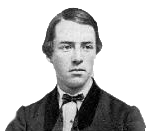
May 28. — Asked the general to let me go off this morning, but he thought he might want me, so I remained. This afternoon there were rumors that we were going to move to-morrow. The day was pleasant. I received letters from Father, Hannah, and Alice.
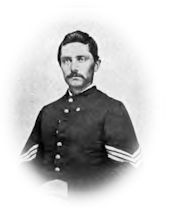
Thursday, 28th—Last night we bivouacked twenty miles east of Vicksburg and remained there till noon, waiting for rations. We then moved on ten miles and went into bivouac for the night. The country is very rough in this part of the state and there are only a few small farms to be seen. Water is scarce, our main reliance being cistern water.
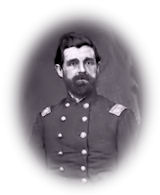
Colonel Lyons.
Fort Donelson, May 28, 1863.—An expedition of cavalry has gone towards Waverley. Colonel Lowe left this morning for Murfreesboro. Our officers returned from there the morning after you left. General Rosecrans asked the Major whether when the fortifications are done some of these troops could not be spared to go to Clarkesville.
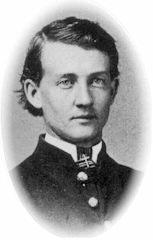
MAY 28TH.—We did not strike out on the war-path again till three P. M. to-day, having spent the time previous in taking a good rest. To-day we have not marched very rapidly, as it has now become necessary to go more slowly in order to feel our way, since we cannot tell what obstacle we may encounter. All the natives we meet along the road claim that Johnston is going to raise the siege. If so, it will prove about the biggest “raising” he ever attended. Camped again about dark.


