Following the American Civil War Sesquicentennial with day by day writings of the time, currently 1863.

June 2013

June 25, Thursday. A special messenger from Mr. Felton, President of the Philadelphia & Baltimore Railroad, called on me this morning before breakfast, with a request I would send a gunboat to Havre de Grace to protect the ferryboat, railroad property, and public travel. He says Rebels are in the vicinity in disguise, concerting measures for mischief. The War Department and military authorities, who should know, are not informed on these matters, and I must exercise my own judgment. There is sensitiveness in the public mind, and security is sought sometimes unnecessarily, but my conviction is there may be cause for apprehension in this instance. I have therefore ordered a gunboat from the Potomac Flotilla to the point indicated and notified Mr. Felton.

Word is sent me by a credible person who left Hagerstown last evening that Ewell and Longstreet with their divisions passed through that place yesterday to invade Pennsylvania with sixty thousand men. The number is probably exaggerated, but I am inclined to believe there may be half that number, perhaps more. Where in the mean time is General Hooker and our army? I get nothing satisfactory from Headquarters or Stanton.

The President to-day approved my placing the Bureau of Equipment and Recruiting in temporary charge of Commander Smith, and the Ordnance Bureau in charge of Commander Wise.

Mr. Stanton called on me this morning and stated he had made an arrangement with John C. Rives to publish a military journal which he proposed to call the Army and Navy Gazette. He wished it to embrace both branches of the service unless I objected. The entire expense, over and above the receipts, whatever they may be, should be borne by the War Department. I told him I of course could make no objection to the name, and if the orders, reports, official papers, and current news were regularly and correctly published there would be some conveniences attending it. The proposition was, however, novel to me, and I knew of no law to warrant it or of any appropriation to defray the expense. I should therefore decline any pecuniary, official, or personal responsibility, or any connection with it. He assured me he did not expect or wish me to incur any part of the expense or responsibility.
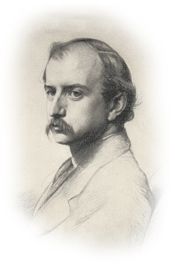
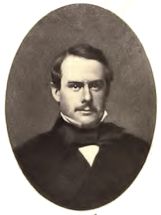
Henry Adams to Charles Francis Adams, Jr.

June 25, 1863

As I have regularly announced, the season of calm has again given way in this region to the new period of squally weather. I have looked forward to this time so long that “impavidum ferient ruinae “; I am prepared in mind for everything.

The prosecution, by means of which the two countries have been kept quiet so long, has come to an end. Not only has the decision gone against us, but the ruling of the venerable and obtuse Jamblichus who has slumbered upon the bench for many years and has not a conception of what has been vulgarly called the spirit of progressive civilization in jurisprudence; the ruling, as I was proceeding to observe, has triumphantly over-set the little law that has ever been established on this matter and leaves us all at sea, with a cheerful view of an almighty rocky lee shore. What will be the result of yesterday’s work I can’t say, but I can guess. Our present position is this. There is no law in England which forbids hostile enterprises against friendly nations. The Government has no power to interfere with them. Any number of Alabama’s may now be built, equipped, manned and despatched from British ports, openly for belligerent purposes and provided they take their guns on board after they’ve left the harbor, and not while in dock, they are pursuing a legitimate errand.

Of course this is crowner’s quest law; crazy as the British constitution; and would get England soon into war with every nation on the sea. The question now is whether the Government will mend it. Mr. Cobden told me last night that he thought they would. I amuse myself by telling all the English people who speak to me on the subject, that considering that their maritime interests are the greatest in the world, they seem to me to have been peculiarly successful in creating a system of international law which will facilitate in the highest possible degree their destruction, and reduce to a mathematical certainty their complete and rapid ruin. And I draw their attention to the unhappy, the lamentable, the much-to-be-deprecated, but inevitable result of yesterday’s verdict, that you could n’t rake up on the American continent twelve citizens of the United States, who could be induced by any possible consideration to condemn a vessel which they had the slightest hope of seeing turned into a pirate against British commerce. I think these arguments are far the most effective we can use. And I think the people here will soon be keenly alive to these results.

Meanwhile what is the effect of all this upon us? It brings stormy weather certainly, but our position is in one respect rather strengthened by it. Public opinion abroad and here must gravitate strongly in our favor. This Government is placed in a position in which it will be very difficult for it to ignore its obligations. With the question between the English Government and its Courts, we have nothing to do. Our demands are on the Government alone, and if the English laws are not adequate to enable her to maintain her international obligations, Cant pis pour elle. She’s bound to make new ones.

But there is another source of anxiety to us of late, though not so serious. A gentleman who is regarded by all parties here as rather more than three-quarters mad, a Mr. Roebuck, has undertaken the Confederate cause, and brought a motion in Parliament which is to be discussed in a few days. Not finding his position here sufficiently strong, he has gone over to Paris and has seen the Emperor who, he says, told him he was willing and earnest to press the question of mediation, if England would join him. So Mr. Roebuck has come back, big with the fate of nations, and we shall see whatever there is to see.

The truth is, all depends on the progress of our armies. Evidently there is a crisis coming at home, and events here will follow, not lead, those at home. If we can take Vicksburg — so! If not, then — so! .. .

Charles Francis Adams, Jr., to brother, John Quincy Adams

Aldie, Va., June 25, 1863

• • • •

BUT what is coming? I fear that universal lack of confidence in every one, from the President through general Hooker downwards, is the distinguishing feature of the army now. Things are certainly much changed for the worse since our regiments first arrived in Virginia ten months ago. Lack of confidence has steadily grown upon us. In Hooker not one soul in the army that I meet puts the slightest, though it may be that I meet only one class. All whom I do see seem only to sadly enquire of themselves how much disaster and slaughter this poor army must go through before the Government will consider the public mind ripe for another change. Meade or Reynolds seems to be the favorite for the rising man and either is respectable and would be a great improvement on the drunk-murdering-arson dynasty now prevailing, of Hooker, Sickles and Butterfield. Meanwhile the golden moments are flying and we are lying here doing nothing. . . .

June 25.—Yesterday we sent many of our sick off. To-day the hospital is again filled with wounded.

Yesterday, being St. John the Baptist’s day, the Mason’s anniversary, there was a grand picnic given by the country people to the soldiers. While in the midst of it, the enemy came upon them, and I am told we have sustained a severe loss. Our army was taken by surprise. The fight was at Hoover’s Gap. Mrs. Dr. Turner has just come from there; her husband hurried her off at l2 o’clock last night.

We are still sending the wounded away who are able to be moved, to make room for more, as the battle is still progressing.

June 25—Marched on, passed through Leesburg, Canada, Hockinsville, and Centerville, all small villages. We got to Carlisle, Pa., at sundown. Marched 21 miles to-day. This city is certainly a beautiful place. It has. 8,000 inhabitants, and we were treated very good by the ladies. They thought we would do as their soldiers do, burn every place we passed through, but when we told them the strict orders of General Lee they were rejoiced. Our regiment was provost guard in the city, but were relieved by the 21st Georgia Regiment, and we went to camp at the U. S. barracks. So far we have lived very good in the enemy’s country. We stayed here until the 30th, when we took the Baltimore pike road, crossed South Mountain at Holly Gap, passed through Papertown and Petersburg. We then left the Pike and took the Gettysburg road—17 miles to-day. This has been a hard day for us, as we were the rear guard of the division, and it was very hot, close and very dusty, and a terrible job to keep the stragglers up.

JUNE 25TH.—We have orders to stay in camp, ready to move at a moment’s notice. Our marching orders are still delayed, so we have enjoyed a good rest. We are now out of hearing of the guns at Vicksburg, and it seems very still around us, indeed.

The term of the enlistment of some members of our regiment has now expired, and they seem to want to get home again to see their mamas; but go they can not until our “rabbit is caught.” Shame on them for wanting to leave before the flag flies over Vicksburg. Many of them have had letters from friends at the North, urging them not to stay after their time is out. But they may as well make up their minds that Grant will hold them till Vicksburg is taken.

Thursday, 25th—Rained all day. Yanks made a general attack on our pickets. I went out to the Company about 11 a. m.; fell back to Ransom’s; went over to Bell Buckle; traveled all night. Came on to Fairfield; staid a short time and came on back to Ransom’s and camped.

June 25th. Early this morning, before daylight, slight firing of musketry and artillery commenced, and continued during nearly the whole day, at Port Hudson.

June 25 — Four companies of our regiment (Co. B was one of the four) was ordered out last night to reinforce Col. B. as a heavy attack was expected to be made last night. We remained there in the ditches until 11 or 12 o’clock when we were relieved by a regiment and received orders to move back to our old position on the river. Daylight has come and the sharp shooters are at work — an attack is expected here today. The Yankees appear to be pressing upon our lines. Major Guthre was wounded today by a ball from sharp shooters. We had heavy cannonading here on the lower end of our lines this evening. Night has come on and one third of us has to be on watch and while we stand as bold sentinels upon the watchtower around Vicksburg, I pray Heaven’s blessings to rest upon us and that the all seeing eye of Jehovah may watch over us and protect us from all danger and harm. W.R.C.

[June 25th]

Early the 25th General Hancock telegraphed Zook to have everything in readiness to move at a moment’s notice on Gum Springs via Sudley Church. At 10 A. M. one of our mounted picket posts was captured, and the patrol came galloping in, followed by the enemy’s cavalry on the Warrenton road. At 10:30 A. M. we received the order to withdraw and promptly fell in and marched to Sudley Church. The telegraph operator cut the wires, removed his instruments, and rode with us. Marched out of Gainsville in fine form, a rear guard of two guns, a squadron of cavalry, and full regiment of infantry following a considerable distance in rear. Flankers were deployed on each side of the column, and in fine spirits we stepped out at a lively gait. Shortly after starting, the enemy’s cavalry completely surrounded us, keeping at a respectful distance, but in full view all the time. At half past two P. M. the head of the column reached Sudley’s Church and crossed the Bull Run river at the ford.

Opposite the ford the ground was high, and here the general posted Arnold’s battery to cover the crossing. He directed the movement of the troops on the opposite side in person and charged me with the supervision of the crossing below. There were eighty wagons and ambulances, and it was a considerable undertaking to keep them all in motion, but by much effort they were kept moving. In the course of half an hour or so an orderly rode in from the rear and reported the enemy pressing the rear guard, and a rebel battery coming up. I sent an orderly to notify Zook, and with some of the quartermaster’s officers examined the river for another ford, luckily finding one almost as good as the regular ford. Shortly afterwards, the rebel guns opened on us and dropped their shells most annoyingly. Arnold was obliged to take position and soon drove them away. Everything safely crossed, and vastly satisfied with the honor of superintending the movement of so many troops, I rejoined the general, who occupied a most commanding position on unobstructed ground. We were greatly amused at the audacity of the rebel cavalry. They completely surrounded us, keeping in full view, but confining themselves simply to watching our movements, and so we made no attempt to disturb them, not being desirous of masking our intentions. We remained in this position for an hour, resting the troops and giving the teams an opportunity of getting into good order, when an orderly from General Hancock came with directions to proceed at once to Gum Springs and there join the rest of the corps. So we marched at once, unluckily getting on the wrong road, causing considerable delay, but striking out across the country. Soon found the proper road and arrived at Gum Springs about 9 P. M.

On the route we passed over the old Bull Run battlefield and at the junction of a railroad crossing saw hundreds of human skeletons bleached white as snow, a ghastly monument of those who had fallen in the great cause. We were considerably depressed by this horrible side of war, and I noticed the soldiers were anxious to hurry away.

The evening was a typical campaign bivouac, and around a cheerful camp fire we sat down to a substantial supper, afterwards regaling ourselves with a toddy prepared by the general’s trusty man, Ferguson; the fatigues and anxieties of the day all forgotten in the glorious and exhilirating surroundings of a thousand camp fires and the music of innumerable bands.