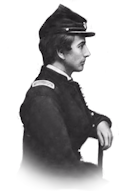
June 26th. Rained nearly all last night, and in consequence the roads are very bad. To-day at 6 A. M. marched to Edward’s Ferry on the Potomac, reaching there at midnight. The march was excessively fatiguing, as we were eighteen hours on the road, the latter part of which was execrable. Crossing the river immediately upon our arrival, we formed in close column of division, stacked arms, and lay down to sleep, the men badly used up, many of them missing. There was much confusion here, caused by the immense trains, which occupied the roads to the exclusion of the troops. Many of the wagons were disabled, and the road was constantly blockaded. We heard on our arrival that Lee had crossed the Potomac and was heading directly for Pennsylvania.
June 2013

26th.—While in the midst of preparation to visit my sisters at W. and S. H., we have been startled by the account of Yankees approaching. They have landed in considerable force at the White House, and are riding over the country to burn and destroy. They have burned the South Anna Bridge on the Central Railroad, and this evening were advancing on the bridge over the South Anna, on this railroad, which is but four miles above us. We have a small force there, and a North Carolina regiment has gone up to-night to reinforce them. We are, of course, in considerable excitement. I am afraid they are ruining the splendid wheat harvests which are now being gathered on the Pamunky. Trusting in the Lord, who hath hitherto been our help, we are going quietly to bed, though we believe that they are very near us. From our army we can hear nothing. No one can go farther than Culpeper Court-House in that direction. Why this has been ordered I know not, but for some good military reason, I have no doubt. It is said that Stuart’s cavalry have been lighting along the line of the Manassas Gap Railroad with great success. We can hear no particulars.
June 25.—This afternoon, a fight occurred at Liberty Gap, Tenn., between a rebel division under General Cleburn, and the Nationals, commanded by Generals Willich, Wilder, and Carter, resulting in the rout of the rebels, who fled, leaving their dead and wounded in the hands of the Nationals. The loss of the Nationals was forty killed and one hundred wounded.—(Doc. 112.)
—The ship Constitution, in sight of the Island of Trinidad, latitude 20° 31′, longitude 29° 16′, was captured by the rebel privateer Georgia.—Fairfax Court-house, Va., having been evacuated by the National troops, was occupied by a rebel guerrilla party during the evening.—An expedition under the command of Colonel S. P. Spear, of the Eleventh Pennsylvania cavalry, reached a point within six miles of Richmond, Va., creating a great panic in that place.—(Doc. 35.)
—As assault was made on the rebel works at Vicksburgh, by General McPherson’s corps, which ended in the capture of one of the forts.—(Doc. 36.)
—The English steamer Britannia, was captured by the Union gunboat St. Jago de Cuba, at a point one hundred and fifty miles from Abaco, having run the blockade of Charleston South-Carolina.
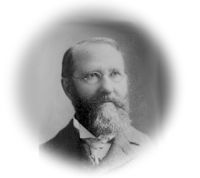
June 25.—The next day, — Sunday, — when we found life enough to open our dust-filled eyes and crawl about a little, we found the engineers, during the previous twenty-four hours, had been pushing matters. Just by us here is a bank, covered with trees and bushes, and really very much exposed to the enemy’s fire. We often venture to pause, however, in the brush, and look at their earthworks, which can be seen from this point to advantage. Here I stopped on Sunday, and saw to my surprise, on a hill just opposite the enemy, that a deep, broad trench had been run within a few rods of them. In the sap were negroes digging it on still closer; and a company of infantry, returning, close at hand, the fire of the rebs. While I was taking my observations, suddenly Bivins turned up at the foot of the bank, cutting poles to pitch his shelter-tent with; and from him I learned that it was no other than our old Company D that I could see loading and firing; pushed up, to say the least, among the very whiskers about this old lion’s active and well-armed jaws.
You shall go with me into this outmost sap, and know what sights and sounds it is our business now to be familiar with. Into this sap I am obliged to go three times a day for my rations, out of the retreat of the colors. First we must creep out of our ravine, through the top of this prostrate tree, whose boughs catch our clothing; then up by the charred trunk, the feet slipping in the mud. Your head now comes within the range of riflemen in the trees over there. Sometimes they are in the trees, though not always. A few steps more, and we come within full range from the parapet; but do not stop to look. Stoop as low as you can, and run. This stump will shelter you; pitted with the striking of balls against it, as if it had the small-pox when a sapling. When you have caught your breath, run for that trunk. It is an ugly one to get over; for it is breast-high, and one’s whole body has to come into the enemy’s view. Once over this, and the road is smoother. We soon gain the cover of the woods, and are comparatively safe. The other day, I was twice shot at while passing the space we have just been over. I do not know how near the bullets came; only the first seemed as if it were sweeping my legs off at the knee with its sharp rush. I stooped, and labored through the brush; when the second came cold along the length of my spine, just above the vertebrse. We are to have a better road, however. One of Company E has just been shot through the head — dead in an instant — here, and we are to have a protected passage-way.
Down this little gully, and we enter the beginning of the sap, at the end of the military road. Behind the angle, just back there, is the station of the ambulance-men. They wait there, day and night, with stretchers ready. These stretchers are now all blood-stained. Three or four a day, out of the brigade and working party, are carried out. The ambulance-corps is made up largely of the musicians: but music! we never hear it now, not even the drum and fife. It is too stern a time for that.
We pass out into the sap. Here is the most dangerous point of all, just at the entrance, where the first man from our regiment was killed the day of the assault. You see how the rebel parapet commands it. We are going considerably nearer to it; but we shall be better sheltered. ‘Tis just in front, with an old shot-pierced building behind it, and white sand-bags lying on top of the tawny slope. That old building might be a ruinous mill, and those bags might be grist, laid out there along the wall until the miller was ready for it; but, every bag or two, there is a sharp-eyed Mississippian with his rifle pointed through some chink. Let us” go at a good pace, so that no one of those fellows will have a chance to draw a-bead on either of us. The trench goes under a large trunk, stretching from bank to’ bank; and from here we are tolerably safe. Only tolerably: for the other day, close by here, one of our company was hit in the face by a glancing ball; and Sergt. Bennett, of Company K, was mortally wounded by a fragment from one of our own shells, which flew back into our lines from over the rebel parapet, where the shell exploded. We are coming close, you see. Climb a steep pitch now, and we reach the station of Company D. The sap is here about six feet wide and four deep, dug out of the hard soil, the dirt being thrown out on the side toward the enemy; forming a bank rising about five feet from the surface, and therefore about nine feet above the bottom of the trench. Here now are our boys, the few that are left, —barely twenty. Along the top of the ridge of earth, logs are placed; into the under side of which, notches are cut at intervals of three or four feet; leaving, between the earth below and the timber above, a loop-hole, four or five inches in diameter, for the men to fire through. McGill has just sprung down, after discharging his piece. Before he loads again, let us climb up, and take a view of the world through the hole. Carefully! Lay your body up against the steeply sloping bank, resting the feet on the edge of the sap. By all means, take care that the top of your head does not project above the narrow timber. Your face is at the hole now. From the outside, a groove runs along the top of the thick bank; then comes the open air; and opposite you, within call easily enough, is the deadly ridge; the two or three tents behind it; the old, ruinous chimneys, the one or two shattered buildings, — so near, you can plainly see threads and bricks and splinters. Do not look long. Every yard, perhaps the intervals are less, behind the sand-bags, there is a rifleman. Mellen, of Company F, has just been shot while aiming his piece through one of these holes. The ball entered through the hole, hit the band of his gun, then the lock, splintering wood and steel, then crashed in through his chest.
McGill is capping his gun. Try one more look before he jumps up for another shot. Can you see any one? No head, I’ll warrant; for, though they are brave enough over there, they are not often careless. The most you will be likely to see will be a hand put up for a moment, with a ramrod, as the charge is pushed home; or a glimpse of butternut as a fellow jumps past some interval in the sand-bags. Now let McGrill and Buflum and Wivers and the others, whose place it is, blaze away at whatever they can see. Little Gottlieb offers me his piece to try a few shots: but I am not anxious to kill a man; and, so long as it is not in my place to fire, I decline it.
You duck your head now as the balls whistle over. It is a nervous sound; but you would soon get over that here. They go with a hundred different sounds through the air, according to the shape, size, and velocity of the projectile. Two strike the bank. It is like two quick blows of a whip-lash. That went overhead, sharp as the cut of a cimeter; another goes with a long moan, then drops into the earth with a “thud.” It comes from some more distant point, and is nearly spent. A shot comes from some great gun in the rear, — an earthquake report; then the groaning, shuddering rush of the shell, as if the air were sick and tired of them, and it was too much to be borne that they should be so constantly sent.
Sit on the edge of the trench now, with your feet hanging down, and your back leaning against the pile of earth. The boys have built shelters of boughs, just on the other side, to keep off, a little, the intolerable sun. A line of men goes along the sap, each carrying a fascine. Then comes a party rolling hogsheads filled with cotton. These are built into the bank beyond to give it strength. Steve and Tom, the cooks, come up with dinner, which is cooked back in the woods to the rear. Coffee and stewed beans to-day. There! — a shower of dirt falls over us, dinner and all, from a ball that hit near the loop-hole: but to dirt and balls alike we are growing indifferent; so we only laugh.
But let us go out to the end of the sap. We pass the young captain of engineers, who is in charge here; a pleasant, active young fellow, who nods back to us as we give him the salute, make several turns, and presently are at the end. Negroes are making the trench here wider. We push through them to the cotton-stuffed hogshead at the extremity. They roll this forward a foot or two, then dig out behind it, and so on. A lieutenant of engineers, and a negro, have just been shot here. From this crevice we can get a peep. Is it not near? You can easily throw a hard-tack across. Looking back on to a side-hill, we can see some of the old wreck of the assault, — a rusty gun or two, mouldy equipments, and there a skeleton. Some regiments got very near on the 14th. Close by runs the little, disused path, among weeds and wild-flowers, along which, before we came, the garrison used to go from their works to the road. It looks innocent as the path up Pocumtuc; but what a way of death it would be to him who should get out of the sap, and try to walk in it! Our boys in the sap here have distinguished company. Almost every day, Gen. Banks comes through, — sometimes with quite a retinue, sometimes only with Gen. Stone.
“Well, boys, how do you stand it?” said he, the other day, to our men.
“Arrah, now, your honor,” said Pat O’Toole, “we’re most dead intirely for the want of whishkey.”
We wait and watch. When night comes, I climb out of the ravine on to the hillside, where the air is fresh. There is a bright moon now, and my vigil is sure to be well lit. I am often there at midnight; and on the rebel side, faint and far along distant roads, I hear the low rattle of wheels, and call of drivers; and the sound of the active mill too, whose location the batteries are crazy to know, that they may seal its doom.
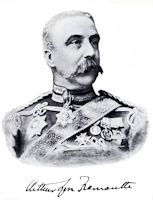
25th June (Thursday).—We took leave of Mrs —— and her hospitable family, and started at 10 A.M. to overtake Generals Lee and Longstreet, who were supposed to be crossing the Potomac at Williamsport. Before we had got more than a few miles on our way, we began to meet horses and oxen, the first fruits of Ewell’s advance into Pennsylvania. The weather was cool and showery, and all went swimmingly for the first fourteen miles, when we caught up McLaws’s division, which belongs to Longstreet’s corps. As my horse about this time began to show signs of fatigue, and as Lawley’s pickaxed most alarmingly, we turned them into some clover to graze, whilst we watched two brigades pass along the road. They were commanded, I think, by Semmes and Barksdale[1] and were composed of Georgians, Mississippians, and South Carolinians. They marched very well, and there was no attempt at straggling; quite a different state of things from Johnston’s men in Mississippi. All were well shod and efficiently clothed. In rear of each regiment were from twenty to thirty negro slaves, and a certain number of unarmed men carrying stretchers and wearing in their hats the red badges of the ambulance corps;—this is an excellent institution, for it prevents unwounded men falling out on pretence of taking wounded to the rear. The knapsacks of the men still bear the names of the Massachusetts, Vermont, New Jersey, or other regiments to which they originally belonged. There were about twenty waggons to each brigade, most of which were marked U.S., and each of these brigades was about 2800 strong. There are four brigades in McLaws’s division. All the men seemed in the highest spirits, and were cheering and yelling most vociferously.
We reached Martinsburg (twenty-two miles) at 6 P.M., by which time my horse nearly broke down, and I was forced to get off and walk. Martinsburg and this part of Virginia are supposed to be more Unionist than Southern; however, many of the women went through the form of cheering McLaws’s division as it passed. I daresay they would perform the same ceremony in honour of the Yankees to-morrow.
Three miles beyond Martinsburg we were forced by the state of our horses to insist upon receiving the unwilling hospitality of a very surly native, who was evidently Unionist in his proclivities. We were obliged to turn our horses into a field to graze during the night. This was most dangerous, for the Confederate soldier, in spite of his many virtues, is, as a rule, the most incorrigible horse-stealer in the world.
[1] Barksdale was killed, and Semmes mortally wounded, at the battle of Gettysburg.
25th. Answered home letter and wrote a little to F. Kept raining most of the day. Had to keep pretty close to tent. In the evening Rob and I rode to town. Got some figs and called at the hospital. Henry prospering nicely, so are the remainder of the boys wounded. Mr. Wright in the hospital. Gave some figs to the boys.
Thursday, 25th—Everything on the outside is quiet as usual. Our engineers blew up one of the main rebel forts, and the infantry rushing in tried to hold the place, but on account of the fierce cross firing had to fall back to their rifle pits. A number of our forces were killed, including one colonel, and a number were wounded. Only a few of the rebels were killed by the explosion, not many being in the fort at the time. Our cannon opened up all along the line. A negro in the fort blown up, was thrown high up in the air and came down on his head within our lines unhurt.[1]
[1] A photograph was taken of the negro and the boys had him on exhibition for a few days at five cents admission.—A. G. D.

Before Vicksburg, Thursday, June 25. Our curiosity was awakened this morning by an order to each piece to deposit all their slow-matches at Captain’s tent, we knew not for what purpose. But we soon learned that it was to convey fire to the blast placed under the big fort to our right (in Logan’s line). A drift 37 feet deep was run under it with chambers parallel to the fort. In this was deposited — lbs. of powder (by the trusty negro). Orders were given to the several sergeants to have the cannoneers at their posts at 2 P. M. at which time the fort was “to be blown up” and a general cannonading to be immediately opened.
As the hour approached, all hands were anxiously waiting, each desirous of witnessing the result. It was dull and very oppressive; all nature seemed drooping, and ominous silence prevailed on both sides; not a flutter of air, not a word was spoken, and you could hear naught but your own silent breath. All at once a dead heavy roll, a hundred shouts, and you could see nothing but a black cloud of dirt and powder smoke, throwing the earth 30 or 40 feet in the air, and about half of the wall rolled over the ditch as if turned by a ponderous plow. Instantaneous with this was the crack of a hundred cannon, as if they were all pulled off by one lanyard, and a furious cannonading answered, while the infantry advancing with a yell that none but soldiers can give, rushed up the breastworks, and a galling fire ensued between the rebs at the bottom and at the top. Our men tried hard to dislodge them and take possession of the fort, but it was too much. They lay on the ground until night, elevating their guns above their heads to shoot, while some obtained concealed positions, firing while those below were loading for them. A stand of colors was brought up and planted. Hand grenades were tossed back and forth with great briskness. Some were digging for a piece of artillery, an engagement in which valor and courage are signalized.
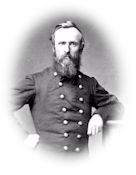
Camp White, June 25, 1863.
Dear Uncle: — Our little Joseph died yesterday after a few days’ severe illness. He was eighteen months old — bright and very pretty. I have hardly seen him, and hardly had a father’s feeling for him. To me, the suffering of Lucy and the still greater sorrow of his grandmother, are the chief afflictions. His brain was excessively developed, and it is probable that his early death has prevented greater suffering. He was the most excitable, nervous child I ever saw. We have sent his body home for burial. Lucy and the rest will leave here in a few days for Chillicothe. This has dashed the pleasure of their visit here.
I have one thousand dollars for your bank (at Cincinnati), and will [shall] have fifteen hundred dollars more in two or three weeks. I want stock to that amount. I have one thousand dollars’ worth of 7:30 bonds, but I will keep them in preference to the stock.
I like Brough’s nomination [for governor of Ohio.] We everywhere lack energy. He will have enough.
Sincerely,
R. B. Hayes.
S. BIRCHARD.
Camp White (opposite Charleston), West Virginia, June 25, 1863. — Last Monday, the 15th, Lucy, Mother Webb, and “all the boys” came here from Cincinnati on the Market Boy. A few happy days, when little Joseph sickened and died yesterday at noon (12:40). Poor little darling! A sweet, bright boy, “looked like his father,” but with large, handsome blue eyes much like Webb’s. Teething, dysentery, and brain affected, the diseases. He died without suffering; lay on the table in our room in the Quarrier cottage, surrounded by white roses and buds all the afternoon, and was sent to Cincinnati in care of Corporal Schirmes, Company K [D], this morning. I have seen so little of him, born since the war, that I do not realize a loss; but his mother, and still more his grandmother, lose their little dear companion, and are very much afflicted.


