Following the American Civil War Sesquicentennial with day by day writings of the time, currently 1863.

July 2013

July 5, Sunday. A Cabinet-meeting to-day at 11 A.M. The principal topic was the mission of Alexander H. Stephens. The President read a letter from Colonel Ludlow, United States Agent for exchange of prisoners, to Secretary Stanton, stating that Stephens had made a communication to Admiral Lee, which the Admiral had sent to the Secretary of the Navy. After reading them, the President said he was at first disposed to put this matter aside without many words, or much thought, but a night’s reflection and some remarks yesterday had modified his views. While he was opposed to having Stephens and his vessel come here, he thought it would be well to send some one —perhaps go himself — to Fortress Monroe. Both Seward and Stanton were startled when this remark was made.

Seward did not think it advisable the President should go, nor any one else; he considered Stephens a dangerous man, who would make mischief anywhere. The most he (Seward) would do would be to allow Stephens to forward any communication through General Dix. Seward passes by Admiral Lee and the Navy Department, through whom the communication originally came. Stanton was earnest and emphatic against having anything to do with Stephens, or Jeff Davis, or their communication. Chase was decided against having any intercourse with them. Blair took a different view. He would not permit Stephens to come here with his staff, but would receive any communication he bore, and in such a case as this, he would not cavil about words. Something more important was involved.

While this discussion was going on, I wrote a brief answer to Lee, and said to the President I knew not why Colonel Ludlow was intruded as the medium of communication, or General Dix, — that neither of them was in any way connected with this transaction. Admiral Lee, in command of the blockading force, received a communication from Mr. Stephens, and had made known to the Navy Department, under whose orders he is acting, the application of the gentleman who had a mission to perform, and was now with Admiral Lee waiting an answer. In this stage of the proceeding, the Secretary of State proposes that Admiral Lee should be ignored, and the subject transferred from the Navy to some military officer, or one of his staff. Was it because Admiral Lee was incompetent, or not to be trusted? Admiral Lee has informed Stephens he cannot be permitted to pass until he has instructions from the Navy Department. Nothing definite has yet been suggested in reply. He and the parties are waiting to hear from me, and I propose to take some notice of his application, and, unless the President objects, send an answer as follows to Admiral Lee: —

“The object of the communication borne by Mr. Stephens is not stated or intimated. It is not expedient from this indefinite information that you should permit that gentleman to pass the blockade with the Torpedo.”

None of the gentlemen adopted or assented to this, nor did they approximate to unity or anything definite on any point. After half an hour’s discussion and disagreement, I read what I had pencilled to the President, who sat by me on the sofa. Under the impression that I took the same view as Chase and Stanton, he did not adopt it. Seward, in the mean time, had reconsidered his proposition that the communication should be received, and thought with Stanton it would be best to have nothing to do with the mission in any way. The President was apprehensive my letter had that tendency. Mr. Blair thought my suggestion the most practical of anything submitted. Chase said he should be satisfied with it. Stanton the same. Seward thought that both Stanton and myself had better write, each separate answers, Stanton to Ludlow and I to Lee, but to pretty much the same effect.

The President said my letter did not dispose of the communication which Stephens bore. I told him the dispatch did not exclude it. Though objection was made to any communication, an answer must be sent Admiral Lee. Everything was purposely left open, so that Stephens could, if he chose, state or intimate his object. I left the dispatch indefinite in consequence of the diversity of opinion among ourselves, but that I had not the least objection, and should for myself prefer to add, “I am directed by the President to say that any communication which Mr. Stephens may have can be forwarded.”

This addendum did not, as I knew it would not, meet the views entertained by some of the gentlemen. The President prefers that a special messenger should be sent to meet Stephens, to which I see no serious objection, but which no one favors. I do not anticipate anything frank, manly, or practical in this mission, though I do not think Stephens so dangerous a man as Mr. Seward represents him. It is a scheme without doubt, — possibly for good, perhaps for evil, — but I would meet it in a manner not offensive, nor by a rude refusal would I give the Rebels and their sympathizers an opportunity to make friends at our expense or to our injury. This, I think, is the President’s purpose. Mr. Blair would perhaps go farther than myself, the others not so far. We must not put ourselves in the wrong by refusing to communicate with these people. On the other hand, there is difficulty in meeting and treating with men who have violated their duty, disregarded their obligations, and who lack sincerity.

I ought to answer Lee, and, because I have not, Ludlow and Dix have been applied to. Seward will make the Secretary of War or himself the medium and not the Secretary of the Navy, — Ludlow or Dix, not Admiral Lee. I proposed to inform Admiral Lee that his communication should be answered to-morrow, it having been decided we would not reply to-day. Seward said the subject would not spoil by keeping. The President thought it best to send no word until we gave a conclusive answer to-morrow.

At 5 P.M. I received a telegram that the Torpedo with Mr. Stephens had gone up the river. Another telegram at eight said she had returned.
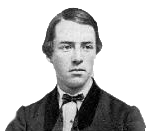

July 5. — I went out to see Rosengarten and his family. Their country house is at Germantown, where there are a great many country residences of the Philadelphians. R.’s house is quite a pretty stone cottage surrounded by a lawn, and with pretty shrubbery, etc. I spent two or three hours there, and then took a drive through Schoolhouse Lane, which they were fortifying, and then to the right on a road running along Wissahickon Creek. The scenery was beautiful and reminded me very much of the suburbs of Boston.

After spending a few hours here very pleasantly, I went back to Philadelphia, and on leaving the cars, heard the news about Meade,[1] etc. It literally poured, and in the midst of this rain I drove to Frank Haseltine’s, arriving there at two o’clock, just at dinner-time. I saw Mrs. Haseltine, looking as young and pretty as ever. Mr. Haseltine I saw last night. Parkman Blake was present, and we had a very pleasant dinner indeed. After dinner we adjourned to Frank’s room, and looked over his old college papers, and talked over old times. I really passed a most pleasant afternoon. From Frank’s we went to Mr. Field’s, and took tea there, meeting Mr. Newhall, Mr. Furness, and Clem Barclay. Mrs. Field was very kind, as was Mr. F. Philadelphia people are much more hospitable than Boston people.


[1] That is, of the final victory at Gettysburg.

Vicksburg, Sunday, July 5. We were momentarily expecting marching orders, while I wrote two letters, but at last we were told to prepare to march at 4 P. M., and at the appointed hour all was packed up, horses hitched up and ready. We entered Vicksburg in front of Carr’s original line, and after many halts among the broken ravines, amongst butternuts swarming on every side, we came into battery of five yards intervals in a little knoll, after dark.

July 5 — We were on the march nearly all last night, and most of the time we were mixed up in an ambulance train. Our march was very slow, and seemed more like a dead march than anything we have done in the marching business since the war. The surroundings were about as cheerful as a tomb.

The cannon we heard in the forepart of the night belonged to the Yanks, and they were shelling some of our wagon trains on top of the mountain. This morning just before day Colonel Thockmorton, commanding the Sixth Virginia Cavalry, came down the mountain with his regiment in a rather stirred-up condition, as if something wild and very dangerous had been seen in front. Captain Chew asked Colonel Thockmorton where he was going. He replied, “Down the mountain. A Yankee battery fired canister into the head of my command, and I am not going up there again until daylight.” Captain Chew then remarked, “Colonel, my battery was ordered up here to support your regiment, and if you go back, I will too.” Accordingly we went back down the mountain a short distance, fed our horses and waited for day. Immediately after daylight we renewed our march up the mountain, and when we arrived on top the Yankee destroyers had vanished from the scene of their last night’s destructive operations, and all was still and quiet on the mountain highlands. From all accounts and appearances the Yankee force that struck the wagon train on top of the mountain last night was considerable and overwhelming, as we had but few men to protect the train at that point in particular. It was not the train that we were guarding that was destroyed. The Yanks destroyed about ninety wagons, and they did their work well. Some of the wagons were chopped to pieces and others were burned. I saw the debris, such as skillets, frying pans, camp kettles, and all sorts of camp furniture scattered all along the road.

I made a little tour of inspection this morning where the Yankee raiders attacked the wagon train last night, merely to see whether I could find any evidence or trace of the resistance our few wagon train guards offered to the overwhelming force of Yankee cavalry that swept along the road. I found very few battle scars or marks on the trees and bushes, but behind a rock in a thick clump of trees lay one of our sharpshooters, still and silent in the bivouac of the dead, and no earthly reveille will ever wake him again. He was shot through the brain, and no doubt was killed by his adversary firing at the flash of the sharpshooter’s gun, which still lay by the dead body and pointed to the front.

After we were on the summit of the mountain about two hours we went down a mile on the Emmitsburg road on picket. We had about five hundred infantry of McLaw’s division with us for support. The infantrymen threw up breastworks along the front of our position. We remained on picket all day, and this evening we moved back a mile and camped at Monterey Springs on the summit of the Blue Ridge, sixteen miles east of Hagerstown. General Longstreet’s infantry came up the Emmitsburg road this evening.

July 5—Left this morning at 5 o’clock. Only marched ten miles to-day. The enemy being in our rear, and skirmishing very strong.

July 5.—This evening, General Kilpatrick captured a rebel train and a large number of prisoners, at a point near Monterey Gap, Va., and in the afternoon he defeated the rebel cavalry under J. E. B. Stuart, at Smithsburgh, Va.— (Doc. 32.)

—A small party of rebel cavalry entered Mechanicstown, Md., and after committing some depredations, retired, taking with them a quantity of flour and several horses.—The following order was officially promulgated at the headquarters of the army at Washington Commanding Officer Fort Monroe, Colonel Ludlow, Agent for the Exchange of Prisoners of War:

The President directs that you immediately place W. H. Lee and another officer selected by you, not below the rank of captain, prisoners of war, in close confinement and under strong guards; and that you notify Mr. R. Ould, confederate agent for exchange of prisoners of war, that if Captain H. W. Sawyer, First New-Jersey volunteer cavalry, and Captain John Flynn, Fifty-first Indiana volunteers, or any other officers or men in the service of the United States, not guilty of crimes punishable with death by the laws of war, shall be executed by the enemy, the afore-mentioned prisoners will be immediately hung in retaliation. It is also directed, that immediately on receiving official or other authentic information of the execution of Captain Sawyer and Captain Flynn, you will proceed to hang General Lee and the other rebel officer designated, as herein above directed, and that you notify Robert Ould, Esq., of said proceedings, and assure him that the Government of the United States will proceed to retaliate for every similar barbarous violation of the laws of civilized war.

H. W. Halleck, General-in-Chief.

—The steamer Harriet Pinckney, from Bermuda, arrived at Halifax, N. S., having on board C. L. Vallandigham.—At seven o’clock this morning, John Morgan, with four thousand cavalry, attacked the Twentieth Kentucky infantry, four hundred strong, under Colonel Hanson, at Lebanon, Kentucky. After a seven hours’ fight, Morgan’s forces commenced burning the town, setting fire to the railroad depot and six or seven houses. Colonel Hanson then surrendered, and Morgan’s forces left in the direction of Springfield.— (Docs. 47 and 108.)

—A battle took place near Bolton, Miss., between the National forces under General W. T. Sherman, and the rear-guard of the rebels under Joe Johnston, in which the latter were compelled to surrender their entire force. The Union loss was very slight, while the number of rebels captured amounted to over two thousand.—General James G. Blunt, having under his command portions of the Second and Sixth Kansas, Third Wisconsin, and Fourteenth Kansas regiments, left Fort Scott for the seat of war in the far West.

July 5th. At ten A. M., ship and crew inspected by the Commodore. Performed Divine service on the quarter-deck. Occasional firing at Port Hudson all this day.

Sunday, 5th.—Went over to river; saw about one hundred boats drawn up in front of town; among them several gunboats. Talked with a Federal soldier, Rufus Wells, who once lived at Ringgold.

Sunday, 5th—Came up to the foot of the mountains and camped.

Sunday, July 5. Like most other Sabbaths in the army, so was this; all day busy cleaning up the camp ground, tearing down the board shanties which former occupants had erected and using the material for flooring in our tents. We had our Fourth of July dinner today; bean soup, hoe cake and lemonade. Hill’s Point is not-a point in the river, as the stream here runs straight, but is a bluff some 25 feet higher than the river and about 20 rods wide. It is the terminus of the table-land beyond, and is formed by wide, deep ravines on either side which run back and soon ascend to the level of the table-land. Heretofore the enemy had a habit of running batteries down here and intercepting the boats coming up the river, forming a sort of blockade, causing our gunboats to waste right smart of ammunition, or necessitating the marching of troops across the country from Newbern to drive them out. During the siege last spring, they had a powerful battery here which caused Gen. Foster a heap of trouble. Since then he has occupied it himself. This is an intrenched camp, sporting three brass six-pounder field pieces. When or by whom these works were built is to me unknown, but they look like the work of the enemy. They contain a great number of angles; commencing on the edge of the bluff next the river, they run several rods along the edge of the ravines, then cross in front of the camp, and from any part of the line can be got direct, cross and enfilading fires. The three guns are in battery on the flanks and center. Major Atwood is in command, and in his absence, Capt. Foss of company F. Such is a description of our present, abiding place.