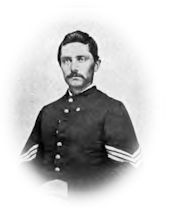
Wednesday, 5th—The heat continues as yesterday. The Eleventh Iowa signed their payrolls today, and the Fifteenth Iowa received their pay. I was on fatigue duty all day. We had dress parade this evening for the first time since May 19th. The boys came out in fine style. Troops are leaving every day to reinforce different commands of the army of the West.
August 2013
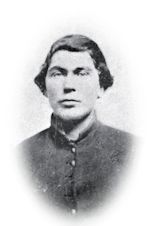
Vicksburg, Wednesday, Aug. 5. Felt much better to-day, with good appetite, had I anything fit to eat. Lieutenants Hood and Simpson have gone home on a furlough. Dr. Miller returned, giving us a speech in the evening.
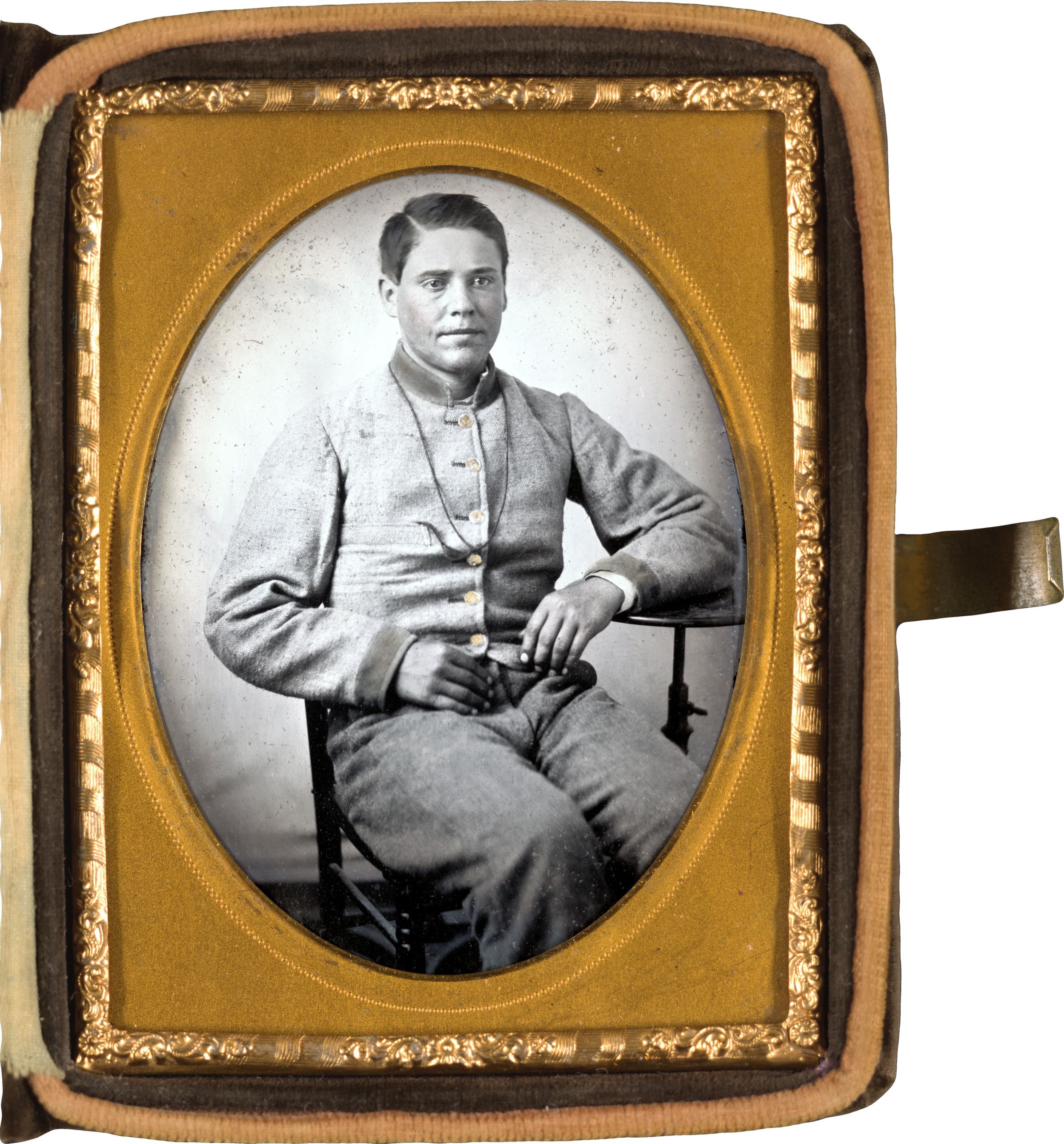 Unidentified soldier in Confederate uniform with lanyard around his neck.
__________
Quarter-plate ambrotype, hand-colored ; 12.4 x 10.0 cm (case)
Deposit by Tom Liljenquist; 2012
Liljenquist Family Collection of Civil War Photographs; Ambrotype/Tintype photograph filing series; Library of Congress Prints and Photographs Division.
Record page for image is here.
__________
 Note – This image has been digitally adjusted for one or more of the following:
- fade correction,
- color, contrast, and/or saturation enhancement
- selected spot and/or scratch removal
- cropped for composition and/or to accentuate subject matter
- straighten image
Civil War Portrait 048
by John Beauchamp Jones
AUGUST 5TH —A letter from Hon. W. Porcher Miles to the Secretary of War, received the 15th July, urging the government to send some long-range Brooke guns for the salvation of Charleston, and saying that the President had once promised him that they should be sent thither, being sent by the Secretary to the President, was, to-day, August 5th, returned by the President, with a paper from the Secretary of the Navy, showing that, at the time Mr. Miles says he was promised the Brooke guns, there were really none on hand. Thus Mr. Miles has been caught by the President, after the lapse of twenty days! It is not denied, even by the Secretary of the Navy, that long-range guns were on hand at the time—but there were no Brooke guns, simply. Thus, while Charleston’s fate hangs trembling in the balance, and the guns are idle here, twenty days are fruitlessly spent. Mr. Miles appears to be a friend of Beauregard. Every letter that general sends to the department is sure to put twenty clerks at work in the effort to pick flaws in his accuracy of statement.
A report of the ordnance officers of Bragg’s army shows that in the late retreat (without a battle) from Shelbyville to Chattanooga, the army lost some 6000 arms and between 200,000 and 300,000 cartridges!
Our naval commanders are writing that they cannot get seamen —and at Mobile half are on the sick list.
Lee writes that his men are in good fighting condition—if he only had enough of them. Of the three corps, one is near Fredericksburg (this side the river), one at Orange C. H., and one at Gordonsville. I doubt if there will be another battle for a month.
Meantime the Treasury notes continue to depreciate, and all the necessaries of life advance in price—but they do not rise in proportion.
The Examiner had a famous attack on the President to-day (from the pen, I think, of a military man, on Gen. Scott’s staff, when Mr. Davis was Secretary of War), for alleged stubbornness and disregard of the popular voice ; for appointing Pemberton, Holmes, Mallory, etc., with a side fling at Memminger.
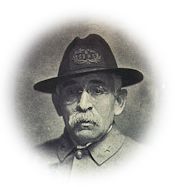
August 4—Left our camp, marched three miles, one mile on the south side of town.
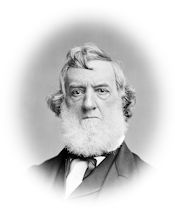
August 4, Tuesday. Very warm. Little done at Cabinet. Seward undertook to talk wise in relation to Commander Collins and the Mont Blanc, but really betrayed inexcusable ignorance of the subject of prize and prize courts, and admiralty law, the responsibilities of an officer, etc.
August 4.—The draft in Philadelphia, Pa., and Oswego, N. Y., was completed this day.—The launch of the National steamer Wabash, containing a crew of twenty-two men, under the command of Acting Master E. L. Haines, of the gunboat Powhatan, and carrying a twelve, pound howitzer, was captured by the rebel blockade-runner Juno, near Cummings Point, in Charleston Harbor.—A force of rebel cavalry attacked General Buford’s pickets, near Rappahannock Station, but were repulsed and driven back beyond Brandy Station, with slight loss. The National loss was one killed and two wounded.—The steamer Ruth, with two million five hundred thousand dollars in funds, belonging to the United States, was burned on the Mississippi River.
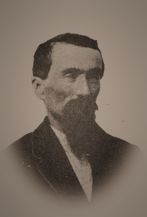
August 4 — At sunrise this morning we were ordered to the front. We started immediately after we received the order. We passed through Culpeper Court House and moved out on the Brandy Station road. After we had proceeded about four miles on that road we were ordered back to Culpeper Court House, as the Yankees were advancing on the Rickseyville road from the direction of Hazel River. We went back nearly to town and halted on a commanding hill and awaited orders.
Late this evening General Jenkins attacked the Yankee cavalry at Brandy Station and drove them back a mile. At dusk we were ordered forward again toward Brandy Station. We moved in that direction through a hard rain, accompanied with thunder and lightning; at some places on the road the water was two feet deep. It was ten o’clock to-night when we halted to camp, one mile west of Brandy Station. Camping to-night is a cheerless affair, as thunder-shower after shower passed over us all afternoon and evening, and everything we have, and everything around us, is wet from the ground up to the tree tops.
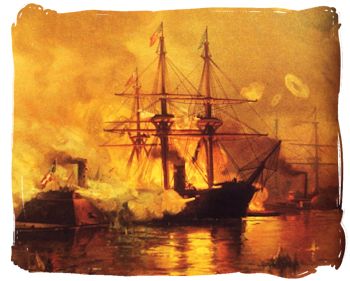
August 4th. At twelve midnight stood off to west-southwest in chase of a sail; at twelve fifteen A. M. discovered her to be a brig, standing to northward and eastward, closehauled; stood on our course again; braced yards up by port braces, and then again by starboard braces; at three fifteen set mizzen-topmast stay-sail, and at three thirty fore-topmast stay-sail, jib, and main trysail; also set the spanker; at five o’clock hoisted our colors to an American barque standing to northward and westward.
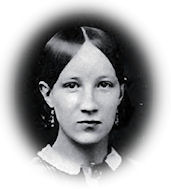
August, 1863.—The U. S. Sanitary Commission has been organised. Canandaigua sent Dr W. Fitch Cheney to Gettysburg with supplies for the sick and wounded and he took seven assistants with him. Home bounty was brought to the tents and put into the hands of the wounded soldiers. A blessed work.


