18th. Moved out between 2 and 3 A. M. Got on the wrong road and lost some time. Marched to within 5 miles of Greenville and got breakfast and dinner at 11:30 A. M. Bought a chicken and turkey. Good dinner. Drake ate with me, about sick, looks miserable. Moved on to Greenville and saw some of the 103rd Ohio. Very pretty town. Prettiest have seen in Tenn. Home of Andy Johnson. Woman said, “Noble and brave Union boys, God grant you may all return home safely, our country at peace.” Camped with Brigade, 5 miles on. 18 miles to Jonesboro. Sent out squad for provisions.
September 2013
Helena, Friday, Sept. 18. A very cold chilly night. We suffered severely as we had no shelter save what we put up with ponchos. Had mounted drill at 8 A. M. but as I felt quite unwell I did not go out. I have a heavy fever. Went out on detail in the P. M. after wood, as there is none to be had save what we haul about a mile. Infantry stole all of ours last night to keep warm. Drew thirteen wedge tents after dark, which we put up. I was fortunate to get in one of four.
Friday, 18th—It is reported in our camps that General Rosecrans has taken Chattanooga, Tennessee, and that General Burnside took two thousand prisoners and twelve pieces of artillery without firing a gun. We hope that the report is true, for Chattanooga will afford our army there a strongly-fortified place.
September 18th. The corps remained in position, watching the enemy, who are in position on the southern side of the Rapidan and are strongly fortified; they are in full view and evidently confident of holding their own. It is more picturesque here than any part of the country we have seen since the South Mountain range. The fields in the valley below us, at the base of the mountains, are full of standing corn, which affords good food for the horses, and an occasional dish for ourselves. As it appeared we were to remain a few days, we selected a house as headquarters, near the base of Garnett’s mountain, and put up our tents around it; we never sleep in houses when our tents come up, but frequently eat in them. They serve as a landmark to make the headquarters conspicuous, and in rainy days are comfortable to lounge in. During the night it rained hard, and to-day the ground is a quagmire. I am much troubled with eczema, brought on by exposure, and these wet, cold days aggravate it seriously. I shall have to go to the rear unless the doctors are more successful than they have been. The natives call this section the Orange range, Clark’s Peak being the highest point. It is occupied now by our signal corps, is very conspicuous and commands an extended view of the country.
About ten o’clock in the evening the general requested me to go to the picket line, and see if Colonel Miles, the commander First brigade, on duty there, had any news of the enemy. This meant a most disagreeable ride of over a mile, through swamps and woods, and required some nice engineering in the dark, to steer a course to avoid running into the enemy. When I left the general’s tent, Stiles called me into his quarters and volunteered to go along, and so buckling on a cavalry sabre, he ordered his horse, and we rode off together into the pitch darkness. After a dreary tramp through a dismal, swampy wood, and much maneuvering to keep within our own picket lines, we stumbled on Miles and his staff, sitting around a little sickly fire, investigating the contents of several large jugs, found in one of the deserted houses on the picket line. They had just concluded it was wine of some sort and referred the matter to the doctor for confirmation. Stiles immediately tasted it, and finding it the right thing, we all pitched in and gave it a thorough trial, in the meantime getting the history of events on the picket line. We spent over an hour with the colonel, chatting about the situation and then returned, leisurely jogging along through the mud and water quite contentedly. The doctor’s canteen was in frequent request, and so refreshed our spirits that we sang a song and continued all the way home very merrily.
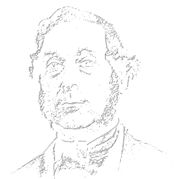
by John Beauchamp Jones
SEPTEMBER 18TH.—Nothing new from the Rappahannock, but a battle is looked for soon. Rosecrans, who had advanced into Georgia, has fallen back on Chattanooga, which he is fortifying. If he be not driven from thence, we shall lose our mines, and the best country for commissary supplies. But Bragg had from 60,000 to 70,000 men on the 5th inst., when he had not fallen back far from Chattanooga; since then he has received more reinforcements from Mississippi, and Longstreet’s corps, arrived by this time, will swell his army to 90,000 men, perhaps. Johnston will probably take command, for Bragg is becoming unpopular. But Bragg will fight!
The equinoctial storm has commenced, and the monitors are not in view of Charleston, having sought quiet waters.
The Enquirer has again assailed Mr. Benjamin, particularly on account of the retention of Mr. Spence, financial agent in England (appointed by Mr. Memminger), an anti-slavery author, whose books advocate Southern independence. To-day a letter was sent to the Secretary of War, from Mr. Benjamin, stating the fact that the President had changed the whole financial programme for Europe. Frazer, Trenholm, & Co., Liverpool, are to be the custodians of the treasure in England, and Mr. McRae, in France, etc., and they would keep all the accounts of disbursements by the agents of departments, thus superseding Mr. Spence. I think this arrangement will somewhat affect the operations of Major Huse (who is a little censured in the letter, purporting to be dictated by the President, but really written by the President) and Col. Gorgas.
If Wilmington continues in our possession, the transactions in Europe will be large, and the government will derive more of its supplies from thence.
September 18.—General Schofield, in command in Missouri, issued a General Order, stating that martial law would be enforced throughout his department against all persons who should in any manner encourage military insubordination, or endeavor to create disaffection among the troops and against all persons who should publish or utter publicly words calculated to excite insurrection, lawless acts among the people, or who should publish falsehoods or misrepresentations of facts, calculated to embarrass or weaken the military authorities, or in any way interfere with the men in the discharge of their duties. Any person guilty of either of the offences above mentioned, should be punished by fine and imprisonment at the discretion of a military commission, and any newspaper which might contain said publications in violation of this order would be suppressed.
—A party of soldiers, belonging to the Eighty-third Illinois regiment, were attacked, about five miles above Fort Donelson, Tenn., by a party of rebel guerrillas, led by the notorious George Hinson. The guerrillas were secreted in bushes, from which they fired a volley, killing two of the soldiers, named John Pickerel and A. P. Wolfe, of company E. The guerrillas escaped after the firing. The soldiers sent a man to the fort for an ambulance, removed a short distance from the road, and hid in the bushes. The guerrillas soon returned, when the soldiers fired on them five rounds. Hinson was shot in the head. The rest fled.
—Major-General Dix issued general orders thanking the troops quartered in the city of New York, during the difficulties consequent upon the draft, for their admirable discipline and soldierly deportment.—Colonel Trusten Polk, formerly United States Senator from Missouri, with his wife and daughter, was captured at Bolivar Landing, Arkansas, and delivered to General Buford, commanding at Helena. Colonel Polk was General Holmes’s Judge-Advocate General, and was with the rebels at New-Madrid.
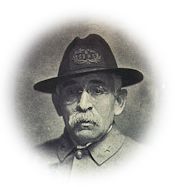
September 18—Raining hard all day, and no tents. Left camp at 2 in the afternoon, marched six miles, halted at the river, and our regiment went on picket. It is still raining very hard, and we are as wet as drowned cats, and cold, too, for we cannot make a fire in front of the enemy. If we did they would have a good mark to shoot at.
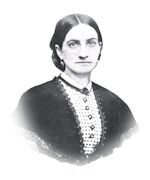
September 17.—We have nothing arranged in the hospital, but it is filled with sick; many of them are on the floors. Mrs. W. and myself have two small rooms. One is used as a dining-room, sitting-room, and for making toddies, eggnogs, etc. A number of the officers we had at the Springs have followed us here, and they eat at our table for the present. They are to have a hospital set apart for them, as it is thought a better plan than having distinctions made where the privates are in the matter of rooms, and eating at separate tables. The doctors all seem to dislike having the care of them.
Dr. McAllister has been persuaded to accept the honor by the promise of some valuable piece of furniture from the other hospitals. Dr. M. is a strict disciplinarian, and I am told the officers do not like him on that account. The doctors object to officers because, they say, they are apt to dictate, and expect much more attention than the privates. I have heard surgeons say they would rather attend five privates than one officer. For my own part, I have never known any difference; have treated them the same as privates, and received kind treatment in return.
Mrs. Johnston, one of the ladies of the place, called on us. She told me of a lady from whom she thought I could procure some milk. Her little boy went with me to show me where the lady lived; he is a pretty little fellow, and very talkative. He related quite a number of stories in his childish way; among other things, he told me a story about some, to use his own words, “mean old refugees.” I asked him if he did not like refugees. He looked at me in astonishment, and said, “No; who would like refugees?” I tried to get him to tell me why they were not to be liked; this he could not do, but seemed to think I ought to know what every body else did.
September 17, Thursday. Unpleasant rumors of a disagreement between Dahlgren and Gillmore and that the latter had requested to be relieved of his present command. This, I think, must be a mischievous rumor, — perhaps a speculative one.
A new panic is rising respecting the ironclads in England, and some of our sensation journals fan the excitement. It does not surprise me that the New York Times, Raymond’s paper, controlled by Thurlow Weed, and all papers influenced by Seward should be alarmed. The latter knows those vessels are to be detained, yet will not come out and state the fact, but is not unwilling to have apprehension excited. It will glorify him if it is said they are detained through protest from our minister. If he does not prompt the Times, he could check its loud apprehensions. I am under restrictions which prevent me from making known facts that would dissipate this alarm. The Evening Post, I am sorry to see, falls in with the Times and its managers, and unwittingly assists those whom it does not admire. Both these journals are importunate, and insist that the Roanoke shall be returned to New York. But the Navy Department is not under newspaper control, though they have the cooperation of distinguished men. To station a steam frigate in New York would involve the necessity of stationing one also in the Delaware, and another at Boston. There would be no limit to the demand for naval defenses, yet it is claimed the coast defenses belong exclusively to the military.
Abby Howland Woolsey to H. Gilman.
Brattleboro, September 17.
I hope soon to hear of the girls’ arrival at Point Lookout. Georgy wrote us of her night at your house and how good you all were to her and to her soldiers too.
Mother is much interested in the hospital here and has been up several times; is interested in the worst way, that is, without the opportunity of doing anything. The wards are thrown open every afternoon from two to five, but visitors are few, and even the kind words she can take, and those of other ladies from this house, seem valued. The men said, “You are so different, ladies, from some that come here, who only walk through and stare at us as if we were wild beasts.” One man was almost convulsed at seeing Mother, and, with tears, would hardly let her hand go. “I knew you, ma’am, the minute you came in. You were at Gettysburg, and were the first one that dressed my arm.” And there the poor arm still lay, useless and swollen, and constant streams of cold water necessary to keep down inflammation.
The same wretched want marks this hospital as all others: the little attention paid to the food of the sick men. Typhoid patients are starving on pork slop, or eat smuggled sutler’s pies of the toughest sort, from a craving for food of some kind. Some of those alphabets for “spelling games” which Mother took up were a great amusement to them, and to-day in the book-store Mother saw one of the soldiers trying to buy some more. None were for sale, but Mother promised him some, and at the printing office ordered, for a very little trifle, a hundred alphabets, which she will give them. . . . We hear that Joe was drafted in Fishkill, and as colored! the “colonel ” before his name which the enrolling officer inserted, being so understood. He feels himself a thorough black Republican now. The villagers met him at the depot one day as he came up from New York and informed him he was drawn, and he had to make them a speech, telling them what an honor he should consider it, if he were well enough, to go, but he should find a substitute (which he has done, a “veteran “), etc., etc. They called out now and then, “That’s so! that’s right, we knew you would take a proper view of it!”
When the substitute was ready to leave for the front, he came to say goodbye, “a little the worse for wear,” and assured Joe with a beaming smile, “Kurnel, you’re a noble man, and I’ll exhonorate your name!”


