
19th. Early start. Water rough. Gave up canoe. Stopped for dinner. Put up 12 miles from Hiawasse. Mr. Georges, poor man, but rebel. Rebel girl. Member of church, chews, smokes and dips and drinks poor whiskey.
January 2014
January 19.—This evening a party scouting for Colonel Williams, in command of the military post at Rossville, Ark., returned to camp, having captured in the Magazine Mountains, some fifteen miles east of the post, the county records of Vernon and Cedar Counties, Mo. The books and papers so captured and retained were worth one million dollars to those counties.— Colonel Clayton attacked and routed Shelby’s rebel force, twenty miles below Pine Bluff, Ark., on the Monticello Railroad. The fight lasted half an hour, when the enemy fled, pursued by Colonel Clayton, with his command, for two hours and a half. The rebels were driven seven miles. Shelby was badly beaten, and the rout was complete.
Shelby’s force was estimated at eight hundred. Colonel Clayton marched sixty miles in twenty-four hours, and made fight and gained a victory. —An unsuccessful attempt was made to burn the residence of Jefferson Davis, at Richmond, Va.— A sale of confiscated estates took place at Beaufort, S. C.
Huntsville, Tuesday, Jan. 19. Washing day, which duly occupied the forenoon. Afternoon spent in writing letters, etc. Evening long and spent in listening to old Welsh tunes, hymns and songs sung by Griff and Evie.
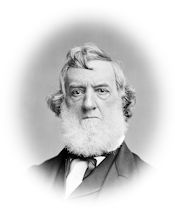
January 19, Tuesday. At the Cabinet to-day the President read letters from certain Louisiana planters and from General Banks and others, urging the admission of cotton within our lines. He also read the rough draft of a letter prepared by himself, designating New Orleans and Baton Rouge as depots for cotton to be brought thither, sold for “greenbacks,” etc., etc. It had been submitted to Chase and Stanton previously, who both indorsed and perhaps advised, if they did not first suggest, it. Seward and Blair thought it might operate well. Stanton said General Grant was opposed to action in his command, but as Banks favored it, he thought it might be well to let the matter go forward as the President proposed. I suggested that the effect would be good to open the whole country west of the Mississippi above New Orleans. But the President said it might disturb General Grant.
The present demonstration of factious grumblers and interested knaves against the Navy Department is alleged want of speed in our boats. Mr. Fox, Isherwood, and others are not able to submit to this abuse with as much composure as myself, and to stop their clamor Fox desires to challenge the Chamber of Commerce to a trial of speed. I told him that nothing would be made by it. If we were to have a trial and they were beaten, they would at once abuse the Navy Department for wasting time and money in boat-racing. Governor Dennison was present and thought the effect of a race would on the whole be well. The Naval Committee are detaining the Eutaw here, and that boat might be used. Somewhat reluctantly and doubtingly I assented to his writing a letter to G. W. Blunt, who I suspect first proposed it.
Have a strange letter from C. B. Sedgwick, who is under pay, revising the Navy laws, but spends much of his time in advocating suspicious claims from scheming contractors. He advises, with some tact and ability, an abandonment of the trials now in progress in Philadelphia for malfeasance.

by John Beauchamp Jones
JANUARY 19TH.—A furious storm of wind and rain occurred last night, and it is rapidly turning cold to-day.
The prisoners here have had no meat during the last four days, and fears are felt that they will break out of confinement.
Yesterday Senator Orr waited upon the President, to induce him to remove Col. Northrop, the obnoxious Commissary-General. The President, it is said, told him that Col. N. was one of the greatest geniuses in the South, and that, if he had the physical capacity he would put him at the head of an army.
A letter from Mrs. Polk, widow of President Polk, dated at Nashville, expresses regret that a portion of her cotton in Mississippi was burnt by the military authorities (according to law), and demanding remuneration. She also asks permission to have the remainder sent to Memphis, now held by the enemy. The Secretary will not refuse.
I bought a pretty good pair of second-hand shoes at auction today for $17.50; but they were too large. I will have them sold again, without fear of loss.
A majority of the Judiciary Committee, to whom the subject was referred, have reported a bill in the Senate vacating the offices of all the members of the cabinet at the expiration of every two years, or of every Congress. This is a blow at Mr. Benjamin, Mr. Memminger, etc., and, as the President conceives, at himself. It will not pass, probably; but it looks like war between the Senate and the Executive. Some of the Secretaries may resign on the 18th of February, when this Congress expires. Nous verrons.
Jan. 18. The order has arrived and we are under heavy inarching orders for Yorktown, which is 30 miles distant and where, it is said, we shall probably all die of malarial fever or other contagious diseases. But there is one redeeming feature to the order; that is, if we will enlist, or three-fourths of those reported for duty will enlist, then they can all go home together as a regiment, while those not enlisting will be sent into banishment, the non-coms reduced to the ranks and permanently assigned to other organizations during their terms of enlistment.
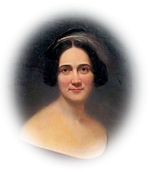
January 18th.—Invited to Dr. Haxall’s last night to meet the Lawtons. Mr. Benjamin[1] dropped in. He is a friend of the house. Mrs. Haxall is a Richmond leader of society, a ci-devant beauty and belle, a charming person still, and her hospitality is of the genuine Virginia type. Everything Mr. Benjamin said we listened to, bore in mind, and gave heed to it diligently. He is a Delphic oracle, of the innermost shrine, and is supposed to enjoy the honor of Mr. Davis’s unreserved confidence.
Lamar was asked to dinner here yesterday; so he came to-day. We had our wild turkey cooked for him yesterday, and I dressed myself within an inch of my life with the best of my four-year-old finery. Two of us, my husband and I, did not damage the wild turkey seriously. So Lamar enjoyed the réchauffé, and commended the art with which Molly had hid the slight loss we had inflicted upon its mighty breast. She had piled fried oysters over the turkey so skilfully, that unless we had told about it, no one would ever have known that the huge bird was making his second appearance on the board.
Lamar was more absent-minded and distrait than ever. My husband behaved like a trump—a well-bred man, with all his wits about him; so things went off smoothly enough. Lamar had just read Romola. Across the water he said it was the rage. I am sure it is not as good as Adam Bede or Silas Marner. It is not worthy of the woman who was to “rival all but Shakespeare’s name below.” “What is the matter with Romola?” he asked. “Tito is so mean, and he is mean in such a very mean way, and the end is so repulsive. Petting the husband’s illegitimate children and left-handed wives may be magnanimity, but human nature revolts at it.” “Woman’s nature, you mean!” “Yes, and now another test. Two weeks ago I read this thing with intense interest, and already her Savonarola has faded from my mind. I have forgotten her way of showing Savonarola as completely as I always do forget Bulwer’s Rienzi.”
“Oh, I understand you now! It is like Milton’s devil—he has obliterated all other devils. You can’t fix your mind upon any other. The devil always must be of Miltonic proportions or you do not believe in him; Goethe’s Mephistopheles disputes the crown of the causeway with Lucifer. But soon you begin to feel that Mephistopheles to be a lesser devil, an emissary of the devil only. Is there any Cardinal Wolsey but Shakespeare’s? any Mirabeau but Carlyle’s Mirabeau? But the list is too long of those who have been stamped into your brain by genius. The saintly preacher, the woman who stands by Hetty and saves her soul; those heavenly minded sermons preached by the author of Adam Bede, bear them well in mind while I tell you how this writer, who so well imagines and depicts female purity and piety, was a governess, or something of that sort, and perhaps wrote for a living; at any rate, she had an elective affinity, which was responded to, by George Lewes, and so she lives with Lewes. I do not know that she caused the separation between Lewes and his legal wife. They are living in a villa on some Swiss lake, and Mrs. Lewes, of the hour, is a charitable, estimable, agreeable, sympathetic woman of genius.”
Lamar seemed without prejudices on the subject; at least, he expressed neither surprise nor disapprobation. He said something of “genius being above law,” but I was not very clear as to what he said on that point. As for me I said nothing for fear of saying too much. “You know that Lewes is a writer,” said he. “Some people say the man she lives with is a noble man.” “They say she is kind and good if—a fallen woman.” Here the conversation ended.
[1] Judah P. Benjamin, was born, of Jewish parentage, at St. Croix in the West Indies, and was elected in 1852 to represent Louisiana in the United States Senate, where he served until 1861. In the Confederate administration he served successively from 1861 to 1865 as Attorney-General, Secretary of War, and Secretary of State. At the close of the war he went to England where he achieved remarkable success at the bar.

Monday, 18th—It cleared off and turned quite cool. Nothing—nothing new; still lying in camp. The men are becoming restless and anxious to move on to another place, and to accomplish something.
18th. Rainy. Passed White Creek Shoals in the morning as Regt. came up. Let several boys in flatboat. Many boys on the river. Gay times. Stopped at Mr. Brown’s—rebel. Good accommodations. Snow.
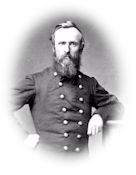
Monday, [January] 18. P. M. — Raining the first time this month. New Year’s Eve change came about midnight. January 1 cold and windy, “very, very indeed”; snow about [the] 3rd. Two weeks of unusual cold weather. Kanawha frozen; navigation suspended about a week; a week’s good sleighing. Now a thaw for a few days; snow going off.
Captain Gilmore out after Rebel Colonel Ferguson, Sixteenth Virginia Cavalry; fourth day out.


