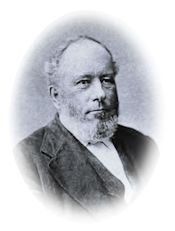
January 1, 1864. We have now entered on the last year of our soldier service and are looking forward to the end, and may it not only end our service as soldiers, but the war as well, when both sides can meet between the lines, shake hands, smoke the pipe of peace and together sign a long and lasting truce, and all say homeward bound. But I am sermonising, and however much that happy end may be desired, the indications now are that it will not be realized. For a month past our regiment has been a good deal excited. About thirty days ago orders were received from the war department at Washington, soliciting re-enlistments from among the soldiers of the old regiments of 1861. Liberal money inducements were offered, and in addition the present term of service would end on re-enlistment; the $100 bounty due at the expiration of the three years term could be drawn, together with a thirty day’s furlough. Lieut. Woodworth of company H was appointed recruiting officer, but up to the present time there have been but few enlistments. We all understood the terms and all thus far have been left free to act according to their own judgment. The officers have not seemed to take much interest in it and have not used their influence to get the boys to enlist but have given advice when sought for. If a man re-enlists he has some motive for it; if he does not he has his reasons, and both may be equally patriotic. I shall not re-enlist, and my reasons are, first, I have no desire to monopolize all the patriotism there is, but am willing to give others a chance. My second reason is that after I have served three years my duty to the country has been performed and my next duty is at home with my family.
January 2014
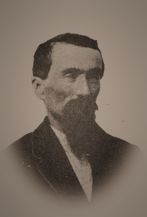
January 1, 1864 — We finished our horse stable today. Snowed all afternoon, and is still snowing at nine o’clock this evening, as I am writing this by the dancing light of a pine knot in a little hut in the snowy woods of Albermarle.
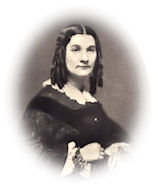
Mrs. Lyon’s Diary.
Jan. 1, 1864.—The weather is very cold. It is ten degrees below zero, the coldest weather ever known in Nashville, so the citizens say. Captain and Mrs. Hewitt and William and I received calls together. We had calls from General Ward[1] and his staff officers, and all the officers of the 13th. In the evening we had all the ladies in our regiment to spend the evening and to help dispose of the eatables that were left over. The band serenaded us.
[1] Major-General Waril was a distinguished Kentuckian, for many years a member of Congress from that State before the war. He was a grand old man and I loved him. One of his staff was Colonel Benjamin Harrison, afterward President. Colonel Harrison was Colonel of an Indiana regiment in our brigade.—W. P. L.
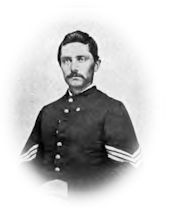
Friday, 1st—This is a cold New Year’s Day, but things are quite lively in camp, the boys being in fine spirits. I got a pass to go down town this afternoon and found the stores all closed for the day. This is the beginning of the year 1864, and this cruel war still continues to rage in the land. I pray to God that it may come to a close before this year does; but, if not, may all things be done to the glory and praise of God, for He is a God of battles. May this war come to a close and our nation be at peace once more, and may slavery be wiped out so that there shall be no more slaves in America.
Washington January 1st 1864
This has been a pleasant day and people have I think enjoyed themselves much better in making their “calls” than they did last year and especialy the year before. Every one seems to feel in good spirits and very hopeful in regard to the future. Mr Lincoln looks brighter and less “woebegone” than usual. Mr Seward is a[s] gracious and confident of the early termination of the War as ever. He receives his guests with more formality than any one else. His gentleman Usher anouncing the name of the visitor in a loud voice at the door of the receiving room. At the Presidents, the Gentleman who introduces stands directly opposite the President with only room for a couple to pass betwen them. Mrs Lincolns Gentleman stands beside her and does the introducing. I made fifteen or twenty “calls” and got to my lodgings early in the evening. The whole City seemed to be alive and the ladies all “at Home.”
Camp White, January 1, 1864.
Dear Uncle: — . . . This is New Year’s day. Bright but very cold and windy. My regiment has re-enlisted and a majority of the men and part of the officers have gone home. I expect to go to Ohio towards the last of this month.
Sincerely,
R. B. Hayes.
S. Birchard.
1st. Happy New Year! Gay and festive. Frozen and just starving. Re-enlistment question presented to the boys. Three from the 2nd Ohio. Took dinner at hdqrs., at white house. Cabbage and beef and mutton. Had a chat with the people. All have suffered badly. Even underclothes taken during the late fights by rebs, also wheat and corn. First-rate visit with Col. Garrard and Allen. Review of campaign. Hard bread, flour and pork for the boys. Makes me happy. Don’t ask more satisfaction than to get plenty of rations. Have been half crazy with anxiety for days.
First command in line east of Mossy Creek. Rained last night. Turned cold about 12 P. M. and blew a hurricane. Awful tedious day. Boys must suffer very much. Col. and staff up and around fires early.
[Diary] January 1, 1864, Friday.
Nelly and Mr. Fairfield and Mr. Tomlinson went to Beaufort to Camp Shaw to the grand celebration of Emancipation Day. It was piercing cold. A sword was presented to General Saxton by the colored people of these islands, through Mr. Lynch, who made an eloquent speech. Colonel Higginson’s regiment presented one to him, and he replied. It was a complete surprise to General Saxton and he is delighted.
Diary And Memoranda, 1864
Fort Whipple, Jan. 7, 1864
This little book was obtained by the earnest wish of my Mother, who desired I should keep a record of events that transpire, during the new year we have just entered.
Lev.
Jan. 1st. A new year has commenced and before its close I hope peace may be restored to our country. And all be restored to their peaceful homes.
January 1, 1864.—General Hood’s an awful flatterer— I mean an awkward flatterer. I told him to praise my husband to some one else, not to me. He ought to praise me to somebody who would tell my husband, and then praise my husband to another person who would tell me. Man and wife are too much one person—to wave a compliment straight in the face of one about the other is not graceful.
One more year of Stonewall would have saved us. Chickamauga is the only battle we have gained since Stonewall died, and no results follow as usual. Stonewall was not so much as killed by a Yankee: he was shot by his own men; that is hard. General Lee can do no more than keep back Meade. "One of Meade’s armies, you mean," said I, ” for they have only to double on him when Lee whips one of them."
General Edward Johnston says he got Grant a place— esprit de corps, you know. He could not bear to see an old army man driving a wagon; that was when he found him out West, put out of the army for habitual drunkenness. He is their right man, a bull-headed Suwarrow. He don’t care a snap if men fall like the leaves fall; he fights to win, that chap does. He is not distracted by a thousand side issues; he does not see them. He is narrow and sure—sees only in a straight line. Like Louis Napoleon, from a battle in the gutter, he goes straight up. Yes, as with Lincoln, they have ceased to carp at him as a rough clown, no gentleman, etc. You never hear now of Lincoln’s nasty fun; only of his wisdom. Doesn’t take much soap and water to wash the hands that the rod of empire sway. They talked of Lincoln’s drunkenness, too. Now, since Vicksburg they have not a word to say against Grant’s habits. He has the disagreeable habit of not retreating before irresistible veterans. General Lee and Albert Sidney Johnston show blood and breeding. They are of the Bayard and Philip Sidney order of soldiers. Listen: if General Lee had had Grant’s resources he would have bagged the last Yankee, or have had them all safe back in Massachusetts. "You mean if he had not the weight of the negro question upon him?" "No, I mean if he had Grant’s unlimited allowance of the powers of war—men, money, ammunition, arms."
Mrs. Ould says Mrs. Lincoln found the gardener of the White House so nice, she would make him a major-general. Lincoln remarked to the secretary: "Well, the little woman must have her way sometimes.”
A word of the last night of the old year. "Gloria Mundi ” sent me a cup of strong, good coffee, I drank two cups and so I did not sleep a wink. Like a fool I passed my whole life in review, and bitter memories maddened me quite. Then came a happy thought. I mapped out a story of the war. The plot came to hand, for it was true. Johnny is the hero, a light dragoon and heavy swell. I will call it F. F.’s, for it is the F. F.’s both of South Carolina and Virginia. It is to be a war story, and the filling out of the skeleton was the best way to put myself to sleep.


