Following the American Civil War Sesquicentennial with day by day writings of the time, currently 1863.

January 2014

January 27.—A party of rebel guerrillas made an attack on the Orange and Alexandria Railroad at Cameron, and after firing upon a train, fled. They were pursued by a squad of cavalry under the command of Lieutenant Jackson, and one of their number captured.—The National cavalry under General Sturgis achieved a victory over the enemy’s cavalry near Fair Gardens, about ten miles cast of Sevierville, Tenn. General McCook’s division drove the enemy back about two miles, after a stubborn fight, lasting from daylight to four P.M., at which time the division charged with the sabre and a yell, and routed the enemy from the field, capturing two steel rifled guns and over one hundred prisoners. The enemy’s loss was considerable, sixty-five of them being killed or wounded in the charge. Generals Garrard and Wolford’s divisions came up, after a forced march, in time to be pushed in pursuit, although their horses were jaded.—Gen. Rawlins’s Report.

—General Palmer, with General Davis’s division, moved toward Tunnel Hill, Georgia, on a reconnoissance. The Twenty-eighth Kentucky and the Fourth Michigan drove in the rebel advance pickets and captured a company of rebel cavalry. The rebels retreated from Tunnel Hill during the night. They lost thirty-two killed and wounded. The Union casualties were two wounded. The object of the reconnoissance was effected.

—The following report was sent by General Thomas, from his headquarters at Chattanooga, to the National war department: “Colonel Boone, with a force of four hundred and fifty men, Twenty-eighth Kentucky mounted infantry, and Fourth Michigan cavalry, left Rossville January twenty-first, moved through McLamore’s caves, crossed Lookout Mountain into Brownton Valley; thence across Taylor’s Ridge to eight miles beyond Deertown, toward Ashton, attacked camp of home guards, Colonel Culbertson, commanding, routed them, destroying camp, considerable number of arms, and other property, and retired to camp without any casualties in his force. Friday, twenty-second January, sent flag of truce under Colonel Burke, with Ohio infantry, with rebel surgeons and a proposition to exchange our wounded at Atlanta for rebel wounded here.

“A despatch from Colonel H. B. Miller, Seventy second Indiana, commanding division, Bluewater, twenty-sixth, via Pulaski, twenty-seventh, says Johnston’s brigade of Roddy’s command crossed Tennessee River at Bainbridge, three miles, and Newport ferry, six miles below Florence, intending to make a junction with a brigade of infantry who were expected to cross the river at Laub’s and Brown’s ferry, thence proceed to Athens and capture our forces; then we engaged them near Florence; routed them, killing fifteen, wounding quite a number, and taking them prisoners, among them three commissioned officers. Our loss, ten wounded.”

—Lieutenant A. L. Cady, of the Twenty-fourth New-York battery, proceeded with his command to Tyrrel County, North-Carolina, and captured five men who had been engaged in a number of robberies and murders; also, two rebel officers, and returned to headquarters with one thousand sheep.

—A party of rebel cavalry made a dash on the lines of Colonel Chapin’s brigade, on guard-duty five miles above Knoxville, Tenn., on the Scott’s Mill road. Their pickets being captured, the camps of the Thirteenth Kentucky and Twenty-third Michigan were completely surprised, and five men of the former and seven of the latter were taken prisoners, one being mortally wounded. Immediately on being advised of the attack on these two regiments, Colonel Chapin sent the One Hundred and Eleventh Ohio and One Hundred and Seventh Illinois to their relief, and the rebels were put to flight, leaving in their track a number of blankets and small-arms.

—Brigadier-General Carter, Provost-Marshal General at Knoxville, Tenn., sent the following letter to Rev. W. A. Harrison: “On account of your persistent disloyalty to the Government of the United States, it has been decided to send you and your family South, within the rebel lines.

You are hereby notified to be at the railroad depot in time for the morning train, on Saturday next, with all your family, prepared to leave permanently. As baggage, you will be permitted to take your wearing apparel and the necessary blankets. You can also take three or four days’ provisions with you.”—The steamer Freestone, while at Carson’s Landing, on the Mississippi, fifteen miles above the White River, was attacked by guerrillas, who were driven off without inflicting any serious damage on the boat.

—In the rebel Congress, Mr. Miles, from the Committee on Military Affairs, reported back the following joint resolutions of thanks to General Beauregard and the officers and men of his command, which were unanimously adopted:

Resolved, That the thanks of Congress are eminently due, and are hereby cordially tendered, to General G. T. Beauregard and the officers and men of his command, for their gallantry and successful defence of the city of Charleston, S. C.—a defence which, for the skill, heroism, and tenacity displayed by the defenders during an attack scarcely paralleled in warfare, whether we consider the persistent efforts of the enemy, or his boundless resources in the most improved and formidable artillery and the most powerful engines of war hitherto known, is justly entitled to be pronounced “glorious” by impartial history and an admiring country.

Resolved, That the President be requested to communicate the foregoing resolutions to General Beauregard and the officers and men of his command.
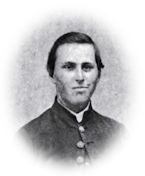
January 26th. In camp today we have a visitor, a minister from Woodstock, Connecticut, Rev. Mr. White. The day being fine, our regular routine was carried out. At dress parade, Mr. White delivered an address, a message from home. A pleasure to hear direct from old Connecticut.

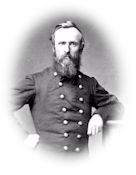
January 26, 1864. — Another large squad of veterans and the most of the remaining officers left for Ohio yesterday. Recruiting seems to be active in Ohio. I think we shall get our share.[1]

Plan of spring campaign from Kanawha Valley. — Ten or fifteen thousand men can move from the head of navigation on the Kanawha River (Loup Creek) via Fayette, Raleigh, Flat Top, and Princeton to the Virginia and Tennessee Railroad between New River and Wytheville, a distance of one hundred and thirty-nine miles, in a week or ten days; spend a week on the railroad destroying New River Bridge and the track for twenty-five miles; return to Loup Creek in one week more and be carried in steamers into the Ohio, and thence East or South for other operations. One week is time enough to convey such a force to Loup Creek from the Potomac or the West. The roads and weather will ordinarily allow such a column to move April 20. Supplies and transportation should be provided at Fayette during February and March. The utmost secrecy should be observed so that the first information the Rebels would have would be the approach of the force. Such a destruction of the railroad would effectually cut the communications of Longstreet and Jones in east Tennessee and compel him [the enemy] to abandon that country. The Rebels could not reconstruct the railroad during the next campaign. It would perhaps compel the evacuation of Richmond.


[1] A Columbus dispatch of February 14, in the Cincinnati Gazette, had this paragraph: — “It has been ascertained at the muster-in office, that the Twenty-third Ohio, Colonel R. B. Hayes, Department of West Virginia, was the first regiment from this State to enlist as veterans. Several regiments have claimed that honor.”

Tuesday, 26th—I went on picket today. The weather is quite warm. Vicksburg, on the east bank of the Mississippi, is built on very high ground. It is quite rough and rolling here. There are some nice buildings here—a very fine court house, six good church buildings and a number of very nice dwellings, besides some large warehouses and stores. During the siege the houses were all more or less damaged, there being scarcely a single building that was not in some way injured. There are very few of the old citizens living here at present, as the military rule of the Union army is not good for their peace of mind.

26th. Found Extell under seats dead, poor boy. Has suffered much, not been alive for months. Procured coffin. Started from Bowling Green before noon. Slow work. At Louisville at 10:30 P. M. Went to Barracks in city, coffee and bread, poor and nasty barracks.

Huntsville, Tuesday, Jan. 26. Another beautiful day full of sunlight and comfort, and I am in good trim to enjoy it. Drill call sounded as usual, but instead of drilling we policed about three acres of ground by order of Captain Dillon for two hours in the forenoon, and in the afternoon the brush, paddle and broom were plied with industry hardly ever equalled on such occasions. Teams sent to Flint River and returned at night with the remaining four guns, and parked in proper positions. Rumor of a rebel cavalry force advancing. Two regiments gone out, others under orders.

Diary And Memoranda, 1864

Jan. 26th. A beautiful evening, the moon is shining brightly and the Potomac is all aglow. The capitol of our nation looks magnificent in its rays, and to cap it all, the Goddess of Liberty smiles on the scene (poetic!)

January 26, Tuesday. Stanton tells some curious matters of Jeff Davis, derived from Davis’s servant, who escaped from Richmond. The servant was a slave, born on Davis’s plantation. Mrs. Davis struck him three times in the face, and took him by the hair to beat his head against the wall. At night the slave fled and after some difficulty got within our lines. He is, Stanton says, very intelligent for a slave and gives an interesting inside view of Rebel trials and suffering. It should be taken, perhaps, with some allowance.

The court of inquiry in relation to the publication of the letter of Commodore Wilkes has been brought to a close. Although not as explicit and positive as it might have been, there is, and could be, no other conclusion than his guilt. When brought before the court and advised of the testimony, which showed the letter was in the hands of the newspaper folks twenty-four hours before it reached the Department, he declined to make any statement. I do not see how a court martial can be avoided. He is insubordinate, evasive, and untruthful; reckless of others’ rights, ambitious, and intensely avaricious.

by John Beauchamp Jones

            JANUARY 26TH.—Gen. Lee recommends the formation of several more brigades of cavalry, mostly from regiments and companies in South Carolina, and to this he anticipates objections on the part of the generals and governors along the Southern seaboard; but he deems it necessary, as the enemy facing him has a vastly superior cavalry force.

            The prisoners on Belle Isle (8000) have had no meat for eleven days. The Secretary says the Commissary-General informs him that they fare as well as our armies, and so he refused the commissary (Capt. Warner) of the prisoners a permit to buy and bring to the city cattle he might be able to find. An outbreak of the prisoners is apprehended: and if they were to rise, it is feared some of the inhabitants of the city would join them, for they, too, have no meat—many of them—or bread either. They believe the famine is owing to the imbecility, or worse, of the government. A riot would be a dangerous occurrence, now: the city battalion would not fire on the people—and if they did, the army might break up, and avenge their slaughtered kindred. It is a perilous time.

            My wife paid $12, to-day, for a half bushel of meal; meantime I got an order for two bushels, from Capt. Warner, at $10 per bushel.

            The President receives visitors to-night; and, for the first time, I think I will go.

            Mr. Foote, yesterday, offered a resolution that the Commissary-General ought to be removed; which was defeated by a decided vote, twenty in the affirmative. Twenty he relied on failed him. Letters from all quarters denounce the Commissary-General and his agents.

January 26.—General Palmer sent an expedition to capture a force of rebel cavalry in Jones and Onslow counties, North-Carolina. They succeeded in routing the enemy, and captured twenty-three men with their horses and equipments. They also destroyed from one hundred and fifty thousand to two hundred thousand pounds of pork, seventy bushels of salt, ten thousand barrels of tobacco, thirty-two barrels of beef, and captured a number of mules, horses, and other material.—Gen. Butler’s Despatch.

—Fourteen men belonging to the Eightieth Indiana regiment, were captured, and two wounded, by a squad of rebel cavalry, within seven miles of Knoxville, Tenn., on the Tazewell road. The men were on a foraging expedition, and were picked up before they had any chance of offering much resistance.