Following the American Civil War Sesquicentennial with day by day writings of the time, currently 1863.

March 2014

March 16.—A party of guerrillas belonging to Roddy’s command made an attack upon the Chattanooga Railroad, at a point between Tullahoma and Estelle Springs, and, after robbing the passengers and committing other outrages, fled on the approach of another train loaded with soldiers. Among other atrocious acts was the following: There were four colored boys on the train acting in the capacity of brakemen, and two black men who were officers’ servants. These six poor creatures were placed in a row, and a squad of about forty of the robbers, under a Captain Scott, of Tennessee, discharged their revolvers at them, actually shooting the poor fellows all to pieces.—An engagement took place at a point two miles east of Fort Pillow, Tenn., between a body of Nationals and about one thousand rebels, who were routed with a loss of fifty killed and wounded.

—Captains Sawyer and Flynn, who had been held at Libby Prison, under sentence of death, in retaliation for the execution of two rebel spies, hung in Kentucky by General Burnside, were released. They were exchanged for General W. F. Lee and Captain Winder, who were held by the United States as personal hostages for their safety.

—The advance of General A. J. Smith’s forces, cooperating with General Banks’s, and under the command of Brigadier-General John A. Mower, reached Alexandria, La., accompanied by Admiral David D. Porter and his fleet of gunboats. —(Doc. 131.)
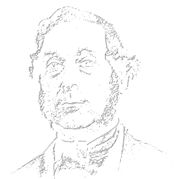
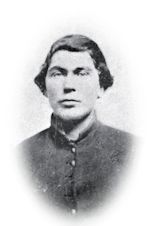
by John Beauchamp Jones

            MARCH 16TH.—There was ice last night. Cold all day. Gen. Maury writes that no immediate attack on Mobile need be apprehended now. He goes next to Savannah to look after the defenses of that city.

            The Examiner to-day publishes Gen. Jos. E. Johnston’s report of his operations in Mississippi last summer. He says the disaster at Vicksburg was owing to Gen. Pemberton’s disobedience of orders. He was ordered to concentrate his army and give battle before the place was invested, and under no circumstances to allow himself to be besieged, which must of course result in disaster. He says, also, that he was about to manœuvre in such manner as would have probably resulted in the saving a large proportion of his men, when, to his astonishment, he learned that Gen. P. had capitulated.

            Willoughby Newton reports that the enemy are building a number of light boats, to be worked with muffled oars, at Point Lookout, Md., and suggests that they may be designed to pass the obstructions in the James River, in another attempt to capture Richmond.

            It is said Lieut.-Gen. E. Kirby Smith, trans-Mississippi, has been made a full general, and that Major-Gen. Sterling Price relieves Lieut.-Gen. Holmes, who is to report at Richmond. If this be so, it is very good policy.

            Gen. Lee is still here, but will leave very soon.

            Gen. Bragg has taken measures to insure the transportation of meat and grain from the South. Much food for Lee’s army has arrived during the last two days.

Huntsville, Tuesday, March 15. Teamsters and boys up early. Those that were not scared out of bed had a good night’s sleep. Felt quite dull and severe cold settled in throat. Went into a citizen’s house to procure my breakfast. Had warm biscuit, buttermilk, etc. for 50c, and started with the train. Walked nearly all the way to camp where we arrived at 11 A. M. Found three letters to me bearing date of the 6th, and all the disagreeable was soon forgotten in the joy of the present. Mother much better and in her own room. Sergeant Hanxhurst after a long period of arrest put on duty. His court-martial read at dress parade. His sentence by the court was reduction to the ranks, but was modified by General Matthies to the loss of one month’s pay, for previous meritorious conduct as non-commissioned officer. He suffers from a jealous clique.

Scottsboro, Ala., March 15, 1864.

I am again on court martial duty, with a prospect of a long siege; but we have an experienced President and a Judge Advocate who promises to be a fast worker; so we may get through quicker than we anticipated. The President, Colonel Heath, 100th Indiana, is a Bob Ingersoll for the world, that is, full of anecdote and fond of malt. ‘Tis probably fortunate that at this time none of the latter is to be had in our division. I dislike detached service in any shape, but prefer court martial duty to almost any other. Would much rather be with my company, and if it were not considered so nix military would ask to be relieved from this. You can’t imagine how proud I am becoming of my company. I have never had an iota of trouble with them. We certainly work as smoothly as any company could. We are all in high feather over the prospect of going to Richmond. Everybody wants to start immediately. If the 15th and 17th corps reach the Rapidan, we doubt your hearing anything more about recrossing the Rapidan and taking positions inside the Washington fortifications. Our corps don’t get along well with these Cumberland and Potomac soldiers. To hear our men talk to them when passing them or their camps marching, you’d think the feeling between us and the Rebels could be no more bitter. We are well off by ourselves, but still we don’t feel at home. We’re too far from our old comrades, 13th, 16th and 17th Corps. This feeling that grows up between regiments, brigades, divisions and corps is very strong and as strange. The 4th and 14th Corps Cumberland chaps our men can endure, although much in the spirit a dog chewing a bone, allows another to come within ten feet. The 11th and 12th Corps Potomac men, and ours never meet without some very hard talk. I must do the Yankees the justice to say that our men, I believe, always commence it, and are the most ungentlemanly by great odds. I do honestly think our corps in one respect composed of the meanest set of men, that was ever thrown together. That is, while on the march they make it a point to abuse every man or thing they see. They always feel “bully,” will certainly march further with less straggling, and make more noise whooping than any other corps in service, but if a strange soldier or citizen comes in sight, pity him, and if he’s foolish enough to ask a question, as “what regiment,” or “where are you bound for?” he’ll wish himself a mile under ground before he hears all the answers, and ten to one not a whit of the information he asked for will be in any of them. We have no pay yet, and no prospects now, but doing good business borrowing.

15th. All the young folks were invited to Dea. Turner’s to tea. I remained at home. Played chess with Thede. Read some— attending preaching in the evening. Prof. Fairchild made a good discourse. Got out my letters from Fannie, reviewed them and burned them. It seemed hard and sad to do so, but I knew it was best. Could not discover any change in the style of her letters in the spring of 1861. They seemed full as warm and affectionate then as ever during the whole year.

Jacksonville, Fla.,
March 15, 1864.

Dear Sister L.:—

I send you a copy of an army paper containing some interesting matter about Olustee. I enclose a specimen of the gray moss that covers these trees. It grows in locks six, eight and even ten feet long and a foot thick hanging all over the branches, yet it has no root. It is an inextricable snarl. It seems to feed on the air, for it can get life no other way. It is the most singular vegetable I ever saw. I will try to send you some orange flowers when I write next.

March 15th.—Old Mrs. Chesnut is dead. A saint is gone and James Chesnut is broken-hearted. He adored his mother. I gave $375 for my mourning, which consists of a black alpaca dress and a crape veil. With bonnet, gloves, and all it came to $500. Before the blockade such things as I have would not have been thought fit for a chamber-maid.

Everybody is in trouble. Mrs. Davis says paper money has depreciated so much in value that they can not live within their income; so they are going to dispense with their carriage and horses.

Tuesday, 15th—We were relieved from guard at the roundhouse, and I received my transportation papers from the provost marshal. I was promoted today from “high private in the rear rank” to sixth corporal in the front rank, my commission to date from March 1, 1864.[1]


[1] This was indeed a surprise to me, as I had never asked for any office. The expression in quotations was a war-time saying, a joke of the privates.—A. G. D.

March 15, Tuesday. At the Cabinet the principal subject was the issue of a new proclamation, calling for a new draft of 200,000 men in consequence of the Navy draft and other demands. There are about 800,000 men in the field, among them some sailors drawn into the army by improper legislation, and the reckless, grasping policy of the army managers, who think less of the general welfare than of narrow and selfish professional display. It did not seem to me that the call was necessary or even expedient, but I perceived it had been determined upon by Halleck, Seward, and Stanton, and that the President had yielded his acquiescence, and opposition was useless. Blair said nothing. Usher gave a slow but affectedly earnest affirmative. Seward said the object was to compel certain Democratic localities to furnish their proportion, and it was desirable to take advantage of the current which was setting in strong for enlistment. The movement did not strike me favorably.

Henderson, the Navy Agent at New York, and Parke Godwin called this evening. He was disturbed by the Olcott investigations, wanted to consult and advise with me, hoped I would be frank. Thought himself injured by newspaper articles and by Olcott’s proceeding. Wished to know what charges or specifications there were against him. I told him I was in no condition to impart information or give advice, or sufficiently informed as to what had taken place to make any statement, even if it was proper, to him; that, if he had done right or nothing wrong, he need be under no apprehension; that his name was much mixed up with certain corruptionists and contractors who were under arrest, and against whom appearances were very bad; that he, better than I, or any one, knew how much there was in all this and whether there was any cause for censure or complaint. He averred there was no cause of complaint against him, — that he was guilty of no wrong. Made inquiries about Olcott, and told of improper and insinuating interrogations put to witnesses, that were unjust to him (H.). I told him I knew nothing of those matters; that I had heard of a most impolitic and reprehensible conversation in the sleeping-car between Olcott and others with him, as to his business and as to persons implicated. Told him O. was an attaché of the War Department, loaned to us for the occasion.

It was my object to listen, and to communicate nothing of the very little I knew of the investigation, and I made them aware of this. I remember that many names were mentioned and some of them, without explanation, were in the shade, but that I was confident some who were thus implicated could explain the transactions satisfactorily.

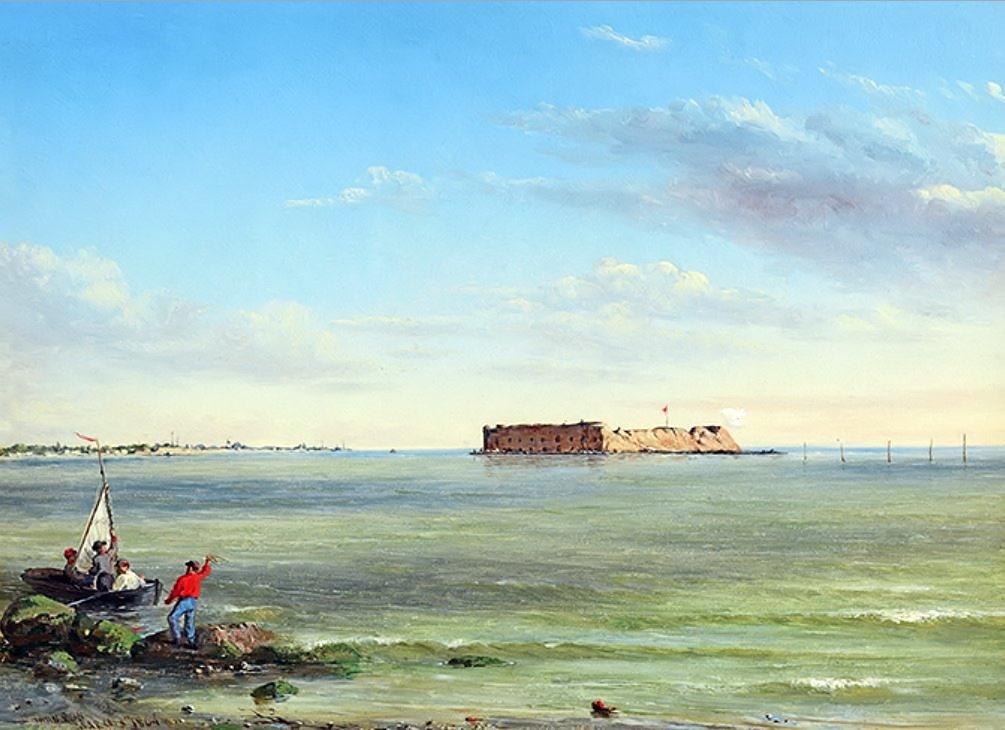
Forts Sumter & Johnson, March 15, 1864 - by Conrad Wise Chapman

Painting by Conrad Wise Chapman.

“Shows mail boat going from one fort to the other.  A good view of Fort Moultrie can be had from this point.  A shell would be thrown over the fort about every five minutes.”  – Conrad Wise Chapman, 1898