Saturday, April 16. — Rained all day. The court simply finished O’Brien’s case, and adjourned until Monday, when Porter comes before them. Received a letter from Hannah to-day. Had a final meeting of the Council of Administration. Nothing new. Took bath.
April 2014
Saturday, April 16th.
Spent the day in fixing up about camp, arranging cook house, for we still retain our old company cook, William Wood, and generally endeavoring to make the company as comfortable as circumstances will permit. I am projecting a residence for myself of the greatest magnificence and grandeur. An eminent architect has been employed and the plans and specifications completed and adopted, and I only await the reports of the contractors who have gone out to discover some old corduroy road which will furnish the necessary lumber in the shape of poles. I shall hope to erect, complete and furnish it within an hour after the timber arrives.
Saturday, 16th—It is clear and quite cool today. My brother John and I went up to Tipton this morning. Things are pretty lively in town; but there are not many of the veterans in today. I went to the harness shop and bought a saddle as a present to father. I called on Mrs. Willey, she and her husband having been good friends of mine. Mr. Willey was a member of the Twenty-fourth Iowa, but died in the spring of ’63 at Milliken’s Bend, above Vicksburg. On our way back home I stopped at the home of Mr. Robedie and took supper with the family.
Huntsville, Saturday, April 16. At 7 A. M. our veterans, thirty-two in number, started on their long anticipated furlough. They were almost beside themselves with pleasant anticipations, as they were greeted with a good-bye that came from the hearts of the comrades they leave behind. I could but think of the time when we should all be permitted to return, with no compulsions to return. Oh, happy day! May it soon come! E. W. E. returned this morning. Left me again alone in my tent. Much excitement prevails as to what will be done with the superfluous men after being reduced to four guns.
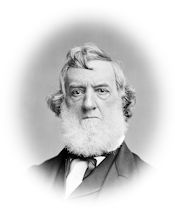
April 16, Saturday. Had a long telegram at midnight from Cairo, respecting Rebel movements in western Kentucky, — at Paducah, Columbus, Fort Pillow, etc. Strange that an army of 6000 Rebels should be moving unmolested within our lines. But for the gunboats, they would repossess themselves of the defenses, yet General Halleck wants the magnanimity and justice to acknowledge or even mention the service.
There is still much excitement and uneasy feeling on the gold and currency question. Not a day but that I am spoken to on the subject. It is unpleasant, because my views are wholly dissimilar from the policy of the Treasury Department, and Chase is sensitive and tender — touchy, I may say — if others do not agree with him and adopt his expedients. Mr. Chase is now in New York. He has directed the payment of the May interest, anticipating that throwing out so much gold will affect the market favorably. It will be likely to have that effect for a few days but is no cure for the evil. The volume of irredeemable paper must be reduced before there can be permanent relief. He attributes to speculators the rise in gold! As well charge the manufacturers with affecting the depth of water in the rivers, because they erect dams across the tributaries! Yet one cannot reason with our great financier on the subject. He will consider it a reflection on himself personally and claims he cannot get along successfully if opposed.
I remarked to Senator Trumbull, whom I met when taking my evening walk last Thursday, and was inquired of, that I could hardly answer or discuss his inquiry in regard to the gold excitement, because in a conversation which we had a year or two since, when one of the bills was pending,—the first, I believe, — I had said to him I was a hard-money man and could indorse no standards but gold and silver as the measure of value and regretted and distrusted the scheme of legal paper tenders. Chase heard of that conversation and claims I was embarrassing the Treasury.
This sensitiveness indicates what I fear and have said, viz. Chase has no system on which he relies, but is seeking expedients which tumble down more rapidly than he can construct them. He cannot stop what he and others call “the rise of gold,” but which is really the depreciation of paper, by the contrivances he is throwing out. The gold dollar, the customs certificates, the interest-bearing Treasury notes, etc., etc., are all failures and harmful and will prove so. The Secretary of the Treasury found a great and rich country filled with enthusiasm in a noble cause and full of wealth, with which they responded to his call, but their recourses and sacrifices were no evidence of financial talent on the part of the Secretary who used them.
The Secretary is not always bold, and has not enforced taxation; he is not wise beyond others, and has not maintained the true measure of value; he resorts to expedients instead of abiding by fixed principles. By multiplying irredeemable paper and general inflation, his “ten forty” five-per-cents may be taken, but at what cost to the country! He is in New York and may negotiate a loan; but if he does, it will be with the banks and, I presume, at six per cent. If so, the banks will not be able to help the speculators, and they, being cramped, will suffer, and perhaps fail. The fancy stocks will be likely to fall under this operation, and the surplus money may seek government securities, but under the inflation how expensive to the country!
April 16.—The report of the United States Commissary of Prisoners was made public. It showed that the number of rebel officers and men captured by the National troops since the beginning of the war was one lieutenant-general, five major-generals, twenty-five brigadier-generals, one hundred and eighty-six colonels, one hundred and forty-six lieutenant-colonels, two hundred and forty-four majors, two thousand four hundred and ninety-seven captains, five thousand eight hundred and eleven lieutenants, sixteen thousand five hundred and sixty-three non-commissioned officers, one hundred and twenty-one thousand one hundred and fifty-six privates, and five thousand eight hundred citizens. Of these, there remained on hand at the date of the report twenty-nine thousand two hundred and twenty-nine officers and men, among whom were one major-general and seven brigadiers. There had been one hundred and twenty-one thousand nine hundred and thirty-seven rebels exchanged against one hundred and ten thousand eight hundred and sixty-six Union men returned.
by John Beauchamp Jones
APRIL 16TH. —Rained all night, and in fitful showers all day.
We have more accounts (unofficial) of a victory near Shreveport, La. One of the enemy’s gun-boats has been blown up and sunk in Florida.
By late Northern arrivals we see that a Mr. Long, member of Congress, has spoken in favor of our recognition. A resolution of expulsion was soon after introduced.
Gen. Lee has suggested, and the Secretary of War has approved, a project for removing a portion of the population from Richmond into the country. Its object is to accumulate supplies for the army. If some 20,000 could be moved away, it would relieve the rest to some extent.
Troops are passing northward every night. The carnage and carnival of death will soon begin!
Annapolis, Md., April 15, 1864.
Dear Father, — . . . I see and hear no indications of our moving soon, nor have I any idea where we arc going. I hope that it will be against Richmond, as I want Lee’s army to be destroyed and Richmond taken. We must do both of these things this summer.
Our band serenaded General Burnside the other evening. This afternoon his chief of staff, Colonel Goodrich, came up here with some ladies to hear the band play. They did not stop long, however, on account of the chilliness of the atmosphere. They are coming again to-morrow.
I am not able to drill with the regiment now at all, as I am on court-martial almost all the time, and from present appearances shall continue on it as long as we are here.
We have been having quite pleasant weather lately, giving us a good chance to drill the men and get the camp in good condition. We have had two snow-storms since our arrival, the last one being merely a flurry. The grass around here is beginning to grow green, the trees to bud, and the birds to sing. Everything in fact looks like spring, by far the pleasantest season in the year in the “Sunny South.” The big blue-bottles, the pest of a camp, are beginning to show themselves and buzz round with that disagreeable noise and in that blundering, careless way which makes them so unpleasant.
I am thankful to say that we have got rid of two of our incompetent officers, and are in a fair way of losing another. . . .
We are all sorry to see that the draft has been postponed. I do wish that they would have it in every place that has been at all backward. We need the men very much.
Friday, April 15. — Received a letter from Father. Day pleasant. O’Brien was tried to-day for desertion. As I was a witness, I did not sit on the court. Colonel Goodrich, of General Burnside’s staff, was here to-day. He had some ladies with him and is going to have them here to-morrow to hear our band.
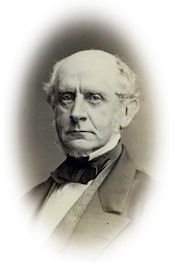
Charles Francis Adams to his son
London, April 15, 1864
America is not much talked of here. Never so little since I first came. The immediate excitement is Garibaldi. Next the Danish conference. Lastly, the departure of Maximilian to be Emperor of Mexico. The first is much the most extraordinary demonstration. People say there never was such a turnout of the people as that which received him. Three miles of road packed, before reaching the city. He is evidently the hero of all the unprivileged classes of England and of Europe. It is sentiment, and not action. The peculiarity of the present age is the freedom of the mind, whilst the body remains passive. Revolutions are worked by the steady spread of convictions rather than the sudden impulse of physical force. The existence of the United States as a prosperous republic has been the example against which all reasoning contrary to the popular feeling has been steadily losing strength. It was the outbreak of the war that in an instant gave such revived hopes to all the privileged classes in Europe. For three years they have been making every possible use of the advantage. But it is now manifestly on the wane once more. Napoleon’s Mexican empire, as a bridle upon the movement of American republicanism, is the only practical result of the crisis. What that will amount to, the moment our troubles pass over and we settle down again into a nation, it is not very hard to foresee. An Austrian prince aided by French soldiers three thousand miles from any base, without an aristocracy and with a people little used to respect authority of any kind, in a country which has no sympathy with either Germans or French, has not a very brilliant prospect in the nineteenth century of founding a dynasty. In my opinion Garibaldi would have been a better selection.
This gentleman is the guest of the Duke of Sutherland at Stafford House. He is a young man with no particular political character, but the family, as you know, is identified with the liberal or Whig side. We all regretted that you were not with us on Wednesday when Stafford House, the only real palace in London, was thrown open to receive guests invited to meet the Italian hero. The only thing I was struck with about him was his great simplicity and quietness of manner. There was an air of dignity in it which had no factitious support in dress or in any outward demonstration what, ever. I know of no nobleman here whose deportment marks rank so strongly. Yet it is very doubtful to me whether he ever was bred to it in any way. Neither as a soldier has he had any but irregular commands, over volunteer forces. The splendor around him, and the many distinguished persons assembled to meet him seemed to produce not the smallest change in his manner. This is perhaps the most difficult of all things to do. It indicates a very sluggish temperament or a great command of nerves.
His lameness from his wound still troubles him, so, presently, he went to bed, escorted to his room by the Duchess of Sutherland, the Duke himself and the Dowager, his mother, the band playing in the centre of the hall on which the grand staircase opens, and many of the company looking down from the corridor above, as they descended. No royal personage would have been more honored. . . .


