Thursday, June 23.— Lost three men on picket. Enemy again opened on us on the picket line. The rebels had a mortar in position, with which they shelled our batteries. Our brigade was relieved and put in the second line, but six companies of our regiment had to remain in the front line.
June 2014
June 23 — In camp, and resting. We have been on forced marches, and sometimes marching day and night, ever since the morning of the ninth of June, and in the meantime we had a few hard fights. Now for a glance at the two armies that were facing each other near Cold Harbor and growling a little when we left the Chickahominy on a chase after General Sheridan’s crack cavalry. General Grant has stopped his sledge-hammer thumping business at the front door and has made a wonderful leap by the left flank, and is now trying to gain admittance to Richmond by the back way, and has settled down in siege order in front of Petersburg, twenty-two miles south of Richmond.
I heard that when General Grant arrived in front of Petersburg, as is usual of late he found General Lee in his front, ready for business at the old stand. The world may ask, but the great question will never be answered, why all this bloody fighting, waste of energy, and sinews of war, sacrifice of human life and vast treasures, merely to make a lodgment in front of Petersburg, which could have been accomplished without much fighting and sacrificial butchery of thousands of soldiers. ‘Tis said that General Grant lost about sixty thousand men, killed, wounded, prisoners, and strayed, on the north side of the James since the fifth of May, the date of the opening of the campaign in the Wilderness.
The bulk of General Grant’s army crossed the James River about the 1th of June, at or near Bermuda Hundred, about sixteen miles below Richmond.

June 23rd. Our brigade was moved to the left to support a battery. Shortly after an artillery duel began. The shell all went over the battery and came amongst us. We lost one man wounded. Just at dusk a charge was ordered to be made by our division across an open field. We drove the Rebs back and threw up rifle-pits. Remained in rifle-pits all day; burried our dead; were relieved at night and went to the rear.
June 23, Thursday. A call in force this A. M. from a large portion of the Massachusetts delegation in behalf of the Smith brothers, now in Fort Warren, wanting them to be bailed, but at the same time admitting a bail bond to be useless or valueless. They proposed, however, the whole Massachusetts delegation should unite in a bond, guaranteeing the appearance of the Smiths for trial. Told them I thought this not a proper proceeding, that it was perhaps doubtful whether bail could properly be taken, that I had written to Mr. Wilson that I wished, if it could be done, that there should be bail, etc., etc. The interview was long; Senator Wilson, Mr. Rice, Mr. Dawes were the principal speakers.
In the afternoon Mr. Rice called at my house with a telegram to the effect that Mr. Wilson would be willing to take bail, but that Assistant Secretary Fox, who has the matter in special charge, had written him not to do so without the consent of Colonel Olcott, etc. I told Mr. Rice, I thought there must be some misapprehension, that I thought Mr. Wilson would act discreetly and properly, that we should probably hear from him by to-morrow morning’s mail. He was earnest, sensitive, and expressed great distrust, or want of confidence in Mr. Fox. I told him, while Mr. Fox was very earnest and persevering, I thought it an error to impute to him personal enmity against the Smiths and others.
Admiral Lee sends me some papers relative to a permit issued by General Butler to one Lane, of the steamer Philadelphia, to trade in Chowan River, North Carolina. It was a little, dirty, speculating intrigue, initiated as early as last March, in a letter from General Butler addressed to the President, proposing to send in ploughs, harrows, and farming utensils to loyal farmers in North Carolina, in exchange for cotton and products of the country, – plausible and taking rascality. The President indorsed that he approved the object. On this General Butler granted a permit. Captain Smith, senior officer in the Sounds, declined to recognize it, but detained the boat and sent the papers to Admiral Lee. The latter failed – called the paper many names, said President’s permit must be respected.
I showed the papers to Seward and Blair, and was disposed to telegraph and detain the vessel. B. was inclined, though doubtingly, to favor my views, S. advised waiting the arrival of the President, but both condemned the proceedings as wholly improper.
Some warm discussion took place, Rice tells me, in the House on the currency and financial questions, showing serious differences in the Ways and Means Committee and between them and the Secretary of the Treasury. It will not surprise me should radical differences be developed. The whole system is one of error, ruinous error to the country.
by John Beauchamp Jones
JUNE 23D.—Clear and warm.
The news of the capture of 1600 Federals, 4 guns, etc., yesterday atPetersburg, has put the people here in better humor, which has been bad enough, made so by reported rapes perpetrated by negro soldiers on young ladies inWestmorelandCounty. There has been talk of vengeance, and no doubt such atrocities cause many more to perish than otherwise would die.
A Mr. Sale, in the West, sends on an extract from a letter from Col. ____, proposing to the government to sell cotton on the Mississippi River for sterling exchange in London, and indicating that in this manner he has large sums to his own credit there, besides $100,000 worth of cotton in this country. Col. ____is a commissary, against whom grave charges have been made frequently, of speculation, etc., but was defended by the Commissary-General.
Mr. Harvey, president Danville Railroad, telegraphs to Gen. Bragg to send troops without delay, or the road will be ruined by the raiders. Bragg sends the paper to the Secretary of War, saying there are no troops but those in the army of Gen. Lee, and the reserves, the latter now being called out. Ten days ago, Mr. Secretary Seddon had fair warning about this road.
by John Beauchamp Jones
JUNE 22D.—Dry and pleasant.
The city full of idle rumors—that the whole brigade of local troops were captured yesterday—that Gen. Fitz Lee has again been made prisoner, and that another raiding party is threatening the Danville Road, the canal, etc. There is no foundation for any of them, so far as I can learn.
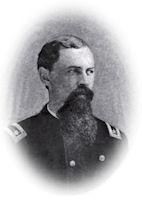
June 23, 1864, 9 a.m.
The Rebels opened furiously from the mountain last night about 12. Here they are firing at a division of the 14th who had advanced and were fortifying. No harm done. I failed to wake up. It is reported this morning that Ewell’s Corps has arrived to reinforce Johnston. Don’t think it will make him strong enough to assume the offensive, if true, and don’t believe it any way. Artillery commenced again half an hour since, and goes on slowly. Rebels haven’t gone, surely.
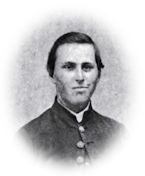
June 23d. Left New Castle very early this hot morning. No air in these valleys of Virginia and West Virginia. Most of our rations consist of fresh meat. It is brought in to us in the night and cooked in the night, broiled on the end of a ramrod. It is hard to keep out of our minds, but is generally believed that we are eating horse and mule meat. When we left Cedar Creek on this raid, General Hunter informed us that we might be obliged to eat horse flesh before our return. At that time we were ordered to be careful of our rations.
All the roads in the mountains and valleys are bad, hard for our feet. It is now thought that we are in the Alleghany Mountains. In spite of all our hardships we cannot help admiring the scenery. How we could enjoy it if we had plenty to eat and could take our time marching along. Up and down, over the mountains we go, until we reach the Sweet Springs, twenty-six miles from New Castle. Here we are to stop for the night. Large fine buildings here. A resort. Deserted. Generals Hunter and Crook located headquarters in a large, fine building. Our regiment stopping nearby. Rations for tonight, plenty of fresh meat and coffee. While we are all tired, foot-sore, and near used up, there is but little growling or fault-finding. Keep up courage very well as we endure these hardships, all for our country. While the days are hot, the nights are cool.
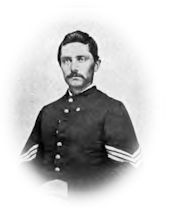
Wednesday, 22d—It has cleared off and is quite warm today. The rebels commenced shelling us this morning, but did little damage, as their shells fell short of our lines, on account of their insufficient charges of powder, we suppose, and because their guns are too small to stand heavier charges. Our batteries opened up and exchanged shots with them for about two hours. Our men commenced throwing up heavy earthworks this evening. Company C went out on picket this evening. There have been no trains coming in to Big Shanty for the last two days on account of the rebels’ destroying the railroad on this side of Chattanooga; but it will be repaired in a few days. Our army draws full rations with the exception of meat, of which we are allowed but three-fifths rations.
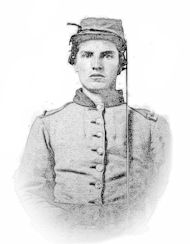
Wednesday, 22d.—Bought new book for my diary to-day, for which I paid six dollars. Hope the war will be ended before I get this one full.


