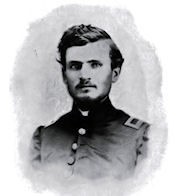
13th. In the morning our regiment left at White House road on picket and rear guard. Several prisoners. Whole army moved. Rear guard until we crossed the Chickahominy, a narrow, swampy, insignificant stream. Remained near the river—south bank—till dark. Moved on towards Charles City C. H.—camping from 2 A. M. till daylight.
June 2014
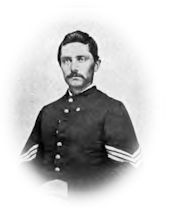
Monday, 13th—It rained again nearly the whole day. We formed a line of battle early this morning, but soon returned to our “ranches” with orders to keep our accouterments on and be ready to form at a moment’s notice. Skirmishing commenced early all along the line and there was cannonading from our side with no reply from the rebels. Things are progressing fine. There is no news from the army around Richmond. I wrote a letter today to Robinson Laport of the Twenty-fourth Iowa and received one from Miss Moore.[1]
[1] Miss Moore, of Tipton. Iowa, wrote letters to encourage the soldiers.—A. G. D.
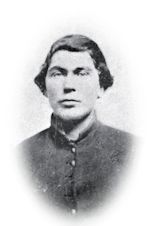
Huntsville, Monday, June 13. Cloudy! Rainy! Muddy! Are we never more to have sunshine? I would wish that some of this would fall on the parched cornfields of Wisconsin. But still it is very nice here, keeps the air cool and is God-sent to our poor wounded in the front. Received a keg of butter from our homes, i. e., Griff, Evie, D. J. D., Bailey and myself. Butter very acceptable and quite an addition to our unwholesome fare. On guard, first relief. Stringent orders in regard to skulking, etc. read to us this evening from Sherman. Took a long and pleasant walk with G. M. S. in the morning.
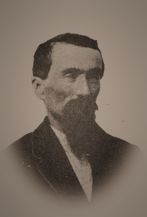
June 13 — Repulsed, defeated, and almost discomfited, the enemy made a precipitate retreat last night, leaving their dead unburied on the field, and also left some of their wounded behind. They evidently looked for and feared a night attack, for they blockaded the road in rear of where their line was yesterday, by felling trees across the way and rendering it impassable for artillery.
This morning when we passed over a portion of the battle-ground that the enemy occupied yesterday I saw several dead artillery horses that were killed by some of our shell yesterday.
This morning we started in pursuit of the retreating raiders, and moved down the Central Railroad, passing through Louisa Court House. Camped to-night four miles below Fredericks Hall. We are moving down the same road that we came up on a few days ago. The Yankee raiders destroyed about four miles of railroad between Louisa Court House and Trevillian Station, which is about all that they accomplished on their extensive raid.
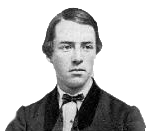
Monday, June 13. — Reached Tunstall’s Station about 4 A.M., and remained there until about 2 P.M. We then marched to about three miles from the Chickahominy, where we remained for the night. Had hard marching during day.
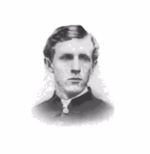
June 13th. Started bright and early; crossed the Chjckahominy at noon and halted for the night, about two miles from the James river. I was detailed for picket, but was relieved; commenced to put up breast works. Marched during the day 25 miles and was very tired.
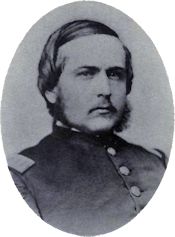
Monday, June 13th
At 10 A. M. we took up our line of march, very much impeded by the wagon trains and the artillery, crossed the Chickahominy River at Long Bridge about 2 P. M., and reached Dr. Wilcox’s plantation on the James River, opposite Windmill Point, at half-past 8 P. M. Here, near what is called Wilcox Landing, we camped in a magnificent clover and wheat field which had theretofore apparently been spared the ravages of war. The Fifth Corps followed the Second Corps to this landing and the Sixth Corps struck the river a mile or two below us. Baldy Smith, with the Nineteenth Corps, occupied the attention of the enemy until we were well on our way, and then fell back to the White House. This is the first day since we left Culpepper on the 4th of May, when my company has not been actually exposed to the fire of the rebels the whole or some part of the twenty-four hours, and it is not very remarkable that the reaction from the strain of thirty-nine days under fire should make this day’s march of about twenty miles seem to me particularly fatiguing. At one point I felt so weak and faint that I strayed off a little way from the line of march and laid down in the dry but cool and shady bed of a little stream. In about an hour, having recuperated somewhat, I arose and trudged along, soon overtaking the company, or what there was left of it.
Lieut. Edmonston, who detested beans in any form, and before we left Fort Marcy was accustomed to refuse them with a sneer whenever they formed part of our bill of fare, marched along to-day toting in his hand a little pail of the Boston berries soaking in water preparatory to boiling them when we should halt long enough to do so, and this unusual indication of a compulsatory education of taste, coupled with a marked tendency to “travel wide,” as if my mercurial ointment had taken effect elsewhere than on the “graybacks” in the seams of his trousers, led me to think that he did not enjoy this day’s experience any more than I did.
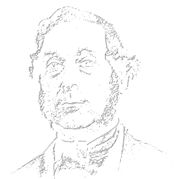
by John Beauchamp Jones
JUNE 13TH—Clear and cool.
Gen. Bragg sent to the Secretary of War to-day a copy of a letter from him to the President, yesterday, proposing to send 6000 more troops to Western Virginia, as-Breckinridge has only 9000 and the enemy 18,000.
Lieut.-Gen Holmes sends from Raleigh, N. C., a letter from Hon. T. Bragg, revealing the existence of a secret organization in communication with the enemy, styled the “H. 0. A.;” and asking authority to arrest certain men supposed to be implicated.
A letter was received from G. W. Lay, his son-in-law, by the Assistant Secretary of War, Judge Campbell, dated near Petersburg, stating that the Southern Express Company would bring articles from Charleston for him. That company seems to be more potential than ever.
Cannonading was heard far down the Chickahominy this morning. And yet Lieut.-Gen. Ewell marched his corps to-day out the Brooke Road, just in the opposite direction! It is rumored that he is marching away for Washington! If he had transportation, and could march in that direction, no doubt it would be the speediest way of relieving Richmond. Gen. Lee, however, knows best.
At the conclave of dignitaries, Hunter, Wigfall, and Secretary Seddon, yesterday, it is reported that when Mr. Seddon explained Grant’s zigzag fortifications, Senator Hunter exclaimed he was afraid we could never beat him; when Senator Wigfall said nothing was easier—the President would put the old folks and children to praying at 6 o’clock A.M. Now if any one were to tell these things to the President, he would not believe him.
June 12, 1864.
It commenced raining before daylight, and has not ceased an instant all day. We are lucky in the roads where it can’t get very muddy, but so much rain is confoundedly disagreeable. The only source of consolation is the knowledge that the Rebels fare much worse than we do. They have neither tents nor oilcloths. For once our corps is in reserve. The 16th and 17th united their lines in front of us this morning. The 17th A. C. especially is using ammunition with a looseness. They are just getting their hands in. The rain is real cold. If it were not for hearing the musketry and artillery firing we wouldn’t know there was an enemy within 50 miles. This is said to be the Georgia gold country. I could just pick up some beautiful specimens of quartz and a flinty stone (maybe quartz also) in which the isinglass shines, and in some places I have picked off sheets two inches square. No forage here. Four deserters came in to-day.
They say that Johnston had an order read to his troops that Wheeler had cut the railroad in our rear, and destroyed our supply trains. The troops all cheered it heartily, but hardly had they got their mouths shut when our locomotives came whistling into Big Shanty, one mile from their lines. The deserters say it disgusted them so much they concluded they’d quit and go home. I wish Sherman would attack them now, for we would be sure to get what trains and artillery they have here.
June 12th. Sunday. Came off picket. General Hunter is applying the torch to many buildings. I watched them burn. Among them were the Washington Military Institute, and the home of Governor Letcher. It was a grand and awful sight to see so many buildings burning at the same time. A bronze statue of George Washington was removed from the front entrance and saved. It was put in one of the wagons, and in time was to be sent to Washington, D. C. After the fires were out I visited the ruins. The cavalry brought in to our lines many slaves, the owners trying to hide them in the surrounding mountains. They were a husky lot, and could run as fast as a horse. I saw them keep up with cavalry. Visited many points of interest in and around this fine looking town.


