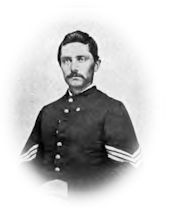
Tuesday, 14th—No rain, but cloudy and quite cool. Skirmishing began again early this morning and our artillery threw shells into the rebels’ works, but they would not reply. They are still fortifying their position. A rebel company consisting of thirty-five men came over to our lines today and gave themselves up. They informed us that there was a whole brigade that would surrender if given a chance, for they were tired of retreating all the while. They also represented to our officers that Johnston’s entire force numbered only sixty thousand men, and said that their artillerymen had orders not to fire when our artillery shelled, but to wait until our troops should make a charge, and then open up on us. There was one man of the Sixteenth Iowa killed today by a rebel sharpshooter.
June 2014

Huntsville, Tuesday, June 14. A sunny day without rain at last. Signed receipt rolls for clothing. All the wounded and sick sent North from the hospitals here. The long-expected order was at last issued this afternoon. “Hold ourselves in readiness to march at any time.” After four days’ waiting I [received] my letter.
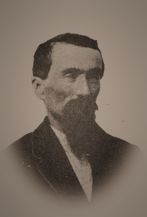
June 14 — We moved only about two miles to-day, and camped near Bumpas Station. Late this evening the second and fourth guns were ordered to the front, in the direction that the raiders are retiring.
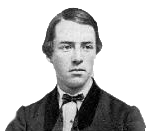
Tuesday, June 14. — Routed out at 4.3o A.m., to move. Crossed a creek at Pollock’s Mills. About a mile farther we crossed the Chickahominy, which divides, running round an island. The branches were not over 25 feet broad. Saw Colonel Spaulding[1] here. We then marched down to within two miles of the James River, near Tyler’s Mills. Halted here an hour, opposite Ex-President Tyler’s house. Moved on three miles, and went in rear of the Sixth Corps, where we camped for night. Dalton came over, and gave us provisions.
[We had been twenty-four hours without food. By changing our base from White House over to the James River we interrupted the commissariat somewhat. I do not think I was ever so hungry in my life. We stacked arms in line of battle, and just as we did so a quail flew up. The men had broken ranks, and they gave chase and caught him, and he was given to me and I had him broiled for my supper. Henry Dalton came over also and gave us some hard-tack. Adjutant Lipp caught a box-turtle and had him roasted. Late in the evening we all of us had plenty to eat.]
[1] Commander of one of the regiments in the Engineer Brigade.

June 14th. Started at 10 A.m. for James river; embarked on a steamer and landed the other side; marched two miles and halted for the rest of the column; formed line of battle and stopped for the night.
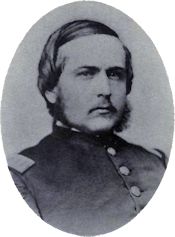
Tuesday, June 14th.
A detail of a thousand men from the regiment was made this morning to go to the river near the Charles City Court House, which had been burned, and cut a way for the trains to the pontoon bridge and the boat landings, and was engaged in this work pretty much all day. The country about here is very attractive, perhaps the most so of any part of Virginia which we have traversed.

by John Beauchamp Jones
JUNE 14TH.—Clear and cool.
Gen. Grant has changed his base—disappearing from the front of Lee in the night. He is supposed to be endeavoring to get his army below the city, and in communication withButler on the south side.
A dispatch from Gen. Lee says Gen. Hampton has defeated Sheridan.
Forrest has gained a victory in the West.
Lincoln has been nominated—Andrew Johnson, of Tennessee, for Vice-President.
Gen. Whiting writes that supplies from abroad are coming in abundantly at Wilmington, N. C.
If we can only preserve our communications with the South, I regard the campaign, if not the war, pretty nearly at an end and Richmond safe! Grant has failed, after doing his utmost to take Richmond. He has shattered a great army to no purpose; while Lee’s army is as strong as ever. This is true generalship in Lee. But Grant can get more men.
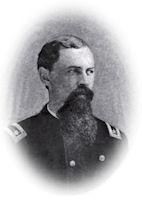
June 14, 1864.
Four officers and 28 men deserted from the Rebels last night. The Rebel captain told one of my corporals that in their brigade there is an organization the members of which avow it their purpose to desert the first opportunity. These men are satisfied the game is up with them, and give it as their reason for deserting. They say the whole brigade will come as opportunity offers. Lively artillery firing in front of us this morning. We hear that Grant has pushed Lee to his fortifications at Richmond. Suppose the report will be, Grant will cut his communications south and west and Lee will evacuate. I see the papers have us across the Chattahoochie, away south of the railroad. Of course that is a poor article of gas from our sensational correspondent in the far rear.
It looks to me as if the Rebels have a very strong position in front of us now, but I may be mistaken. We have been quietly laying in camp all day. I must credit Georgia with one pleasant June day, that is not too warm. There has been the usual amount of firing to-day, though few hurt.
June 13, 1864.
The rain continued until 5 p.m. Everything and everybody thoroughly soaked. Our division moved about one-half mile to the left this p.m. Strategy! We moved out into an open ploughed field. You can imagine the amount of comfort one could enjoy so situated, after two days’ constant rain, and the water still coming down in sheets.
The field is trodden into a bed of mortar. No one has ventured a guess of the depth of the mud. It is cold enough for fires and overcoats. My finger nails are as blue as if I had the ague. There is one consolation to be drawn from the cold, it stops the “chigres” from biting us. I would rather have a bushel of fleas and a million of mosquitoes on me than a pint of “chigres,”—don’t know the orthography—They are a little bit of a red thing,—just an atom bigger than nothing; they burrow into the skin and cause an itching that beats the regular “camp” all hollow. Some of the men have scars from “chigre” bites that they received at Big Black last summer, and will carry them across the Styx. The ants here also have an affinity for human flesh and are continually reconnoitering us. I kill about 200,000 per day. Also knock some 600 worms off of me. Great country this for small vermin. I pick enough entomological specimens off me every day to start a museum. I do manage to keep clear of greybacks, though.
Every time I commence talking about chigres I feel short of language. I am satisfied of one thing, if my finger nails don’t wear out, there’ll be no flesh left on my bones by autumn. The case stands finger nails vs. chigres, and skin is the sufferer. Notwithstanding rain, cold or chigres, we are in excellent spirits. Sherman don’t tell us anything (in orders) good or bad, but every man feels that we have “a goodly thing” and is content to work and wait. I never heard less complaining, or saw troops in better spirits. If we get to Atlanta in a week all right; if it takes us two months you won’t hear this army grumble. We know that “Pap” is running the machine and our confidence in him is unbounded.
We have so far had abundance of rations, but if it comes down to half, we will again say “all right.” Our army is stronger to-day than it ever was in numbers and efficiency. I am sure that there is not a demoralized company in the command. There has been considerable shooting along the front to-day, and the lines have been advanced some, but we are nearly a mile back, and being constantly ready to move. I have not been out, and don’t know much about the exact situation. Its something new for our division to be in reserve. Time passes much more quickly in the front. The general opinion is that we are gradually working to the left, and will cross the Chattahoochie about east or northeast of Marietta. We are now 26 miles from Atlanta by railroad and something nearer by pike.
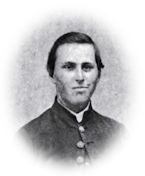
June 13th. A hot morning. All is quiet. Gave my clothes a good washing, hanging them on the bushes to dry. A good swim and bath while waiting for them to dry. Dry quickly in this climate. No change of raiment, only one suit, we are in light marching order. A soldier’s life in the field is not always one of cleanliness, marching in the dust and dirt, wading brooks and rivers, sleeping on the ground.
Orders from the Colonel. I have been made a corporal, for bravery on the battlefield of Piedmont, June 5th, 1864. So the orders read. I donned my chevrons for the honorable posish, 4th corporal, Company C, 18th Regiment, Connecticut Volunteers, at Lexington, Virginia, June 13th, 1864.
Marching orders received. We leave here tomorrow morning.


