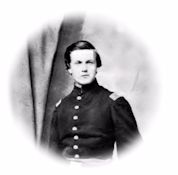
Following the American Civil War Sesquicentennial with day by day writings of the time, currently 1863.

August 2014

(From Horatio D. Jarves to Stephen M. Weld, Senior)

August 2, 1864.

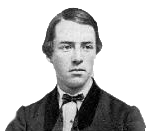
My Dear Mr. Weld, — What was a little uncertain about Steve has been cleared up, and we have had definite news from him. One of our officers conversed with the captain who took him. It appears he and some few men were so run over and trampled upon by the colored troops in their stampede that they could n’t move until too late. It was in between two traverses of the rebel first line. The rebel captain says that Steve and the few men with him held out to the last, and was finally “taken like a soldier with his arms in his hands,” by an overwhelming rush of rebs. He was unhurt, and took it good-naturedly. His enemies could n’t help admiring him. I send you a lot of letters which have come for Steve, and have taken care of his things. I will take measures to send home his horses as soon as possible.

With regards to all your family,

I am yours truly,

H. D. Jarves.

August 2d. A fine morning. All is quiet in camp. Found a place where I could wash my clothes and dry them. Drew rations. Am feeling fine. A hot sun and dusty roads to march over, a fellow cannot keep very clean. Having a good rest in the good cool woods. We cannot help to wonder why we are in this section of the woods, unless the enemy are somewhere about here. Private soldiers are not supposed to know anything, but to obey orders.

Etowah Bridge, Tuesday, Aug. 2. Rainy forenoon. Hot, sultry in the afternoon. We are once more effectually chained in camp by General Smith. No passes to be allowed save those approved by him. Yet we can go out grazing, etc. Had blackberry pies and green corn. Signed pay rolls, a pleasant task in view of the pleasing anticipations of greenbacks. Paper blockade still continues. 80th Ohio headed back from Acworth to Resaca to relieve 10th Missouri. Going out of service, time expired.

by John Beauchamp Jones

            AUGUST 2D.—Bright and hot. At 4 P.M. a cloud rising. Fear my wife, and daughter Fannie, and Custis (who has a days’ furlough), who went this morning per Fredericksburg Railroad intoHanoverCounty to gather blackberries, will be caught in a rain. Nevertheless, the rain is wanted.

            Assistant Secretary Campbell is again “allowing” doubtful characters to pass out of the Confederate States to theUnited States; among these is Dr. McClure, “the embalmer,” who, too, carried others out for bribes.

            The Signal Bureau gives information to-day of Grant’s purpose to spring the mine already sprung, also of a raid, that was abandoned, north and west ofRichmond. They say Grant has now but 70,000 men, there being only a few men left atWashington. Can the agents paid by the Signal Bureau be relied on?

            Gen. Bragg telegraphs fromColumbus,Ga., that Gen. Roddy has been ordered to reassemble his forces in North Alabama, to cutSherman’s communications.

            The news fromGeorgia is more cheering.

            The commissioners (of prices) have reduced the schedule: it was denounced universally. It is said by the Examiner that the extravagant rates, $30 per bushel for wheat, and $50 for bacon, were suggested by a farmer in office.

            Gen. Lee writes that he had directed Morgan to co-operate with Early, but he was sick.

            The enemy’s account of our loss in the battle before Atlanta is exaggerated greatly. Sherman’s army is doomed, I think.

            Seven P.M. No rain here, but my family were-drenched in a hard shower at Hanover Junction, and what was worse, they got no blackberries, the hot sun having dried the sap in the bushes.

August 2, 1864.

Just as I got out of bed this morning Aunt Julia [a slave] called me to look down the road and see the soldiers. I peeped through the blinds, and there they were, sure enough, the Yankees— the blue coats!

I was not dressed. The servant women came running in. “Mistress, they are coming! They are coming! They are riding into the lot! There are two coming up the steps!”

I bade Rachel [a slave] fasten my room door and go to the front door and ask them what they wanted. They did not wait for that, but came in and asked why my door was fastened. She told them that the white folks were not up. They said they wanted breakfast, and that quick, too.

“Thug” [short for “Sugar,” the nickname of a little girl, Minnie Minerva Glass, now Mrs. Joe Carey Murphy of Charlotte, North Carolina, who had come to pass the night with Sadai] and Sadai, as well as myself, were greatly alarmed. As soon as I could get on my clothing I hastened to the kitchen to hurry up breakfast. Six of them were there talking with my women. They asked about our soldiers and, passing themselves off as Wheeler’s men, said:

“Have you seen any of our men go by?”

“Several of Wheeler’s men passed last evening. Who are you?” said I.

“We are a portion of Wheeler’s men,” said one.

“You look like Yankees,” said I.

“Yes,” said one, stepping up to me; “we are Yankees. Did you ever see one before?”

“Not for a long time,” I replied, “and none such as you.” [These men, Mrs. Burge says further, were raiders, Illinois and Kentucky men of German origin. They left after breakfast, taking three of her best mules, but doing no further injury.]

To-night Captain Smith of an Alabama regiment, and a squad of twenty men, are camped opposite in the field. They have all supped with me, and I shall breakfast with them. We have spent a pleasant evening with music and talk. They have a prisoner along. I can’t help feeling sorry for him.

Monday, August 1st.

There is much speculation in the army as to the reason why the explosion of the mine did not accomplish what had apparently been expected of it, and bitter criticisms are freely indulged in by many of the officers and men at the loss, as we hear it reported, of from three to four thousand men with no compensatory result. The wildest rumors are in circulation, one being that General Grant had no confidence in the scheme and at the time of the explosion was actually playing cards with General Rawlings at City Point. Another is that owing to the reported strained relations between Generals Meade and Burnside, the former did not wish the mine, which was on Burnside’s front, to prove a success, and that after the fiasco he pretended to be very much disappointed and actually put Burnside in arrest, Grant countermanding the arrest as soon as he heard of it. Yet another is that Burnside is to be dismissed and Meade removed. Still another is that some of the general officers charged with the execution of the plan showed the white feather, and failed to lead their men to the assault as they should have done. There is no place in the world where gossip prevails to the extent that it does in an army in the field, and in the countless and conflicting statements of fact which seem to have acquired currency, I very much doubt if the true history of the causes which led to the failure of the mine is ever written. But whatever the real facts may have been, it is my individual opinion that if there had been an officer in supreme command, who kept himself in close touch with all parts of the line and knew the exact situation as it existed at the more important points, and so had been able promptly to take advantage of any favorable opportunities suddenly and unexpectedly arising, any disaster occurring at one point could and would have been retrieved by an overwhelming success at another point.

August 1st. Monday. Commenced a letter to Sarah. Wrote home. Regt. remained saddled some time in the morning in anticipation of an attack. Went on picket in evening.

Tuesday, 30th.—There seems to be an opinion that Yankees are not falling back, but moving to our left.

August 1.—I have had a visit from my old friend, Dr. P. Thornton, who is in General Wharton’s command. I told him all I had heard against General Wheeler. He says General W. has no taste for raiding or running after raiders. His forte is in defending the rear of the army in a retreat, and in that capacity he can not be excelled. Dr. T. also says that nearly all the men were exhausted, as they have been chasing these raiders since last Tuesday.

On Saturday General W. ordered General Anderson, who had fresh men, to hurry and intercept the enemy at a place called Corinth, where there is a good crossing on the river. He had failed to get up in time, but the doctor thinks few of them will escape. He thinks we have captured and killed at least eight or nine hundred, and they still continue to be brought in, and not an hour in the day but droves of horses are driven past.

Dr. Wellford has nearly all the wounded to attend, as Dr. Reesse has gone to the front, and Dr. Burks is very sick; and, to add to our distress, many of our best nurses have been sent to the front, and among them Dr. W.’s head nurse, Mr. Martin, from South Carolina, one of the best nurses we had; his health is bad. I think it is sinful to take such men away from these poor sufferers.

Dr. Henderson told me he was at the receiving field hospital when some of these same men were sent back from the army; and our surgeons got a few blessings from the doctors, as they had enough to do without taking care of such sick men.

Jacksonville, Fla.,
August 1, 1864.

Dear Sister L.:—

My last was written on the 23d, and in that I told you that the regiment had gone on another expedition and that I, being unwell, had been left behind in command of camp. I am much better now, so you may dispense with any extra anxiety you may have felt on my account.

The expedition did not go to Indian River as we expected, but went up the St. Johns thirty miles, landed and struck across the country to Darby, on this railroad and seven miles west of Baldwin. It then turned and came back this way. The rebs had quite a little force behind three miles of intrenchments at Baldwin, and if Birney had moved right on he might have captured the whole of them, but he waited while they got ready to move, and only captured a dozen or so, and three officers. The regiment came back on the 28th, Thursday, and next day we were ordered to embark on the Cosmopolitan at 11 o’clock.

We have the only band in this district, and under the leadership of the colored Professor Anderson, it has got to be a good band. The officers pay the professor $100 a month to lead and instruct the band, and they take some pride in it. We found that we were going to Hilton Head to stay, and just as the regiment embarked he ordered the band ashore. Being enlisted men they were subject to his orders, but their instruments were the property of the regiment and the officers piled them up on deck. General Birney said they might be our instruments, but they could not go on a government boat. We told Professor Anderson to come with us, as he was not a soldier. General Birney ordered him off the boat as he was a citizen, and so it went, but the general finally beat us and we left the band.

He was determined that the regiment should not stay at Hilton Head, so he did all he could to make us appear to disadvantage, and immediately on landing he attacked General Foster and kept at him till he succeeded in getting us sent back, and here we are again. While he was gone, Colonel Noble in command here did something. He captured a locomotive and a train of cars on the Cedar Keys railroad which crosses this railroad at Baldwin. We expect to start on another expedition to-morrow. Our trip to the Head was a nice little excursion, take it all round, especially for those who did not get seasick. There are but few more troops there than here, but it is headquarters of the department and a busy place. I was much amused while I was there at seeing the contrabands. It was market day (and is every day) and they were coming to sell the melons and other vegetables. They all came in boats, and the beach is so very flat that their boats cannot come near the shore. The men come in every day costume, but the women put on their brightest bandanas and calicoes. Arrived at the end of their voyage, they run their boats up as far as they can, and then the men get out in the water and shoulder the women and carry them ashore and return for their cargoes. The process of transportation affords excellent opportunities for taking photographs of “black-legs,” etc., for the Rogues’ Gallery. I saw one of “de pretty yaller gals” dressed in the extreme of fashion, silk dress, white skirt, gaiters, etc., standing on a board on the beach surrounded by a group of lesser lights (or shades) who paid their homage by respectful “how dye’s.” She had evidently donned some of her “missis'” garments and I but do her justice in saying she looked well in them.

My! But I did lay in the ice creams, soda waters and melons up at the Head, like a fellow who hadn’t had any in some time.

E. says his time is half out (more too, now) and if anybody gets him out in the infantry again, he’ll be a smart man. Oh, ho, ho, I told you so, but don’t tell him I told you so. His patriotism is not much less, but the poetry of war sounds better at a distance.

Its “Hottentotissimus” down here now. Thermometer past 100 degrees—a heap. I stand it much better than I expected and so does everyone else. I wear woolen clothes —woolen shirt and drawers all the time, too.