Following the American Civil War Sesquicentennial with day by day writings of the time, currently 1863.

Diary and Letters of Rutherford Birchard Hayes

Post image for “I am sorry you are to be left with so much responsibility”—Rutherford B. Hayes

CAMP CHASE, July 2, 1861.

DEAREST:—The comet, or the storm, or something makes it cold as blazes this morning, but pleasant. Speaking of shirts, did I leave my shirts at home? I have but two or three here now. Have they been lost here, or how? You need not make me any if they are gone. I intend to wear flannel or mixed goods of some sort, but if there are a few tolerably good ones or collars, you may let Dr. Joe bring them up when he comes.

By the by, you know Dr. Joe has been appointed to our regiment, Dr. Clendenin having declined the Twenty-sixth. I wrote Dr. Joe a scolding letter in reply to his note abusing the governor. I did so because I felt confident that he was to be appointed in some way, and I didn’t want him to kick the fat in the fire by getting in a sensation about it before the matter was finally determined. Matthews and all are very glad. I am more interested in it than in anything else connected with the regiment.

I believe I told you it would be in good point if you could fix up one or two of my thick vests. I shall take away from here nothing but my gray travelling suit and thick vests. The military coats will conceal the vests, so they are as good as any other. Dr. Joe better get a good ready before he comes up. It may be difficult for him to get away. As for clothing and fixings, they can all be sent to him; but his business arrangements better be made, if possible, before he leaves. If he keeps well, as I think he will, he will enjoy this life very much. His rank and pay will be the same as mine. He is allowed two or three horses, and should have at least one. There is no stabling here at present, so he need not now bring his horse, if he would prefer not to keep him at the hotel or in Columbus.

Love to Grandma and all. Kisses for the dear boys. They will mourn the loss of their Uncle Joe. I should not be much loss to them now; when they get older I will try to help in their education. Birch, if possible, should be a soldier; Webb will do for a sailor; Ruddy will do for either or ‘most anything else. I am sorry you are to be left with so much responsibility; but, with your mother’s advice, do what you both agree is best and it will perfectly satisfy me.

Affectionately, yours ever,

RUTHERFORD.

MRS. HAYES.

Post image for “A camp is a queer place;”—Rutherford B. Hayes

CAMP CHASE, June 30, 1861.

DEAREST:—Sunday morning, according to army regulations, there is to be a mustering and inspection of all men, visiting of sick quarters, etc., etc., on the last Sunday of each month. We have gone through with it, and have found, with a few exceptions, matters in good sort. Our colonel is fond of pleasantry, amiable and social. He enjoys the disposition of Matthews and myself to joke, and after duty, we get jolly. But he has not a happy way of hitting the humors of the men. Still, as we think him a kind-hearted, just man, we hope the men will learn to appreciate his good qualities, in spite of an unfortunate manner.

I have had some of the jolliest times the last week I have any recollection of. A camp is a queer place; you will enjoy being here. Matthews writes his wife not to come until the men are uniformed. This will be in about ten days we suppose. I don’t want you to wait on that account, but would like to have you stay until after we get on our good “duds.” Mother and Platt were out with Ruddy last night. He wanted to stay with us very much, but his father objected; he promised to let him stay out here with Birch.

I have heard nothing from Clendenin, but our colonel says he thinks Dr. Joe will be our physician, even if Clendenin concludes to accept the post he is offered in the Twenty-sixth. I hope he is right, and as he has had some talk with Governor Dennison on the subject, I am inclined to put faith in his conjecture.

Affectionately, your

B.

MRS. HAYES.

CAMP CHASE, June 28, 1861.

DEAR UNCLE:—I found all well at home and at Columbus— all feeling anxious about you. I gave as favorable an account of your health as I could conscientiously.

I am again in camp. Our new colonel is personally an agreeable gentleman to be associated with; in experience and education, equal to the place; but probably deficient in physical health and energy. . . .

Sincerely,

R. B. HAYES.

S. BIRCHARD.

CAMP CHASE, June 27, 1861, Thursday, A. M.

DEAREST L—:—At my leisure, I have looked over the little what-you-may-call-it and its chapter of contents. It is so nice, and has everything needful that I have thought of, and more too. Much obliged, dearest. With all my boots, I find I have no slippers; forgot, also, my pepper-and-salt vest.

Found mother and all well and happy, and most glad that you are coming up. . . . We shall probably be here some time longer than I supposed. Matthews says Colonel Scammon turns out to be socially and individually a most agreeable person to be associated with.

We have chosen a Methodist chaplain, Amos Wilson, of Bucyrus. The governor could not appoint but one of these four surgeons from Cincinnati, and took Clendenin as first on the list, and first applied for by Colonel Fyffe. If Dr. Clendenin declines, he will appoint Dr. Joe for us, and says he shall be the next appointed from Cincinnati. He has appointed a good man for us, but will transfer him to make room for Joe if Clendenin does not accept. We can’t complain of the governor’s disposition in the matter. He wishes to know Dr. Clendenin’s intentions as soon as possible. If he declines, Dr. Joe must be ready to come up forthwith. Dr. Jim will pretty certainly be retained as assistant, in any event, but he must pass an examination, if he is in this region when the new appointment is to be made.

Love to “all the boys,” and much for Grandma and yourself, from your loving and affectionate.

R.

MRS. HAYES.

CAMP CHASE, June 22, 1861.

DEAREST LU:—I start for Fremont this morning. . . . As to surgeons, four only are to be appointed; it will not be possible to get two of them from Cincinnati. Either Clendenin or Dr. Joe will not get appointed. I mention this merely to show the facts. I want the doctor to do nothing at all about it, nor to say anything about it. Dr. Clendenin can probably get an appointment from Washington as brigade surgeon. It will be some days before the appointments will be made. There is a good disposition to accommodate us at headquarters, and I think the prospect fair for his [Dr. Joe’s] appointment.

I shall want towels, sheets, and three table-cloths, one and one-half dozen napkins, two comforts. Don’t buy them, or any of them, but if you have them to spare, I will take them. I would advise the spending of as little as possible. We do not know the future, and economy is a duty. These things are merely luxuries. Love to all.

Affectionately,

R.

P. S.—You will enjoy looking at us here, and I shall be glad to have you come up. You can hardly live out at camp; but possibly, we can keep you a night or two, and you can stay here through the day. It is pleasant living here. Colonel Scammon is our colonel. This will do. It has advantages which I need not explain which would not occur to an outside looker-on.

MRS. HAYES.

CAMP CHASE, June 20, 1861.

DEAR UNCLE:—I now expect to leave here on Saturday and come to Fremont to stay over Sunday with you. On Monday I will go down to Cincinnati to stay one or two days, and then I return to devote myself to the instruction and exercises of my post. Matthews returned yesterday, having finished his home preparations.

We have been in camp almost two weeks, and were getting on finely when we lost our colonel. Rosecrans has been promoted to a brigadier-generalship, and left us night before last to command the Virginia expedition to the Kanawha. We are helping the governor find some competent military man to take his place. If Matthews had had two months’ teaching and experience, he would be willing to take the place, and I should have perfect confidence in him, but as it is, he prefers not to take the responsibility.

Mother has returned. She was out here a few days ago, in good health for her and spirits. I shall see you so soon, that I need not write further. I enjoy this life, and it is going to be healthy for me. I shall hardly be more exposed to cold than in a very open tent the two cold nights a few days ago; but I am gaining in strength and spirits.

Sincerely,

R. B. HAYES.

S. BIRCHARD

CAMP CHASE, June 20, 1861.

DEAREST L—:—Your letter filled me with joy—as your letters will always do. I write to say that my present purpose is to go to Fremont Saturday, to remain over Sunday, and Monday, to go down home and stay one or two days only. You will find it so pleasant up here that I do not go down except for business. Make little mem.’s of all things you want me to attend to. Recollect about any thin duds I have, especially coats. I am now well provided with most things.

Yes, the loss of our colonel did trouble us. Matthews does not yet wish the responsibility of command. With a few weeks’ experience I would prefer his appointment; in fact, I would anyhow, but we are casting about and the governor will consult our wishes. Our present preference is either Colonel [Eliakim Parker] Scammon or Colonel George W. McCook, the latter if he would take it. It will probably be satisfactory. If the new man is competent, he will be a very mean man if he does not get on well with us.

Affectionately,

R.

MRS. HAYES.

June—, 1861.—Early in the second week of our camping out in service, Colonel Rosecrans returned and set vigorously to work organizing the regiment. The evening of the day he returned we were closing up matters in our tent preparatory to going to bed, when two gentlemen rode up with a dispatch which announced the appointment of Colonel Rosecrans to the post of brigadier-general, and ordering him to repair to western Virginia to take command of Ohio troops moving in that direction. We rode into Columbus and saw the colonel now general, off about midnight. Good-bye to our good colonel. A sorry thing for us. May it prove all he hopes to him. I shall never forget how his face shone with delight as he read the dispatch.

CAMP JACKSON, Sunday, June 16, 1861.

DEAREST L—:—Morning work done and waiting till Dr. Hoge begins, I write to my darling wife and boys. Would you like to know our daily routine. (Mem.:—Colonel King commanding State troops and my superiors, Colonels Rosecrans and Matthews, all having gone home, I am now in command of all at this post, eighteen companies United States troops and sixteen companies State troops, in all three thousand men and upwards. A sudden responsibility for a civilian, but the duties are chiefly such as a civilian can easily do, so it is strange rather in appearance than reality). First, at 5 A. M., gun fired and reveille sounded, calling all men to roll-call. I was up and dressing. Owing to bright light in a tent, sound sleeping in the cool air, etc., etc., this I did not find difficult. In a few minutes all the captains call at my tent to report themselves and the condition of their men.

I sit at a table looking towards the front entrance of the tent; an orderly on my right to go errands; a clerk at a table on the left to write; an adjutant ditto to give orders and help me guess what ought to be done in each case, and a sentinel slowly pacing back and forth in front of the entrance whose main employment is telling men to take off their hats before entering on the surroundings. The first business is looking over the orders of the day, and telling the adjutant to see them carried out. These are as to guards and such, which are stereotyped with slight alterations to suit circumstances—such as guarding wells, fixing new sentinels where men are suspected of getting out, etc., etc. Next comes issuing permits to go out of camp to town and to parties to go bathing in the Scioto one and one-half miles distant. Then comes in, for an hour or more, the morning reports of roll-call, showing the sick, absent, etc., etc., all to be looked over and corrected; and mistakes abound that are curious enough. Once we got all the officers returned as “under arrest.” One captain lost a lieutenant, although he was present as plainly as Hateful W. Perkins was in Pease’s anecdote. Then rations are returned short; on that point I am strong, and as the commissary is clever, we soon correct mistakes. Then we have difficulties between soldiers, very slight and easily disposed of; but troubles between soldiers and the carpenters whose tools disappear mysteriously, and farmers in the neighborhood who go to bed with roosts of barnyard fowl and wake up chickenless and fowlless, are more troublesome. The accused defenders of their country can always prove an alibi by their comrades, and that the thing is impossible by the sentinels whose beat they must have passed.

Since writing the above, I have waited under a tree, with a flag raised, three quarters of an hour for Dr. Hoge’s congregation, but for some reason he did not come, and an audience of one thousand were disappointed, possibly(?), however, not all disagreeably. I have sent five men and a sergeant to arrest two deserters in Columbus (not of our regiment) belonging to Captain Sturgess’ company of Zanesville; one sergeant and two men to see safely out of camp two men who were about to have their heads shaved for refusing to take the oath of allegiance; a lieutenant and ten men to patrol the woods back of the camp, to prevent threatened depredations on a farmer. This all since I began writing. The wind is rising and the dust floats in on my paper, as you see. As yet, we eat our meals at Colonel King’s quarters—plain good living. Guard-mounting is a ceremonious affair at 9 A. M. At 12 M., drum-beat and roll-call for dinner; at 6 P. M., ditto for supper; at 7 P. M., our band calls out the regiment for a parade; not yet a “dress parade,” but a decidedly imposing affair, notwithstanding. The finale is at 10 P.M.

The evenings and night are capital. The music and hum, the cool air in the tent, and open-air exercise during the day, make the sleeping superb. We have cots about like our lounge, only slighter and smaller, bought in Dayton. Our men are fully equal to the famous Massachusetts men in a mechanical way. They build quarters, ditches, roads, traps; dig wells, catch fish, kill squirrels, etc., etc., and it is really a new sensation, the affection and pride one feels respecting such a body of men in the aggregate.

We are now feeling a good deal of anxiety about Colonel Rosecrans. He is said to be appointed a brigadier. If it were to take effect six weeks or three months hence, we would like it if he should be promoted; but now we fear some new man over us who may not be agreeable, and we do not like the difficulties attendant upon promotion. The governor says we shall not lose Colonel Rosecrans, and we hope he is right.

I enclose a letter in the Cleveland Herald written by some one in one of our Cleveland companies. With Colonel Rosecrans in command, we should have no trouble with our men. We have reconciled them as, I think, perfectly, or as nearly so as men ever are with their officers. But if Colonel Rosecrans goes, we are between Scylla and Charbydis you know—officers at our head whom we may not like, or men under us who do not like us; but it will all come right. I am glad I am here, and only wish you were here.

I was in at Platt’s last evening an hour or so. Laura was expecting Platt by the late train, but as he has not yet come out here, I suspect he did not arrive. Love to all. Kiss the boys. I enjoyed reading your talk about them and their sayings.

Affectionately,

R. B. HAYES.

MRS. HAYES.
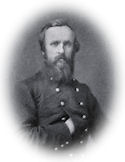
Sunday [June] 16.—Colonel Rosecrans and Matthews, having gone to Cincinnati, and Colonel King to Dayton, I am left in command of camp, some twenty-five hundred to three thousand men—an odd position for a novice, so ignorant of all military things. All matters of discretion, of common judgment, I get along with easily, but I was for an instant puzzled when a captain in the Twenty-fourth, of West Point education, asked me formally, as I sat in tent, for his orders for the day, he being officer of the day. Acting on my motto, “When you don’t know what to say, say nothing,” I merely remarked that I thought of nothing requiring special attention; that if anything was wanted out of the usual routine I would let him know.