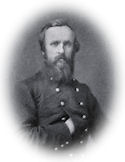
Following the American Civil War Sesquicentennial with day by day writings of the time, currently 1863.

Diary and Letters of Rutherford Birchard Hayes

CAMP JACKSON, NEAR COLUMBUS,

Friday P. M., June 14, 1861.

DEAR UNCLE:—I received from Cincinnati two letters from you, and am very sorry to hear of your ill health. If you are not likely to come here soon, let me know, and I will certainly visit Fremont, when I can get leave to go home. The business here will require attention for a few days yet, before we get into an established routine. I shall probably leave here in about a week, and can then, if you wish it, visit you one day. If you were well, you would enjoy a few days here. Laura could send you out in the morning, and there are hosts of conveyances back.

I enjoy this thing very much. It is open-air, active life, novel and romantic. Hotter than Tophet in the sun, but a good breeze blowing all the time.

Our arrangement of regimental matters has turned out to be a capital one so far. We are in command of the whole camp, and, as Colonel Rosecrans is absent, Matthews and I are starring it. What we don’t know, we guess at, and you may be sure we are kept pretty busy guessing.

My want now is a good horse. A small or medium-sized animal of good sense, hardy and kind, good looking enough, but not showy, is what I want. A fast walk, smooth trot, and canter are the gaits. I don’t object to a pacer if he can walk and gallop well. Don’t bother yourself to find one, but if you happen to know any, let me know. I am busy or I would write more.

Sincerely,

R. B. HAYES.

S. BIRCHARD.


CAMP JACKSON, NEAR COLUMBUS,
Friday P. M., June 14, 1861.
DEAR UNCLE:—I received from Cincinnati two letters from you, and am very sorry to hear of your ill health. If you are not likely to come here soon, let me know, and I will certainly visit Fremont, when I can get leave to go home. The business here will require attention for a few days yet, before we get into an established routine. I shall probably leave here in about a week, and can then, if you wish it, visit you one day. If you were well, you would enjoy a few days here. Laura could send you out in the morning, and there are hosts of conveyances back.
I enjoy this thing very much. It is open-air, active life, novel and romantic. Hotter than Tophet in the sun, but a good breeze blowing all the time.
Our arrangement of regimental matters has turned out to be a capital one so far. We are in command of the whole camp, and, as Colonel Rosecrans is absent, Matthews and I are starring it. What we don't know, we guess at, and you may be sure we a
CAMP JACKSON, NEAR COLUMBUS,

Friday P. M., June 14, 1861.

DEAR UNCLE:—I received from Cincinnati two letters from you, and am very sorry to hear of your ill health. If you are not likely to come here soon, let me know, and I will certainly visit Fremont, when I can get leave to go home. The business here will require attention for a few days yet, before we get into an established routine. I shall probably leave here in about a week, and can then, if you wish it, visit you one day. If you were well, you would enjoy a few days here. Laura could send you out in the morning, and there are hosts of conveyances back.

I enjoy this thing very much. It is open-air, active life, novel and romantic. Hotter than Tophet in the sun, but a good breeze blowing all the time.

Our arrangement of regimental matters has turned out to be a capital one so far. We are in command of the whole camp, and, as Colonel Rosecrans is absent, Matthews and I are starring it. What we don't know, we guess at, and you may be sure we are kept pretty busy guessing.

My want now is a good horse. A small or medium-sized animal of good sense, hardy and kind, good looking enough, but not showy, is what I want. A fast walk, smooth trot, and canter are the gaits. I don't object to a pacer if he can walk and gallop well. Don't bother yourself to find one, but if you happen to know any, let me know. I am busy or I would write more.

Sincerely,

R. B. HAYES.

S. BIRCHARD.
re kept pretty busy guessing.
My want now is a good horse. A small or medium-sized animal of good sense, hardy and kind, good looking enough, but not showy, is what I want. A fast walk, smooth trot, and canter are the gaits. I don't object to a pacer if he can walk and gallop well. Don't bother yourself to find one, but if you happen to know any, let me know. I am busy or I would write more.
Sincerely,
R. B. HAYES.
S. BIRCHARD.
Post image for “Our captains impress me, as a body, most favorably.”—Diary of Rutherford B. Hayes

Thursday, June 13, Colonel William S. Rosecrans appeared and assumed the command. Our regiment was paraded after retreat had been sounded. The long line looked well, although the men were ununiformed and without arms. We were lucky in having a band enlisted as privates at Ashland.

Colonel Rosecrans is a spirited, rapid talker and worker and makes a fine impression on officers and men. Appointments of regimental staff officers were made. . . . Guards or sentinels detailed. Men lectured on manners and behavior, etc., etc.

There are many good singers in camp, and as we are not reduced to order yet, the noises of the camp these fine evenings and the strangeness have a peculiar charm. How cold the nights are! I am more affected as I look at the men on parade than I expected to be; not more embarrassed. I am not greatly embarrassed, but an agreeable emotion, a swelling of heart possesses me. The strongest excitement was when I saw the spirit and enthusiasm with which the oath was taken.

Our captains impress me, as a body, most favorably. Captain McIlrath is a large, fine-looking man, six feet three and a half inches high; has been a chief of police in Cleveland—one of the best in his vocation; takes great pride in his company and has it in a fine state of discipline—the best of any in camp. Captain Skiles has served in Mexico, is apparently a man of fine character, a member of church. Captain Moore is a New England-farmer-like man, shrewd and trusty. Captain Zimmerman is a conscientious, amiable, industrious man and has a stout set of men from the iron region, Mahoning County.

Post image for “The camp is yet higgledy-piggledy…”—Rutherford B. Hayes

COLUMBUS, June 12, 1861.

DEAR FORCE:—You can’t regret more than I do the issue of this business, so far as you are concerned. I have tried to get two companies (so as to include you and Company A of G.G. [Guthrie Greys]) admitted. Failing in that, I tried one, but the thing is all settled, and the governor fears to disturb the elements again.

Our regiment promises to be an exceedingly pleasant one. We are the first regimental officers on the ground. Our colonel will command in this camp until a brigadier-general arrives. We are the best known persons, and the struggle is to get into our regiment from all quarters. The camp is yet higgledy-piggledy and will require some labor to bring it up. But all goes on rapidly. We have been busy as bees a large part of the time in the scorching sun; but so far, it [is] great fun. I enjoy it as much as a boy does a Fourth of July.

Sincerely,

R.B. HAYES

M. F. FORCE, ESQ.

Our mustering was completed June 11 and 12. We were guests of Colonel King (for rations) at the log headquarters and slept at Platt’s. Both good arrangements. Wednesday evening, 12th, we got up a large marquee, fine but not tight, and that night I had my first sleep under canvas—cool but refreshing.

COLUMBUS, June 12, 1861.

DEAR UNCLE:—We are in Camp Jackson—hot, busy, and jolly. Colonel Rosecrans is an energetic, educated West Pointer, very cheerful and sensible. Judge Matthews you know. We are on good terms with our captains, and the whole thing pleases me vastly; but I see no chance of getting out to see you; so you must come here one of these days. We are in the suds yet; still I would enjoy a visit even now. I cannot say more now. Good-bye.

Sincerely,

R.B. HAYES.

P.S.—We were sworn in to-day; our commissions are from the 7th.

S. BIRCHARD.

COLUMBUS, June 10, 1861.

DEAR UNCLE:—Matthews and myself are here and find that the governor makes up a list of regimental officers, calls it a regimental organization and assigns to it companies as he pleases, preferring to select officers from one part of the State and men from another. We are the Twenty-third Regiment¹ and our companies will probably be from the north. The men indicated are said to be a superior body. We have seen the captains and are favorably impressed. Of course this policy is calculated to cause embarrassment, but the governor shoulders the responsibility and we are not involved in any personal unpleasantness. We shall be here probably a week before going down to make our final preparations.

I may not be able to visit Fremont. If not you will see me here.

Sincerely,

R. B. HAYES.

S. BIRCHARD.

_______

¹ The first three-years regiment organized in Ohio

COLUMBUS, June 10, 1861.

DEAR FORCE:—I do not dispatch you as to matters here, because it is not certain what will be done, but our present impression is, that we can get no additional companies into our regiment. Full regiments have been made up, and the governor is assigning officers to them, or, rather, he makes up regimental staffs, and assigns companies from a list of accepted companies already in camp. . . . This mode of doing the thing creates some difficulty, and changes are possible, but not probable. I regret this, but we can’t perhaps change it. The governor is doing it in a frank, manly way which relieves us from all embarrassment in the premises.

Sincerely,

R.B. HAYES.

M. F. FORCE, ESQ.

(Private—Don’t show this out of the family.)

CINCINNATI [COLUMBUS], June 10, 1861.

DEAR DOCTOR:—We are not quite certain, but our matters probably stand this way. The governor makes up a regimental staff and assigns to it companies as far removed from it, usually, as possible. We are to be the Twenty-third Regiment and companies will be assigned, usually, from the north. The proposed companies are very fine ones. This policy naturally creates some embarrassment, and may, or may not, work well, but the governor takes the responsibility in a very manly way, and relieves us from all embarrassments. If there is trouble, it will be between the governor and the companies, not involving us in the least. We like our captains, and would get along with them well, if this policy don’t interfere. Nothing can be said about surgeon at present. I suspect it is arranged, but can’t guess how.

I can’t say when I shall come down, but soon, to stay two or three days and fix up; probably about Saturday next. Lucy may gradually get ready my matters; not too many things; there will be time enough.

The camp is at the race-track four miles west. You need not talk much of my probable fix, as changes are possible. Love to all. I will write often.

Sincerely,

R. B. HAYES.

P.S.—Order at Sprague’s a major’s uniform for infantry; they have my measure; see Rhodes; also, a blue flannel blouse, regulation officer’s; pants to be large and very loose about the legs; to be done the last of this week, or as soon as convenient. Blouse and pants first to be done.

DR. JOSEPH T. WEBB.

June 10, Monday morning, after a few hours’ rest at the Goodale or Capitol House, we went over to the governor’s office and learned that the governor had made up a regiment composed of companies chiefly from the extreme northern and northeastern part of the East [State], the field officers being all from Cincinnati, to be the Twenty-third Regiment Ohio Volunteer Infantry, for the service of the United States during the war. This regiment was to be organized under General Order No. 15, issued by the adjutant-general of the United States, May 4, 1861, and was the first regiment in Ohio in which the regiment did not elect its own field officers. We feared there would be some difficulty in reconciling the men and officers to officers—strangers—not of their own selection. . . .

Several of these companies had been in camp in Camp Taylor, near Cleveland, together, and wished to remain and act together. All the captains came into the governor’s office, soon after we entered, in a state of some excitement, or at least some feeling, at finding themselves placed under strangers from a distant part of the State. We were introduced to them. Colonel Rosecrans unfortunately was not present, having not yet arrived from some military service at Washington. The governor explained to Matthews and myself that the field officers of the Twenty-third were fixed, that we were the Twenty-third Regiment, and that those captains could go into it or not as they saw fit. A little acquaintance satisfied us that our captains were not disposed to be unreasonable, that their feeling was a natural one under the circumstances, and that all ill feeling would disappear if we showed the disposition and ability to perform our duties. Captain Beatty, however, would not be content. He had been a senator in the Legislature, was fifty-five or sixty years old and not disposed to go under young men.

We took a hack out to Camp Jackson,¹ four miles west of Columbus on the National Road. Several companies were mustered into service by Captains Simpson and Robinson the same day. Colonel E. A. King, of Dayton, was, under state authority, in command of all the soldiers, some twenty-five hundred in number, not mustered into service. As rapidly as they were mustered in, they passed under Colonel Matthews, as the ranking field officer in United States service. Luckily, Captain Beatty was not ready for the mustering officer and we succeeded in getting Captain Zimmerman’s fine company in his place. Ditto Captain Howard in place of Captain Weller.

_______

¹ Name changed a few days later to Camp Chase.

Post image for “We have been at the camp all the afternoon.”—Rutherford B. Hayes

COLUMBUS, Monday, 10 P. M., June 10, 1861.

DEAREST LU:—I have just sent Judge Matthews to bed in the room over the library, and I thought I’d write a few words to my dear wife before sleeping. We have been at the camp all the afternoon. Our quarters are not yet built; all things are new and disorganized; the location is not nearly so fine as Camp Dennison, but with all these disadvantages, we both came away feeling very happy. We visited our men; they behaved finely; they are ambitious and zealous, and met us in such a good spirit. We really were full of satisfaction with it. We are glad we are away from the crowds of visitors who interfere so with the drills at Camp Dennison.

When we reached town, Judge Matthews learned that Bosley was elected over the Grays; he was more than content with it.

I shall not need things in a hurry; take time, and don’t worry yourself. I shall probably be down the last of the week; I shall only be prevented by the absence of Colonel Rosecrans and Judge Matthews. The colonel has accepted and will be here Wednesday.

There is a good band in camp; several well drilled companies. We shall have four thousand men by Saturday. Ours is the best regiment: two companies from Cleveland, one from Sandusky, one from Bellefontaine and one from Ashtabula, under a son of J.R. Giddings—a pleasant gentleman and a capital company.

But I must stop this. You know how I love you; how I love the family all; but Lucy, I am much happier in this business than I could be fretting away in the old office near the courthouse. It is living. My only regret is that you don’t like our location. We shall probably spend the summer here, or a good part of it, unless we go into Virginia. No more tonight. Much love.

Sincerely,

R.B. HAYES.

MRS. HAYES.