July 28, Tuesday. The Secretary of War promises that he will reinforce General Gillmore with 5000 men. I thought it should be 10,000 if we intended thorough work, but am glad of even this assurance. General Halleck excuses his non-action by saying Gillmore had not applied for more men. Vigilance is not one of Halleck’s qualifications.
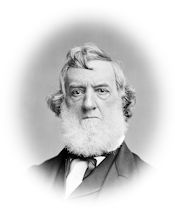
Diary of Gideon Welles
July 27, Monday. Had a strange letter from Senator John P. Hale, protesting against the appointment of Commodore Van Brunt to the command of the Portsmouth Navy Yard, because he and V. B. are not on friendly terms. He wishes me to become a party to a personal controversy and to do injustice to an officer for the reason that he and that officer are not in cordial relations. The pretensions and arrogance of Senators become amazing, and this man, or Senator, would carry his private personal disagreement into public official actions. Such are his ideas of propriety and Senatorial privilege and power that he would not only prostitute public duty to gratify his private resentment, but he would have the Department debased into an instrument to minister to his enmities.
I have never thought of appointing Van Brunt to that yard, but had I intended it, this protest could in no wise prevent or influence me. With more propriety, I could request the Senate not to make Hale Chairman of the Naval Committee, for in the entire period of my administration of the Navy Department, I have never received aid, encouragement, or assistance of any kind whatever from the Chairman of the Naval Committee of the Senate, but constant, pointed opposition, embarrassment, and petty annoyance, of which this hostility to Van Brunt is a specimen. But I have not, and shall not, ask the Senate to remove this nuisance out of their way and out of my way. They have witnessed his conduct and know his worthlessness in a business point of view; they know what is due to the country and to themselves, as well as to the Navy Department.
The Mexican Republic has been extinguished and an empire has risen on its ruins. But for this wicked rebellion in our country this calamity would not have occurred. Torn by factions, down-trodden by a scheming and designing priesthood, ignorant and vicious, the Mexicans are incapable of good government, and unable to enjoy rational freedom. But I don’t expect an improvement of their condition under the sway of a ruler imposed upon them by Louis Napoleon.
The last arrivals bring us some inklings of the reception of the news that has begun to get across the Atlantic of our military operations. John Bull is unwilling to relinquish the hope of our national dismemberment. There is, on the part of the aristocracy of Great Britain, malignant and disgraceful hatred of our government and people. In every way that they could, and dare, they have sneakingly aided the Rebels. The tone of their journals shows a reluctance to believe that we have overcome the Rebels, or that we are secure in preserving the Union. The Battle of Gettysburg they will not admit to have been disastrous to Lee, and they represent it as of little importance compared with Vicksburg and Port Hudson, which they do not believe can be taken. Palmerston and Louis Napoleon are as much our enemies as Jeff Davis.
July 26, Sunday. Dispatches from Admiral Dahlgren under date of the 21st were received in the second mail. He says Gillmore had but 8000 men when he commenced operations, that of these he has lost by casualties — killed, wounded, and prisoners — about 1200, and a like number are useless by illness, the result of overexertion, etc., so that he has actually less than 6000 effective men. The War Department does not propose to strengthen him. Dahlgren three or four times has said the force was inadequate, and expressed a hope for reinforcements. I sent Assistant Fox with these dispatches to Halleck, who rebuffed him,—said General Gillmore had called for no more troops, and if we would take care of the Navy, he would take care of the Army.
I went this noon (Sunday) to the President with Dahlgren’s dispatches; told him the force under Gillmore was insufficient for the work assigned him; that it ought not now to fail; that it ought not to have been begun unless it was understood his force was to have been increased; that such was his expectation, and I wished to know if it could not be done. It would be unwise to wait until Gillmore was crushed and repelled, and to then try and regain lost ground, which seemed to be the policy of General Halleck; instead of remaining inactive till Gillmore, exhausted, cried for help, his wants should be anticipated.
The President agreed with me fully, but said he knew not where the troops could come from, unless from the Army of the Potomac, but if they were going to fight they would want all their men. I asked if he really believed Meade was going to have a battle. He looked at me earnestly for a moment and said: “Well, to be candid, I have no faith that Meade will attack Lee; nothing looks like it to me. I believe he can never have another as good opportunity as that which he trifled away. Everything since has dragged with him. No, I don’t believe he is going to fight.”
“Why, then,” I asked, “not send a few regiments to Charleston? Gillmore ought to be reinforced with ten thousand men. We intend to send additional seamen and marines.” “Well,” said the President, “I will see Halleck. I think we should strain a point. May I say to him that you are going to strengthen Dahlgren?” “Yes,” I replied. “But it would be better that you should say you ordered it, and that you also ordered the necessary army increase. Let us all do our best.”
Our interview was in the library, and was earnest and cordial. If, following the dictates of his own good judgment, instead of deferring to Halleck, who lacks power, sagacity, ability, comprehension, and foresight to devise, propose, plan, and direct great operations, and who is reported to be engaged on some literary work at this important period, the President were to order and direct measures, the army would be inspired and the country benefited. A delicacy on the part of Gillmore to ask for aid is made the excuse of the inert General-in-Chief for not sending the troops which are wanted, and when he learns from a reliable source of the weak condition of the command, he will not strengthen it, or move, till calamity overtakes it, or he is himself ordered to do his duty. Halleck originates nothing, anticipates nothing, to assist others; takes no responsibility, plans nothing, suggests nothing, is good for nothing. His being at Headquarters is a national misfortune.
July 25, Saturday. Colonels Roes and Morris, commanding two of our Connecticut regiments, came to see me. Each is of opinion that few men will be obtained in that State under the draft. I fear the subject has not been managed with much skill, and that it has been done without much consultation or advice. Possibly one or two members of the Cabinet have run to the War Department and volunteered their views. I have not.
July 24, Friday. This being Cabinet day, Mr. Seward spent an hour with the President, and when the rest came in, he immediately withdrew. Some inquiry was made in regard to army movements and Meade in particular, but no definite information was communicated. Meade is watching the enemy as fast as he can since he let them slip and get away from him.
Some cheering news from Foster, who has cut the great Southern Railroad and burnt the bridge over Tar River.
A force from Kelley has also seized and destroyed the Southwestern Railroad at Wytheville. While something efficient is being done by Union generals with small commands, the old complaint of inactivity and imbecility is again heard against the great Army of the Potomac. Meade is — I say it in all kindness — unequal to his position, cannot grasp and direct so large a command, would do better with a smaller force and more limited field, or as second under a stronger and more able general. If he hesitates like McClellan, it is for a different reason. Since the Battle of Gettysburg he has done nothing but follow Lee at a respectful distance.
July 23, Thursday. I had a call on Monday morning from Senator Morgan and Sam J. Tilden of New York in relation to the draft. General Cochrane was present during the interview and took part in it. The gentlemen seemed to believe a draft cannot be enforced in New York.
Am feeling anxious respecting movements in Charleston Harbor. It is assumed on all hands by the people and the press that we shall be successful. I am less sanguine, though not without hopes. Fort Wagner should have been captured in the first assault. The Rebels were weaker then than they will be again, and we should have been as strong at the first attack as we can expect to be. Gillmore may have been a little premature, and had not the necessary force for the work.
Whiting, Solicitor of the War Department, has gone to Europe. Is sent out by Seward, I suppose, for there is much sounding of gongs over the mission instituted by the State Department to help Mr. Adams and our consuls in the matter of fitting, or of preventing the fitting out of naval vessels from England. This Solicitor Whiting has for several months been an important personage here. I have been assured from high authority he is a remarkable man. The Secretary of War uses him, and I am inclined to believe he uses the Secretary of War. This fraternity has made the little man much conceited. Mr. Seward, Mr. Chase, and even the President have each of them spoken to me of him, as capable, patriotic, and a volunteer in the civil service to help the Government and particularly the War Department.
I have found him affable, anxious to be useful, with some smartness; vain, egotistical, and friendly; voluble, ready, sharp, not always profound, nor wise, nor correct; cunning, assuming, presuming, and not very fastidious; such a man as Stanton would select and Seward use. Chase, finding him high in the good graces of the President and the Secretary of War, has taken frequent occasion to speak highly of Solicitor Whiting. My admiration is not as exalted as it should be, if he is all that those who ought to know represent him.
July 22, Wednesday. A delegation from Connecticut, appointed by the Legislature, called on me and consumed some time in relation to the coast defenses of the State and the waters of Long Island Sound. There is quite a panic along the whole New England coast. It is impossible to furnish all the vessels desired, and there is consequently the disagreeable result of refusal I have very little apprehension of danger from any rover or predatory excursion in that quarter, yet it is possible, as it is possible some Rebel may set my house on fire. Should a rover make a dash in the Sound, do damage, and escape, great and heavy would be the maledictions on me after these formal applications. I am many times a day reminded and told of my responsibility.
Called last evening to see young Dahlgren. Was shocked to hear the gallant young fellow had lost his leg. Shall be glad if he does not lose his life, which I much fear.
Mr. Gooch and Mr. Hooper[1] continue to be very troublesome in regard to the Charlestown Navy Yard, which they are disposed to take into their hands, so far at least as to make it subservient to their election and party aspirations.
[1] Daniel W. Gooch and Samuel Hooper, Republican Congressmen from Massachusetts
July 21, Tuesday. A dispatch from General Grant makes mention of large captures of cattle coming east from Texas, and of munitions going south to Kirby Smith. General Sherman is following up Joe Johnston.
A dispatch from Admiral Porter says that he, in concert with General Grant, sent an expedition up the Yazoo and that it was a complete success. Grant in his dispatch makes no mention of, or allusion to, the Navy in this expedition, nor of any consultation with Admiral Porter, although without the naval force and naval cooperation nothing could have been accomplished.
LeRoy telegraphs that he, with his gunboats, followed Morgan, or kept on his flank five hundred miles up the Ohio River, encountered him when attempting to cross the river near Bluffington, and drove him back.
The aspect of things is more favorable and it is amusing to read the English papers and speeches anticipating, hoping, predicting disaster to the Union cause. It will be more amusing to read the comments on the reception of intelligence by the steamer which left soon after the 4th inst.
July 20, Monday. Morgan’s invasion of Ohio and Indiana is likely to terminate more creditably to the Union cause than Lee’s excursion into Pennsylvania. It looks as if the fellow and his force would be captured.
July 18, Saturday. Have a letter from Governor Andrew, who in a matter misrepresented me; claims to have been led into error by the “Gloucester men,” and is willing to drop the subject.[see footnote 1] I shall not object, for the Governor is patriotic and zealous as well as somewhat fussy and fanatical.
General Marston and others, a delegation from New Hampshire with a letter from the Governor, wanted additional defenses for Portsmouth. Letters from numerous places on the New England coast are received to the same effect. Each of them wants a monitor, or cruiser, or both. Few of them seem to be aware that the shore defenses are claimed by and belong to the War, rather than the Navy, Department, nor do they seem to be aware of any necessity for municipal and popular effort for their own protection.
Two delegations are here from Connecticut in relation to military organizations for home work and to preserve the peace. I went to the War Department in their behalf, and one was successful, perhaps both.
There is some talk, and with a few, a conviction, that we are to have a speedy termination of the war. Blair is confident the Rebellion is about closed. I am not so sanguine. As long as there is ability to resist, we may expect it from Davis and the more desperate leaders, and when they quit, as they will if not captured, the seeds of discontent and controversy which they have sown will remain, and the social and political system of the insurrectionary States is so deranged that small bodies may be expected to carry on for a time, perhaps for years, a bushwhacking warfare. It will likely be a long period before peace and contentment will be fully restored. Davis, who strove to be, and is, the successor of Calhoun, without his ability, but with worse intentions, is ambitious and has deliberately plunged into this war as the leader, and, to win power and fame, has jeopardized all else. The noisy, gasconading politicians of the South who figured in Congress for years and had influence have, in their new Confederacy, sunk into insignificance. The Senators and Representatives who formerly loomed up in Congressional debate in Washington, and saw their harangues spread before the country by a thousand presses, have all been dwarfed, wilted, and shriveled. The “Confederate Government,” having the element of despotism, compels its Congress to sit with closed doors. Davis is the great “I am.”
In the late military operations of the Rebels he has differed with Lee, and failed to heartily sustain that officer. It was Lee’s plan to uncover Washington by inducing Hooker to follow him into Pennsylvania. Hooker fell into the trap and withdrew everything from here, which is surprising, for Halleck’s only study has been to take care of himself and not fall into Rebel hands. But he felt himself safe if Hooker and the army were between him and Lee.
From the interrupted dispatches and other sources, it is ascertained that Lee’s plan was the concentration of a force of 40,000 men at Culpeper to rush upon Washington when our army and the whole Potomac force was far away in the Valley of the Cumberland. But Davis, whose home is in Mississippi and whose interest is there, did not choose to bring Beauregard East. The consequence has been the frustration of Lee’s plans, which have perished without fruition. He might have been disappointed, had he been fairly seconded. Davis has undoubtedly committed a mistake. It hastens the end. Strange that such a man as Davis, though possessing ability, should mislead and delude millions, some of whom have greater intellectual capacity than himself. They were, however, and had been, in a course of sectional and pernicious training under Calhoun and his associates, who for thirty years devoted their time and talents to the inculcation first of hate, and then of sectional division, or a reconstruction of the federal government on a different basis. Nullification was an outgrowth. When Calhoun closed his earthly career several men of far less ability sought to wear his mantle. I have always entertained doubts whether Calhoun intended a dismemberment of the Union. He aimed to procure special privileges for the South, — something that should secure perpetuity to the social and industrial system of that section, which he believed, not without reason, was endangered by the increasing intelligence and advancing spirit of the age. Many of the lesser lights — shallow political writers and small speech-makers — talked flippantly of disunion, which they supposed would enrich the South and impoverish the North. “Cotton is king,” they said and believed, and with it they would dictate terms not only to the country but the world. The arrogance begotten of this folly led to the great Rebellion.
Davis is really a despot, exercising arbitrary power, and the people of the South are abject subjects, demoralized, subdued, but frenzied and enraged, with little individual independence left, — an impoverished community, hurrying to swift destruction. “King Cotton” furnishes them no relief. Men are not permitted in that region of chivalry to express their views if they tend to national unity.
Hatred of the Union, of the government, and of the country is the basis of the Confederate despotism. Hate, sectional hate, is really the fundamental teaching of Calhoun and his disciples. How is it to be overcome and when can it be eradicated? It has been the growth of a generation, and abuse of the doctrine of States’ rights, — a doctrine sound and wholesome in our federal system when rightly exercised. But when South Carolina in 1832 assumed the sovereign right of nullifying the laws of the government of which she was a member, — defeating by State action the federal authority and setting it at defiance, — claiming to be a part of the Union but independent of it while yet a part, her position becomes absolutely contradictory and untenable. Compelled to abandon the power and absolute right of a State to overthrow the government which she helped to create, or destroy federal jurisdiction, the nullifiers, still discontented, uneasy, and ambitious, resorted to another expedient, that of withdrawing from the Union, and, by combining with other States, establishing power to resist the government and country. Sectionalism or a combination of States was substituted for the old nullification doctrine of States’ rights. If they could not remain in the Union and nullify its laws, they could secede and disregard laws and government. Can it be extinguished in a day? I fear not. It will require time.
It is sad and humiliating to see men of talents, capacity, and of reputed energy and independence, cower and shrink and humble themselves before the imperious master who dominates over the Confederacy. Political association and the tyranny of opinion and of party first led them astray, and despotism holds them in the wrong as with a vise. The whole political, social, and industrial fabric of the South is crumbling to ruins. They see and feel the evil, but dare not attempt to resist it. There is little love or respect for Davis among such intelligent Southern men as I have seen.
Had Meade done his duty, we should have witnessed a speedy change throughout the South. It is a misfortune that the command of the army had not been in stronger hands and with a man of broader views, and that he had not a more competent superior than Halleck. The late infirm action will cause a postponement of the end. Lee has been allowed to retreat — to retire — unmolested, with his army and guns, and the immense plunder which the Rebels have pillaged. The generals have succeeded in prolonging the war. Othello’s occupation is not yet gone.
__________________________
[1] This refers to the statement, In a letter of July 1, from Governor Andrew to Secretary Welles, that the Navy Department had sent no vessels to the defense of the Massachusetts coast till after the Confederate cruiser Tacony “had rioted along the Vineyard Sound for four days.” The Secretary, under date of July 11, showed the incorrectness of this allegation, and Governor Andrew, in his letter of the 16th, withdrew it and explained that it was made ” upon the authority of municipal officers and citizens of Gloucester.”


