Following the American Civil War Sesquicentennial with day by day writings of the time, currently 1863.

Diary of Gideon Welles

July 17, Friday. At the Cabinet council Seward expressed great apprehension of a break-up of the British Ministry. I see in the papers an intimation that should Roebuck’s motion for a recognition of the Confederacy prevail, Earl Russell would resign. I have no fears that the motion will prevail. The English, though mischievously inclined, are not demented. I wish the policy of our Secretary of State, who assumes to be wise, was as discreet as theirs. He handed me consular dispatches from Mr. Dudley at Liverpool and is exceedingly alarmed; fears England will let all the ironclads and rovers go out, and that the sea robbers will plunder and destroy our commerce. Mr. Dudley is an excellent consul, vigilant, but somewhat, and excusably, nervous, and he naturally presents the facts which he gets in a form that will not do injustice to the activity and zeal of the consul. Seward gives, and always has given, the fullest credit to the wildest rumors.

Some remarks on the great error of General Meade in permitting Lee and the Rebel army with all their plunder to escape led the President to say he would not yet give up that officer. “He has committed,” said the President, “a terrible mistake, but we will try him farther.” No one expressed his approval, but Seward said, ” Excepting the escape of Lee, Meade has shown ability.” It was evident that the retention of Meade had been decided.

In a conversation with General Wadsworth, who called on me, I learned that at the council of the general officers, Meade was disposed to make an attack, and was supported by Wadsworth, Howard, and Pleasonton, but Sedgwick, Sykes, and the older regular officers dissented. Meade, rightly disposed but timid and irresolute, hesitated and delayed until too late. Want of decision and self-reliance in an emergency has cost him and the country dear, for had he fallen upon Lee it could hardly have been otherwise than the capture of most of the Rebel army.

The surrender of Port Hudson is undoubtedly a fact. It could not hold out after the fall of Vicksburg. We have information also that Sherman has caught up with and beaten Johnston.

July 16, Thursday. It is represented that the mob in New York is about subdued. Why it was permitted to continue so long and commit such excess has not been explained. Governor Seymour, whose partisans constituted the rioters, and whose partisanship encouraged them, has been in New York talking namby-pamby. This Sir Forcible Feeble is himself chiefly responsible for the outrage.

General Wool, unfitted by age for such duties, though patriotic and well-disposed, has been continued in command there at a time when a younger and more vigorous mind was required. In many respects General Butler would at this time have best filled that position. As a municipal and police officer he has audacity and certain other qualities in which most military men are deficient, while as a general in the field he is likely to accomplish but little. He, or any one else, would need martial law at such a time, and with such element, in a crowded and disorderly city like New York. Chase tells me there will probably be a change and that General Dix will succeed General Wool. The selection is not a good one, but the influences that bring it about are evident. Seward and Stanton have arranged it. Chase thinks McDowell should have the position. He is as good, perhaps, as any of the army officers for this mixed municipal military duty.

Lee’s army has recrossed the Potomac, unmolested, carrying off all its artillery and the property stolen in Pennsylvania. When I ask why such an escape was permitted, I am told that the generals opposed an attack. What generals? None are named. Meade is in command there; Halleck is General-in-Chief here. They should be held responsible. There are generals who, no doubt, will acquiesce without any regrets in having this war prolonged.

In this whole summer’s campaign I have been unable to see, hear, or obtain evidence of power, or will, or talent, or originality on the part of General Halleck. He has suggested nothing, decided nothing, done nothing but scold and smoke and scratch his elbows. Is it possible the energies of the nation should be wasted by the incapacity of such a man?

John Rodgers of the Weehawken was here to-day. He is, I think, getting from under the shadow of Du Pont’s influence.

Mr. Hooper and Mr. Gooch have possessed themselves of the belief — not a new one in that locality — that the Representatives of the Boston and Charlestown districts are entitled to the custody, management, and keeping of the Boston Navy Yard, and that all rules, regulations, and management of that yard must be made to conform to certain party views of theirs and their party friends.

July 15, Wednesday. We have the back mails this morning. The papers are filled with accounts of mobs, riots, burnings, and murders in New York. There have been outbreaks to resist the draft in several other places. This is anarchy, — the fruit of the seed sown by the Seymours and others. In New York, Gov. Horatio Seymour is striving — probably earnestly now — to extinguish the flames he has contributed to kindle. Unless speedy and decisive measures are taken, the government and country will be imperiled. These concerted outbreaks and schemes to resist the laws must not be submitted to or treated lightly. An example should be made of some of the ringleaders and the mob dispersed. It is reported that the draft is ordered to be stopped. I hope this is untrue. If the mob has the ascendency and controls the action of the government, lawful authority has come to an end. In all this time no Cabinet-meeting takes place.

Seward called on me to-day with the draft of a Proclamation for Thanksgiving on the 29th inst. With Meade’s failure to capture or molest Lee in his retreat and with mobs to reject the laws, it was almost a mockery, yet we have much to be thankful for. A wise Providence guards us and will, it is hoped, overrule the weakness and wickedness of men and turn their misdeeds to good.

I have dispatches this evening from Admiral Dahlgren with full report of operations on Morris Island. Although not entirely successful, his dispatch reads much more satisfactorily than the last ones of Du Pont.

We hear through Rebel channels of the surrender of Port Hudson. It was an inevitable necessity, and the rumors correspond with our anticipations.

July 14, Tuesday. We have accounts of mobs, riots, and disturbances in New York and other places in consequence of the Conscription Act. Our information is very meagre; two or three mails are due; the telegraph is interrupted. There have been powerful rains which have caused great damage to the railroads and interrupted all land communication between this and Baltimore.

There are, I think, indubitable evidences of concert in these riotous movements, beyond the accidental and impulsive outbreak of a mob, or mobs. Lee’s march into Pennsylvania, the appearance of several Rebel steamers off the coast, the mission of A. H. Stephens to Washington, seem to be parts of one movement, have one origin, are all concerted schemes between the Rebel leaders and Northern sympathizing friends, — the whole put in operation when the Government is enforcing the conscription. This conjunction is not all accidental, but parts of a great plan. In the midst of all this and as a climax comes word that Lee’s army has succeeded in recrossing the Potomac. If there had been an understanding between the mob conspirators, the Rebels, and our own officers, the combination of incidents could not have been more advantageous to the Rebels.

The Cabinet-meeting was not full to-day. Two or three of us were there, when Stanton came in with some haste and asked to see the President alone. The two were absent about three minutes in the library. When they returned, the President’s countenance indicated trouble and distress; Stanton was disturbed, disconcerted. Usher asked Stanton if he had bad news. He said, “No.” Something was said of the report that Lee had crossed the river. Stanton said abruptly and curtly he knew nothing of Lee’s crossing. “I do,” said the President emphatically, with a look of painful rebuke to Stanton. “If he has not got all of his men across, he soon will.”

The President said he did not believe we could take up anything in Cabinet to-day. Probably none of us were in a right frame of mind for deliberation; he was not. He wanted to see General Halleck at once. Stanton left abruptly. I retired slowly. The President hurried and overtook me. We walked together across the lawn to the Departments and stopped and conversed a few moments at the gate. He said, with a voice and countenance which I shall never forget, that he had dreaded yet expected this; that there has seemed to him for a full week a determination that Lee, though we had him in our hands, should escape with his force and plunder. “And that, my God, is the last of this Army of the Potomac! There is bad faith somewhere. Meade has been pressed and urged, but only one of his generals was for an immediate attack, was ready to pounce on Lee; the rest held back. What does it mean, Mr. Welles? Great God! what does it mean?” I asked what orders had gone from him, while our troops had been quiet with a defeated and broken army in front, almost destitute of ammunition, and an impassable river to prevent their escape. He could not say that anything positive had been done, but both Stanton and Halleck professed to agree with him and he thought Stanton did. Halleck was all the time wanting to hear from Meade. ” Why,” said I, “he is within four hours of Meade. Is it not strange that he has not been up there to advise and encourage him?” I stated I had observed the inertness, if not incapacity, of the General-in-Chief, and had hoped that he, who had better and more correct views, would issue peremptory orders. The President immediately softened his tone and said: “Halleck knows better than I what to do. He is a military man, has had a military education. I brought him here to give me military advice. His views and mine are widely different. It is better that I, who am not a military man, should defer to him, rather than he to me.” I told the President I did not profess to be a military man, but there were some things on which I could form perhaps as correct an opinion as General Halleck, and I believed that he, the President, could more correctly, certainly more energetically, direct military movements than Halleck, who, it appeared to me, could originate nothing, and was, as now, all the time waiting to hear from Meade, or whoever was in command.

I can see that the shadows which have crossed my mind have clouded the President’s also. On only one or two occasions have I ever seen the President so troubled, so dejected and discouraged.

Two hours later I went to the War Department. The President lay upon a sofa in Stanton’s room, completely absorbed, overwhelmed with the news. He was, however, though subdued and sad, calm and resolute. Stanton had asked me to come over and read Dana’s[1] report of the materials found at Vicksburg. The amount is very great, and the force was large. Thirty-one thousand two hundred prisoners have been paroled. Had Meade attacked and captured the army above us, as I verily believe he might have done, the Rebellion would have been ended. He was disposed to attack, I am told, but yielded to his generals, who were opposed. If the war were over, those generals would drop into subordinate positions.

_______________________________

[1] Charles A. Dana, Assistant Secretary of War.
July 13, Monday. The army is still at rest. Halleck stays here in Washington, within four hours of the army, smoking his cigar, doing as little as the army. If he gives orders for an onward movement and is not obeyed, why does he not remove to headquarters in the field? If this army is permitted to escape across the Potomac, woe be to those who permit it!

The forces which were on the Pamunkey have been ordered up and are passing through Baltimore to the great army, which is already too large, four times as large as the Rebels, who have been driven on to the banks of the Potomac, and are waiting for the river to fall, so that they can get back into Virginia without being captured or molested, — and Meade is waiting to have them. Drive them back, is Halleck’s policy.

Wrote a congratulatory letter to Porter on the fall of Vicksburg. Called on the President and advised that Porter should be made a rear-admiral. He assented very cheerfully, though his estimate of Porter is not so high as mine. Stanton denies him any merit; speaks of him as a gas-bag, who makes a great fuss and claims credit that belongs to others. Chase, Seward, and Blair agree with me that Porter has done good service. I am aware of his infirmities. He is selfish, presuming, and wasteful, but is brave and energetic.

July 11, Saturday. Am sorry to see in the New York Tribune an attempt to compliment me by doing injustice to Mr. Seward. On the question of the French tobacco we differed. I think it should remain in Richmond until the blockade is raised. In regard to the claims of Spain to a maritime jurisdiction of six miles, Mr. S., though at first confused and perplexed, seemed relieved by my suggestion. I apprehend that Mr. Fox, who is intimate with one of the correspondents of the Tribune, may, with the best intentions to myself, have said something which led to the article. It may have been Mr. Sumner, who is acquainted with the facts, and often tells the newspaper people things they ought not to know and publish.

I fear the Rebel army will escape, and am compelled to believe that some of our generals are willing it should. They are contented to have the War continue. Never before have they been so served nor their importance so felt and magnified, and when the War is over but few of them will retain their present importance.

I directed Colonel Harris a few days since to instruct the Marine Band when performing on public days to give us more martial and national music. This afternoon they begun strong. Nicolay soon came to me aggrieved; wanted more finished music to cultivate and refine the popular taste, — German and Italian airs, etc. Told him I was no proficient, but his refined music entertained the few effeminate and the refined; it was insipid to most of our fighting men, inspired no hearty zeal or rugged purpose. In days of peace we could lull into sentimentality, but should shake it off in these days. Martial music and not operatic airs are best adapted to all.

July 10, Friday. I am assured that our army is steadily, but I fear too slowly, moving upon Lee and the Rebels. There are, I hope, substantial reasons for this tardiness. Why cannot our army move as rapidly as the Rebels? The high water in the river has stopped them, yet our troops do not catch up. It has been the misfortune of our generals to linger, never to avail themselves of success, —to waste, or omit to gather, the fruits of victory. Only success at Gettysburg and Vicksburg will quiet the country for the present hesitancy. No light or explanation is furnished by the General-in-Chief or the War Department.

July 9, Thursday. The Secretary of War and General Halleck are much dissatisfied that Admiral Porter should have sent me information of the capture of Vicksburg in advance of any word from General Grant, and also with me for spreading it at once over the country without verification from the War Office.

July 8, Wednesday. There was a serenade last night in honor of the success of our arms at Gettysburg and Vicksburg. The last has excited a degree of enthusiasm not excelled during the war. The serenade was got up for a purpose. As a matter of course the first music was at the President’s. Mr. Seward’s friend, General Martindale, arranged matters, and a speech of Mr. Seward duly prepared was loudly delivered, but the music did not do him the honors. To Mr. Secretary Stanton and Major-General Halleck they discoursed sweet sounds, and each responded in characteristic remarks. No allusion was made by either of them to the Navy, or its services. General Halleck never by a scratch of his pen, or by a word from his mouth, ever awarded any credit to the Navy for anything. I am not aware that his sluggish mind has ever done good of any kind to the country.

The rejoicing in regard to Vicksburg is immense. Admiral Porter’s brief dispatch to me was promptly transmitted over the whole country, and led, everywhere, to spontaneous gatherings, firing of guns, ringing of bells, and general gratification and gladness. The price of gold, to use the perverted method of speech, fell ten or fifteen cents and the whole country is joyous. I am told, however, that Stanton is excessively angry because Admiral Porter heralded the news to me in advance of General Grant to the War Department. The telegraph office is in the War Department Building, which has a censorship over all that passes or is received. Everything goes under the Secretary’s eye, and he craves to announce all important information. In these matters of announcing news he takes as deep an interest as in army movements which decide the welfare of the country.

The Potomac is swollen by the late heavy rains, and the passage of the Rebel army is rendered impossible for several days. They are short of ammunition. In the mean time our generals should not lose their opportunity. I trust they will not. Providence favors them. Want of celerity, however, has been one of the infirmities of some of our generals in all this war. Stanton and Halleck should stimulate the officers to press forward at such a time as this, but I fear that they are engaged in smaller matters and they will be more unmindful of these which are more important. Halleck’s policy consists in stopping the enemy’s advance, or in driving the enemy back, — never to capture. Enough has been said to S. and H. to make them aware of the urgency of the President and Cabinet, and I trust it may have a good effect, but I do not learn that anything extra is being done. The President says he is rebuffed when he undertakes to push matters.

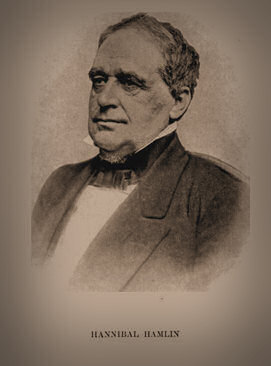
I yesterday informed Vice-President Hamlin and the Maine Senators we should try to keep a couple of steamers and two sailing-vessels cruising off New England during the fishing season; that we could not furnish a gunboat to every place; that the shore defenses belonged properly to the War Department, etc. They on the whole seemed satisfied.

2007-00707.jpg The President sends me a strange letter from Hamlin, asking as a personal favor that prizes may be sent to Portland for adjudication, — says he has not had many favors, asks this on personal grounds. Mr. Hamlin spoke on this subject to me, — said the President referred it to me; — and both he and Mr. Fessenden made a strong local appeal in behalf of Portland. I informed them that such a matter was not to be disposed of on personal grounds or local favoritism; that Portsmouth, Providence, New Haven, and other places had equal claims, if there were any claims, but that public consideration must govern, and not personal favoritism; that additional courts would involve great additional expense; that we had no navy yard or station at Portland, with officers to whom the captors could report, no prison to confine prisoners, no naval constructors or engineers to examine captured vessels, etc., etc. These facts, while they somewhat staggered the gentlemen, quieted Fessenden, but did not cause Hamlin, who is rapacious as a wolf, to abate his demand for government favors. He wanted these paraphernalia, these extra persons, extra boards, and extra expenditures at Portland, and solicited them of the President, as special to himself personally

July 7, Tuesday. The President said this morning, with a countenance indicating sadness and despondency, that Meade still lingered at Gettysburg, when he should have been at Hagerstown or near the Potomac, to cut off the retreating army of Lee. While unwilling to complain and willing and anxious to give all praise to the general and army for the great battle and victory, he feared the old idea of driving the Rebels out of Pennsylvania and Maryland, instead of capturing them, was still prevalent among the officers. He hoped this was not so, said he had spoken to Halleck and urged that the right tone and spirit should be infused into officers and men, and that General Meade especially should be reminded of his (the President’s) wishes and expectations. But General Halleck gave him a short and curt reply, showing that he did not participate and sympathize in this feeling, and, said the President, “I drop the subject.”

This is the President’s error. His own convictions and conclusions are infinitely superior to Halleck’s, — even in military operations more sensible and more correct always, — but yet he says, ” It being strictly a military question, it is proper I should defer to Halleck, whom I have called here to counsel, advise, and direct in these matters, where he is an expert.” I question whether he should be considered an expert. I look upon Halleck as a pretty good scholarly critic of other men’s deeds and acts, but as incapable of originating or directing military operations.

When I returned from the Cabinet council I found a delegation from Maine at the Department, consisting of Vice-President Hamlin, the two Senators from that State, and Senator Wilson of Massachusetts. These gentlemen had first waited on the President in regard to the coast defenses and protection of the fishermen, and were referred by him to me instead of the army, which claims to defend the harbors. At the moment of receiving this delegation I was handed a dispatch from Admiral Porter, communicating the fall of Vicksburg on the fourth of July. Excusing myself to the delegation, I immediately returned to the Executive Mansion. The President was detailing certain points relative to Grant’s movements on the map to Chase and two or three others, when I gave him the tidings. Putting down the map, he rose at once, said we would drop these topics, and “I myself will telegraph this news to General Meade.” He seized his hat, but suddenly stopped, his countenance beaming with joy; he caught my hand, and, throwing his arm around me, exclaimed: “What can we do for the Secretary of the Navy for this glorious intelligence? He is always giving us good news. I cannot, in words, tell you my joy over this result. It is great, Mr. Welles, it is great!”

We walked across the lawn together. “This,” said he, “will relieve Banks. It will inspire me.” The opportunity I thought a good one to request him to insist upon his own views, to enforce them, not only on Meade but on Halleck.