Following the American Civil War Sesquicentennial with day by day writings of the time, currently 1863.

Diary of Gideon Welles

April 20, Monday. Received Admiral Du Pont’s detailed report with those of his officers. The document is not such as I should have expected from him a short time ago, but matters of late prevent me from feeling any real disappointment. Fox went last night to New York in anticipation of such a report. The tone and views of the sub-reports have the ring, or want of ring, of the Admiral in command. Discouragement when there should be encouragement. A pall is thrown over all. Nothing has been done, and it is the recommendation of all, from the Admiral down, that no effort be made to do anything. [Du Pont] has got his subordinates to sustain him in a proceeding that his sense of right tells him is wrong.

I am by no means confident that we are acting wisely in expending so much strength and effort on Charleston, a place of no strategic importance, but it is lamentable to witness the tone, language, absence of vitality and vigor, and want of zeal among so many of the best officers of the service. I cannot be mistaken as to the source and cause. A magnetic power in the head, which should have inspired and stimulated them, is wanting; they have been discouraged instead of being encouraged, depressed not strengthened.

April 19, Sunday. Several letters from Du Pont on unimportant matters, but no detailed reports of the fight from himself or officers. Advised with Fox and thought best for him to go to New York and see Admiral Gregory and Captain Rowan with a view to more effective action if necessary. Nothing certain when we shall hear from Du Pont. In the mean time it is important to prepare for an emergency.

April 18, Saturday. Went to the President and read to him my letter of this date to Mr. Seward, on the subject of the Peterhoff mail. I have done this that the President may have both sides of the question, and understand what is being done with his “approval,” without consultation with me and the members of the Cabinet in council. The Secretary of State, for reasons best known to himself, if he has any reason for his action, has advised with no one in a novel and extraordinary proceeding on his part, where he has made concessions by which our rights and interests have been given up and the law disregarded. When confronted, he, instead of entering upon investigation himself or consulting with others, has gone privately to the President, stated his own case, and got the President committed to his unauthorized acts. I therefore prepared my letter of this date, and before sending it to Mr. Seward, I deemed it best that the President should know its contents. He was surprised and very much interested; took the letter and reread it; said the subject involved questions which he did not understand, that his object was to “keep the peace,” for we could not afford to take upon ourselves a war with England and France, which was threatened if we stopped their mails; and concluded by requesting me to send my letter to Seward, who would bring the subject to his attention for further action. My object was gained. The President has “approved,” without knowledge, on the representation of Seward.

April 17, Friday. No reports from Charleston. Am in hopes that side issues and by-play on the Mississippi are about over and that there will be some concentrated action. Porter should go below Vicksburg and not remain above, thereby detaining Farragut, who is below, from great and responsible duties at New Orleans and on the Gulf. The weak and sensitive feeling of being outranked and made subordinate in command should never influence an officer in such an emergency. Porter has great vanity and great jealousy but knows his duty, and I am surprised he does not perform it. Wrote him a fortnight since a letter which he cannot misunderstand, and which will not, I hope, wound his pride.

But little was before the Cabinet, which of late can hardly be called a council. Each Department conducts and manages its own affairs, informing the President to the extent it pleases. Seward encourages this state of things. He has less active duties than others, and watches and waits on the President daily, and gathers from him the doings of his associates and often influences indirectly and not always advantageously their measures and movements, while he communicates very little, especially of that which he does not wish them to know.

Blair walked over with me from the White House to the Navy Department, and I showed him the correspondence which had taken place respecting captured mails. Understanding Seward thoroughly, as he does, he detected the sly management by which Seward first got himself in difficulty and is now striving to get out of it. My course he pronounced correct, and he declared that the President must not be entrapped into any false step to extricate Seward, who, he says, is the least of a statesman and knows less of public law and of administrative duties than any man who ever held a seat in the Cabinet. This is a strong statement, but not so overstated as would be generally supposed. I have been surprised to find him so unpractical, so erratic, so little acquainted with the books, — he has told me more than once that he never opened them, that he was too old to study. He has, with all his bustle and activity, but little application; relies on Hunter and his clerk, Smith, perhaps Cushing also, to sustain him and hunt up his authorities; commits himself, as in the case of the mails, without knowing what he is about.

April 16, Thursday. Received a singular letter from Seward respecting the mail of the Peterhoff, undertaking to set aside law, usage, principle, established and always recognized rights, under the pretense that it will not do to introduce new questions on the belligerent right of search. He has, inconsiderately and in an ostentatious attempt to put off upon the English Legation a show of power and authority which he does not possess and cannot exercise, involved himself in difficulty, conceded away the rights of his country without authority, without law, without a treaty, without equivalent; and to sustain this novel and extraordinary proceeding he artfully talks about new questions in the belligerent right of search. The President has been beguiled by ex-parte representations and misrepresentations to indorse “approved” on Seward’s little contrivance. But this question cannot be so disposed of. The President may be induced to order the mail to be given up, but the law is higher than an Executive order, and the judiciary has a duty to perform. The mail is in the custody of the court.

April 15, Wednesday. No full reports yet from Du Pont. Am pained, grieved, distressed by what I hear; and that I hear from him so little. We learn that after all our outlay and great preparations, giving him about all our force and a large portion of the best officers, he intends making no farther effort, but will abandon the plan and all attempts to take it. A fight of thirty minutes and the loss of one man, which he witnessed, satisfies the Admiral.

The Ironsides, the flagship, was suspiciously remote from the fight, yet sufficiently near to convince the Admiral he had better leave the harbor. Down to the day of the conflict I had faith in him and his ability, though grieved at his delays. When here last fall, expressly to consult and concert measures for the capture of Charleston, he was as earnest and determined as any of us, did not waver a moment, and would not listen to a suggestion of Dahlgren as an assistant.

April 14, Tuesday.

Little of interest to-day at council.

The War Department, which early in the War claimed that the armed force on the Western rivers should be subject to military control, became involved in difficulty. Naval officers, naval guns, naval men, and naval discipline were wanted and so far as could be done were given, but Congress merely ordered that the armed vessels should be transferred to the Navy. This law had given offense to the War Department, and when the transfer was made, the “ram fleet,” as it was called, was withheld. This was, as I said to Stanton, in disregard of the law and would be likely to lead to difficulty, for, while there might be cooperation, there could not be separate commands without conflict.

The ram fleet was commanded by the family of Ellett, brave, venturous, intelligent engineers, not always discreet or wise, but with many daring and excellent qualities. They had under them a set of courageous and picked men, furnished by the military, styled the Marine Brigade, and did some dashing service, but refused to come under naval orders, or to recognize the Admiral in command of the Mississippi Squadron. The result was, as I anticipated might be the case, an arrest and suspension of Brigadier-General H. W. Ellett from the command of the ram fleet.

Stanton is very laudatory of the Elletts, and violent in his denunciations of Porter, whom he ridicules as a “gas bag and fussy fellow, blowing his own trumpet and stealing credit which belongs to others.” There is some truth in what he says of the Elletts and also of Porter, but the latter with all his verbosity has courage and energy as well as the Elletts.

April 13, Monday. Wrote Seward a letter on the subject of captured mails, growing out of the prize Peterhoff. On the 18th of August last I prepared a set of instructions embracing the mails, on which Seward had unwittingly got committed. The President requested that this should be done in conformity with certain arrangements which Seward had made with the foreign ministers. I objected that the instructions which Mr. Seward had prepared in consultation with the foreigners were unjust to ourselves and contrary to usage and to law, but to get clear of the difficulty they were so far modified as to not directly violate the statutes, though there remained something invidious towards naval officers which I did not like. The budget of concessions was, indeed, wholly against ourselves, and the covenants were made without any accurate knowledge on the part of the Secretary of State when they were given of what he was yielding. But the whole, in the shape in which the instructions were finally put, passed off very well. Ultimately, however, the circular containing among other matters these instructions by some instrumentality got into the papers, and the concessions were, even after they were cut down, so great that the Englishmen complimented the Secretary of State for his liberal views. The incense was so pleasant that Mr. Seward on the 30th of October wrote me a supercilious letter stating it was expedient our naval officers should forward the mails captured on blockade-runners, etc., to their destination as speedily as possible, without their being searched or opened. The tone and manner of the letter were supercilious and offensive, the concession disreputable and unwarrantable, the surrender of our indisputable rights disgraceful, and the whole thing unstatesmanlike and illegal, unjust to the Navy and the country, and discourteous to the Secretary of the Navy and the President, who had not been consulted. I said to Mr. Seward at the time, last November, that the circular of the 18th of August had gone far enough, and was yielding more than was authorized, except by legislation or treaty. He said his object was to keep the peace, to soothe and calm the English and French for a few weeks.

Lord Lyons now writes very adroitly that the seizure of the Peterhoff mails was in violation of the order of our Government as “communicated to the Secretary of the Navy on the 31st of October.” He makes no claim for surrender by right, or usage, or the law of nations, but it was by the order of our Government to the Secretary of the Navy. No such order was ever given by the Government. None could be given but by law of Congress. The Secretary of the Navy does not receive orders from the Secretary of State, and though I doubt not Mr. Seward in an excitable and inflated moment promised and penned his absurd note, which he called an order when conversing with them, — gave it to them as such, — yet I never deemed it of sufficient consequence to even answer or notice further than in a conversation to tell him it was illegal.

NAVY DEPARTMENT, 13 April, 1863.

Sir,

I have the honor to acknowledge the receipt of your communication of the 11th inst., enclosing a note of Lord Lyons and correspondence relative to the mail of the Peterhoff.

His Lordship complains that the Peterhoff’s mails were dealt with, “both at Key Westand at New Yorkin a manner which is not in accordance with the views of the Government of the United States, as stated in your letter to the Secretary of the Navy, of the 31st Oct. last.”

Acting Rear Admiral Bailey, an extract from whose letter is enclosed, in the correspondence transmitted on the 14th ulto., gave Her Majesty’s Consul atKey Westan authenticated copy of the law of theUnited States, and of the instructions based thereon, on the subject of papers which strictly belong to the captured vessels and the mails.

By special direction of the President, unusual courtesy and concession were made to neutrals in the instructions of the 18th August last to Naval Officers, who themselves were restricted and prohibited from examining or breaking the seals of the mail bags, parcels, &c. which they might find on board of captured vessels, under any pretext, but were authorized at their discretion to deliver them to the Consul, commanding naval officer, or the legation of the foreign government to be opened, upon the understanding that whatever is contraband, or important as evidence concerning the character of a captured vessel, will be remitted to the prize court, &c.

On the 31st of October last, I had the honor to receive from you a note suggesting the expediency of instructing naval officers that, in case of capture of merchant vessels suspected or found to be vessels of insurgents, or contraband, the public mails of every friendly or neutral power, duly certified or authenticated as such, shall not be searched or opened, but be put as speedily as may be convenient on the way to their designated destination. As I did not concur in the propriety or “expediency” of issuing instructions so manifestly in conflict with all usage and practice, and the law itself, and so detrimental to the legal rights of captors, who would thereby be frequently deprived of the best, if not the only, evidence that would insure condemnation of the captured vessel, no action was taken on the suggestions of the letter of the 31st October, as Lord Lyons seems erroneously to have supposed.

In the only brief conversation that I ever remember to have had with you, I expressed my opinion that we had in the instructions of the 18th of August gone to the utmost justifiable limit on this subject. The idea that our Naval officers should be compelled to forward the mails found on board the vessels of the insurgents — that foreign officials would have the sanction of this government in confiding their mails to blockade runners and vessels contraband, and that without judicial or other investigation, the officers of our service should hasten such mails, without examination, to their destination, was so repugnant to my own convictions that I came to the conclusion it was only a passing suggestion, and the subject was therefore dropped. Until the receipt of your note of Saturday, I was not aware that Lord Lyons was cognizant such a note had been written.

Acting Rear Admiral Bailey has acted strictly in accordance with the law and his instructions in the matter of the Peterhoff’s mail.

The dispatch of Lord Lyons is herewith returned.

I am, respectfully,

                   Your Obd’t Serv’t,

                                    GIDEON WELLES,

                                       Secty. of Navy.

HON. Wm. H. SEWARD, Secty. of State.
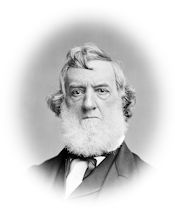
April 12, Sunday. An intense and anxious feeling on all hands respecting Charleston. Went early to the Department. About 11 A.M. a dispatch from the Navy Yard that the Flambeau had not arrived. The President and Stanton came in a little after noon and waited half an hour, but it was then reported the Flambeau was not yet in sight. I came home much dejected. Between 2 and 3 P.M. Commander Rhind of the Keokuk, Upshur, and Lieutenant Forrest called at my house with dispatches from Du Pont. They were not very full or satisfactory, — contained no details. He has no idea of taking Charleston by the Navy. In this I am not disappointed. He has been coming to that conclusion for months, though he has not said so. The result of this demonstration, though not a success, is not conclusive. The monitor vessels have proved their resisting power, and, but for the submarine obstructions, would have passed the forts and gone to the wharves of Charleston. This in itself is a great achievement.

Went to the Executive Mansion. Read the dispatches to and had full conversation with the President. Sumner came in and participated.

Rhind, an impulsive but brave and rash man, has lost all confidence in armored vessels. When he took command of the Keokuk his confidence was unbounded. His repulse and the loss of his vessel have entirely changed his views. It was, I apprehend, because of this change and his new appointment to armored vessels that he was sent forward with dispatches. He has, I see, been tutored. Thinks wooden vessels with great speed would do as well as iron-clads. I agreed that speed was valuable, but the monitors were formidable. In this great fight the accounts speak of but a single man killed and some ten or twelve wounded. What wooden or unarmored vessels could have come out of such a fight with so few disasters. No serious injury happened to the flagship, the Ironsides, which, from some accident, did not get into the fight. We had expected Du Pont and the ironclads would pass Sumter and the forts and receive their fire, but not stop to encounter them.

Du Pont has been allowed to decide for himself in regard to proceedings, has selected, and had, the best officers and vessels in the service, and his force is in every respect picked and chosen. Perhaps I have erred in not giving him orders. Possibly the fact that he was assured all was confided to him depressed and oppressed him with the responsibility, and has prevented him from telling me freely and without reserve his doubts, apprehensions. I have for some time felt that he wanted the confidence that is essential to success. His constant call for more ironclads — for aid —has been a trial. He has been long, very long, getting ready, and finally seems to have come to a standstill, so far as I can learn from Rhind, who is, if not stampeded, disgusted, demoralized, and wholly upset. It is not fear, for he has courage, — to daring, to rashness, — and his zeal, temperament, and ardor are by nature enthusiastic. But these qualities are gone. Why DuPont should have sent him home to howl, or with a howl, I do not exactly understand. If it was to strengthen faith in himself and impair faith in the monitors the selection was well made. Rhind had too much confidence in his vessel before entering the harbor, and has too little in any vessel now.

April 11, Saturday. The President returned from Headquarters of the Army and sent for me this A.M. Seward, Chase, Stanton, and Halleck were present, and Fox came in also. He gave particulars so far as he had collected them, not differing essentially from ours.

An army dispatch received this P.M. from Fortress Monroe says the Flambeau has arrived in Hampton Roads from Charleston; that our vessels experienced a repulse; some of the monitors were injured. The information is as confused and indefinite as the Rebel statements. Telegraphed to Admiral Lee to send the Flambeau to Washington. Let us have the dispatches.

Seward is in great trouble about the mail of the Peterhoff, a captured blockade-runner. Wants the mail given up. Says the instructions which he prepared insured the inviolability and security of the mails. I told him he had no authority to prepare such instructions, that the law was paramount, and that anything which he proposed in opposition to and disregarding the law was not observed.

He called at my house this evening with a letter from Lord Lyons inclosing dispatches from Archibald, English Consul at New York. Wanted me to send, and order the mail to be immediately given up and sent forward. I declined. Told him the mail was properly and legally in the custody of the court and beyond Executive control; assured him there would be no serious damage from delay if the mail was finally surrendered, but I was inclined to believe the sensitiveness of both Lord Lyons and Archibald had its origin in the fact that the mail contained matter which would condemn the vessel. “But,” said Seward, “mails are sacred; they are an institution.” I replied that would do for peace but not for war; that he was clothed with no authority to concede the surrender of the mail; that by both statute and international law they must go to the court; that if his arrangement, of which I knew nothing, meant anything, the most that could be conceded or negotiated would be to mails on regular recognized neutral packets and not to blockade-runners and irregular vessels with contraband like the Peterhoff. He dwelt on an arrangement entered into between himself and the British Legation, and the difficulty which would follow a breach on our part. I inquired if he had any authority to make an arrangement that was in conflict with the express provisions of the statutes, — whether it was a treaty arrangement confirmed by the Senate. Told him the law and the courts must govern in this matter. The Secretary of State and the Executive were powerless. We could not interfere.