Following the American Civil War Sesquicentennial with day by day writings of the time, currently 1863.

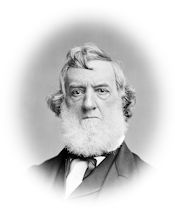
Diary of Gideon Welles

January 13, Tuesday. Received this A.M. from Admiral Du Pont an intercepted mail captured off Charleston. Reed Saunders, who had the mail in charge, threw it overboard, as he supposed, but the master of the vessel, once a volunteer acting master in our service whom I had dismissed for drunkenness, practiced a deception, and Saunders threw over something else than the mail, which the master secreted, retained, and delivered, and thereby saved his bacon. The mail was not forwarded to its destination, as Seward directed it should be, but opened. Numerous and important dispatches from Mallory, Memminger, Benjamin,[1] etc., etc., disclose important facts. Took some of the more interesting to Cabinet council.

Was waited upon by a large committee composed mostly of old friends and associates sent here by Connecticut to procure the location of a navy yard at New London. Mr. Speaker Carter was chairman and chief spokesman; wanted a navy yard at New London for defensive purposes, for the benefit to be derived from a large establishment located in the State; but little had been expended in Connecticut by the Federal Government; thought it a duty to look out for our own State; if the Union should be broken up, it would be well to have such an establishment as I had proposed in our own limits, etc. Assured the committee if Congress decided to establish a navy yard at New London I should not oppose but would heartily cooperate to make it what was wanted and what it should be. That the small yard at Philadelphia was totally insufficient, and if, in removing it, Congress should decide to go to New London instead of remaining on the Delaware, I should submit to the decision, but I could not, in honesty, sincerity, and as an American citizen acting for all, recommend it. That I had never supposed that the true interest of the country would be promoted by such a transfer; that, much as I loved my native State, I could not forget I was acting for the whole country and for no one locality. That League Island on the Delaware possessed some peculiar advantages that belonged to no other navy yard nor to New London; that it had been tendered, a free gift, by the city of Philadelphia as a substitute for the present contracted wharfage in the city; that I had conscientiously advised its acceptance, and I could not do otherwise than to still act in accordance with my convictions of what I deemed best for the whole country by continuing to recommend its acceptance, whatever might be determined in regard to a navy yard at New London, which was an altogether different matter.

_______________________________________

[1] Heads respectively of the Navy, Treasury, and State Departments in the Confederate Government.


January 12, Monday. Accounts from Vicksburg are unfavorable and vague. I fear there has been mismanagement, but we must wait official reports. It is said that Sherman has been superseded by McClernand. I know not how this is. At the commencement of this campaign, as early as last September, it was understood that McClernand was to have command of the army which was to go down the river and cooperate with our naval commander, Porter. The President had confidence in him, and designated the appointment, which was acceptable to Porter, who had a particular dislike of West-Pointers. For this I cared but little, because it was confessedly without knowledge of the officers individually and their merits, a close and a sweeping condemnation of all, — partly, I think, because he did not know them, and feared he should be compelled to play a subordinate part with them, while with a civilian general he would have superiority.

For three months, while Porter has been organising the Squadron, nothing has been heard of McClernand until since the attack on Vicksburg, and now it is merely to tell us he has abandoned the place and withdrawn his forces.

The rumor of the capture of the Harriet Lane with the little garrison at Galveston is confirmed. I am grieved and depressed, not so much for the loss of the Harriet Lane as from a conviction that there has been want of good management. It is about three months since we took Galveston, and yet a garrison of only three hundred men was there when the Rebel army approached the place. Some one is blamable for this neglect.

The court martial on Fitz John Porter closed last Saturday, and the rumor is that he was at once unanimously acquitted. Of the facts I know nothing. I have read none of the evidence. Shall be glad if he is blameless and it shall so appear. My impressions were that while he and some others were not disloyal, as charged, they did not support and sustain the general in command, Pope, in a great crisis as they should have done; that they performed their duty to the letter of the law, perhaps, but not with alacrity and zeal; that while they did not wish the country to suffer a reverse, it would not grieve them if Pope did. In all this I may be doing certain officers injustice. They were, however, the impressions made upon me at the time when disaster was impending and our soldiers were giving their blood and their lives to the country. I am no admirer of Pope, who has the reputation among those who know him of being untruthful and wholly unreliable, a braggart and blusterer. Wrong may be to some extent done him, but there is some cause for what is said of him. He was instrumental in bringing Halleck here, and Halleck gave him the army in return. Both came from the West, and, aided by Stanton and Chase, Pope was placed in command over generals who were his superiors in age, experience, and qualifications. This was as much, to say the least, to humiliate McClellan as to serve the country. Pope preceded Halleck here, but it was the same influence that initiated the two. It is not difficult to see who is the cause of their being here to supplant McClellan, whose tardy inaction here and on the Peninsula disheartened the nation. Fitz John Porter was one of the generals who had great faith in McClellan, who sympathized with him in good and evil fortune, but who was destitute of faith in Pope, as were nearly all his associates, who each, like their commander, felt wronged, almost insulted, by the exaltation of an officer from the Western Department, for whom they had not high regard, placed over them. The change of commanders could not inspire him with confidence and zeal, but if he permitted it to impair his efficiency he is inexcusable.

January 10, Saturday. The President sent for Stanton and myself; wished us to consult and do what we could for the employment of the contrabands, and as the Rebels threatened to kill all caught with arms in their hands, to employ them where they would not be liable to be captured. On the ships he thought they were well cared for, and suggested to Stanton that they could perform garrison duty at Memphis, Columbus, and other places and let the soldiers go on more active service.

Covode called at my house this evening and wanted the President’s card. Said he was likely to get into difficulty and wished his name not to be used in the matter of removing the Navy Agent which he had urged. Would himself see Chambers and advise him what to do. He expects, he says, to be candidate for Governor of Pennsylvania. Covode is shrewd but illiterate, a match and more than a match for men of higher culture, reputation, and acquirements; but I hardly think his gubernatorial expectations will be realized, though they sometimes take strange material for Governor in Pennsylvania.

. . . . . . . . . .

The great problem which is being solved in these days seems to be scarcely realized by our public, and really great, men. It is sad to witness in this period of calamity, when the nation is struggling for existence, and the cause of good government and civil liberty is at stake, the spirit of party overpowering patriotism. The Governors in several of the States have presented their messages during the week. Tod of Ohio exhibits a manly, wholesome, and vigorous tone, others also do well, but the jesuitical and heartless insincerity of Seymour of New York is devoid of true patriotism, weak in statesmanship, and a discredit to the position he occupies. Unhallowed partisan and personal aspirations are moving springs with him. That such a man, at such a time, should have been elected to such a place does no credit to popular intelligence or to public virtue. When Seward, himself, I think, rightly disposed, acquiesced in the debased partisanship of his friend Weed, who in spite wanted Wadsworth, the gallant and patriotic citizen, defeated, he committed a fatal error.

In the insurgent States patriotism seems extinguished, the flag and country are hated. There is great suffering on the part of the people from all the direful calamities which war can bring, yet there is no evidence of returning sense or affection for that union which conferred upon them happiness and prosperity. Greater calamities, greater suffering, must be endured.

Some things have taken place which will undoubtedly for a time exasperate the Southern mind, for they will affect Southern society, habits, labor, and pursuits. For a period emancipation will aggravate existing differences, and a full generation will be necessary to effect and complete the change which has been commenced.

January 9, Friday. On my way to Cabinet-meeting this A.M. met Covode and Judge Lewis of Pennsylvania. The two had just left the President and presented me with a card from him to the effect that Covode had investigated the case of Chambers, Navy Agent at Philadelphia, and that if I saw no objection he should be removed. Told them I was going to the President and the subject should have attention. When I mentioned the subject, the President wished me to look into the case and see that all was right. He had not, he said, examined it, but passed it over to me, who he knew would.

The final accounts of the result at Murfreesborough are favorable. Rosecrans has done himself honor and the country service. From Vicksburg the intelligence is less satisfactory. There appears to have been good fighting but without results. A desperate stand will be made by the Rebels to hold this place. It is important to them to prevent the free navigation of the Mississippi; it is as important to us that it should be unobstructed. They wish to have communication with Texas; we want to cut it off. Had the army seconded Farragut and the Navy months ago, Vicksburg would have been in our possession. Halleck was good for nothing then, nor is he now.

January 8, Thursday. Had a singular letter to-day from Chase, requesting that vessels with custom-house clearance might be allowed to pass the blockade. The arrangement is in accordance with an understanding which he has with the Secretary of War. Replied that I was prepared to give no such instructions until the blockade was raised or modified.

January 6, Tuesday. Got off dispatches this morning ordering the ironclads south to strengthen Du Pont in his attack on Charleston, which he intends to take, —then Savannah, if not too long delayed, when the ironclads must go around to Pensacola.

Wilkes is not doing as much as we expected. I fear he has more zeal for and finds it more profitable to capture blockade-runners than to hunt for the Alabama. Lord Lyons is preferring complaints against him for want of courtesy, when he is really flinging on him British insults. There is not much love lost between him and John Bull. If Seward would square up firmly we could make Bull behave better.

January 5, Monday. Commander Bankhead arrived this morning and brings particulars of the loss of the Monitor. Its weakness was in herself, where we had apprehended, and not in an antagonist. This has been in some degree remedied in the new boats we are now constructing.

For months I have been berated and abused because I had not more vessels of the Monitor class under contract. Her success with the Merrimac when she was under the trial as an experiment made men wild, and they censured me for not having built a fleet when she was constructed. Now that she is lost, the same persons will be likely to assail me for expending money on such a craft.

There is a set of factious fools who think it is wise to be censorious, and it is almost as amusing as it is vexatious to hear and read the remarks of these Solomons. One or two of these officious blockheads make themselves conspicuous in the New York Chamber of Commerce, and none more so than Mr. Charles H. Marshall, who attempts to show off his nautical knowledge by constantly attacking and slandering the Secretary of the Navy. Marshall was formerly a shipmaster and it was his often expressed opinion that no man should be Secretary of the Navy who has not had command of, and the sailing of, a ship. Like many others as simple if not as egotistical, he would have the Secretary who administers the department a sailor and for the same reasons he should be an engineer, naval constructor, etc. On every occasion of disaster, no matter from what cause, this man Marshall imputes it to the fact that the Secretary of the Navy has never commanded a ship, and he never admits that any credit is due the Navy Department for intelligent and correct administration, or the Secretary of the Navy for any success of any kind, whether of a squadron or single ship, because he is not and never was a sea-captain. Marshall has had his prejudices sharpened by others and particularly by Moses H. Grinnell, who thinks a shipping merchant would make a good Secretary of the Navy. Both are disappointed men, and each wants to be at the head of the Navy Department.

Thus far the British pirate named Alabama sailing under Rebel colors has escaped capture. As a consequence there are marvelous accounts of her wonderful speed, and equally marvelous ones of the want of speed of our cruisers. Of course there is no controverting these fables; she will be a myth, a “skimmer of the seas,” till taken, and our own vessels, of better speed and power, will be slandered by the Marshalls and Grinnells as destitute of all speed. There are men of better sense in the Chamber of Commerce, but one of these has been an extensive ship-owner, the other a shipmaster; both are good and well-meaning men, have been successful business men, but are egotistical and vainly weak. Neither is competent to administer the Navy Department.

The loss of the Monitor and the report of Admiral Lee and others of the draft of water at the inlet is unfavorable for a naval attack on the battery at Cape Fear, and the army object to move on Wilmington except in conjunction with the Navy. It is best, therefore, to push on to Charleston and strengthen Du Pont. The War Department promised to send forward to South Carolina an additional military force of ten thousand under General Hunter. Halleck is heavy-headed; wants sagacity, readiness, courage, and heart. I am not an admirer of the man. He may have some talent as a writer and critic; in all military matters he seems destitute of resources, skill, or capacity. He is more tardy and irresolute than McClellan and is deficient in the higher qualities which the latter possessed.

We have further cheering news from Tennessee of the success of Rosecrans at Murfreesborough; also hopeful news from Vicksburg. I do not see that the least credit is due to Halleck in either of these cases, unless for not embarrassing the officers in command.

It was arranged and directed by the President that General McClernand should command the forces which were to cooperate with the Navy at the opening of the navigation of the Mississippi and the capture of Vicksburg. But McClernand has scarcely been heard of. He is not of the Regular Army, and is no favorite, I perceive, with Halleck, though the President entertains a good opinion of him. Blair alluded two or three weeks since to the fact that McClernand was crowded aside; said there was a combination to prevent his having that command. The President started from his chair when the remark was made and said it should not be so. Stanton declared it was not so, that he and Halleck had arranged the matter that day. The President looked surprised and said he supposed it had been done long ago.

January 3, Saturday. We have, yesterday and to-day, broken accounts of a great fight for three days — and not yet terminated — at Murfreesborough, Tennessee. All statements say we have the best, that we shall beat the Rebels, that we have pierced their centre, that we are driving them through M., etc. I hope to hear we have done instead of we “shall” do. None of our army fights have been finished, but are drawn battles, — worrying, exhausting, but never completed. Of Rosecrans I have thought better and hope a good account of his work, but the best sometimes fail, and he may not be best.

A word by telegraph that the Monitor has foundered and over twenty of her crew, including some officers, are lost. The fate of this vessel affects me in other respects. She is a primary representative of a class identified with my administration of the Navy. Her novel construction and qualities I adopted and she was built amidst obloquy and ridicule. Such a change in the character of a fighting vessel few naval men, or any Secretary under their influence, would have taken the responsibility of adopting. But Admiral Smith and finally all the Board which I appointed seconded my views, and were willing, Davis somewhat reluctantly, to recommend the experiment if I would assume the risk and responsibility. Her success with the Merrimac directly after she went into commission relieved me of odium and anxiety, and men who were preparing to ridicule were left to admire.

When Bushnell of New Haven brought me the first model and plan, I was favorably impressed. I was then in Hartford, proposing to remove my family, but sent him at once to Washington, following myself within a day or two. Understanding that Ericsson, the inventor, was sensitive in consequence of supposed slight and neglect by the Navy Department or this Government some years ago, I made it a point to speak to Admiral Smith, Chairman of the Board, and specially request that he should be treated tenderly, and opportunity given him for full and deliberate hearing. I found Admiral Smith well disposed. The plan was adopted, and the test of her fighting and resisting power was by an arrangement between Admiral Smith and myself, without communication with any other, that she should, when completed, go at once up Elizabeth River to Norfolk Navy Yard, and destroy the Merrimac while in the dry dock, and the dock itself. Had she been completed within the contract time, one hundred days, this purpose would have been accomplished, but there was delay and disappointment, and her prowess was exhibited in a conflict with her huge antagonist under much more formidable circumstances. Her career since the time she first entered Hampton Roads is public history, but her origin, and everything in relation to her, from the inception, have been since her success designedly misrepresented.

Admiral Smith beyond any other person is deserving of credit, if credit be due any one connected with the Navy Department for this vessel. Had she been a failure, he, more than any one but the Secretary, would have been blamed, and [he] was fully aware that he would have to share with me the odium and the responsibility. Let him, therefore, have the credit which is justly his.

January 1, 1863, Thursday. The New Year opens with a bright and brilliant day. Exchanged congratulations at the Executive Mansion with the President and colleagues, at eleven this morning. The usual formalities. Officers of the Army and Navy came in at half-past eleven. I left before twelve.

The Emancipation Proclamation is published in this evening’s Star. This is a broad step, and will be a landmark in history. The immediate effect will not be all its friends anticipate or its opponents apprehend. Passing events are steadily accomplishing what is here proclaimed.

The character of the country is in many respects undergoing a transformation. This must be obvious to all, and I am content to await the results of passing events, deep as they may plough their furrows in our once happy land. This great upheaval which is shaking our civil fabric was perhaps necessary to overthrow and subdue the mass of wrong and error which no trivial measure could eradicate. The seed which is being sown will germinate and bear fruit, and tares and weeds will also spring up under the new dispensation.

Blair mentioned at my house a few evenings since that General McClellan assumed command of the Army of the Potomac last September without orders; that, finding military affairs in a disordered and confused condition, he sought an interview with the President, Stanton, and Halleck respectively, and also called to see him (Blair), but he was absent; that he then called his staff and left, but met me, to whom alone he communicated whither he was going and his purpose. This, Blair tells me, is the statement made by McClellan to Governor Dennison, who has been stopping with Blair. I well remember meeting him at that time, but my understanding has been that McC. received command of the Army by order of the President on recommendation of Halleck.

December 31, Wednesday. We had an early and special Cabinet-meeting, convened at 10 A.M. The subject was the Proclamation of to-morrow to emancipate the slaves in the Rebel States. Seward proposed two amendments, — one including mine, and one enjoining upon, instead of appealing to, those emancipated, to forbear from tumult. Blair had, like Seward and myself, proposed the omission of a part of a sentence and made other suggestions which I thought improvements. Chase made some good criticisms and proposed a felicitous closing sentence. The President took the suggestions, written in order, and said he would complete the document.

I met General Burnside on the portico of the White House this A.M. He was about entering his carriage, but waited my coming. Says he is here a witness in Fitz John Porter’s case.

The year closes less favorably than I had hoped and expected, yet some progress has been made. It is not to be denied, however, that the national ailment seems more chronic. The disease is deep-seated. Energetic measures are necessary, and I hope we may have them. None of us appear to do enough, and yet I am surprised that we have done so much. We have had some misfortunes, and a lurking malevolence exists towards us among nations, that could not have been anticipated. Worse than this, the envenomed, relentless, and unpatriotic spirit of party paralyzes and weakens the hand of the Government and country.