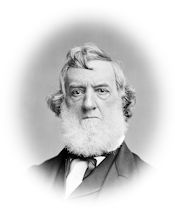
Following the American Civil War Sesquicentennial with day by day writings of the time, currently 1863.

Diary of Gideon Welles

December 4, Thursday. The Members of Congress from Minnesota are urging the President vehemently to give his assent to the execution of three hundred Indian captives, but they will not succeed. Undoubtedly the savage wretches have been guilty of great atrocities, and I have as little doubt the stories of their barbarities, bad enough in themselves, are greatly exaggerated. What may have been the aggressions and provocations which led the Indians on is not told us. When the intelligent Representatives of a State can deliberately besiege the Government to take the lives of these ignorant barbarians by wholesale, after they have surrendered themselves prisoners, it would seem the sentiments of the Representatives were but slightly removed from the barbarians whom they would execute. The Minnesotians are greatly exasperated and threaten the Administration if it shows clemency.

Some of the Members of Congress begin early to manifest a perverse and bad spirit. Foremost as regards the Navy, of which he should be the friend and organ, is John P. Hale, Chairman of the Senate Naval Committee. He is censorious to all the Administration, but especially to the Navy Department, which, instead of supporting, he omits no opportunity to assail and embarrass. Calvert, of the House, is equally virulent. He thinks he has cause to be angry with me, but has not the courage and manliness to declare the reason or motive which governs him. Some months since he made application to me to order the return of one or two slaves who were on the Potomac Flotilla, or in the navy yard, to his sister, who, he says, is a deserving loyal lady residing in Virginia near the Potomac. I of course declined. I also declined appointing some one to be midshipman under the general clause, whom he wished selected, as I declined in many similar cases. He is also dissatisfied because the Naval School is not immediately returned to Annapolis, which is within his district.

The lowest bidder for one of the large steamers lives at Chester. Other competitors are greatly excited and charge him with being disloyal. This charge is, I think, untrue, though one of the firm is a Democrat and opposed the election of President Lincoln. But the idea of exclusion or favoritism in a matter of this kind, and in disregard of law, is absurd.

Count Adam Gurowski, a Polish exile, who has been employed as a clerk in the State Department, has published a book which I am told is unsparing in its assaults upon almost all in authority, but that he deals gently with me. He is by nature a grumbler, ardent, earnest, rash, violent, unreasonable, impracticable, with no powers of rightfully discriminating character; nor is he a correct judge of measures and results. I have neither sought nor shunned him. Under no circumstances could he be to me a pleasant companion. He wants, I think, to be frank and honest in his way, to be truthful, though given to scandal; brave he is without doubt, a rude, rough Polish bear who is courted and flattered by a set of extreme partisans that delight in listening to his denunciations of public men, and in hearing his enthusiastic praises in broken English of liberty. He is an exile for good and bad qualities, a martyr to his opinions and his manners. Seward gave him a clerkship, — why and for what reason I never understood, for his companions and intimates are Seward’s opponents, and the Count himself is and always has been an open, persistent, undisguised opponent of Seward and his course. The Count, it seems, kept a journal or took memoranda while in the Department and wrote scandal and hate in bad English, which he has printed.

The proposition to divide the State of Virginia is before Congress, and I am told it will probably be successful. I am not clear as to its expediency, and I doubt if it can constitutionally be done. Certainly the time is not auspicious for such a step. To me the division of Virginia at this time looks like a step towards a division of the Union, a general break-up. This is intuitive, an impression without investigation. Let us have no separations or divisions at present.

I have answered two resolutions, petty calls of Congress, in relation to the appointment of midshipmen. There are one hundred and forty vacancies, chiefly in consequence of the secession of the Southern States, and I have appointed sixty-two.

Senator Fessenden has been to see me in the case of George H. Preble, who is one of his constituents and a neighbor, who is dismissed for failure to do his duty on the 4th of last September, when he permitted the steamer Oreto (Florida) to run the blockade at Mobile. Senator F. thinks injustice has been done Preble, and asks that he be restored and then tried by court martial. Told him this could not be done by the Department or the President; that, being out of the service, there was but one way of restoring him, and that was by a new appointment. To be reinstated, the President must nominate and the Senate confirm. The act of confirmation would itself absolve him. The Senate would not, however, confirm a man with guilt or wrong upon him. Fessenden said he had taken a different view; thought the President might restore without Congressional action, yet seemed confused and in doubt. Wished me to talk with Admirals Smith and Dahlgren; says the officers generally justify Preble, who, he added, is in Washington and would like to see me. I requested him to call; told F. my view of the case was unchanged, but would hear and give consideration to anything he might advance.

Preble called the next day, and we went over the case. He claims he did his whole duty; says he believed the Oreto was an English vessel, and he wished to keep the peace, was perhaps too prudent. I told him that in his zeal to preserve the peace he forgot his duty as an officer; that he had been placed as a sentinel before the harbor of Mobile, with express orders to prevent ingress or egress, and had, in not obeying these orders, failed to do his whole duty. His excuse was that if he obeyed his orders he would hurt somebody, but in not obeying he had done his country and the service great injury; that the excuse did not become an officer and would not justify a sentinel. We had much discussion on this point. He said he could have boarded and sunk the Oreto, but suppose he had done so and she had been an English vessel with an English flag above, what would have been the consequences to himself? I assured him the Government would never let an officer suffer for fidelity in obeying orders and being vigilant in performing his duty; that it would have been better for him had he not paused to consider consequences to himself, better for the country had he strictly obeyed his orders, and even if the Oreto had been an English vessel and been sunk by him, he would have been justified, and the Englishman condemned for his temerity in violating usage and disregarding the warning of the sentinel.

The subject has given me trouble, and I sent my conclusions by Assistant Secretary Fox to Fessenden. Fox, when he saw Fessenden, did not find it convenient to state his errand, but requested the Senator to call and see me, which he did on Tuesday morning.

I informed him there was no way of instituting a court martial nor even a court of inquiry. The officers who would be required as witnesses were in the Gulf and could not be detached from indispensable duty and brought home on such an errand. That under the circumstances — the feelings of himself and others — and in justice to both Preble and the Government, I would appoint a board of officers, who should take the three reports of Commodore Preble on the 4th and 6th of September and 10th of October, — being his own statements of his case at different dates, — and say whether he had done his whole duty as he claimed and in conformity with the articles of war. That their report I would submit to the President to dispose of, and thus end the matter, so far as the Navy Department was concerned. He asked if I did not prefer the certificates of other officers. I replied no, neither statements, witnesses, nor arguments would be introduced, nothing but Preble’s own reports, which I thought all he or his friends could require. F. was a little nonplussed. Said it was certainly fair, he was satisfied with such submission and presumed P. would be.

Within an hour Preble called; said that Senator F. had informed him of my proposition for an informal court, which he thought fair, but wished Admiral Farragut’s letter to go to the board, as F. by his hasty letter had made an improper prejudice on me. I assured him he was mistaken, — that my action was based on his own statement. What I proposed was a board that should take his own reports and decide upon the same evidence as the Admiral and I had done, and I should abide their conclusion. The tribunal would necessarily be informal and composed of men whose opinions, if they had formed any, were unknown to me and I hoped to him also.

He said this was all he could ask or expect, but intimated it might relieve me of responsibility if Admiral Farragut’s letter was included in the submission. I said no, I evaded no honest responsibility. My convictions were that I had done right, though it had borne hard upon him; that he had been in fault from error in judgment, rather than criminal intent, but the injury was none the less, and the example was quite necessary. Without assenting to my views he said he should be satisfied with the judgment of the board and left me.

I appointed Admiral Foote, Commodore Davis, and Lieutenant-Commander Phelps and shall leave the matter in their hands.

The House has voted to create and admit Western Virginia as a State. This is not the time to divide the old Commonwealth. The requirements of the Constitution are not complied with, as they in good faith should be, by Virginia, by the proposed new State, nor by the United States. I find that Blair, with whom I exchanged a word, is opposed to it.

We have news of a movement of our troops at Falmouth with the intention of crossing the Rappahannock and attacking the Rebels.

The Rebel steamer Alabama was at Martinique and escaped the San Jacinto, Commander Ronckendorff, a good officer.

December 3. It is a month since I have opened this book and been able to make any record of current events. A pressure of public business, the preparation of my Annual Report, and domestic sorrows have consumed all my waking moments. A light, bright, cherub face, which threw its sunshine on our household when this book was last opened, has disappeared forever. My dear Hubert, who was a treasure garnered in my heart, is laid beside his five brothers and sisters in Spring Grove. Well has it been for me that overwhelming public duties have borne down upon me in these sad days. Alas, frail life! amid the nation’s grief I have my own.

A change of the commander of the Army of the Potomac has taken place. Stanton is gratified. McClellan is ordered to Trenton, and Burnside succeeds him. Burnside will doubtless do his best, is patriotic and amiable, and, had he greater powers and grasp, would make an acceptable and popular, if not a great, general. I hope the War Department will sustain him more earnestly than it did McClellan. Of the change I knew nothing and wished to know nothing when it was made. I had expected it might take place earlier, when McClellan seemed testing the forbearance of the Government, and not one good word was said for him. It seemed there could not be, but after he commenced to move, I was less prepared to see him displaced and the announcement came with a shock. We shall see what Burnside can do and how he will be seconded by other generals and the War Department.

The November elections have not been favorable to the Administration. To a great extent its friends are responsible. Some active and leading Republican minds have ability and talent to abuse, berate, traduce, often in secret, and assail, and these gifts are directed against the Administration. The worst of them are opposed to the Government and violently opposed to its being administered by Democrats.

The efforts of the officers under General Dix and [of] the General himself, aided by the War and Treasury Departments, have finally so far prevailed that the blockading squadron is to allow vessels to pass on a permit from General Dix’s military staff. I declined to recognize any such practice unless by special order of the President, who can if he pleases modify the blockade. To allow exports and imports is inconsistent with a rigid and honest blockade. There has been a good deal of manœuvring, much backing and filling. The prize is great. Civilians, quasi-military men, etc., are interested, — men of political influence. Dix has made three distinct visits to Washington on the subject. Some of his staff and Treasury agents were urgent. I do not think military operations at Fortress Monroe and its vicinity were suspended or that they suffered by the absence of Dix. Repeated discussions took place in the Cabinet. My determination being fixed, it became necessary the President should issue an order. Chase and Stanton each prepared a form for the President to sign. Stanton’s was adopted. When the President signed it, I proposed that Nicolay should make duplicates, one for me. Stanton thought it unnecessary, said he would make and send me a perfect copy as soon as he reached the War Department. This was on Tuesday, the 11th of November. On Wednesday, having business with the President, I asked if he retained a copy. He said he did not, but, remembering Stanton’s promise and my objections to the proceedings, he manifested his surprise that Stanton had failed to supply me; wished me to call on Stanton and get it. I did stop at the War Department on my return. S. professed astonishment, said he had entirely forgotten it, that it was in his pocket, had never been taken out. On Friday morning, the 14th, I received from Captain Turner, senior officer at Hampton Roads, a letter inclosing a copy of the President’s order, with a letter from Stanton to General Dix inclosing it, dated the very day on which the order was issued, although he assured me the dispatch was in his pocket wholly forgotten. The copy which he sent me and the copy from the naval officer at Hampton Roads reached me at the same time. Turner had properly refused to recognize the order sent by Stanton as authentic, — would not obey it unless received through the Navy Department. It is unnecessary to comment further than to say there was something more than right in the transaction.

My Annual Report, which is necessarily long, appears to have been well received. The New York papers give it approval, some of them reluctant approval. The Herald says it is a document highly creditable to the country but not to the Secretary. I am informed this article is by Bartlett, who continues to be malignantly angry because I would not purchase vessels through his agency. He confessed to a friend that he had been disappointed in not making a hundred thousand dollars through the Navy Department, and sent me word that I should feel his vengeance, for he controlled the New York press. It seems the papers of that city are, on naval matters, shaped and directed much as he wishes and said they should be. The Times, where Thurlow Weed influences the pliant Raymond, says the Report is too much in detail, is not what it should be, but is able, etc. The Evening Post says nothing, publishes a brief summary only. The World publishes it in full without a word of comment. The National Intelligencer compliments it highly, and so do several of the Philadelphia papers which have been sent me. The World of to-day has a complimentary article on the Secretary of the Navy.

Some grumbling I anticipated from New London and its vicinity for doing my duty. I last March, and again in June, addressed Congress through the Navy Committee on the need of a suitable navy yard and establishment for the construction of iron vessels and iron armor. The suggestions drew from the city of Philadelphia an offer of League Island. I thought, if the latter place was suitable, a change might be made without increasing the number of yards. Congress authorized me to accept it, but Senator Foster of Connecticut procured a condition to be affixed that the Board which was to examine League Island with a view of substituting it for the most limited yard should also examine and report on the harbor of New London, and the Rhode Island Senators had a further proviso that the waters of Narragansett Bay should be also examined by the same board.

For an iron navy yard and establishment neither myself nor any one else entertained a thought of New London or Narragansett Bay, nor would either be exactly suitable for iron vessels and machinery; fresh water is essential. Neither would Congress consent, nor does the country require four navy yards east of the Hudson. But the Board I appointed had some disagreement. Admiral Stringham, Chairman of the Board, and a resident of Brooklyn, had a rival feeling as regards Philadelphia, and a partiality for New London, where he had studied in his youth. Professor Bache, Superintendent of the Coast Survey, who was one of the Board, was even adroit. The Board was divided, and, forgetful of the great object in view, — that of an establishment for iron vessels in fresh water and the suitability of League Island, — a majority reported that New London was the best place for such a navy yard. Not unlikely the fact that I am from Connecticut had its influence with some of them, though it has not with me. I am authorized by Congress to accept League Island if the Board report it suitable, but I am not authorized to accept of New London or Narragansett Bay. But I conclude to take no final step without giving Congress an opportunity to decide, though stating I propose to accept of League Island, which would change but not increase the number of yards, if Congress did not disapprove. I am acting for the country, not for any section, or city, or set of speculators, and though I have a partiality for my State, and for New London, where I have many excellent friends, yet I should be unworthy of my place were I to permit local or selfish interests of any kind to control me against what is really best for the country. But, while convinced I am right, and deserving of approval, I shall encounter censure and abuse in quarters where I desire the good opinions of my fellow citizens.

November 4, Tuesday. Further news of the depredations by the Alabama. Ordered Dacotah, Ino, Augusta, etc., on her track. The President read in Cabinet to-day his sensible letter of the 13th of October to General McClellan, ordering him to move and to pass down on the east side of the Blue Ridge. McClellan did not wish to move at all. Was ordered by Halleck, and when he found he must move, said he would go down the west side of the mountains, but when he finally started went on the east side without advising H. or the President.

Stanton, whose dislike of McC. increases, says that Halleck does not consider himself responsible for army movements or deficiencies this side of the mountains, of which he has had no notice from General McClellan, who neither reports to him nor to the Secretary of War. All his official correspondence is with the President direct and no one else.

The President did not assent to the last remarks of Stanton, which were more sneering in manner than words, but said Halleck should be, and would be, considered responsible, for he (the President) had told him (Halleck) that he would at any time remove McC. when H. required it, and that he (the President) would take the entire responsibility of the removal.

Mr. Bates quietly suggested that Halleck should take command of the army in person. But the President said, and all the Cabinet concurred in the opinion, that H. would be an indifferent general in the field, that he shirked responsibility in his present position, that he, in short, is a moral coward, worth but little except as a critic and director of operations, though intelligent and educated.

Congress wisely ordered a transfer of all war vessels on the Mississippi to the Navy. It was not by my suggestion or procurement that this law was passed, but it was proper. It has, however, greatly disturbed Stanton, who, supported by Halleck and Ellet, opposes a transfer of the ram fleet as not strictly within the letter, though it is undoubtedly the intent of the law. That Ellet should wish a distinct command is not surprising. It is characteristic. He is full of zeal to overflowing; is not, however, a naval man, but is, very naturally, delighted with an independent naval command in this adventurous ram service. It is, however, a pitiful business on the part of Stanton and Halleck, who should take an administrative view and who should be aware there cannot be two distinct commands on the river under different orders from different Departments without endangering collision.

Seward sent me a day or two since a singular note, supercilious in tone, in relation to mails captured on blockade-runners, telling me it is deemed expedient that instructions be given to our naval officers that such mails should not be opened, but that as speedily as possible they be forwarded. Who deems it expedient to give these instructions, which would be illegal, abject, and an unauthorized and unwarranted surrender of our maritime rights? No man the least conversant with admiralty or statute law, usage, or the law of prize, or who knowingly maintains national rights can deem it expedient to give such instructions, and I have declined doing so. The President must give the order, which he will never do if he looks into the subject. This is another exhibition of the weakness and the loose and inconsiderate administrative management of the Secretary of State, who really seems to suppose himself the Government and his whims supreme law. We had this subject up last August, and I then pointed out the impropriety of any attempt to depart from law and usage, but so shaped a set of instructions as to relieve him; but this proceeding is worse than the former. I shall make no farther effort to relieve him, and have told him I cannot go beyond my instructions of the 18th of August last. He professes to believe something more is necessary to keep the English authorities quiet. The truth is he then and now undertook, in a spirit of self-conceit, to do more than he is authorized. Stuart, the English Charge, knows it; has, I have no doubt, pressed Seward to have instructions issued to our officers which shall come up to the promises he ostentatiously made. He is conscious, I think, that he has been bamboozled, but he will not be able to extricate himself by bamboozling me. His course is sometimes very annoying, and exhibits an indifference which is astonishing in one of his long experience and intellectual capacity.

November 1, Saturday. The work on the ironclad turret steamer Passaic is nearly finished. Ericsson makes a proposition to fire the fifteen-inch gun through the orifice instead of protruding the piece. I have no faith in it. Fox was at first disposed to consider it favorably but doubtingly. Have sent Fox, Admiral Smith, and Dahlgren to New York to witness test experiment.

October 25, Saturday. General Wadsworth,[1] Mr. Fenton, and others urgently insist on some changes in the Brooklyn Navy Yard, of masters who, they claim, are active partisans. But they made no clear case. Told them, I was opposed to the policy of removals of competent officers unless for active, offensive partisanship; that any man was entitled to enjoy and exercise his opinion without molestation. General W. concurred with me but understood there were such masters within the prescribed rules. Told them that from any facts I had received I would only remove Fairion, master machinist, who, it is shown, is so immersed in politics as to neglect his business, and is a candidate for comptroller. As he manifests a willingness and intention to leave the service for another place, I think he can depart a few days in advance without detriment. This taking advantage of an excited election to thrust miserable partisans into places which they are often indifferently qualified to fill, I dislike, and so expressed myself to General W., who assented fully to my views.

Some discussion was had yesterday in Cabinet in regard to the course which should be pursued towards General J. C. Davis, who killed Major-General Nelson. The grand jury, it is reported, have ignored the bill in the civil case. The question was whether the military ought to take notice of the homicide after the civil authorities declined. Chase and Blair thought the military should. Stanton opposed it. Seward thought the affair might be looked into. I remarked that if the transaction had occurred in the Navy, we should at least have had a court of inquiry.


[1] Major-General James S. Wadsworth, United States Volunteers, in charge of the defense of Washington, and later an unsuccessful Republican candidate for Governor of New York.

October 24, Friday. Wrote Chase this A.M. respecting traffic at Norfolk. The army officers are crowding Admiral Lee with permits to favorites obtained in abundance through General Dix. All is in violation of good faith as regards the blockade. I wrote Chase that all trade should be interdicted or it should be opened to all; that there ought to be no sham blockade to pamper army corruptionists; that if there is a blockade it should be rigidly enforced, excluding all; or let us open the port to all. The subject was discussed in Cabinet. Previous to introducing it, I had some talk with Chase. He fully agreed with me, but preferred opening the port, while, under the representations of Stanton, I doubted the expediency. But we agreed that one policy or the other ought to be adopted, but it should not be equivocal. When the subject was introduced, Chase flinched, as he often docs, and he did not sustain me, though he did not oppose me, — said nothing. Seward entreated that the question might be got along with for ten days, until after the New York election. He did not wish to have Dix and the interested fellows around him take cause of offense at this moment. Stanton said he thought I had consented to traffic under permits by Dix. I replied that I had not, and that he could have had no such thought from anything I had said or done; that I was opposed to traffic through any blockaded ports and to return cargoes even in army transports, or vessels carrying army supplies.

October 18, Saturday. The ravages by the roving steamer 290, alias Alabama, are enormous. England should be held accountable for these outrages. The vessel was built in England and has never been in the ports of any other nation. British authorities were warned of her true character repeatedly before she left.

Seward called on me in some excitement this P.M., and wished me to meet the President, himself, Stanton, and Halleck at the War Department relative to important dispatches just received. As we walked over together, he said we had been very successful in getting a dispatch, which opened up the whole Rebel proceedings, — disclosed their plans and enabled us to prepare for them; that it was evident there was a design to make an immediate attack on Washington by water, and it would be well to buy vessels forthwith if we had not a sufficient number ready for the purpose. When we entered Stanton’s room, General Halleck was reading the document alluded to and examining the maps. No one else was present. Stanton had left the Department. The President was in the room of the telegraph operator.

The document purported to be a dispatch from General Cooper, Assistant Secretary of War of the Confederates, to one of the Rebel agents in England. A question arose as to the authenticity of the dispatch. Halleck, who is familiar with Cooper’s signature, doubted after examining the paper if this was genuine. Adjutant-General Thomas was sent for and requested to bring Cooper’s signature for comparison. Seward then took the papers and commenced reading aloud. The writer spoke of “the mountains of Arlington,” “the fleet of the Potomac,” “the fleet of the North,” etc. I interrupted Seward, and said it was a clumsy manufacture; that the dispatch could have been written by no American, certainly not by General Cooper, or any person conversant with our affairs or the topography of the country; that there were no mountains of Arlington, no fleet of the Potomac, or fleet of the North. General Halleck mentioned one or two other points which impressed him that the dispatch was bogus. The President came in while we were criticizing the document, the reading of which was concluded by Seward, when the President took the papers and map to examine them. General Thomas soon brought a number of Cooper’s signatures, and all were satisfied at a glance that the purported signature was fictitious.

Seward came readily to the opinion that the papers were bogus and that the consul, or minister, — he did not say which, — had been sadly imposed upon, — sold. The dispatch had, he said, cost a good deal of money. It was a palpable cheat. It may be a question whether the British authorities have not connived at it, to punish our inquisitive countrymen for trying to pry into their secrets.

It is just five weeks since the Battle of Antietam, and the army is quiet, reposing in camp. The country groans, but nothing is done. Certainly the confidence of the people must give way under this fatuous inaction. We have sinister rumors of peace intrigues and strange management. I cannot give them credit, yet I know little of what is being done. The Secretary of War is reticent, vexed, disappointed, and communicates nothing. Neither he nor McClellan will inspire or aid the other.

Chase is pursuing a financial policy which I fear will prove disastrous, perhaps ruinous. His theories in regard to gold and currency appear to me puerile.

General Dix is pressing schemes in regard to the blockade and trade at Norfolk which are corrupt and demoralizing. Dix himself is not selling licenses, but the scoundrels who surround him are, and he can hardly be ignorant of the fact. The gang of rotten officers on his staff have sent him here. One of the worst has his special confidence, and Dix is under the influence of this cunning, bad man. He has plundering thieves about him, — some, I fear, as destitute of position as honesty.

McClellan is not accused of corruption, but of criminal inaction. His inertness makes the assertions of his opponents prophetic. He is sadly afflicted with what the President calls the “slows.” Many believe him to be acting on the army programme avowed by Key.

October 17, Friday. The question of traffic at Norfolk was discussed in Cabinet. General Dix has, I see, made some headway. Stanton wanted to transfer the whole subject of permits for army supplies and intercourse to General Dix. Chase thought there should be leave granted for return cargoes also. I requested, if there was to be a modification of the blockade, that it should be distinctly understood and announced to what extent. If traffic was to be authorized, it should be publicly known. Let us not have the shame, demoralization, and wrong of making a measure of this kind a cover for favoritism. No distinct conclusion was arrived at.

October 15, Wednesday. General Dix came to see me in relation to the blockade of Norfolk. Says Admiral Lee is extremely rigid, allows no traffic; that the people of Norfolk are suffering, though in his opinion one half the people are loyal. The place, he says, is in the military occupation of the Government and therefore is not liable to, and cannot, be blockaded. Tells me he has been reading on the question, and consulting General Halleck, who agrees with him. I told him if Norfolk was not, and could not be, a blockaded port, I should be glad to be informed of the fact; that the President had declared the whole coast and all ports blockaded from the eastern line of Virginia to the Rio Grande, with the exception of Key West. Congress, though preferring the closing of the ports, had recognized and approved the fact, and authorized the President from time to time, as we recovered possession, to open ports at his discretion by proclamation. That he had so opened the ports of Beaufort, Port Royal, and New Orleans, but not Norfolk. If he was disposed to raise the blockade of that port, I should not oppose it but be glad of it. That I had so informed the President and others, but there was unqualified and emphatic opposition in the War Department to such a step. If he would persuade the Secretary of War to favor the measure, there would be little resistance in any other quarter. Perhaps he and General Halleck could overrule the objections of the Secretary of War. That I intended to occupy no equivocal attitude. This was not to be a sham blockade, so far as I was concerned. I thought, with him, that as Norfolk was in the military occupancy of our armies and to continue so, there was no substantial reason for continuing the blockade; that not only humanity towards the people but good policy on the part of the Administration required we should extend and promote commercial intercourse. Commerce promotes friendship. It would induce the people in other localities to seek the same privileges by sustaining the Union cause. That, as things were, Admiral Lee was doing his duty and obeying instructions in rigidly enforcing the blockade. That I was opposed to favoritism. There should be either intercourse or non-intercourse; if the port was open to trade, all our citizens, and foreigners also, should be treated alike.

“But,” said General Dix, “I don’t want the blockade of Norfolk raised; that won’t answer.”

“Yet you tell me there is no blockade; that it has ended, and cannot exist because we are in military possession.”

“Well,” said he, “that is so; we are in military occupancy and must have our supplies.”

“That,” I replied, “is provided for. Admiral Lee allows all vessels with army supplies, duly permitted, to pass.”

“But,” continued he, “we must have more than that. The people will suffer.”

“Then,” said I, “they must return to duty and not persist in rebellion. The object of the blockade is to make them suffer. I want no double-dealing or false pretenses. There is, or there is not, a blockade. If there is, I shall, until the President otherwise directs, enforce it. If there is not, the world should know it. Should the blockade be modified, we shall conform to the modifications.”

The General thought it unnecessary to tell the world the blockade was modified or removed. I thought we should make the changes public as the declaration of blockade itself, if we would maintain good faith. He seemed to have no clear conception of things; thought there ought to have never been a blockade. In that I concurred. Told him I had taken that view at the commencement, but had been overruled; we had placed ourselves in a wrong position at the beginning, made the Rebels belligerents, given them nationality, — an error and an anomaly. It was one of Mr. Seward’s mistakes.

A letter has been shown about, and is to-day published, purporting to be from General Kearny, who fell at Chantilly. The letter is addressed to O. S. Halstead of New Jersey. It expresses his views and shows his feelings towards McClellan, who, he says, “positively has no talents.” How many officers have written similar private letters is unknown. “We have no generals,” says this letter of Kearny.

October 14, Tuesday. The Secretary of State sends me an important dispatch from Stuart, British Chargé d’Affaires during the absence of Lord Lyons, in which he undertakes to object, unofficially, to the purchase by the Government of the steamer Bermuda, a prize captured last April, until the judgment of the court shall have been pronounced. Seward gives in, cringes under these supercilious and arrogant claims and assumptions. It sometimes appears to me there is a scheme among some of the legations to see how far they can impose upon our Secretary of State by flattery and pretension. I have written a reply which will be likely, I think, to settle Mr. Stuart, and possibly annoy Mr. Seward, who, since the affair of the Trent, when at first he took high and untenable ground, has lost heart and courage, and is provokingly submissive to British exactions. I hope he will let Stuart have my letter. It touches on some points which I wish to force on the attention of the English Government.

Stanton read a dispatch from General Pope, stating that the Indians in the Northwest had surrendered and he was anxious to execute a number of them. The Winnebagoes, who have not been in the fight, are with him, and he proposes to ration them at public expense through the winter. He has, Stanton says, destroyed the crops of the Indians, etc. I was disgusted with the whole thing; the tone and opinions of the dispatch are discreditable. It was not the production of a good man or a great one. The Indian outrages have, I doubt not, been horrible; what may have been the provocation we are not told. The Sioux and Ojibbeways are bad, but the Winnebagoes have good land which white men want and mean to have.

The evening papers contain a partisan speech from John Van Buren,[1] in which he introduces a letter of General Scott, dated the 3d of March, 1861, addressed to Seward. It was familiar. I have heard it read twice by General S. himself, the first time, directly after the inauguration of Mr. Lincoln, in the War Department, but I had the impression it was addressed to the President instead of Seward. For what reason it was placed in the hands of John Van Buren I do not understand. The General thought much of this letter, and wrote it, as I supposed, to influence the then incoming administration, but it was wholly inconclusive when decision was wanted. He was in those days listened to by both the President and Secretary of State, and his indecisive policy had probably an effect on them as well as others. I have since come to the conclusion that the General’s own course was shaped by Seward, and that, after Seward put him aside, took Meigs into his confidence, and got up the military expedition to Pickens without his knowledge, General Scott, in justification of himself and to show his own views independent of the Secretary of State, was decidedly for the Union.

His influence in the early months of the Administration was, in some respects, unfortunate. It was a maze of uncertainty and indecision. He was sincerely devoted to the Union and anxious that the Rebellion should be extinguished, yet shrank from fighting. Seward had brought him into his policy of meeting aggression with concession. Blockade some of the worst cities, or shut up their ports, guard them closely, collect duties on shipboard, or “let the wayward sisters go in peace.”[2] His object seemed to be to avoid hostilities, but to throw the labor of the conflict on the Navy if there was to be war. He still strove, however, as did Seward, to compromise difficulties by a national convention to remodel the Constitution, though aware the Democrats would assent to nothing. General Scott inaugurated the system of frontiers, and did not favor the advance of our armies into the rebellious States. The time for decisive action, he thought, had passed, and those who were for prompt, energetic measures, which, just entering on administrative duties, they desired, were checked by the General-in-Chief.


[1] A son of Martin Van Buren and a lawyer of ability. The speech was made in the Cooper Institute, New York, at a meeting to ratify the nomination of Horatio Seymour as Governor of New York by the Democrats.

[2] General Scott’s expression as given in the letter referred to was, “Wayward sisters, depart in peace.”