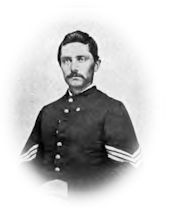
Wednesday, 8th—We moved forward early this morning, marching twelve miles to the little town of Ackworth, where we went into camp. We are now with Sherman’s army, our corps being placed on the left in front of Atlanta. Our front is about twenty-five miles north of the city, while my division is back about ten miles farther. Sherman’s forces now number about one hundred and fifty thousand men and it is thought that the rebels under Johnston have seventy-five thousand. Our army, in the main, is lying still today, though there is some skirmishing in the front. The rebels have fallen back about ten miles. The health of our men is excellent; they are in fine spirits and anxious for a fight.
Diary of Alexander G. Downing; Company E, Eleventh Iowa Infantry
Tuesday, 7th—The weather continues warm. Our corps drew fifteen days’ rations at Kingston this morning. We left the place at 10 o’clock, carrying five days’ rations, the balance to be hauled by the supply trains. We marched twelve miles to Cartersville and went into camp. Our troops control the railroad, which is in running order to this place, but the rebels burned the bridge just before evacuating the town. Our men will soon have it rebuilt, using the old piers, which are intact. It is three hundred feet long and one hundred feet above the water. The rebels were very strongly fortified here at Cartersville, but they left the place without fighting because of our troops flanking them. Cartersville will be used as a base of supply for Sherman’s army.
Monday, 6th—It is quite warm. We started early this morning, and crossing the Coosa river on a pontoon bridge, passed through Rome for Kingston, about fourteen miles distant. We arrived at Kingston about 4 o’clock in the afternoon and went into camp. Kingston is on the railroad running from Chattanooga to Atlanta. Our forces routed the rebels from here about ten days ago. A large force of our men is stationed here. There is no news from the front. We are still in mountainous country, but there are some very nice farms in the valley with fine dwelling houses.
Sunday, 5th—Rain again this forenoon and clear this afternoon. We started early this morning, our regiment leading the advance division, and at 3 o’clock reached our destination, Rome, Georgia. The sixteen miles covered today was over very muddy roads, such as we have had for the last fifty miles, and all were greatly fatigued. Some of the men gave out completely and had to ride in the ambulance. News came that General Grant had surrounded Richmond, and that General Sherman was driving Johnston, but the report is too good to believe, yet I hope it is true.
Saturday, 4th—We started at 8 o’clock and marched fifteen miles today. Have had rain for three days now, but late in the afternoon it cleared off. We had to wade a river, the water being only three or four feet deep, and the boys had great fun in trying to carry the powder on their heads to keep it dry. We were soaking wet from the rain so we did not mind wading the river. But the muddy roads make marching very hard, especially since we are kept on two-thirds rations when we might just as well have more. Large foraging parties were again sent out, but there isn’t anything in the country to be had, although we traversed a level country between two mountains the whole day.
Friday, 3d—It rained nearly all day and changed the dust into mud, which made the marching very heavy. We left camp at 8 o’clock and leaving the valley, traveled over a spur of Lookout mountain nine miles across. We marched eighteen miles today and bivouacked on the Chattanooga river. We passed a house of mourning today where lay the body of the head of the family, he having been killed just a few days before in a battle with Sherman’s men. I never saw a sadder sight. The wife and daughters dressed in deep, rich mourning were most pitifully bewailing their loss. But some of our boys remarked that the people of the South had brought on this war themselves.
Thursday, 2d—A fine shower about noon cooled the air and laid the dust. The entire corps lay in camp all day, the men washing and mending their clothes, and the blacksmiths shoeing the horses and mules. We are in the valley between the Sandy and Lookout mountains, which are heavily timbered with pine and ash. The quartermaster’s trains were sent out on forage today, but although the farms in the valley are fairly good, there is little to be had, for the few farmers thought it useless to grow crops this summer.
Wednesday, 1st—Our brigade started at 5 this morning, but covered only twelve miles. We marched down the Sandy mountains into the valley and went into bivouac along the banks of Sandy creek. The rear of the army did not get into camp until midnight. The wagon trains could move but slowly over the rough, rocky roads, and even then the teams are almost worn out. Many of the horses and mules lost their shoes and have broken hoofs and sore feet. Large foraging parties are sent out, but because of the poverty of the country they do not get much.
Tuesday, 31st—We broke camp in the early morning and started on another day’s march, our brigade leaving at 7 o’clock and taking up the rear. We climbed the mountains again and after marching sixteen miles went into camp on the very top. This has been a hard march; the men are suffering as never before from sore feet and some, giving out, had to be hauled in the ambulance. Then, too, we are on two-thirds rations because of the lack of transportation.
Monday, 30th—The weather is getting quite warm and the roads are dusty. Our advance guard broke camp at daylight, while our brigade did not get under way until 10 o’clock. We crossed a ridge of mountains this afternoon and this evening went into camp in the valley close to Warrenton. The mountains are heavily timbered, mostly chestnut, and the soil is sandy and rocky. There are only a few small farms here and there. The men have gone to war, while the women and children remain with scarcely anything to live on.


