Following the American Civil War Sesquicentennial with day by day writings of the time, currently 1863.

Miscellaneous document sources

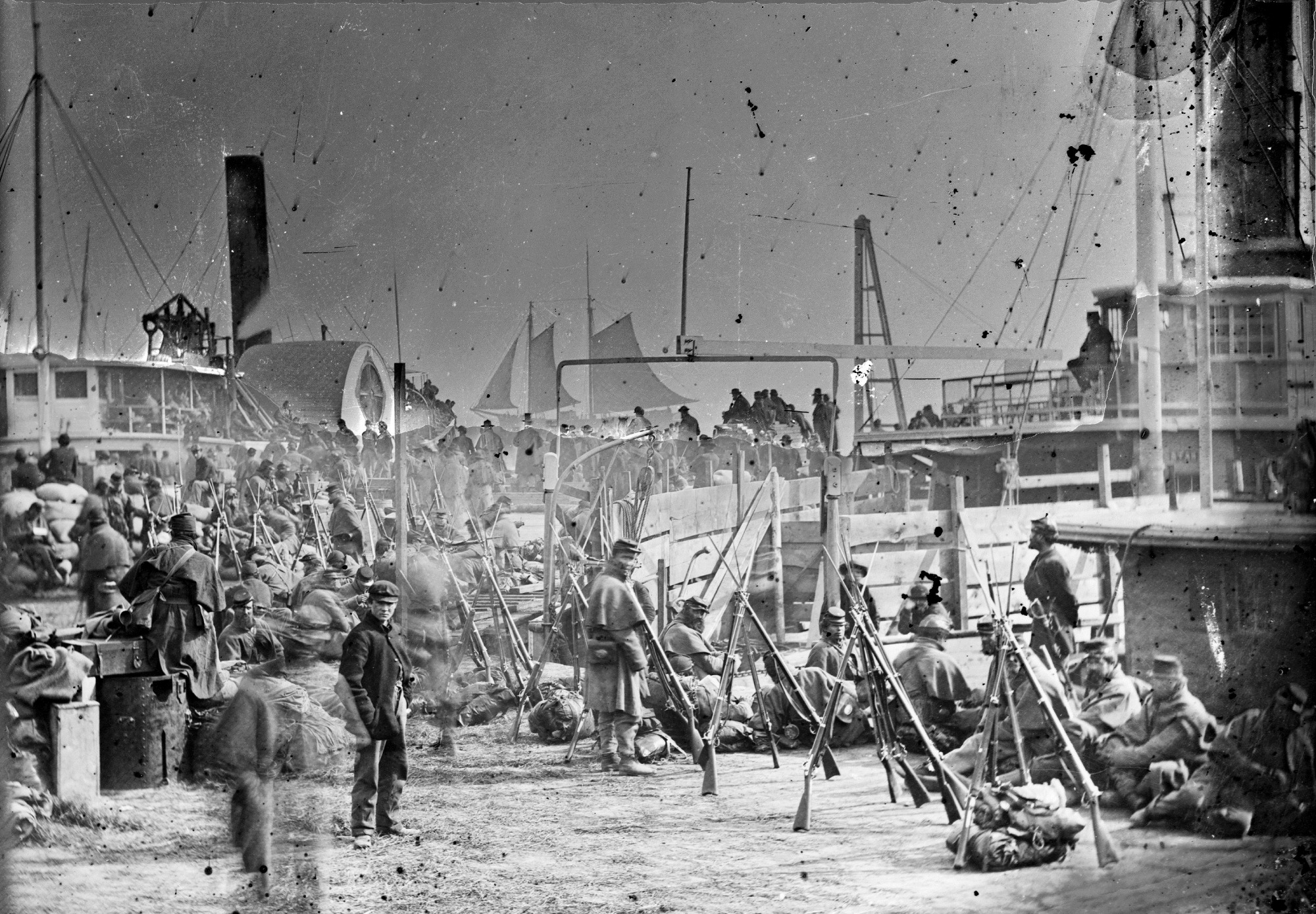
Aquia Creek Landing, Va

Embarkation of 9th Army Corps for Fort Monroe

This photograph is by Alexander Gardner. “On February 5, 1863, Sedgwick was succeeded by Maj. Gen. William F. “Baldy” Smith, and on February 12 the corps was ordered to Newport News, where it encamped for a month.” [IX Corps (Union Army) – Wikipedia]

Library of Congress image.

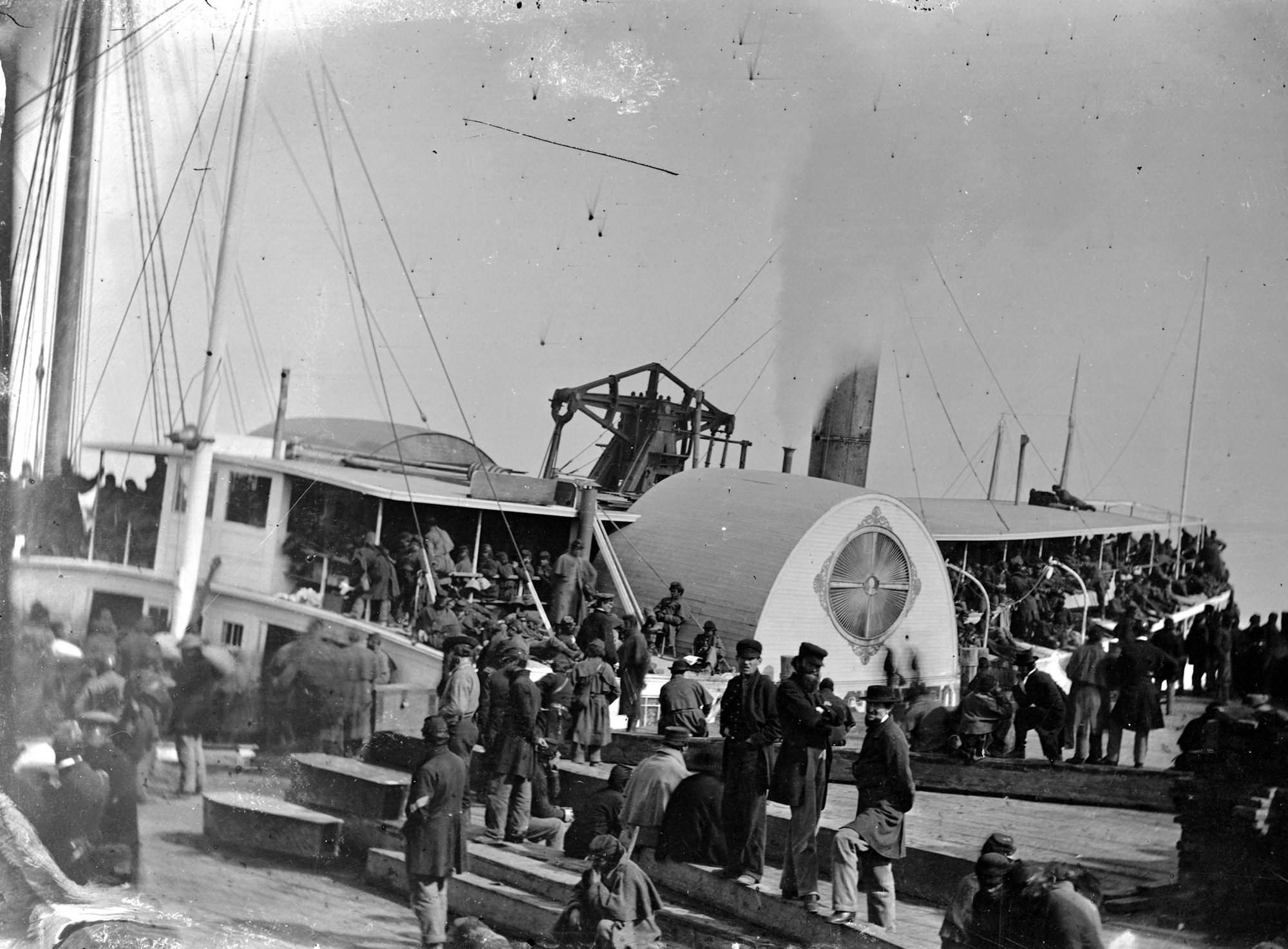
Aquia Creek Landing, Va. Embarkation of 9th Army Corps for Fort Monroe; another view 00315a

Aquia Creek Landing, Va. Embarkation of 9th Army Corps for Fort Monroe; photograph is by Alexander Gardner. “On February 5, 1863, Sedgwick was succeeded by Maj. Gen. William F. “Baldy” Smith, and on February 12 the corps was ordered to Newport News, where it encamped for a month.” [IX Corps (Union Army) – Wikipedia]

Library of Congress image.

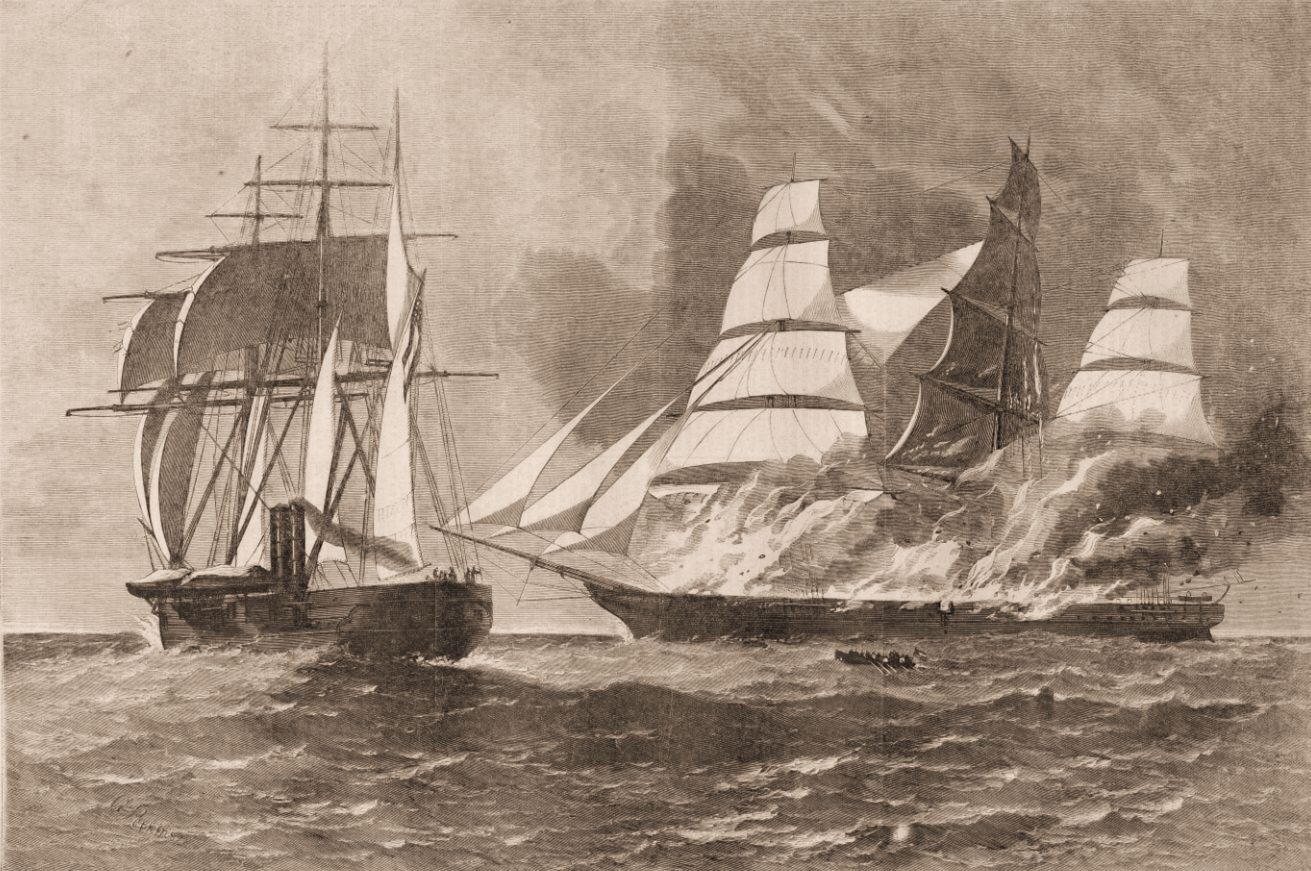
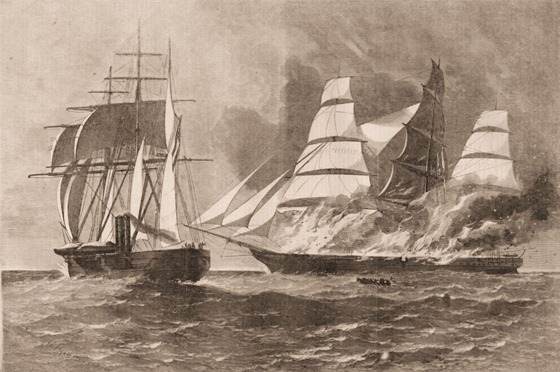
CSS Florida Destroys the Jacob Bell

Destruction of the Clipper Ship “Jacob Bell” by the British Pirate “Florida.”

Published in the March 21st, 1863 issue of Harper’s Weekly.

______________

Account in the  NY Times, March 15, 1863:

DOINGS OF THE PIRATES.; The Capture of the Jacob Bell by the Florida. STATEMENTS OF PASSENGERS.

HALIFAX, Tuesday, March 10.

The following account of the capture of the ship Jacob Bell, from Swatow, China, bound to NewYork, by the Confederate, privateer Florida, is from Mrs. WILLIAMS, whose husband is Commissioner of Customs to the Imperial Government of China, and Master CHAS. W.JOHNSON, passengers on board the Bell:

The Jacob Bell, 1,600 tons, Capt. FRISBY, with a full cargo of teas, cassia, camphor, cassia oil, &c., &c., valued at $1,500,000, part of it British property, at about noon on the 12th ult., about 100 miles from Sombrero, discovered a steamer in pursuit under a full head of steam, and all sail set. After six hours’ chase, the steamer fired a shot which struck about twice the length of the ship astern, when Capt. FRISBY ordered his ship hove to. The steamer carried the National flag. After sailing around the Bell three times, she presented a broadside, run up the rebel flag and sent a boat’s crew on board; she proved to be the rebel privateer Florida. After examining the Bell’s papers, she was declared a prize to the Confederate States. The officers, crew and passengers of the Bell were immediately transferred to the Florida, being allowed only half an hour to collect a few necessary articles, the prize crew appropriating whatever of the remaining articles, including many valuable curiosities, &c., pleased their fancy. The Florida immediately started in pursuit of a schooner, giving orders to the prize master to seer a certain course to meet the Florida the following morning. The schooner escaped in the darkness. The Florida and Jacob Bell met the morning of the 13th, when the prize crew were taken off and the ship fired. The Florida narrowly escaped being run down by the Bell, she having banked her fires, the crew were so intently engaged in transferring plunder as to quite neglect the management of the ship, which, with sails set, bore down on the Florida, the rigging of which had to be manned and the Bell shoved off. She was then abandoned and burned to the water’s edge.

The same day the Florida brought to a French bark, boarded and examined her papers, afterwards chased a schooner, which escaped. On the 17th brought to the Danish bark Morning Star, which consented to receive the crew and passengers of the Bell and land them at St. Thomas.

Immediately on intelligence reaching St. Thomas, the Federal man-of-war Alabama started in pursuit. The Vanderbilt would leave as soon as she had coaled.

The Florida carries six 68-pounders and two chasers, 120-pounders. The crew numbers 160 all told. Officers quite young; crew principally Irish, some of whom expressed a desire to leave her.

Capt. MAFFIT and officers of the Florida showed them every attention and seemed to be desirous of making their situation as comfortable as possible. Capt. MAFFIT mentioned the Vanderbilt having passed him, but it being night, and the Florida lying so low, with sails furled and smoke-stack down, she was not discovered.
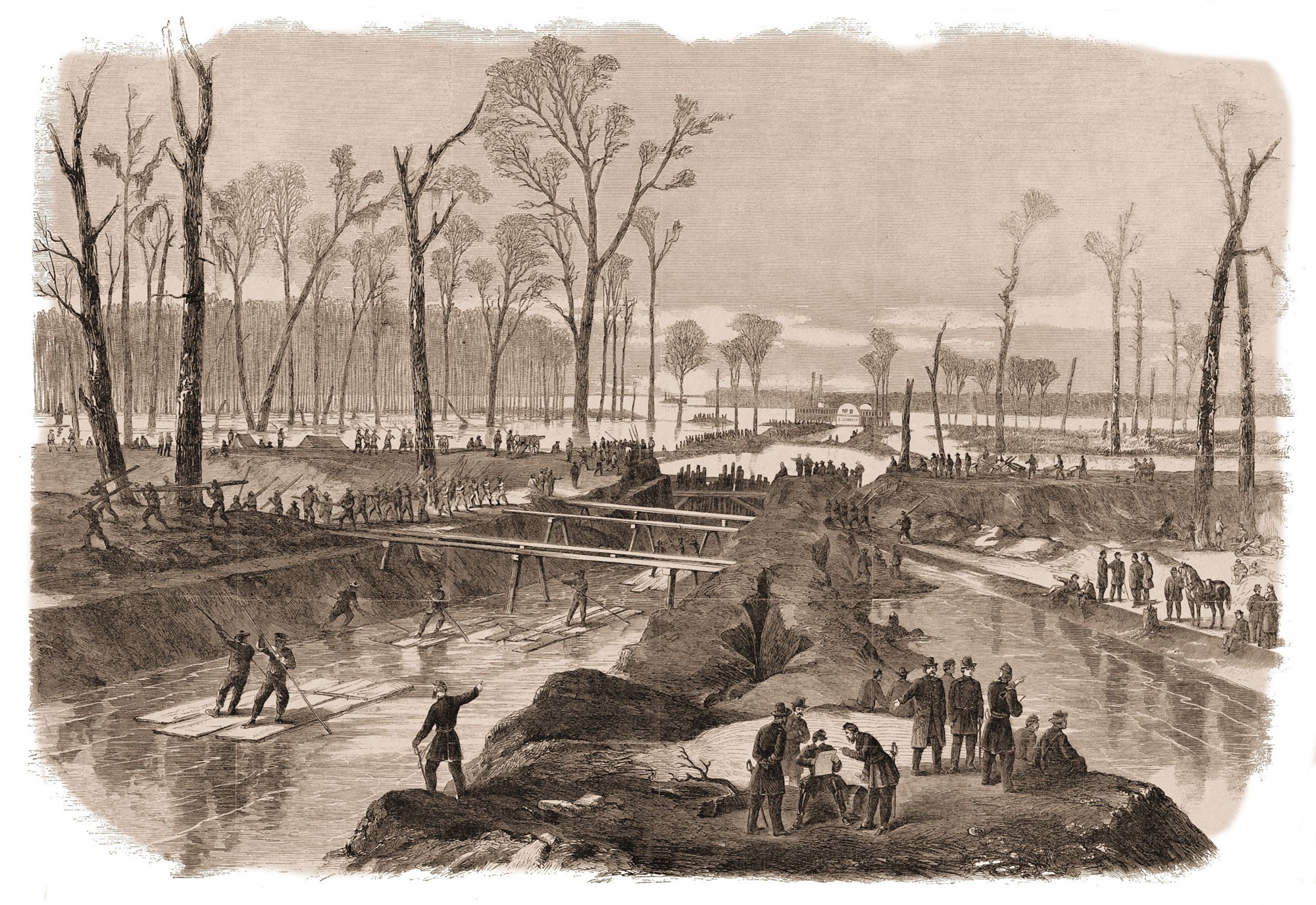
The Head of the Canal, Opposite Vicksburg

The Head of the Canal, Opposite Vicksburg, Miss., Now Being Cut by Command of Gen. Grant.

Published in March 28, 1863 edition of Frank Leslie’s Illustrated Newspaper.

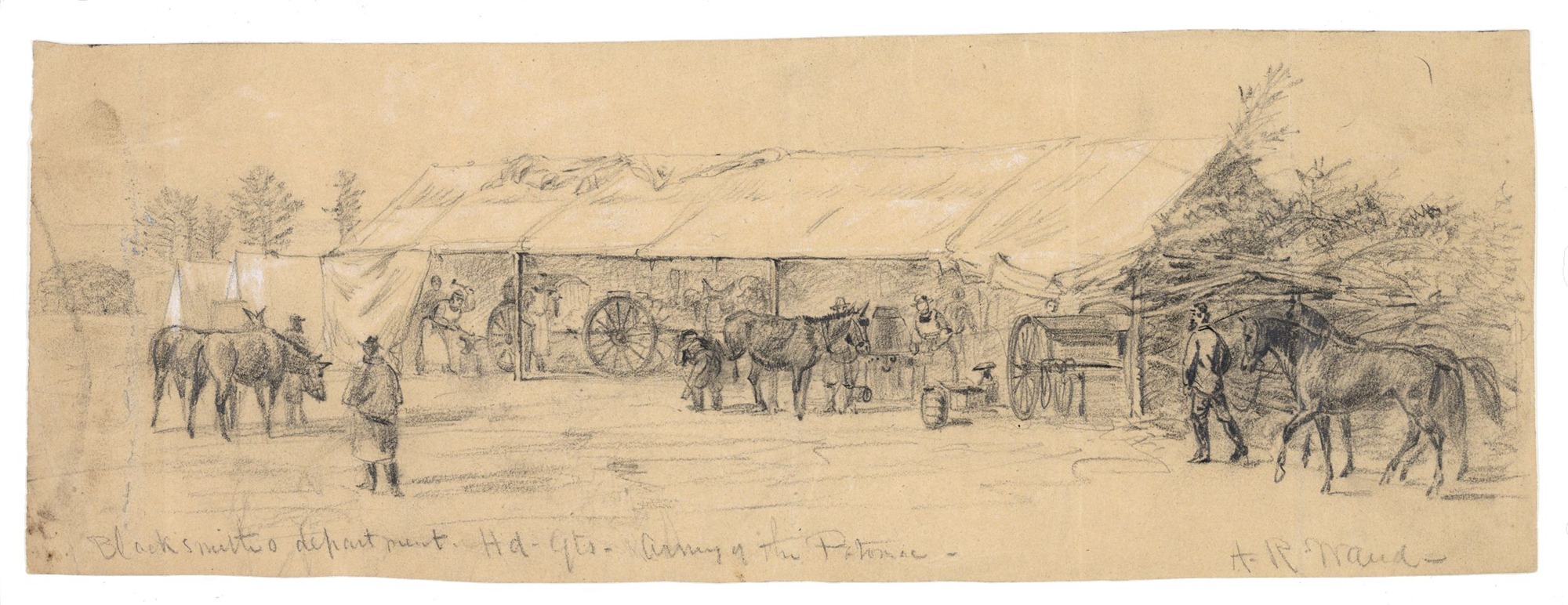
Blacksmiths department Hd. qts

(click on image for larger version)

Title: Blacksmiths department Hd. qts. Army of the Potomac

Created: 1863 ca. February

Artist: A.R. Waud. (signed lower right)

Published in: Harper’s Weekly, April 18, 1863

Library of Congress image

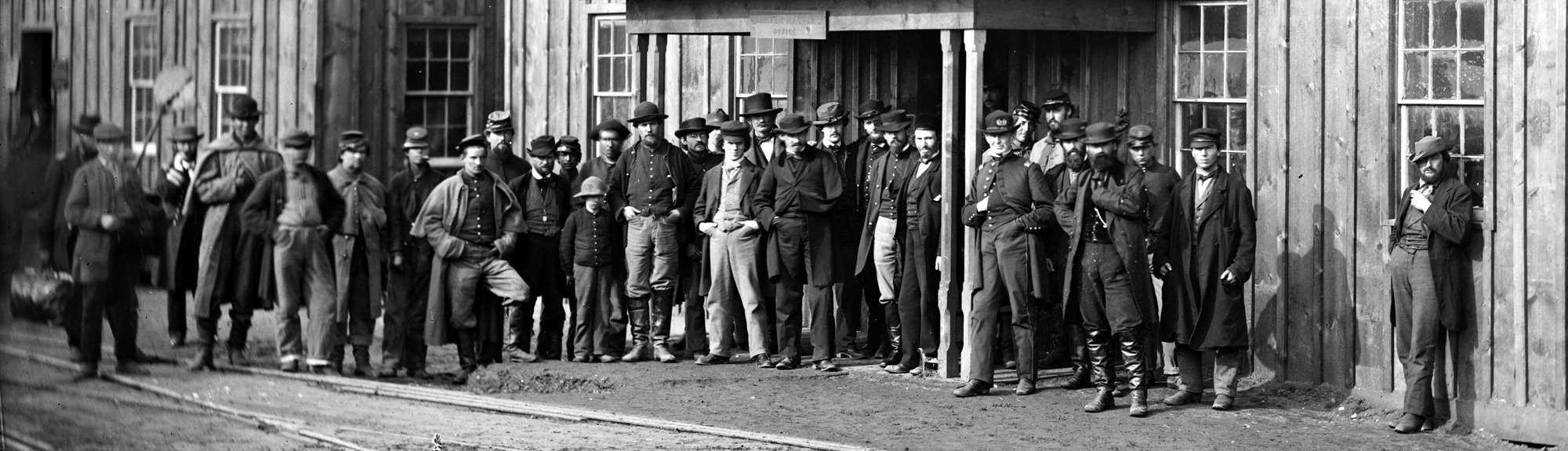
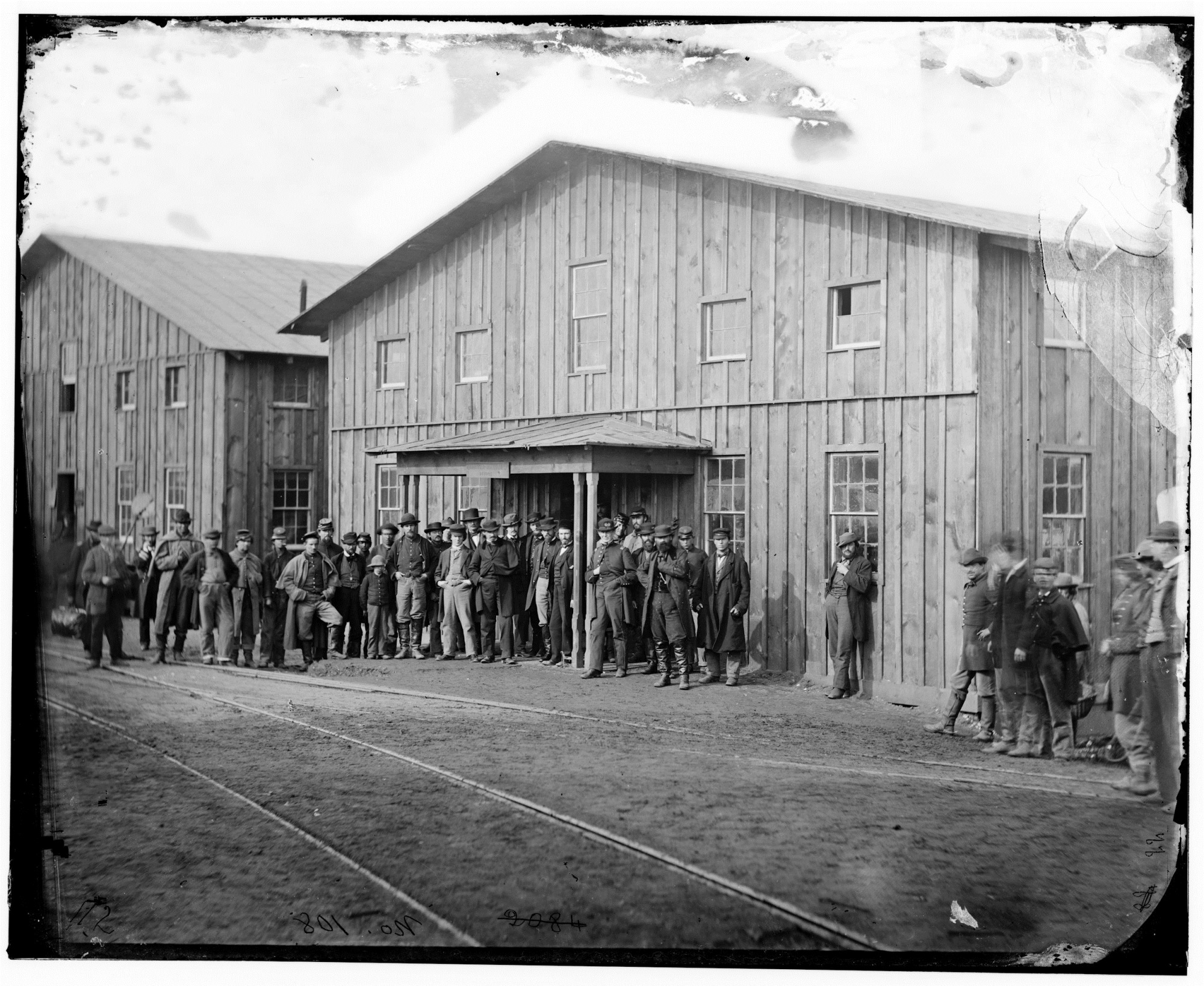
Group at Quartermaste office at Aquia Creek Landing, Va

Aquia Creek Landing, Va. Personnel in front of Quartermaster’s Office; photograph is by Alexander Gardner. The image above is cropped from the following larger photo.  (Click on either image to view larger version.)

Personel at Quartermaste office at Aquia Creek Landing, Va

Library of Congress image.

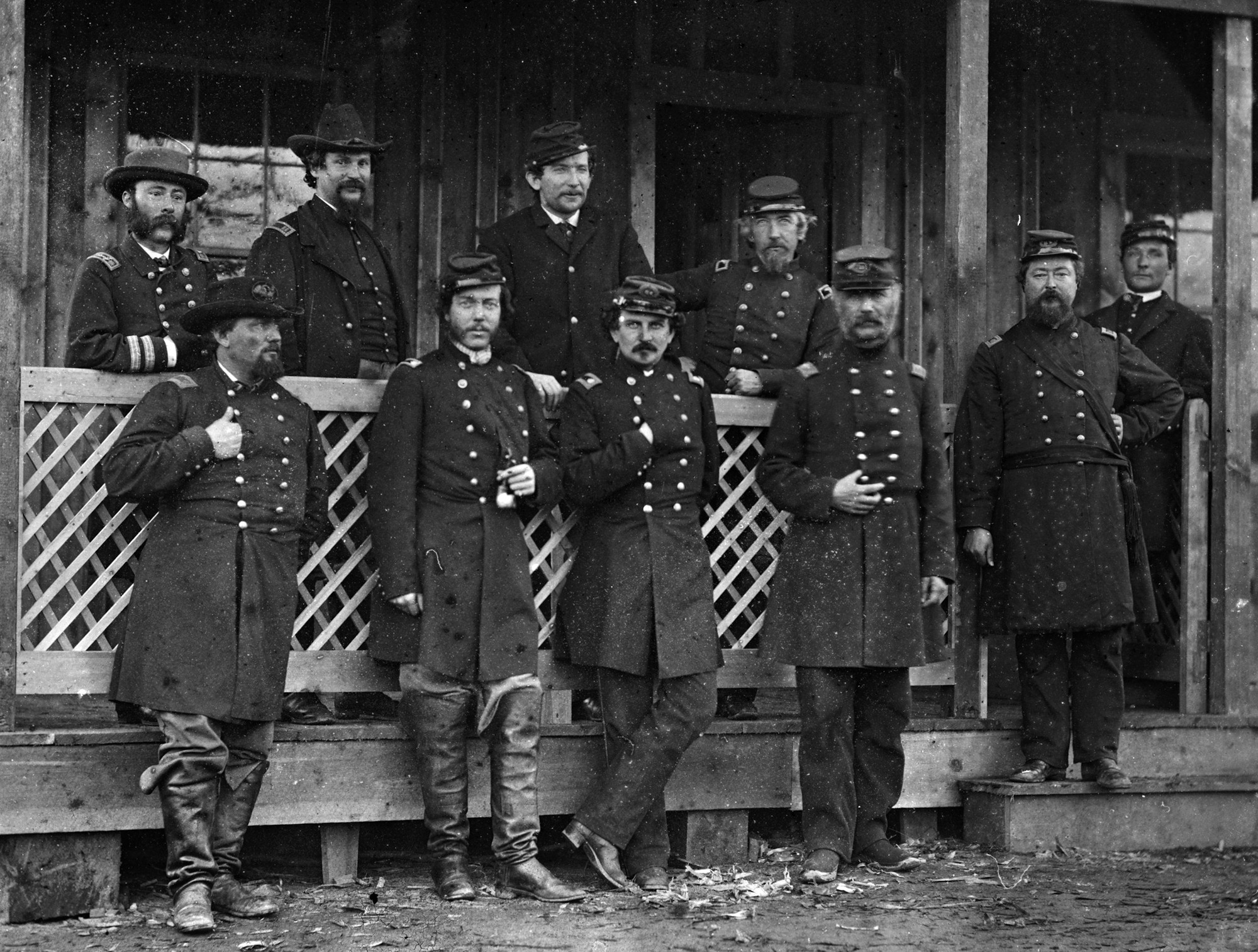
Aquia Creek, Virginia. Group standing in front of hospital

Aquia Creek, Virginia. Group standing in front of hospital, photographed by by Alexander Gardner.

Library of Congress image.

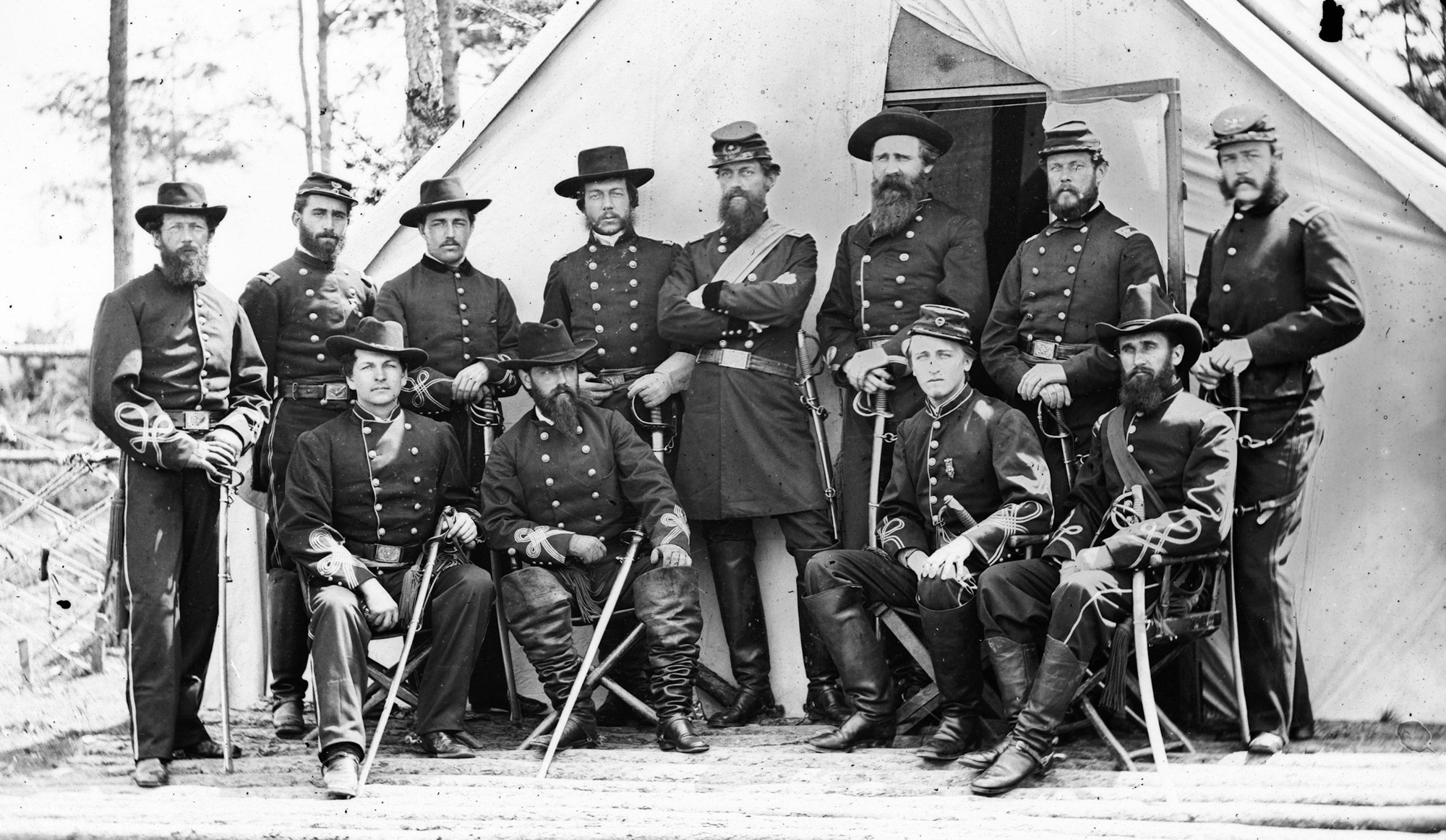
Falmouth, Virginia. General George Stoneman and staff 01170a

Photographed by James F. Gibson at Falmouth, Virginia, February, 1863.

Library of Congress image.

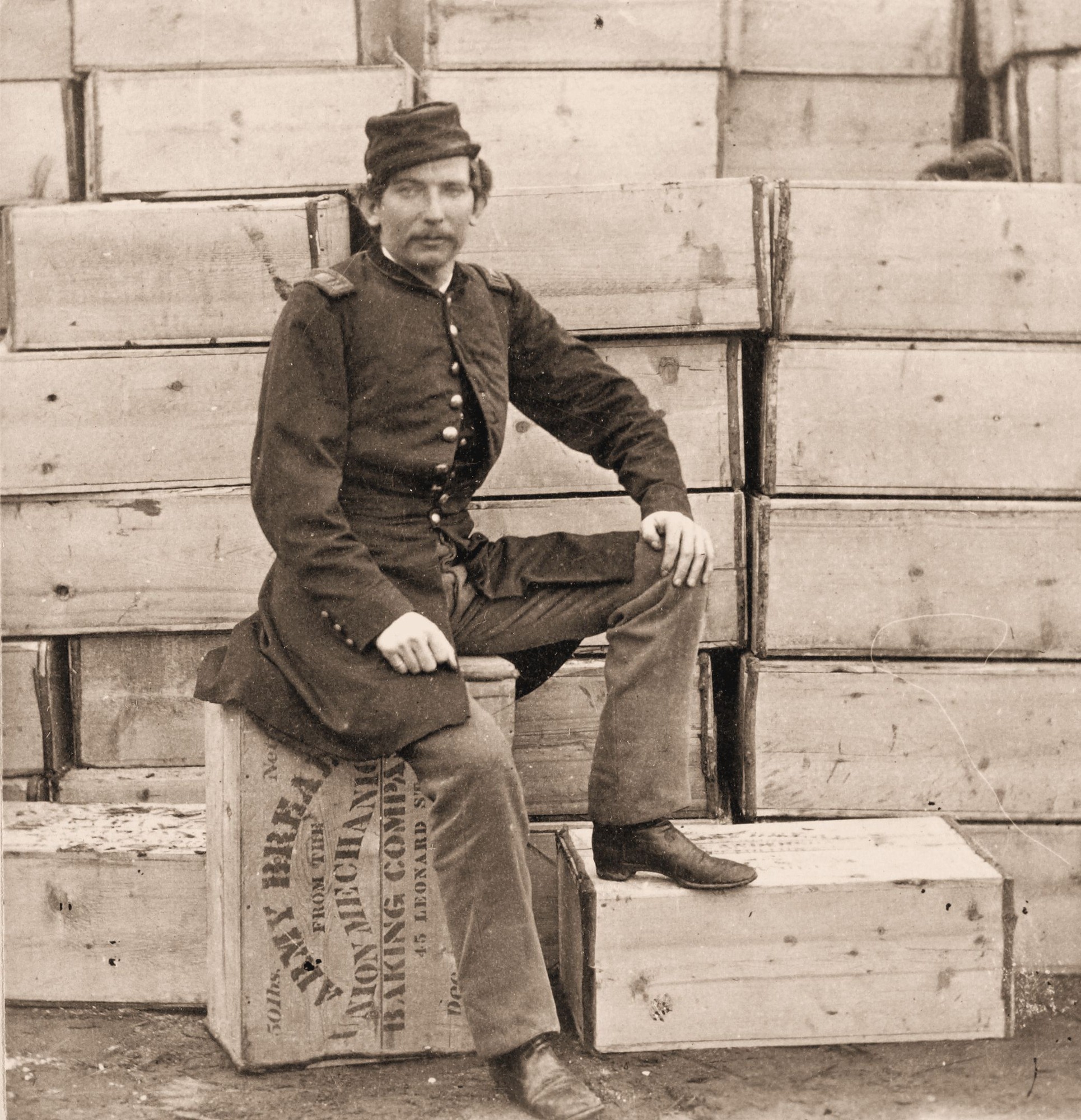
Union Captain J. W. Forsyth, the Provost Marshall, sitting on a crate of hardtack

Back of Card:

“Hard Tack.”

There is no necessity to tell the “boys” what this is; they all remember the old chorus of the old army song about “Hard Tack:”

“Many days we have crunched you until our jaws are sore,

Oh! “Soft Bread” come again once more.”

______________________

Stereograph showing Union Captain J. W. Forsyth, the Provost Marshall, sitting on a crate of hardtack, a cracker like bread served to soldiers, at Aquia Creek, Virginia. Crate says “50lbs. net. Army Bread from the Union Mechanic Baking Company, 45 Leonard St.”

Library of Congress image.

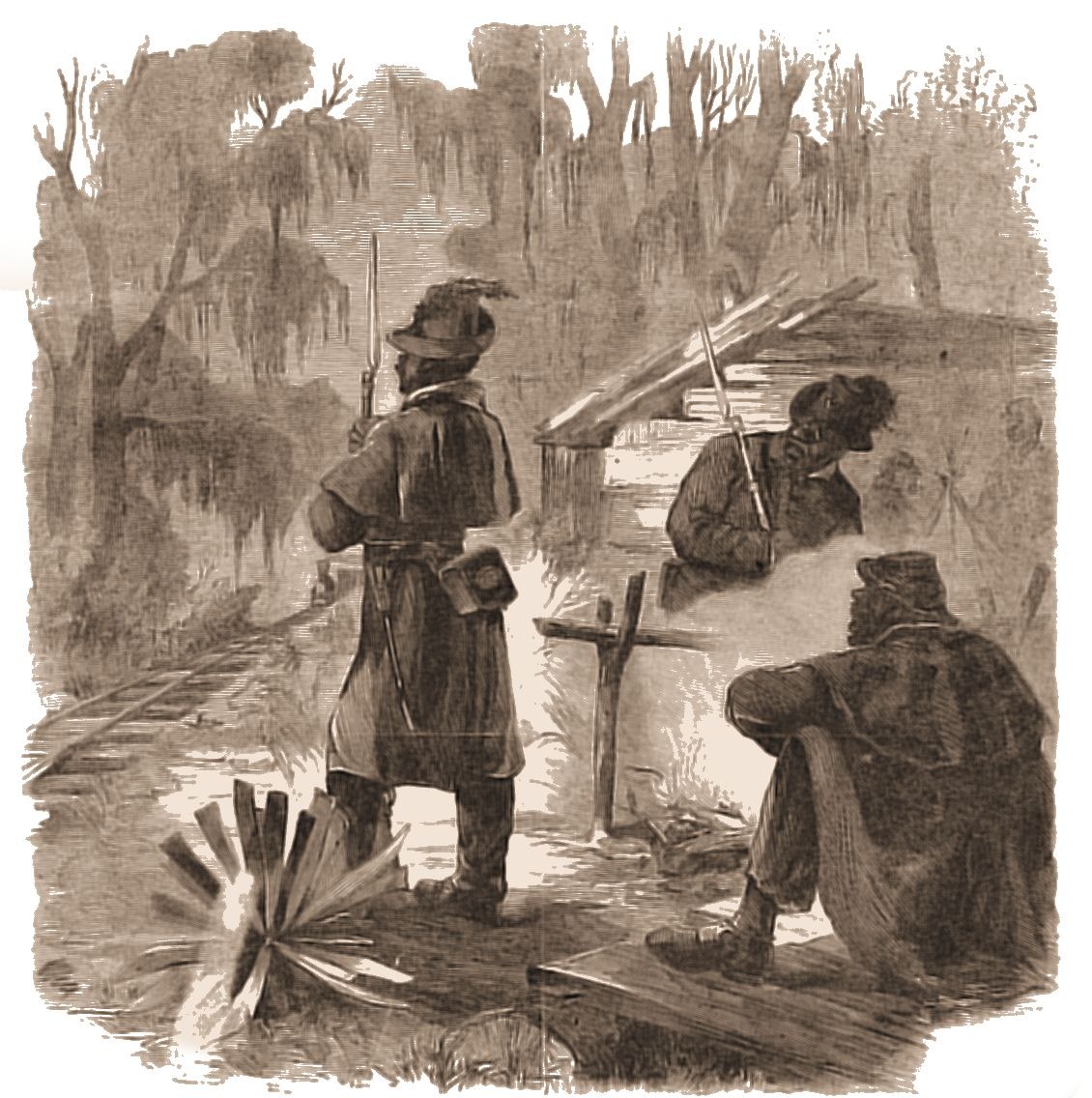
Pickets of the First Louisiana “Native Guard” Guarding the New Orleans, Opelousas, and Great Western Railroad

Pickets of the First Louisiana “Native Guard” Guarding the New Orleans, Opelousas, and Great Western Railroad.  (March 7, 1863 issue of Frank Leslie’s Illustrated Newspaper.)

_______________

Scenes in Louisiana.

Our artist has sent some sketches which illustrate, in a striking degree, some novel phases of life, both military and civil, which the present struggle is involved. The fact of black regiments being actively employed is not an novelty, since they have been for some time part of the British military system, which, with its usual commonsense, avails itself of every aid in the pursuit of its objects. Our Artist says that among the cypress swamps of Louisiana Negro soldiers are invaluable, and accompanies his sketch of the pickets of the first Louisiana native troops, guarding the New Orleans, hope Eleusis and Great Western Railroad, with some remarks which we quote:

“In this swamp in the wilderness the ‘image soldiers’ are eminently useful. The melancholy solitude, with the spectral cypress trees, which seem to stand in silent despair, like nature’s sentinels waving in the air wreathes of grey funereal moss, to warn all human beings of latent pestilence around, though unendurable to our soldiers of the north, seems an elysium to these sable soldiers, for the swampy forest has no horrors to them. Impervious to miasma, they only see the home of the coon, the possum and the copperhead, so that with ‘de gun that Massa Sam gib ‘em’ they have around them all the essential elements of colored happiness, except ladies’ society.”