Following the American Civil War Sesquicentennial with day by day writings of the time, currently 1863.

Miscellaneous document sources

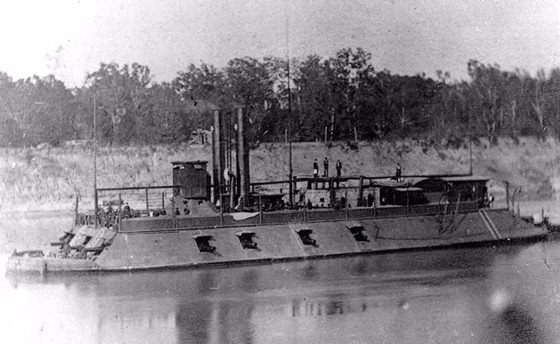
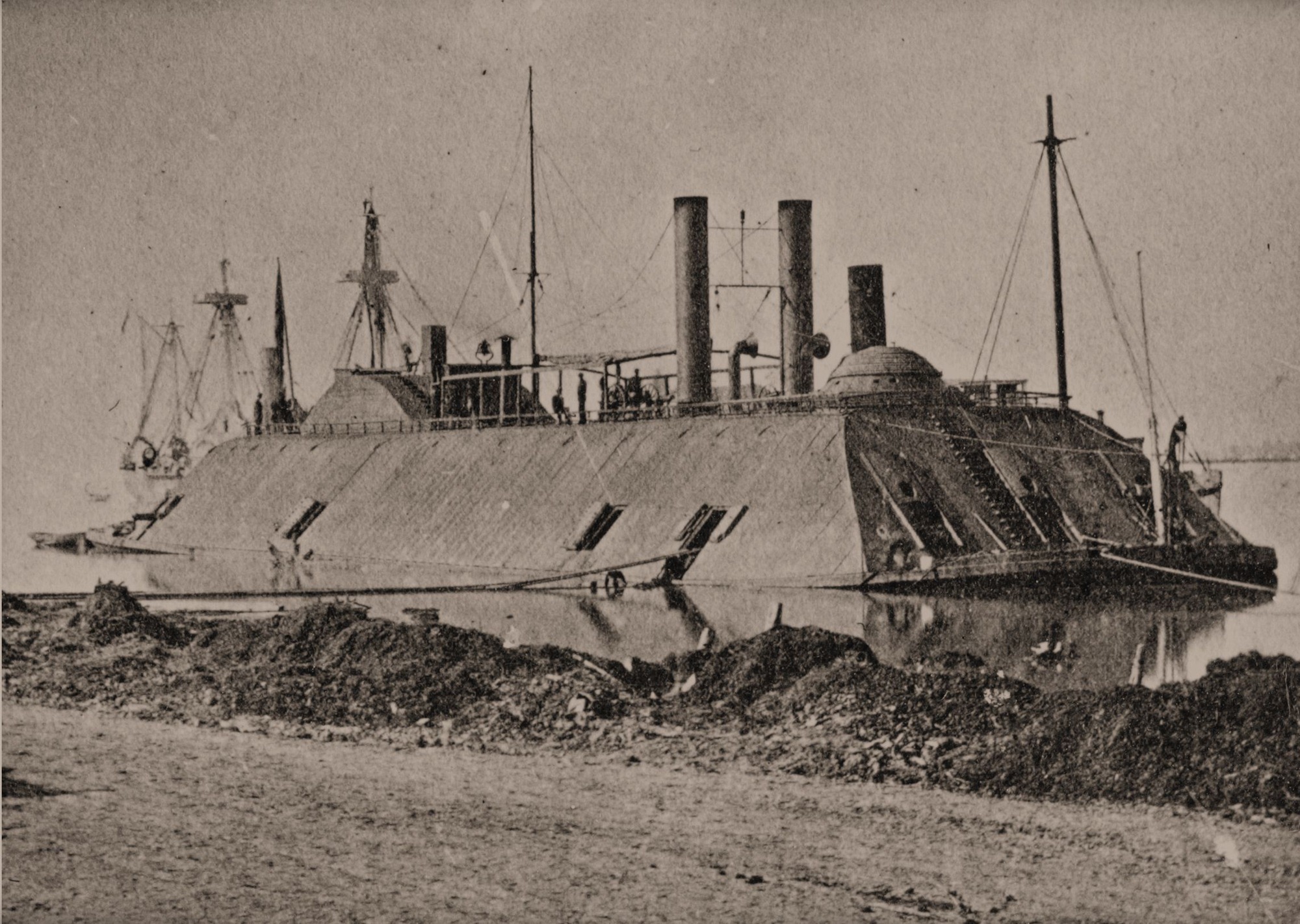
USS Essex - 1s02823u

US Navy Naval Historical Center:

USS Essex, a 1000-ton ironclad river gunboat, was converted in stages from the steam ferry New Era. Originally constructed at New Albany, Indiana, in 1856, the ship was purchased in September 1861 by the U.S. Army for its Western Gunboat Flotilla. Modified into a 355-ton “timberclad” gunboat, and retaining the name New Era, she took part in an expedition up the Cumberland River in November 1861. Renamed Essex soon thereafter, she received iron armor and other changes and was then actively employed in operations during early 1862, engaging Confederate gunboats near Lucas Bend, Missouri, on 11 January. On 6 February, she was badly damaged by enemy gunfire during an attack on Fort Henry, Tennessee.

During subsequent repairs, Essex‘ Commanding Officer, William D. Porter, spared little expense (albeit without official authorization) in upgrading his ship into one of the most powerful ironclads on the Western Rivers. Lengthened, widened, reengined, rearmored and completely altered in appearance, Essex was back in service in time for operations against Vicksburg, Mississippi, in July. On the 22th of that month she ran past the enemy fortress city, engaging and damaging the Confederate ironclad Arkansas along the way. After joining Rear Admiral Farragut’s squadron as the only Federal ironclad on the lower Mississippi, she helped repel an attack on Baton Rouge, Louisiana, on 5 August and was instrumental in the destruction of the Arkansas the next day.

Essex was formally transferred to the Navy in October 1862 and remained active on the rivers through the rest of the Civil War. She bombarded Port Hudson, Louisiana, and helped with the occupation of Baton Rouge in December 1862. In May-July 1863 she participated in the capture of Port Hudson. She took part in the Red River expedition in March-May 1864. Essex was decommissioned in July 1865. After her sale to private interests in November of that year, she reverted to the name New Era. She was scrapped in 1870.

Library of Congress:

Summary: Photo shows the USS Essex, launched in 1856 as the New Era and acquired during the American Civil War by the US Army in 1861 for the Western Gunboat Flotilla. Transferred to the US Navy in 1862 and participated in several operations on the Mississippi River, including the capture of Baton Rouge and Port Hudson in 1863.

“Probably Baton Rouge, La.” handwritten on back of card.

Library of Congress Prints and Photographs Division Washington, D.C. 20540 USA

Record page for image: http://www.loc.gov/pictures/item/97501522/

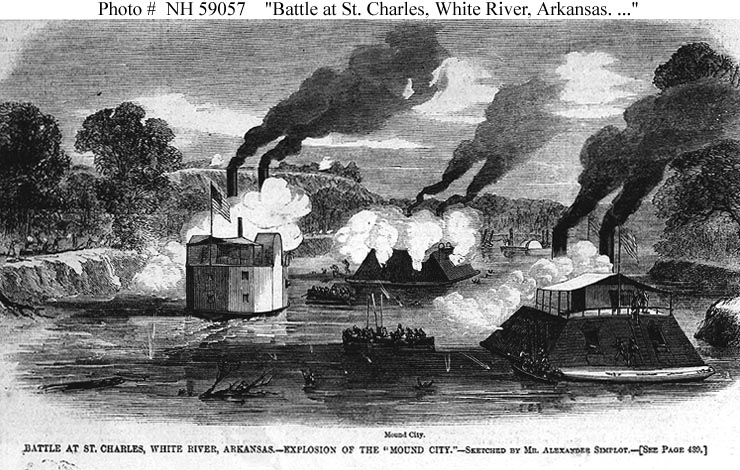
Engagement at Charles City–Explosion of the Boiler of the Mound City–Terrible Loss of Life–Total Defeat of the Rebels.

USS_Mound_City_01Memphis, June 19.–An expedition, composed of the gun-boats St. Louis, Lexington, Conestoga and Mound City, with transports carrying the Forty-third and Forty-sixth Indiana Regiments, under Colonel Fitch, was sent hence some days since to remove the obstructions from the White River. On the 17th the expedition reached St. Charles, 85 miles from the mouth of the river, where the Rebels had erected a battery.
An engagement ensued, lasting an hour and a half. While the gun boats engaged the batteries, the troops under Colonel Fitch landed a short distance below and proceeded to storm the place. During the cannonading, a ball entered the boiler of the gun-boat Mound City, causing a fearful explosion and loss of life. The crew consisted of one hundred and seventy-five, of whom one hundred and twenty-five were killed and wounded. The following officers are among the killed:–John Kenzie, Jan Scoville, John Green, Henry R. Brown, Jos. Nixon and John Cox. Captain Kelty, the Flag Officer, was badly scalded, but it is thought will recover.
Colonel Fitch’s charge on the battery was a perfect success, driving the enemy out at the point of the bayonet. The Rebel loss is 125 killed and wounded, and 30 prisoners. General Halleck has occupied Holly Springs.
Chicago, June 21.–The following fuller account of the fight with the Rebel batteries on White River has just been received.


Memphis, June 19.–The gun-boat Conestoga has arrived with despatches containing the particulars of the engagement at the Rebel fortifications below St. Charles.
On the 17th, the gun-boats St. Louis, Mound City, Lexington, and Conestoga, and transport New National, having on board the Forty-sixth Indiana Regiment, Col. Fitch, which left here a week ago to open communication with Gen. Curtis’ army, and remove the obstructions from White River, ascended that stream. The gun-boat Mound City, Captain Kelty commanding, was about a mile and a half in advance. In a bend of the river near St. Charles, two concealed batteries opened on the Mound City. Her decks were immediately cleared for action, and as soon as the range of the works was obtained, the guns opened fire.
Capt. Kelty signaled to Col. Fitch to land his force below the fort, which was successfully accomplished. The Lexington and St. Louis shelled the woods, under cover of which Col. Fitch gained the rear of the Rebel position.
At this juncture a ball from a siege gun on the bluff struck the forward and port side of the Mound City, penetrating the casements and passing through the steam drum. The vessel was filled with the escaping vapor, and nearly every one on board was scalded; only twenty-three of the officers and crew, out of one hundred and seventy-five, escaped from injuries. The scene which ensued was horrible. Many of the crew, frantic with pain, jumped overboard, and some of them were drowned. Boats from the Conestoga, which was coming up at the time to support the Mound City, were sent to their relief; but the Rebels fired on the men in the water with grape and canister from their field pieces, murdering most of those who were attempting to escape.
Being apprised of the state of affairs in the river, Colonel Fitch’s regiment pushed forward and carried the fort by storm at the point of the bayonet. The Rebel works consisted of two batteries, the lower one mounting six field pieces, and the upper one three heavy siege guns, manned by from 400 to 500 men, under command of Colonel Frye, late of the United States Navy. About 200 Rebels are said to have escaped, over 150 are reported killed and wounded, and thirty taken prisoners.
Among the prisoners is Colonel Frye, who was wounded in the shoulder. He has been brought to Memphis by the Conestoga.
Captain Kelly, of the Mound City, was severely scalded about the face and hands. He will recover. Second Master Hearth, Third Master Kinzie, Fourth Master Scoville, Master’s Mate H. R. Browne, Paymaster —–, Chief Engineer John Cox, and Assistant Engineers John McAffee and Hollingsworth were killed. Pilot Chas. Young was severely scalded, and is reported to have since died. Surgeon Jones and Carpenter Manning were slightly scalded. From eighty to one hundred of our sailors have already been buried, and over twenty are missing.
Colonel Fitch, report[ed that] but few of his men were wounded and none [died], and but for the unfortunate accident on the Mound City, the Rebel works would have been carried without loss on our side. She can easily be repaired. The Flag Officer has sent to Cairo for another crew. The Rebels have obstructed the channel above, by sinking two large steamboats and a gun-boat, believed to be the Maypol.

Philadelphia Inquirer
Monday, June 23, 1862

USS_Mound_City_01

From Wikipedia:

(In June 1862), the (Federal) Army of the Southwest under Major General Samuel R. Curtis had been operating in the interior of Arkansas. Curtis believed that Confederate forces of the Trans-Mississippi Department were gathering to attack him. Fearing that he would be cut off, he requested that communications be established between his army and that on the Mississippi River. Either the Arkansas River or the White River would have served his purposes, but the Arkansas was too low for water transport, so an expedition was sent up the White River with intent to give Curtis the aid he had asked for. A single regiment, the 46th Indiana Volunteers, embarked in army transports; they were accompanied by two armored gunboats, Mound City and St. Louis, two unarmored gunboats, and an armed tug. On 13 June, the expedition entered the White River and proceeded uneventfully upstream for four more days.

With intent only to slow down the progress of the Union vessels and not to make a determined stand, the Confederates had set up a pair of batteries on the bluffs near St. Charles, Arkansas, some 80 miles (130 km) above the river mouth. The guns were taken from a gunboat which they had then scuttled in the middle of the stream as a further impediment. On 18 17 June, the Federal flotilla arrived at that point; the soldiers went ashore to attack the batteries from the land side, while the two armored gunboats came up the river, Mound City leading. Shots were exchanged between the gunboats and the shore batteries, with nothing exceptional until a chance shot from the upper battery happened to penetrate the casemate of the lead gunboat. The shot killed some men in its passage, but most of the damage it caused occurred when it hit the vessel’s steam drum. Hot steam immediately filled the entire boat, killing and scalding most of the crew. Those who could do so jumped overboard into the river, where Rebel sharpshooters shot them as they tried to swim to safety. By the time the carnage was over, 125 men were dead by the first shot, scalding, drowning, or being shot in the water. An additional 25 were injured by the steam. Among the wounded was Commander Kilty, who survived and later returned to service in the Navy, although he lost his left arm. Only 25 men of the entire crew escaped without major injury. Meanwhile, the soldiers had moved into position to assault the batteries, so the Confederates fled, leaving their wounded and their guns behind.

Despite the almost complete loss of her crew, Mound City had suffered only inconsequential damage that could soon be repaired. First Master John A. Duble of the gunboat Conestoga took temporary command in place of Commander Kilty. Replacements for the crew were taken from other vessels in the expedition, and they went on for another 65 miles (105 km). They then turned back without meeting the Army of the Southwest. Soon enough Curtis was able to move his army to Helena, Arkansas, where he was able to reestablish his communications without the support of the Gunboat Flotilla.

From Department of the Navy Naval History Center:

This action between Federal gunboats and Confederate shore batteries took place on 17 June 1862. USS Mound City was disabled by a shot that penetrated her steam drum, causing heavy casualties among her crew. Other U.S. ships present were the ironclad Saint Louis (seen in the right foreground) and “timberclads” Lexington and Conestoga. The gunboat in left center is one of the “timberclads.”

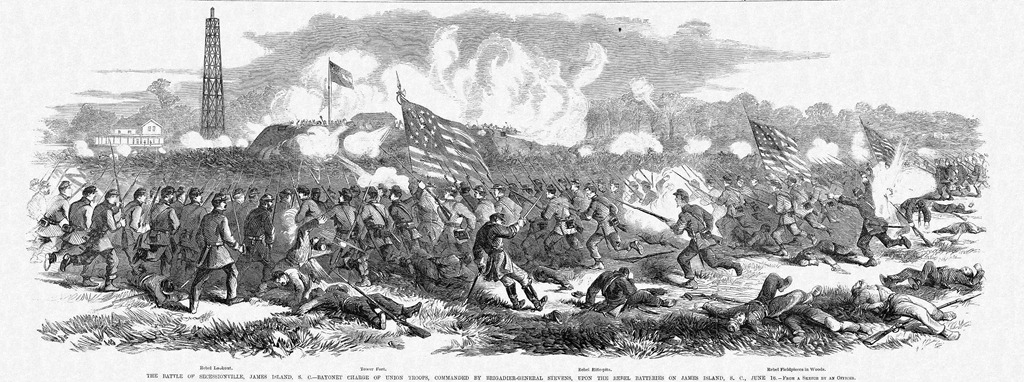
Bayonet Charge at Secessionville, SC, June 16, 1862 – Frank Leslie’s Illustrated Newspaper

Battle of Secessionville, June 16, 1862

Click on image to view larger version.

 The Battle of Secessionville.

(from The days of the Swamp Angel by Mary Hall Leonard, 1914)

Since the taking of Port Royal the United States had gradually gained possession of nearly all the Sea Islands south of Charleston, as the Confederates left them one by one. Now it was said at the War Department in Washington that if the Union forces were suddenly concentrated on James Island, and if Fort Johnson could be taken, the city itself might be reached by Federal batteries. So from Hilton Head the troops embarked, landing at Old Battery on the Stono River. But by this time the Confederates had erected the new fortification, afterward called Fort Lamar, to keep off the invaders. The commander of the Union forces now attempted by a sudden overwhelming movement to capture this fort.

On the morning of June 16 the people of Charleston were startled by the discharge of guns and by smoke in the direction of James Island. Messengers soon began to arrive in the city and telegrams from the nearest points came pouring in.

The whole town was in a tremor of excitement. People thronged the streets, watching the smoke of the battle, listening to the sounds of the firing, and eagerly asking one another for news.

Thus was precipitated the battle of James Island, or Secessionville, resulting in the repulse of the United States troops, who fell back, leaving their killed and wounded on the field.

With the retreat of the invaders a great wave of rejoicing swept over the community. But there was no time for idle exultation. The wounded must be cared for. Mourners must be comforted. Preparations must be made for further defense in case of renewed attack.

Frampton Place, near the scene of the battle, was at once made into a temporary hospital, though as soon as possible the wounded and the prisoners were brought into the city. The hospitals were filled with the injured of both armies, and many of the ladies of Charleston found a new field for service as volunteer nurses. As for Dr. MacPherson, he seemed to be in a dozen places at once, attending personally to the most important cases, and organizing and superintending the work of other surgeons.

To the relief of the Confederates, the Northern general did not renew the attack. The defeat at Secessionville terminated this invasion, and no more attempts were made to enter Charleston from the rear.


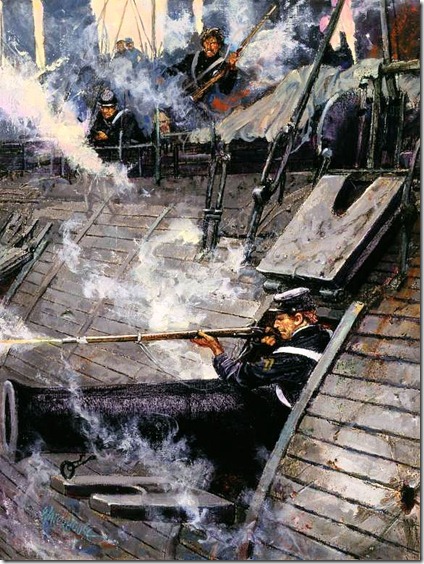
Corporal John Mackie fighting aboard the USS Galena during the Battle of Drewry's Bluff.

John Mackie (Wikipedia)

Mackie enlisted in the Marine Corps from New York on August 23, 1861. By 1862, he held the rank of Corporal and was serving on the ironclad warship USS Galena (1862). On May 15, 1862, a five-ship Union Navy squadron, including the Galena, steamed up the James River to test the defenses of the Confederate capital, Richmond, Virginia. After reaching a bend in the river upstream of Dutch Gap, the squadron encountered submerged obstacles and heavy fire from Fort Darling, atop Drewry’s Bluff. The fort’s artillery batteries inflicted severe damage on the Galena and forced the Union squadron to turn back. During the battle (which would come to be known as the Battle of Drewry’s Bluff), most of Galena’s naval gun crew was killed or wounded. Mackie led a group of Marines who took over operation of the guns for the remainder of the battle.

Mackie later received a Medal of Honor.

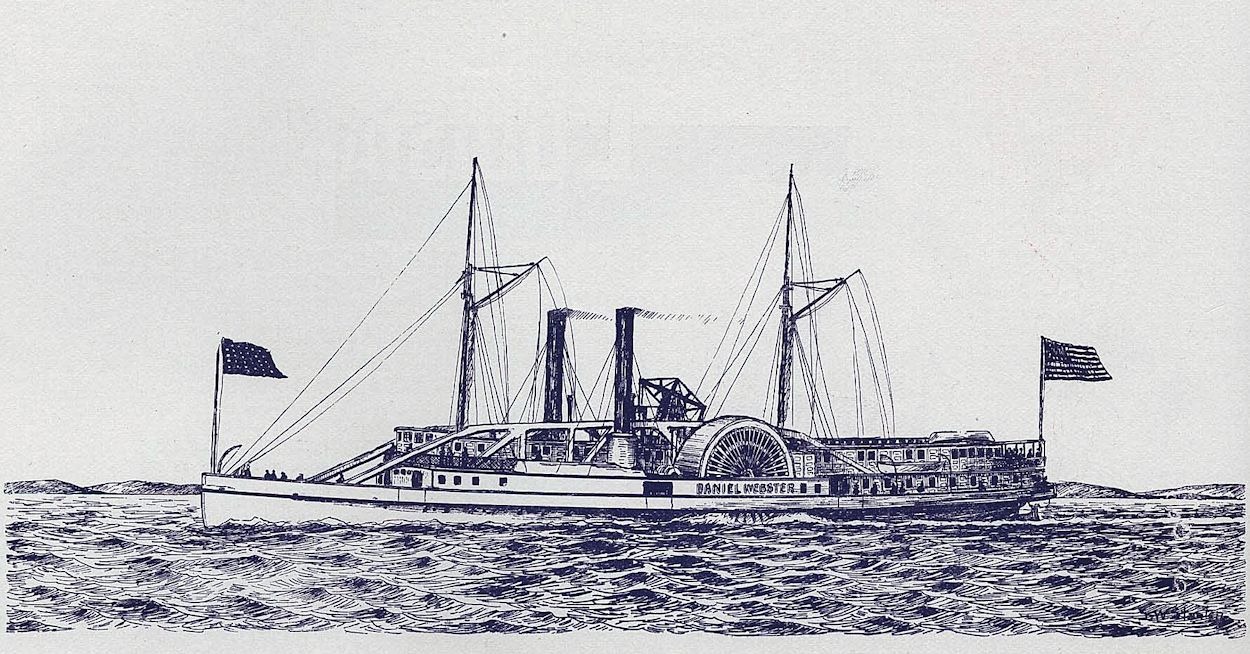
Steamship Daniel Webster

(click on image to view larger version)

Two ships named Daniel Webster were used as hospital transports by the U. S. Sanitary Commission.  They were referred to as Daniel Webster No. 1 and Daniel Webster No. 2.

While this ship was used during the War as a transport, it was under the name of Expounder for at least part of it’s service.  She afterwards ran between Baltimore and West Point, Va.

In 1884 the Daniel Webster left Boston for the St. Lawrence River, and her name was changed to Saquenay.

Built 1854 at Greeenpoint, Long Island.   (More info at Maritime History of the Great Lakes.)

Camp Alcorn, Hopkinsville, Ky., }

January 4th, 1862. }

Miss Pattie: It is with the purest of motives that we write you these lines. We are now in the army of our country, deprived of the enjoyment of the society of loved friends at home, and the greatest satisfaction we have is in communicating with those we have left behind, in whose company we once took delight. And though our acquaintance with you is limited, yet it is nothing but truth to say that the impression you have made upon our mind to desire to place you in the catalogue of absent friends, and to communicate with you as such.

It is true that the impression you have made upon us must last while memory exists, and though we should fall before the enemies of our country amid the smoke of battle and the clangor of arms, the last recollection of our mortal existence will be of our native Southern land and the fair and beautiful ladies that inhabit the same.

Since we have left our friends and peaceful homes we have learned by experience what we knew from reason before, that is, that the soldier’s life is very hard. But who with one drop of patriotic blood in his veins could refuse to respond to the call of his invaded country? Our once happy country is now bleeding at every pore. A mighty host of vandals and infidels have seized the reins of Government and trampled under their unhallowed feet the Constitution of our fathers, and in their madness have set at defiance the holy edict of sacred write, and declare that there is a higher law that must govern the actions of the free people of America. A tyrant more odious than ever reigned in the kingdoms and empires of Europe, is now enthroned in the cerulean chair of state, and his anathematical denunciation (that the South must submit to him) has gone forth and is irrevocable. And now to carry out his nefarious designs, he has called out the largest armies ever drilled in modern times, and has sent them forth, for our subjugation and everlasting ruin as a people, and they are pouring down upon us like mighty gathering avalanches, and threatening to overwhelm us in one grand destructive wreck. Under these circumstances I would ask again, what patriotic Southern son could refuse to go and drive away the invaders of his country’s liberty? Our country called us to leave our homes to defend and preserve untarnished and untouched by the hand of the invader, her fair escutcheon. Our duty said to us, go, young soldiers, and prove yourselves to be the sons of immortal sires. Nature, with all her ten thousand tongues, seemed to say to all the brave of Southern climes, go to the field of battle and preserve for yourselves and future generations, political and religious liberty. So we have determined that come what may, weal or woe, death or prosperity, our country must be free. That the South will prevail, that her arms will prove invincible, and that the enemy will fly before them like chaff before the wind of heaven.

And in conclusion, fair Miss Cone, permit us to say that we scarcely hope that after the smoke of battle and the noise of war shall have passed away; that when peace shall have hovered over our fertile land, like ministering angels over the returning prodigal, to see you and enjoy your company and society again.

There is no rest or enjoyment for us until the land we love the most is cleared of our enemies. But our hopes and prayers now are, that the God that holds the sceptre and controls the destiny of the vast universe, will bring this war to a speedy and peaceful termination, and that we may yet live to see all our friends again in a state of happiness and prosperity; and that universal peace, like a mighty river, pure as the fountain that was opened in the House of David may spread over the plains of earth and that the rider of the white horse may again pass over this war distracted continent, followed by the Angel that has the everlasting gospel to preach to the fallen of Adam’s race.

Geo. McLeod.

He was wounded at Fort Donelson and died at the hospital at Mound City, Illinois, February 3d, 1862.

_______

Daily Missouri Republican, February 27, 1862

Excerpts from 13 diary entries and letters that tell more of the news of the major battle about 25 miles west southwest of the U.S. President’s home.

imageSusan Bradford Eppes – A telegram this afternoon tells of the deaths of Generals Bee and Bartow, both Georgians and both relatives of the Whitehead family.  (read more: Through Some Eventful Years.)

imageRutherford B. Hayes (diary entry) – We had heard the first rumor of a great defeat, but this gave us the details. A routed army, heavy loss, demoralization, on our side; a great victory, confidence, and enthusiasm, on the other, were the natural results to be expected. Washington in danger, its capture probable, if the enemy had genius. (read more: Diary and Letters of Rutherford Birchard Hayes.)

imageMary Boykin Chesnut – Witnessed for the first time a military funeral. As that march came wailing up, they say Mrs. Bartow fainted. The empty saddle and the led war-horse —we saw and heard it all, and now it seems we are never out of the sound of the Dead March in Saul. It comes and it comes, until I feel inclined to close my ears and scream. (read more: A Diary From Dixie.)

imageJane Eliza Woolsey – God be praised for that telegram! What a day was yesterday to us; and what a day must it have been to you, my dear Eliza! The terrible news, the conflicting reports, the almost unendurable suspense we were in, the distance from you at such a time! Altogether it was a time to be remembered! (read more: Letters of a Family During the War for the Union.)

imageJudith White McQuire – Our loss, when compared with that of the enemy, was small, very small; but such men as have fallen! How can I record the death of our young friends, the Conrads of Martinsburg, the only sons of their father, and such sons! (read more: Diary of a Southern Refugee During the War.)

imageElisha Franklin Paxton – It is a miracle that I escaped with my life, so many falling dead around me. Buried two of our comrades on the field. God bless my country, my wife, and my little ones! (read more: Letters from camp and field while an officer in the Confederate Army.)

imageGeorgeanna Woolsey – Everything was in our hands and success seemed certain at Bull Run, when from some cause or other a panic was created, our men fell back, the rebels seized the moment for a bold rush and we were entirely routed. Joe says there never was a more complete defeat. All last night the soldiers were arriving in all sorts of conveyances, and on horses cut from ambulances and baggage wagons. An officer from Bull Run told us he saw four soldiers on one horse; and so they came flying back to Washington in all directions. (read more: Letters of a Family During the War for the Union.)

imageJosiah Marshall Favill – Dodd and I dressed up in our best clothes, and walked to the city, first going to the telegraph office, where we had to wait a long time for our turn, to notify our families at home that we were not killed, wounded, or missing. (read more: Diary of a Young Officer.)

imageRobert Shaw Howland – Of course the first thought of us civilians is to take care of the wounded. I send enclosed a cheque from Cousin Edward and one from myself. If you find you cannot use these amounts satisfactorily at Washington let us know and we will send materials as they may be wanted. (read more: Letters of a Family During the War for the Union.)
imageHoratio Nelson Taft – Yesterday was a rainy day and the poor Soldiers were coming in all day wet and cold. We had our house full of members of our Lyons Co. to tea, and made them as comfortable as we could. Today I have taken down to the camp for them two pairs of pantaloons, bot tobacco for the Zuaves and helped them “out” all I could. The City is full of returning soldiers, many in a bad condition, wounded & tired out. (The Diary of Horatio Nelson Taft.)
imageCharles Francis Adams, Jr. – I don’t see any good in my saying anything of the disgraceful and disastrous battle of yesterday. The impression here is very general that Scott’s policy was interfered with by the President in obedience to what he calls the popular will and at the instigation of Sumner, Greeley and others, and the advance was ordered by Scott only after a written protest. The result was a tremendous and unaccountable panic, such as raw troops are necessarily liable to on a field of battle in a strange country, and it all closed in the loss of guns, colors, equipage, and even honor. (read more: A Cycle of Adams Letters.)

imageRutherford Birchard Hayes (letter). – The Washington affair is greatly to be regretted; unless speedily repaired, it will lengthen the war materially. The panic of the troops does not strike me as remarkable. You recollect the French army in the neighborhood of the Austrians were seized with a panic, followed by a flight of many miles, caused merely by a runaway mule and cart and “nobody hurt.” (read more: Diary and Letters of Rutherford Birchard Hayes.)

imageWilliam Howard Russell. – The morning was far advanced when I awoke, and hearing the roll of waggons in the street, I at first imagined the Federals were actually about to abandon Washington itself; but on going to the window, I perceived it arose from an irregular train of commissariat carts, country waggons, ambulances, and sutlers’ vans, in the centre of the street, the paths being crowded as before with soldiers, or rather with men in uniform, many of whom seemed as if they had been rolling in the mud. Poor General Mansfield was running back and forwards between his quarters and the War Department, and in the afternoon some efforts were made to restore order, by appointing rendezvous to which the fragment of regiments should repair, and by organising mounted patrols to clear the streets. (read more: My Diary North and South.)
imageSusan Bradford Eppes. – Joy! Joy!! There has been a great victory for our side. Yesterday the Battle of Manassas was fought in Virginia and it was a complete victory for the Confederates. Our army chased the Yankees almost to Washington city. –  read more: Through Some Eventful Years.

imageMary Boykin Chesnut. – Mrs. Davis came in so softly that I did not know she was here until she leaned over me and said: “A great battle has been fought. Joe Johnston led the right wing, and Beauregard the left wing of the army. Your husband is all right. Wade Hampton is wounded. Colonel Johnston of the Legion killed; so are Colonel Bee and Colonel Bartow. Kirby Smith is wounded or killed.” – A Diary from Dixie.

imageJohn B. Jones. – Both Col. B. and I were in a passion this morning upon finding that the papers had published a dispatch from their own agent at Manassas, stating that the President did not arrive upon the field until the victory was won; and therefore did not participate in the battle at all. – read more: A Rebel War Clerk’s Diary at the Confederate States Capital.

imageJudith White McQuire. – They are evidently deserters. They only concur in one statement—that there was a battle yesterday. – read more: Diary of a Southern Refugee During the War.

imageJane Eliza Woolsey. – We were all undressed, but waited with anxiety till the sound approached nearer and nearer; but made up our minds not to rush down and buy one, as it might be a hoax—till at last a tremendous howl of three boys through 10th street gave us the news of a “great battle at Bull’s Run.” “Rebels defeated! Batteries all taken!” – read more: Letters of a Family During the War for the Union.

imageDora Richards Miller. – What a day! I feel like one who has been out in a high wind, and cannot get my breath. The news-boys are still shouting with their extras, “Battle of Bull’s Run! List of the killed! Battle of Manassas! List of the wounded!” Tender-hearted Mrs. F. was sobbing so she could not serve the tea; but nobody cared for tea. “O G.!” she said, “three thousand of our own, dear Southern boys are lying out there.” – read more: War Diary of a Union Woman in the South.

imageRutherford B. Hayes. – Just received news of a dreadful defeat at Manassas, or beyond Centreville. General McDowell’s column pushed on after some successes, were met apparently by fresh troops, checked, driven back, utterly routed! What a calamity! – read more: Diary and Letters of Rutherford Birchard Hayes.

imageHoratio Nelson Taft. – The two RI, the NH 2nd, the 71st NY, and the NY 27th are here again, having lost at least 1/4 of their numbers. The Ellsworth Zuaves are all cut to pieces, only about 250 left out of 1100. My nephew Saml Androus of the Michigan 1st is said to be killed. That Regt suffered terribly. – read more: Diary of a Clerk in the U. S. Patent Office.

imageAbby Howland Woolsey. – At noon we got the first extra with the despatch announcing the defeat and retreat of our troops—defeat, because retreat, or vice versa, whichever it was. It is a total rout of our grand army of the Union. All guns gone, etc.; but the saddest is the vast number of wounded and half dead. I have no doubt your hands are full, at some one of the hospitals. – read more: Letters of a Family During the War for the Union.

imageWilliam Howard Russell. – I awoke from a deep sleep this morning, about six o’clock. The rain was falling in torrents and beat with a dull, thudding sound on the leads outside my window; but, louder than all, came a strange sound, as if of the tread of men, a confused tramp and splashing, and a murmuring of voices. I got up and ran to the front room, the windows of which looked on the street, and there, to my intense surprise, I saw a steady stream of men covered with mud, soaked through with rain, who were pouring irregularly, without any semblance of order, up Pennsylvania Avenue towards the Capitol. A dense stream of vapour rose from the multitude; but looking closely at the men, I perceived they belonged to different regiments, New Yorkers, Michiganders, Rhode Islanders, Massachusetters, Minnesotians, mingled pellmell together. – read more: My Diary North and South.

image
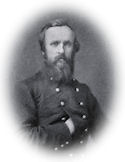
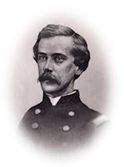
Josiah Marshall
Favill
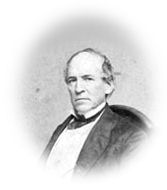
image
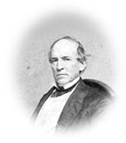
Image of unknown
man used for John
Beauchamp Jones.
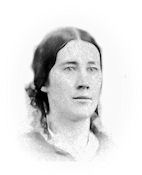
image
Image of unknown
woman used for
“refugee” Judith
White McQuire.
image
Joseph Howland
image
Horatio Nelson Taft
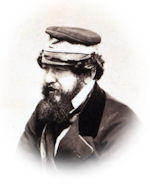
image
William Howard Russell

Seven of the writers that are being tracked on Daily Observations from The Civil War wrote diary entries or letters on July 21, 1861 that related to the battle near Manassas Junction and/or the aftermath.

Josiah Marshall Favill – “In the order prescribed by the regulations, for a force feeling the enemy preparatory to an attack, we marched forward, passing over the open field and into a piece of full grown timber, apparently the slope of a considerable hill. As we slowly ascended the rising ground, suddenly a loud screeching noise overhead sent more than half the regiment pell mell the other side of a fence that ran along the road side. Here we crouched down flat on our bellies, our hearts in our mouths..,” – Diary of a Young Officer.

John Beauchamp Jones – “The President left the city this morning for Manassas, and we look for a battle immediately. I have always thought he would avail himself of his prerogative as commander-in-chief, and direct in person the most important operations in the field; and, indeed, I have always supposed he was selected to be the Chief of the Confederacy, mainly with a view to this object, as it was generally believed…” – A Rebel War Clerk’s Diary at the Confederate States Capital.

Judith White McQuire – “We were at church this morning and heard Bishop Meade, on the subject of “Praise.” He and his whole congregation greatly excited. Perhaps there was no one present who had not some near relative at Manassas…” Diary of a Southern Refugee During the War.

Joseph Howland – “On The Battle-Field Near Bull Run… Our brigade is making a demonstration in the face of the enemy and a fight is going on on the right of the line five or six miles off.” – Letters of a Family During the War for the Union.

Horatio Nelson Taft – “This has been the most exciting day yet. We have heard the guns all day from the battle which has been raging at or near Mannasses Junction. There is no news that can be relied on public tonight, only that a terrible fight has been going on all day.” – Diary of a Clerk in the U.S. Patent Office.

William Howard Russell – “The calmness and silence of the streets of Washington this lovely morning suggested thoughts of the very different scenes which, in all probability, were taking place at a few miles’ distance. One could fancy the hum and stir round the Federal bivouacs, as the troops woke up and were formed into column of march towards the enemy.” – My Diary North and South.