Following the American Civil War Sesquicentennial with day by day writings of the time, currently 1863.

Miscellaneous document sources

From the following brief article the reader can form some idea of the persecution to which Union men had to submit in the town of Fredericksburg as early as the 14th of February, 1861, the date of its publication :—

“Why is it that secessionists talk of compromise with derision? Why is it that they wish to precipitate Virginia out of the Union? Why is it that they call conservative or Union men ‘Submissionists,’ ‘Black Republicans,’ ‘Abolitionists,’ ‘ Traitors and enemies to the South,’ &c. &c.? Are secessionists more intellectual than Union men? In what have they displayed it? Are they more patriotic? What proofs have they given of the fact? Are they more brave? Why then did they vacate their seats in the Senate and Congress halls of the United States, thus virtually surrendering all their rights into the hands of their enemies? Why, in the hour of their country’s peril, did they retreat into the Gulf States, having as a safeguard the Atlantic Ocean on the one side, and the border States between them and danger on the other side? There is no submission in all this, is there? Very brave, is it? In what have Union men compromised their honor or dignity? It is not honorable, not dignified, for a man to stand his ground and fight for his rights on his own soil, and sacredly maintain the trust the people have confided in him! But it is very honorable, quite dignified, for a man to throw down his legal weapons of defence and run away, and belt on the sword, and swear if the enemy comes to him he’ll thrash him out! This is very brave, is it?

“What rights have secessionists to protect that Union men have not? Have Union men no civil, religious, and domestic rights to protect? We think it bad policy for secessionists who would break up the peace and harmony of the Government, and plunge the whole country into civil war, to be accusing their fellow-citizens, who are trying to pour oil upon the troubled waters and are making all possible efforts to bring about peace and harmony, of being ‘Submissionists,’ ‘Black Republicam,’ ‘Abolitionists,’ and ‘ Traitors’ and ‘Enemies to the South'”

_______

“The Conspiracy Unveiled. The South Sacrificed; the Horrors of Secession.” Rev. James W. Hunnicutt (Editor of the Fredericksburg (Va.) Christian Banner); 1863, Philadelphia; J. B. Lippincott & Co.

“The Union, Now and Forever, One and Inseparable.”
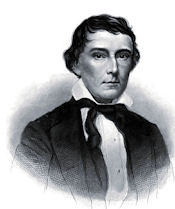
Mr. President: I have been notified by a committee of this body of my election to the office of Vice-President under the Provisional Government established for the Confederate States of America; the notification is in a letter, which I beg leave to read:

Montgomery, Ala., February 9, 1861.

Sir: The Congress of the Provisional Government for the Confederate States of America have this day unanimously elected you to the office of Vice-President of the Confederate States, and we have been appointed to communicate the fact, and to respectfully invite your acceptance.

In performing this pleasing duty, allow us to express the hope that you will accept; and we beg to suggest that it would be most agreeable to the body we represent, as you are a member of the Congress, that you should signify to it, in person, your consent to serve the country in the high position to which you have been called.

We have the honor to be, very respectfully, yours,

JOHN PERKINS, Jr.,

W. P. HARRIS,

JNO. GILL SHORTER.

To Hon. Alexander H. Stephens.

From this it appears to be the general desire that I should in person make known to the body in a verbal response my acceptance of the high position to which I have been called.

This I now do. In this august presence, before you, Mr. President, before this Congress and before this large concourse of people under the bright sun and brilliant skies which now smile so auspiciously upon us, I will take this occasion also to return my most profound acknowledgments for this expression of confidence on the part of Congress.

There are special reasons why I place an unusually high estimate on it. The considerations that induced me to accept it I need not state. Suffice it to say that it may be deemed questionable whether any good citizen can refuse to discharge any duty that may be assigned him by his country in an hour of need.

It might be expected that I should at this time indulge in some remarks upon the state of our public affairs, the dangers that threaten us, and the most advisable measures to he adopted to meet pressing exigencies. Allow me to say, that in the absence of the distinguished gentleman who has been called to the chief executive chair I think it best to forbear to say anything on such matters. We expect him here in a few days—by Wednesday of this week at farthest—unless providentially detained longer. When he comes we will hear from him on all these difficult questions, and I doubt not we shall cordially and harmoniously concur in the line of policy his superior wisdom and statesmanship shall indicate. In the meantime there are matters we may very profitably be directing our attention to. Such as providing necessary postal arrangements, making provision for the transfer of the custom-houses from the jurisdiction of the separate States to the Confederacy, and the imposition of such duties as will be necessary to meet present and expected exigencies. In the exercise of the power to assess duties we are limited to the objects of revenue. A small duty, not exceeding 10 per cent upon importations, it is believed will be sufficient.

And above all, in the interim between this and the arrival and inauguration of the President, we can be directing our attention to the constitution of a permanent government, stable and durable, which is one of the leading objects of our assembling.

I am now ready to take the oath of office.

______

Source: Journal of the Congress of the Confederate States of America, 1861 – 1865. Vol. 1; page 42

William Lloyd Garrison

The Liberator, Boston

The election of the Republican candidate, Abraham Lincoln, to the Presidency of the United States, has operated upon the whole slaveholding South in a manner indicative of the torments of the damned. The brutal dastards and bloody-minded tyrants, who have so long ruled the country with impunity, are now furiously foaming at the mouth, gnawing their tongues for pain, indulging in the most horrid blasphemies, uttering the wildest threats, and avowing the most treasonable designs. Their passions, set on fire of hell, are leading them into every kind of excess, and they are inspired by a demoniacal phrenzy. To the South is strikingly applicable, at this hour, the language of the Revelator:—Babylon is fallen, is fallen, and become the habitation of devils, and the hold of every foul spirit, and a cage of every unclean and hateful bird. Her sins have reached unto heaven, and God hath remembered her iniquities. In the cup which she hath filled, fill to her double. In her is found the blood of the cup which she hath filled, fill to her double. In her is found the blood of prophets and of saints. How much she hath glorified herself, and lived deliciously, so much torment and sorrow give her. Therefore shall her plagues come in one day, death, and mourning, and famine; and she shall be utterly burned with fire; for strong is the Lord God who judgeth her. So much for dealing in slaves, and souls of men, trampling upon all human rights, defying God and his eternal law, and giving unlimited indulgence to every sensual and devilish inclination! Rejoice over her, thou heaven, and ye holy apostles and prophets; for God hath judged the great whore, which did corrupt the earth with her fornication, and hath avenged the blood of his servants at her hand.

Never has the truth of the ancient proverb, Whom the gods intend to destroy, they first make mad, been more signally illustrated than in the present condition of the Southern slaveholders. They are insane from their fears, their guilty forebodings, their lust of power and rule, their hatred of free institutions, their consciousness of merited judgments; so that they may be properly classed with the inmates of a lunatic asylum. Their dread of Mr. Lincoln, of his administration, of the Republican party, demonstrates their insanity. In vain does Mr. Lincoln tell them, I do not now, nor ever did, stand in favor of the unconditional repeal of the Fugitive Slave LawI do not now, nor ever did, stand pledged against the admission of any more Slave States into the Union.I do not stand pledged to the abolition of slavery in the District of ColumbiaI do not stand pledged to the prohibition of the slave trade between the different States—they rave just as fiercely as though he were another John Brown, armed for Southern invasion and universal emancipation! In vain does the Republican party present but one point of antagonism to slavery—to wit, no more territorial expansion—and exhibit the utmost cautiousness not to give offence in any other direction—and make itself hoarse in uttering professions of loyalty to the Constitution and the Union—still, they protest that its designs are infernal, and for them there is sleep no more! Are not these the signs of a demented people?

Nevertheless, there is method in their madness. In their wildest paroxysms, they know precisely how far to proceed. Will they secede from the Union? Will they jump into the Atlantic? Will they conflagrate their own dwellings, cut their own throats, and enable their slaves to rise in successful insurrection? Perhaps they will—probably they will not! By their bullying and raving, they have many times frightened the North into a base submission to their demands—and they expect to do it again! Shall they succeed?

EXECUTIVE DEPARTMENT OF ALABAMA

Montgomery, December 14, 1860.

Whereas, the election of Abraham Lincoln, a Black Republican, to the Presidency of the United States, by a purely sectional vote, and by a party whose leading and publicly avowed object is the destruction of the institution of slavery as it exists in the slaveholding states, and whereas, the success of said party will greatly endanger the peace, interests, security and honor of the slaveholding States and make it necessary that prompt and effective measures should be adopted to avoid the evils which must result from a Republican administration of the Federal Government, and as the interests and destiny of the slaveholding states are the same, they must naturally sympathize with each other, they therefore, so far as may be practicable, should consult and advise together as to what is best to be done to protect their mutual interests and honor. Now therefore, in consideration of the premises, I, Andrew B. Moore, Governor of the State of Alabama, by virtue of the general powers in me vested, do hereby constitute and appoint Hon. Robert H. Smith in conjunction with Hon. I. W. Garrott, a citizen of said State, a Commissioner to the Sovereign State of North Carolina, to consult and advise with his Excellency Gov. John W. Ellis and the members of the Legislature now assembled, as to what is best to be done to protect the rights interests and honor of the slaveholding states, and to report the result of such consultation in time to enable me to communicate the same to the convention of the State of Alabama, to be held on Monday, the 7th day of February next.

In testimony whereof I have hereunto set my hand, and caused the great seal of the State to be affixed in the City of Montgomery, this the 14th day of December, in the year &c aforesaid.

Andrew B. Moore, Governor.

_____

The Magazine of History With Notes and Queries, Vol. III No. 1, January 1906, page 50

Washington, December 13th. At the request of Hon. Reuben Davis of Mississippi, member of the Committee of States, the Southern members of Congress assembled at his rooms to-night and adjourned at eleven o’clock, at which the following declaration was made and signed by those present. It had already been presented to the Committee of Thirty-three:

transparent

Washington, December 13th, 1860.

To our Constituents: The argument is exhausted. All hope of relief in the Union, through the agency of committees, Congressional legislation, or constitutional amendments, is extinguished, and we trust the South will not be deceived by appearances or the pretence of new guarantees. The Republicans are resolute in the purpose to grant nothing that will or ought to satisfy the South. We are satisfied the honor, safety, and independence of the Southern people are to be found only in a Southern Confederacy —a result to be obtained only by separate State secession—and that the sole and primary aim of each slaveholding State ought to be its speedy and absolute separation from an unnatural and hostile Union.

transparent

Signed by J. L. Pugh, David Clopton, Sydenham Moore, J. L. M. Curry, and J. A. Stallworth of Alabama; Alfred Iverson, J. W. H. Underwood, L. J. Gartrell, and Jas. Jackson, (Senator Toombs is not here, but would sign). John J. Jones, and Martin J. Crawford of Georgia; Geo. S. Hawkins of Florida. It is understood Mr. Yulee will sign it. T. C. Hindman of Arkansas. Both Senators will also sign it. A. G. Brown, Wm. Barksdale. O. R. Singleton, and Reuben Davis of Mississippi; Burton Craige and Thos. Ruffin of North Carolina; J. P. Benjamin and John M. Landrum of Louisiana. Mr. Slidell will also sign it. Senators Wigfall and Hemphill of Texas, will sign it.

transparent

Mr. Davis made the following statement to the caucus:

Being a member of the Committee of Thirty-three, I state that the above witnessed despatch was communicated to the committee this evening, and a resolution passed proposing no specific relief, eight Northern States dissenting, avowedly intended to counteract the effect of the above despatch, and, as I believe, to mislead the people of the South. From information derived from Republican members of the committee and other Northern Representatives, I fully concur in the above despatch.

transparent

Reuben Davis. The manifesto will be immediately communicated to the several constituencies of the gentlemen named by telegraph.

transparent

______

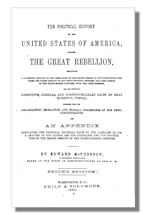
The Political History of the United States of America, During the Great Rebellion, from November 6, 1860, to July 4, 1864; page 37; Edward MacPherson; 1865

[COPY.]

Columbia, December 7, 1860.

[STRICTLY  CONFIDENTIAL.]

My Dear Sir: With a sincere desire to prevent a collision of force, I have thought proper to address you directly and truthfully on points of deep and immediate interest.

I am authentically informed that the forts in Charleston harbor are now being thoroughly prepared to turn, with effect, their guns upon the interior and the city. Jurisdiction was ceded by this State expressly for the purpose of external defence from foreign invasion, and not with any view that they should be turned upon the State.

In an ordinary case of mob rebellion, perhaps it might be proper to prepare them for sudden outbreak. But when the people of the State, in sovereign convention assembled, determine to resume their original powers of separate and independent sovereignty, the whole question is changed, and it is no longer an act of rebellion. I, therefore, most respectfully urge that all work on the forts be put a stop to for the present, and that no more force may be ordered there.

The regular Convention of the people of the State of South Carolina, legally and properly called, under our Constitution, is now in session, deliberating upon the gravest and most momentous questions, and the excitement of the great masses of the people is great, under a sense of deep wrongs, and a profound necessity of doing something to preserve the peace and safety of the State.

To spare the effusion of blood, which no human power may be able to prevent, I earnestly beg your immediate consideration of all the points I call your attention to. It is not improbable that, under orders from the Commandant, or perhaps from the Commander-in-Chief of the army, the alteration and defences of those posts are progressing without the knowledge of yourself or the Secretary of War.

The Arsenal, in the city of Charleston, with the public arms, I am informed, was turned over, very properly, to the keeping and defence of a State force, at the urgent request of the Governor of South Carolina. I would most respectfully, and from a sincere devotion to tie public peace, request that you would allow me to send a small force, not exceeding twenty-five men and an officer, to take possession of Fort Sumter immediately, in order to give a feeling of safety to the community. There are no United States troops in that fort whatever, or perhaps only four or five, at present, besides some additional workmen or laborers, lately employed to put the guns in order. If Fort Sumter could be given to me, as Governor, under a permission similar to that by which the Governor was permitted to keep the Arsenal, with the United States arms, in the city of Charleston, then I think the public mind would be quieted, under a feeling of safety; and as the Convention is now in full authority, it strikes me that could be done with perfect propriety. I need not go into particulars, for urgent reasons will force themselves readily upon your consideration.

If something of the kind be not done, I cannot answer for the consequences.

I send this by a private and confidential gentleman, who is authorized to confer with Mr. Trescott fully, and to receive through him any answer you may think proper to give to this.

I have the honor to be, most respectfully,

Yours, truly,

(Signed) F. W. PICKENS.

To the President of the United States.

________

Reports and Resolutions of South Carolina to the General Assembly; published 1861

December 7, 1860, The Charleston Mercury

At one o’clock yesterday, Messrs. E. LAFITTE & CO. Erected a handsome flagstaff, twenty-five feet high on the roof of their office, Savannah Packet wharf, and unfurled a banner at its summit which has been universally admired. The flag has a plain white ground – something like the Hayne and Meeting streets banner – with a green palmetto in the centre and the lone star in the upper inner corner. It was saluted by prolonged cheers from the many friends whom the Messrs. LAFITTE had invited to be present on the occasion, and also by a volley of cannon, fired by the redoubtable SMITH, of shark-killing notoriety, and who proved himself as equally efficient a gunner as a knight of the hook and line. Five guns were fired off – one for South Carolina, for Georgia, for Florida, for Alabama and for Mississippi, and between the intervals of the firing the enthusiastic spectators renewed the cheering.

Messrs. LAFITTE & CO. Then invited their friends…. where they were received most cordially by Capt. PECK, and where a bounteous collation, with the auxiliaries of wine, &c., awaited them. As the guests got on board the Cecile, Capt. PECK hoisted a blood-red banner with a yellow palmetto, which was received with additional marks of enthusiasm.

Indeed, poles, of late, are multiplying almost as fast as banners. We notice that Messrs. CHAFEE & KNAUFF, at No. 135 East Bay, have erected from the second story of their store, a staff, thirty feet in height, and displaying a handsome flag from the summit. The flag is a red ground, with a yellow palmetto; in the centre the lone star and a crescent.

________

Note: The flag represented at the top of this post was the closest I could find to that described in the article.  It was the flag of Company C, South Carolina 18th Artillery Battalion during the war.

Mike Goad — A major part of my approach to the war is to present observations made in letters, journals, and diaries by people living the war and its impacts. My hope is that this will often result in our being able to “see” the progress of events from a variety of perspectives.

In most instances, I will be including all of what was included in the published versions of their writings, no matter how mundane.  Some will have entries for almost every day while, with others, there will be long lapses without writing.

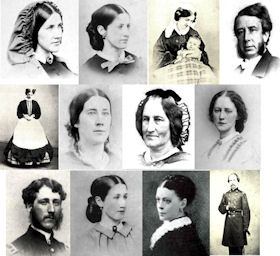
I have a large number of posts already scheduled for future publication in “Daily Observations from The Civil War,” including material from the following writers:

Dora Richards Miller, "War Diary of a Union Woman in the South"

Mary Boykin Chesnut, "A Diary From Dixie"

Lincoln Administration Secretary of the Navy, Gideon Wells, "Diary of Gideon Welles"

Susan Bradford Eppes, "Through Some Eventful Years"

Horatio King, Postmaster General at the end of the Buchanan administration

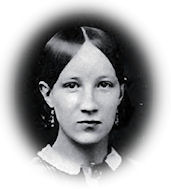
Catherine Cowles Richards, "Village Life in America 1852 - 1872"

The Woolseys of New York, "Letters of a Family During the War for the Union"

DNC Chairman August Belmont, "A Few Letters and Speeches of the Late Civil War"

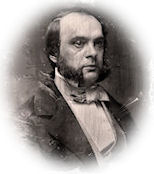
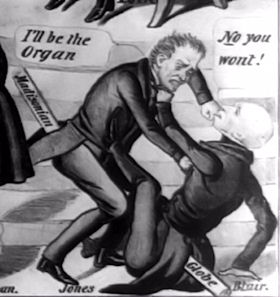
John Beuchamp Jones, "A Rebel War Clerk's Diaray at the Confederate States Capital." (Image is from 1845 political cartoon)

Executive Office, Columbia, S. C,
November 29, 1860.

Mr. Wm. Henry Trescot.

Dear Sir: Although South Carolina is determined to secede from the Federal Union very soon after her Convention meets, yet the desire of her constituted authorities is, not to do anything that will bring on a collision before the ordinance of secession has been passed and notice has been given to the President of the fact; and not then, unless compelled to do so by the refusal of the President to recognize our right to secede, by attempting to interfere with our exports or imports, or by refusal to surrender the forts and arsenals in our limits. I have found great difficulty in restraining the people of Charleston from seizing the forts, and have only been able to restrain them by the assurance that no additional troops would be sent to the forts, or any munitions of war. Everything is now quiet, and will remain so until the ordinance is passed, if no more soldiers or munitions of war are sent on. That is to say, I will use my utmost efforts to effect that object, and believe I will succeed; but the Legislature and myself would be powerless to prevent a collision if a single soldier or another gun or ammunition is sent on to be placed in the forts. If President Buchanan takes a course different from the one indicated and sends on a reinforcement, the responsibility will rest on him of lighting the torch of discord, which will only be quenched in blood. I am under a pledge to sanction resistance, and to use all the military power of the State to prevent any increase of troops in these garrisons, and had to make the pledge to restrain the people, who are restive, and hope no necessity will arise to compel me to redeem the pledge. I write to you knowing that, while you will be faithful to the Government of the United States as long as you hold office under it, yet you are also a South Carolinian, and would desire, by all means, to avoid the needless shedding of blood. If you think there is no impropriety in showing this letter to the President you are at liberty to do so, for I do not wish him to be mistaken and act in such a way as to bring upon the country a bloody war, without the most imperious necessity.

Very truly yours,

Wm. H. Gist.

_____

The Genesis of the Civil War: The Story of Sumter, 1860-1861; Samuel Wylie Crawford; C. L. Webster & Company, 1887; p. 31.

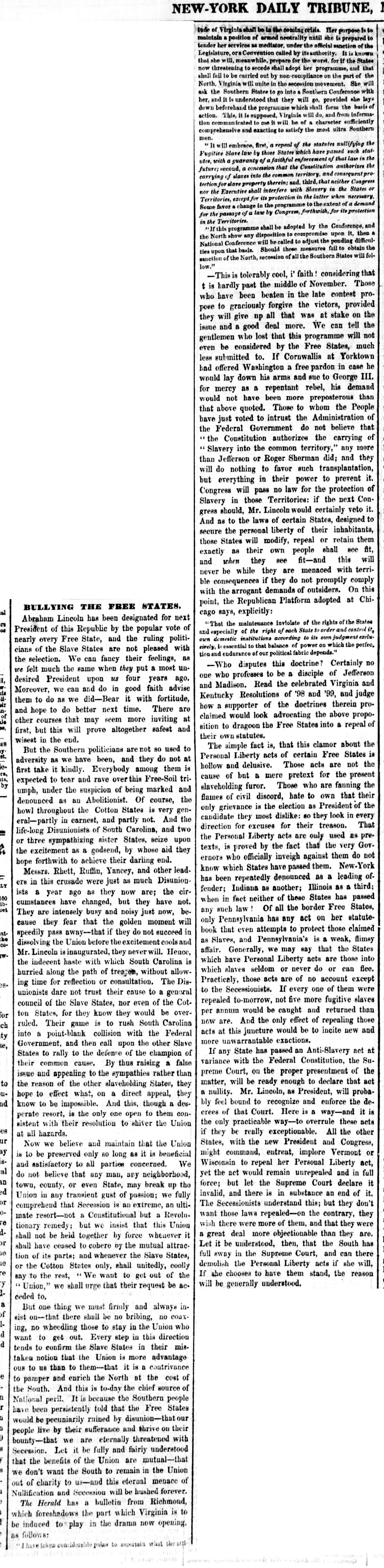
New York Tribune, November 19, 1860.—

ny_tribune_11-19-1860Now we believe and maintain that the Union is to be preserved only so long as it is beneficial and satisfactory to all parties concerned. We do not believe that any man, any neighborhood, town, county or even State may break up the Union in any transient gust of passion; we fully comprehend that secession is an extreme, an ultimate resort—not a constitutional but a revolutionary remedy. But we insist that this Union shall not be held together by force whenever it shall have ceased to cohere by the mutual attraction of its parts; and whenever the slave States or the cotton States only shall unitedly and coolly say to the rest, ”We want to get out of the Union,” we shall urge that their request be acceded to.

This paragraph, from Horace Greeley’s New York Tribune, is cited in a number of 19th century books on the war.

Of course it was but one part of a longer article, which was titled, “Bullying The Free States.”

Click on the clipping to view the whole article image (1.62 mbytes)