Following the American Civil War Sesquicentennial with day by day writings of the time, currently 1863.

The American Civil War

New Year’s [1862]. Took dinner with Mrs. Norton. Miss Betty Callender and Doctor Richardson the only strangers present. Mrs. Chilton keeping us all alive. Dr. R. has some machine on hand with which he intends to blow up Federal rebels. It is highly approved by all who have seen it. In the evening, Edmund (or Edward) Harrison, whom they all call “Duck,” came in. He has lately returned from Europe; he was studying at Bonn, but our Southern troubles have brought him home. He is a quiet, modest young man; though his father is so rich, he is retiring in dress and deportment and seems to have no desire beyond a quiet room and a book. He does not represent the idea of “young America” in the least. He is in love, I think, with his pretty cousin, S. C, who is altogether unsuited to him, being fond of admiration and the world generally.

Lizzie Ogden, speaking of her brother Billy, now in the Confederate States Army as lieutenant, says, that as an officer, he has been let into the secret of Beauregard’s plans, which he, Billy, thinks excellent—said brother not being twenty. The mingled pride and simplicity of this speech made me laugh—in my sleeve—though I would not hurt Lizzie’s feelings for the world.

Everybody sending blankets to our soldiers. We have sent all of ours except two thin ones. Mrs. Chilton and I go to the Ladies’ Sewing Society and bring home bundles of work to do for the soldiers.

Free market kept up by contribution. Planters all over the county send in to support it. The poor, it seems, are quite fastidious; some scenes in the free market are quite ludicrous. Some of the women, if told they cannot gratify some particular taste, refuse all that is offered; for instance, one became angry a few days ago because presented with black tea instead of green, and another finding no coffee turned up her nose at all the other comfortable items which the market contains. Some women, they say, curse their benefactors heartily when disappointed. Coffee they had at first, but blockade times have changed this once familiar berry into something resembling gold beads. Cleopatra, with her pearls, was scarcely more “wastefully given” than a coffee drinker in these days. Strange to say, I have not relished it for years until now. I have not parted with my tea yet, though I dole it out somewhat less lavishly than in old times when tea caddies were as “plenty as blackberries,” rather more so in New Orleans.

Mrs. Chilton, going up to Hinds County, begs us to go with her, but there is something in our own little home which we cannot give up. We are so lonely-hearted, so wasted by early afflictions; anxious, nervous years and desolating losses, that we have nothing of feeling or interest to interchange with any, even those we approve.

Gave Mrs. Chilton a little supper the very night before she left. Mrs. Montgomery without the Judge (no gentlemen invited), Mrs. Norton, Mrs. Parham, Sarah C, Mary Lou Harrison and Mrs. Dameron were the guests. Mr. Dameron came, not knowing gentlemen were interdicted. Charley Chilton came in after awhile, and Mr. Parham sent word that it was very unkind to admit but one of the “Confederate Guards.” Amused Mrs. Montgomery and several others with a trick with a key and a book which told the fortune accurately of everyone present. If I had found the philosopher’s stone, it could not have given more general satisfaction, I believe. Wanted to keep Mrs. Chilton for a good-bye late talk, but Mrs. Norton hurried her off.

A great day of sport to usher in the new year. Amongst other amusements in our army, Hancock’s Brigade “got up a time on its own hook.” At twelve o’clock I went into the parade ground, and found about 10,000 people, soldiers and civilians, collected to witness the sport. Hancock’s Brigade is composed of the 5th Wisconsin, 6th Maine, 43d New York, and 49th Pennsylvania Volunteers. The sport commenced by a foot race of one thousand yards, purse $20 for the first out, $10 for second. About twenty started. The 5th Wisconsin took both prizes. Then jumping three jumps, prize $15, won by a member of the 5th Wisconsin. Next, climbing a greased pole, first prize won by a member of 6th Maine. Second, by 5th Wisconsin. Next, a greased pig (a two hundred-pounder) with a face as long as the moral law, or as a “speech in Congress, shorn of his hair, the knot which had been tied in his tail to prevent his crawling through fence cracks, was untied, and his whole skin thoroughly ” greased” with soft soap, was turned loose, with the announcement, “get what you can, and hold what you get.” The holder was to have the pig and ten dollars. For this prize, there were about four thousand competitors. The word was given, and the “Grand Army of the Potomac ” was at last on the move. This chase commenced a little before sun-set. Pig had one hundred yards the start. One fellow far outran all the rest, and as he drew close on to his game, piggy suddenly turned on him with a “booh,” and the fellow ran t’other way as if he had seen a rebel. The whole crowd came rushing on piggy, expecting him to run; but piggy stood his ground and said “booh!” “The front line ” suddenly brought a halt. But the rear, not prepared for so sudden a check, pressed forward, and the whole came down in a heap. A scream of “murder.” Piggy answered “booh.” At every “booh” a “line was swept away.” The pile of humanity became impassable. Those in the rear, filed to right and left, and by a “flank movement” took piggy in the rear. And now came a hand to hand encounter. As the last streak of the expiring day shed its light upon the excited combatants, it revealed a living mass of four thousand people—and a pig ; the pig crowning the heap at the moment when the ray withdrew its light. Night was then made hideous by the screams of murder and replies of “booh.” Neither party could distinguish friend from foe; and as I retire for rest, the combat still rages. I I do not permit myself to doubt, however, that the morning will bring us the news of “another great victory by the grand army of the Potomac.”[1]

At twelve o’clock last night, just as the old year was being crowded out of existence to make room for the new, I was awoke by a gentle thumbing of a guitar. ‘Twas right at the door of my tent. In a moment commenced at the other end of the tent, the soft, sweet notes of a violin ; then, from all sides came up, low, soft, sweet sounds, as ever a band of small instruments poured forth. The music stopped for awhile, and a voice asked, “Shall we now strike up with the band?” “No! no! No drum, nor fife, nor horn;— they will disturb the sick, and he will not like that!!” Could a more delicate compliment than was-conveyed in this remark have been devised by a soldiery whose business is pomp and noisy war! ” He won’t like it—it will disturb his patients.” I appreciated this. It struck a cord which vibrated in unison with my pride, my vanity, my ambition. I of course acknowledged it; and so deeply felt the compliment that I record it, as worthy of my remembrance. “The hospital boys” got up a handsome supper to-night, at which the Surgeons were guests. It was a very pretty supper, and to me a pleasant affair.


[1] Notice that in this athletic contest for prizes, three Eastern and one Northwestern Regiment engaged ; all the prizes save one (climbing the pole, which was taken by a Maine sailor) were carried off by the one Western Regiment.

January 1, 1862 —The year closed under gloomy auspices; with a check at Dranesville, and a rumored disaster in Missouri. The year which has begun opens with evil tidings. We fear that there is no doubt of the fact that the Northern Union has consented to the surrender of Mason and Slidell; and with that event all hope of an immediate alliance between the Southern Confederacy and Great Britain must cease.

Under other circumstances we might derive a consolation for the loss by considering the ineffaceable disgrace that falls on the enemy. Never, since the humiliation of the Doge and Senate of Genoa before the footstool of Louis XIV., has any nation consented to a degradation so deep. If Lincoln and Seward intended to give them up at a menace, why, their people will ask, did they ever capture the ambassadors? Why the exultant hurrah over the event, that went up from nineteen millions of throats? Why the glorification of Wilkes? Why the coward insults to two unarmed gentlemen, their close imprisonment, and the bloodthirsty movements of Congress in their regard? But, most of all, why did the government of Lincoln indulge a full Cabinet with an unanimous resolution that, under no circumstances, should the United States surrender Messrs. Slidell and Mason? Why did they encourage the popular sentiment to a similar position? The United States government and people swore the great oath to stand on the ground they had taken; the American eagle was brought out; he screeched his loudest screech of defiance—then

“Dropt like a craven cock his conquered wing”

at the first growl of the lion. This is the attitude of the enemy. It would greatly console us to contemplate him, did we not know that no new exhibition of insolence and cowardice could sink him lower in the world’s estimation. The United States have lost no character by an exhibition of poltroonery as yet unknown in the diplomacy of other nations. That country had already sunken beneath the reach of infamy. The only charge of bayonets made during the war by Lincoln’s soldiers, was that of Fairfax’s marines on Miss Slidell; and the surrender of her father at the first menace of Great Britain, will create neither more disgust or further surprise.

Nor can we hope for a popular revulsion in the Northern people against the folly and pusillanimity of their rulers. People and rulers are alike. It is only in the sentiment of England that we can find a ray of encouragement. It is certain that the British wanted war; that they were confident of getting it, and that they will be bitterly disappointed at the unsatisfactory result. Now, this result, though apparently due to the lily livers of the Yankees, is partially attributable to the management of the Palmerston ministry. That Cabinet gave Seward and Lincoln the chance of humiliation, when it could have taken redress with the high hand, and shut the door to apology by recalling Lyons, sending home Adams, and setting the British fleet at once in full sail for the scene of action. The Palmerston ministry is the friend of the North, and is directly antagonistical to the majority of the British nation. On these data we venture the prophecy that in less than three months this ministry will fall from power.

Whenever it does so, we may anticipate immediate intervention by Great Britain in the affairs of this continent. The inclinations and interest of that people are so closely united on this one point that we do not hesitate to declare the result a moral necessity. But for some time we may be left alone in this quarrel. Let us not repine, though the task be heavy on the arm. If we would respect ourselves, consolidate our nationality, insure our future independence, and transmit a heroic memory to posterity, we must prove to ourselves and to all others, that our own unaided strength is sufficient for our own redemption. If it is not, there remains one resolution, by which every citizen that is worthy of freedom can avoid the sight of its extinction and the spectacle of his country’s ruin — to die in the last ditch of their defence.—Richmond Examiner.

—Mason and Slidell left Fort Warren, Boston harbor, about eleven o’clock this forenoon. The arrangement for their return was very quietly made, and nothing was known at Boston in regard to the affair, until the hour arrived for their departure. The steam tugboat Starlight was employed by the Government to convey the prisoners to Provincetown, Cape Cod, where they were to be transferred to the British gunboat Rinaldo, which arrived at that port last night. Accordingly the tugboat Starlight left Boston shortly before ten o’clock this morning, and stopped at Fort Warren, where she took on board Mason and Slidell, and their two secretaries. After receiving their baggage, etc., the tug proceeded on her way to sea, leaving the fort about eleven o’clock. The whole affair was conducted without any display, in perfect quiet, and in the ordinary manner of conveying passengers. The tugboat reached Provincetown this afternoon, and the prisoners were transferred to the British gunboat, which immediately proceeded to sea.

—The Court of Inquiry, in the case of Colonel Miles, charged with being intoxicated at the battle of Bull Run, honorably acquitted him of the charge. The decision is furnished in a report of Reverdy Johnson and R. S. Gillett, in which they declare that the bulk of the evidence produced on the trial goes to show that the charges arc entirely false.

—The British prize bark Empress, of Hull, arrived at New-York from New-Orleans bar. She was bound from Rio Janeiro for New-York, as her captain reported, and had been ordered off from Pass a l’Outre previously, and was captured by the United States sloop Vincennes. She had a cargo of six thousand five hundred bags coffee.

—All the Yankee prisoners from Charleston, including Colonel Corcoran, arrived at Columbia, S. C, this afternoon, in a special train. They were met at the depot by the rebel-guard of this city, and conducted to prison.—Richmond Dispatch, January 3.

—The rebel batteries at Pensacola, Fla., having repeatedly fired at the national vessels, Fort Pickens opened on the rebel 6teamer Times, which was landing stores at the navy-yard today. The rebel batteries responded, and the firing was continued till evening, Fort Pickens firing the last shot The rebel guns were well aimed, and most of their shells burst inside of the fort; only one man was wounded, however. A shot from Fort Pickens made a large breech in Fort Barrancas. In the evening the National guns set Warrington on fire.—(Doc. 1.)

—The Knoxville (Tenn.) Register of to-day expresses the opinion that Parson Brownlow’s release was a great blunder, and gives the following reasons: In brief, Brownlow has preached at every church and school-house, and made stump-speeches at every cross-road, and knows every man, woman and child, and their fathers and grandfathers before them, in East-Tennessee. As a Methodist circuit-preacher, a political stump speaker, a temperance orator, and the editor of a newspaper, he has been equally successful in our division of the State. Let him but once reach the confines of Kentucky, with his knowledge of the geography and population of East Tennessee, and our section will soon feel the effect of his hard blows. From among his own old partisan and religious sectarian parasites he will find men who will obey him with the fanatical alacrity of those who followed Peter the Hermit in the first crusade. We repeat again, let us not underrate Brownlow.

—Twelve of the Buckner Guards, under Lieut. Hines, crossed Green River, Ky., twelve miles from Morgantown, surrounded a house in which four Federal troops were concealed, and took them prisoners. They got ten guns and the sword of Capt. Phelps, which he had left there. After recrossing the river, they attempted to arrest a man who had several times fired at the Confederate soldiers across the river. The man shot at Mr. Cook, one of the guides, but missed him, whereupon Cook shot him dead.—Bowling Green Courier, January 4.

—At Richmond, Va., there was a more general observance of “New Year’s” than usual, owing to the fact that the war had brought to that city a considerable addition to the population from other cities, where the anniversary is always a period of social festivity. The streets were thronged with ladies, and every body looked gay and cheerful. Among notable events of the day was the President’s reception, which commenced at twelve o’clock, and continued three hours. The President stood at the door of the large reception-room, and thousands of persons took advantage of the opportunity to give him a friendly grasp of the hand. Mrs. Davis was not present, but her place was well supplied by her sister, Miss Howell, Mrs. Col. Davis and Mrs. General Jones. The ceremonies of introduction were conducted by the President’s aids, Colonel Joseph Davis and Colonel G. W. C. Lee. The armory band was present, and every thing passed off delightfully. — Richmond Dispatch, January 2.

— A joint expedition of gunboats, under command of Commander C. R. P. Rodgers, and a column of infantry, commanded by General Stevens, left Port Royal Harbor, S. C., yesterday evening, and this morning proceeded across the Coosaw River, and shelled the rebel fort at Port Royal Ferry. On taking possession of the batteries, it was found that the retreating rebels had removed all their guns but one, though quite a number of shells were discovered in the magazines. Port Royal Ferry was immediately reopened by the Union forces, and the fort garrisoned by the Pennsylvania Roundheads. After its occupation, the rebels appeared in force and in line of battle, whereupon the gunboats opened upon them with shot and shell, driving them into the woods, and causing great havoc in their ranks. When the firing ceased, which was after sunset, a rebel officer was sent with a flag of trace, to ask permission to carry off their killed and wounded; but the gunboats reopened fire before General Stevens’ reply was obtained, which caused the rebel messenger to put spurs to his horse, and gallop off in hot haste.
December 31 — The men were a little slow in bunching this morning, but eventually we all got together and proceeded to an old stone church at the eastern edge of town on the Berryville pike, which was used as an arsenal. There we got a new gun, ammunition, harness—a full equipment for a new detachment. Heretofore we had but two pieces in the battery, both rifled guns. This new one is a twelve-pound howitzer, a valuable and necessary adjunct to the battery, as howitzers are very effective at close range, and especially adapted for grape and canister.

After we got everything arranged in good condition we struck out for Martinsburg, where we arrived this evening, New Year’s Eve.

TUESDAY 31

The old year goes out today, bright and dry. I have been in the office nearly all day. The boys called about 1/2 past two. I came home with them, stopped and bought Bud a cap. After dinner, bought some coal, and went down to the Ave with Holly and bought him a suit of clothes, and an overcoat for Bud, paid $12.00. Paid my fuel bill for Dec $9.00, grocery bill $24.00. Bud (H N Jr) went up to the Presidents this evening. The boys have a Dark lantern to exhibit. The President looked in at the boys show. Genl McClellan is sick abed. A fight is expected over the River now anytime. The Army seems to be getting ready. The Banks in all the Cities and also the U.S. Treasury have suspended specie payments today. No particular excitement in the City tonight, but the Ave & 7th St are swarming with people and business was never so brisk. I have been over to Mr Hartlys after Julia. The Band of the Regulars on Franklin Square are performing now and do every night. VanMaster called today, Col is improving. The health of our family is now good.

______

The three diary manuscript volumes, Washington during the Civil War: The Diary of Horatio Nelson Taft, 1861-1865, are available online at The Library of  Congress.

December 31.—The Canadian press comments upon the release of Messrs. Mason and Slidell in the same spirit which has prompted its various representations hitherto in their treatment of the rebellion. The Leader uses the most abusive language at its command. It pronounces the surrender one of the “greatest collapses since the beginning of time,” and has much to say of the “humiliation” of the National Government. The Globe talks much more moderately, and heartily congratulates its readers on the result; and the Montreal Gazette speaks of it as a “bitter, bitter pill for the fire-eaters to cram down their noisy throats.”—N. T. Times, December 81.

—In the United States Senate a communication was received from the Secretary of War, to-day, stating that it is incompatible with the public interest to furnish the correspondence which has passed between General Scott and General Patterson, relative to the conduct of the war.—N. Y. Herald, December 31.

—Captains Shillinglaw and Mason, of the Seventy-ninth New York regiment, Lieutenant Dickinson, of the Third United States infantry, Lieutenant J. W. Hart, Twentieth Indiana, and Corporal Thomas McDowell, of the Seventy-ninth New York, arrived at Fortress Monroe, from Richmond, Va., by a flag of truce from Norfolk.

—At Washington, D. C., Daniel S. Dickinson presented a costly stand of State colors to the Dickinson Guard, Eighty-ninth New York Volunteers. E. H. Duell received .them in behalf of the regiment, delivering a felicitous address. Vice-President Hamlin, Gen. Casey and Staff, W. S. Doane, Augustus Schell, and others, were present.

—At seven o’clock this morning an expedition, consisting of three U. S. gunboats, with an additional force of marines, left Ship Island, in the Gulf of Mexico, under command of Commander Melanchthon Smith, U. S. N., for the city of Biloxi, Mississippi. No resistance being met with, Commander Smith landed at the wharf, under a flag of truce, and held a short conference with the Mayor of the city, who, after an hour’s consultation with some prominent citizens, surrendered the town and the battery commanding the harbor. The guns of the battery were dismounted and carried to the boats by U. S. sailors—the inhabitants witnessing the proceedings. While this was transpiring on shore, a schooner was discovered working her way back of Deer Island into Biloxi Bay. A boat was instantly manned and sent in pursuit. After rowing about nine miles, the vessel was overtaken and forced to surrender— she was on her way to New Orleans with thirty thousand feet of hard pine flooring boards as a cargo. It not being Commander Smith’s design to hold Biloxi, the expedition returned this evening to Ship Island with their prize in tow.—(Doc. 245.)

—The Richmond Examiner of to-day, publishes the following on the Confederate Tax Bill: In the Tax bill enacted by the Confederate States Congress there is a clause placing a tax upon “all interest-bearing bonds.” We learn that, according to the construction of the law given by Secretary Memminger, the taxpayer will not be permitted to deduct his liabilities from the amount of money due him, although he may be, in fact, in arrears.

Thus, if his liabilities amount to one hundred thousand dollars, and he holds “interest-bearing bonds” to the amount, of fifty thousand dollars, he has to pay a tax upon the fifty thousand dollars, when, in reality, he is worth nothing. Again: A has purchased a farm at forty thousand dollars, and sold his own for thirty thousand dollars. He is in possession of the forty thousand dollar farm, and has to pay a land tax thereon; at the same time be holds the bonds, “interest-bearing,” for the thirty thousand dollar farm, because the “stay law” prevents their execution. He is, therefore, required to pay a tax upon the thirty thousand dollars, and also upon the forty thousand dollar farm; thus paying a tax upon seventy thousand dollars, when in reality he holds only forty thousand dollars’ worth of property.

His bonds are fastened upon him, and he cannot collect them. Again, B holds A’s bends for the forty thousand dollars farm; B must, therefore, pay a tax upon these bends. Therefore, the land purchased by A from B is paying a double tax; Be is the land sold by A to C; for A pays a tax on C’s bends for thirty thousand dollars, and C pays on the land in kind. Such a law, or the construction of it, is certainly wanting in uniformity and justice.

—At Berlin, above the Point of Rocks, in Maryland, an affair occurred which illustrates the necessity of extreme caution in dealing with the rebels. Two men approached the river on the Virginia side with a flag of truce and begged to be brought over, stating they were refugees. Captain Pardee, of Company A, Twenty-eighth Pennsylvania, gave orders to so dispose of his force as to cover a boat to bring them over, in the mean time entertaining those on the opposite side by conversation to distract their attention. When all was ready he despatched a sergeant and two men in a boat to bring them off. As the boat approached the shore a company of dismounted rebel cavalry showed themselves on the hill above and fired a volley upon the boat. The crew threw themselves overboard toward the Maryland shore, and thus protected pulled the boat across. In the mean time Pardee’s concealed riflemen opened on the cavalry with such effect as to came a stampede with great loss in wounded, at least. One of the boatmen had an ear lacerated by a ball from the cavalry.—N. Y. Evening Post, January 4, 1862.

December 30th, 1861.

My dear Mother:

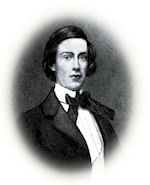
I hardly know what you all think at home — Hall gets married, and I send no word of congratulation; Walter sends me a beautiful present, and I return no word of thanks; Horace writes me a letter full of kindness, and it lies still unanswered; your letters come with such regularity, and yet are hardly better treated. You have been waiting, I suppose impatiently, to receive some news, but I have been obliged to be silent, for I have been quite ill with a fever. I am better this morning, so I write to set your mind at ease. I am under the charge now of Dr. McDonald, who is excessively kind and supplies me with every comfort a sick man could desire, such as clean sheets, cheerful faces, currant jelly, easy chairs, etc. I do not feel much like writing I must say, and, after I’ve told you I am now getting along very comfortably, you will excuse me from making this letter a long one.

With best love,

Very Affec’y.,

W. T. Lusk.

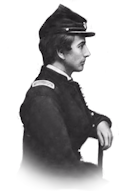
On the tenth of December the colonel received a letter from the adjutant general of the state, stating that I had been appointed first lieutenant and adjutant of the regiment and would be commissioned as such just as soon as he would furnish the date of Fiske’s appointment as assistant adjutant general of volunteers. I feel very proud of this appointment, and of the colonel’s good opinion. It is only about three months since I joined the regiment, unknown to every officer in it, and now enjoy the distinction of holding the most sought for subaltern position in it.

What a delightful prospect ahead, to think of riding, instead of marching. My feet are not good enough for tramping, and after every march I have been partially disabled; from this time hence, I hope to ride, but as we have not been paid yet, I shall have to wait awhile before I can buy a horse; in the meantime McKibben, our good natured quartermaster, is furnishing me with an animal that requires infinite skill to ride; he is a constitutional kicker, and don’t like any one on his back, so I have the opportunity of exercising an animal that requires a good deal of skill to manage, all of which will be useful to me I hope.

On Christmas day the camp was en fete; in the morning, we had a full dress review and inspection; and were then dismissed for the day, only the guard being on duty. Most of the officers went to Alexandria; the others dispersed amongst their friends in other commands, every one in search of amusement. I remained in camp to dinner, and had a very good one, with enough of liquid refreshment to properly digest it. In the afternoon, the major and I rode out towards Edsals Hill, some five miles distance on the railroad, where our division picket line was established; up to this time our regiment had not been on picket duty, and were eager to get out to the front, to have a possible glimpse of the enemy; it is now under orders for this duty, for a tour of four days, and so we rode out to examine the ground beforehand. The road was bad, and the country desolate and impoverished, but the ride did us good, and we returned to camp in the best of spirits.

The following morning the regiment turned out, six hundred strong, fully equipped, blankets rolled, and supplied with forty rounds of ammunition, and four days’ cooked rations; marching immediately after breakfast for the picket line, Parisen in command. I rode for the first time at the head of the regiment, and found it a very great improvement to trudging on foot. When we arrived on the ground the regiment formed in line, and details were made for reserves and picket post when we proceeded to relieve the withdrawing regiment, which was drawn up in line to receive us; taking our instructions from the old guard, we soon prepared the details, and I was ordered to go out and relieve the pickets, which proved most fascinating; for the first time, we formed the fringe of the army, and were to be its eyes and ears. All in front of us was an unknown region, with rare opportunities for adventure, and the men as well as officers, seemed delighted at the change; after relieving all the posts, drawing a plan, and marking the picket posts down on it, I returned to the reserve headquarters, meeting on the way the major, at an old log house, chatting away with an old woman and a pretty young girl. They told us all about the country; that the Johnnies picketed the same position, some time ago; visited them every day asking similar questions, and equally interested in getting news of our doings; they were reticent, and did not tell us anything of consequence, but the girl enjoyed being talked to and we were nothing loth to accommodate her. Notwithstanding it rained the first day and night very heavily, we managed to keep moderately dry; the men in little brush shelters, packed so closely, and stood up at such an acute angle that the rain ran down, without going through. We used a dilapidated old log cabin for headquarters, which, as it had a large fire place, was quite comfortable. In the evening, all hands sat around the blazing fire, told stories, and smoked our pipes; later on, arranging our saddles for pillows on the floor, we lay down, and slept tolerably well; being on grand guard duty, of course we did not take off our clothes, or arms, and on this account did not sleep very soundly. The following morning we started on a scouting expedition as far as Burk’s Station. We got together all the officers and men we could mount, with two full companies of infantry, under La Valley; the weather had become clear, cold, and bright, and we started about ten o’clock, in fine form, the officers riding ahead, pretty well deployed, the infantry following, along the railroad track; we had a glorious gallop, keeping our eyes open for the sight of a gray back. When we approached a house we completely encircled it, cocked our pistols, and rode up together; then two or three dismounted, and went in whilst the others kept watch; in this way we visited every house within our line of march, in order to satisfy ourselves there was no one there belonging to the other side; our interviews with the feminine housekeepers, who were not the least afraid, were sometimes very amusing; they had no hesitation in pitching into us, and calling us all sorts of hard names, but we took it good naturedly, and quite enjoyed their frankness; they told us, among other things, that the rebels frequently came out on just such expeditions as we were on and with similar objects in view, and some of them, were good enough to wish we might meet them and get captured. In fact we wanted to meet some of them, and have a little skirmish, but went quite up to the station without meeting any one whatever. There we found a couple of large houses, and a deserted camp of log huts, accomodations for a brigade. While looking over these splendidly built huts, we got a glimpse of the rebels pickets, several men and a couple of small fires being in sight. The men were greatly pleased at seeing a real enemy, but did not molest them. In one of the large houses we found a very old, blind gentleman, and two young women, his daughters; he mistook us for rebels, and made himself very agreeable, bringing out milk and pies, and inviting us to help ourselves. By the time his good things were despatched, La Valley with his blue coated infantry came up, and gave us away. The old man was greatly chagrined, but did not say anything. After quite a stay to rest the men and horses, we bid our host good bye, promising to call again soon. Leaving La Valley to return by the road, we put spurs to our horses, and enjoyed a magnificent gallop across the country, reaching the picket reserve on Edson Hill about dusk, much pleased with our first experience of scouting. At the end of the four days, we were in turn relieved, and marched back to camp.

_______

Note: This part of the “diary” is more of a recollection than a day by day diary.  I am splitting it up for posting on Daily Observations from the Civil War at what appear to be appropriate points; these may differ somewhat from actual historical records.

December 30.—The Richmond Examiner of this date has the following on “Yankee worship”: We had thought that we were incapable of being taken by surprise by any new act of indulgence or deference toward Yankees by a government that entreats them here to enjoy the fats of offices and contracts, or by a public which has not forgotten its old standard of “society,” as measured in the amount of court and dirty toadyism they might be permitted to pay to Northern notabilities. But we were mistaken. We are intensely and altogether surprised at the latest event of Yankee impatience and Richmond servility. We are surprised to learn that a certain Yankee, Dr. King, from Newport, Rhode Island, has been permitted to come here to see a sick son, a prisoner. We are surprised to learn that the doctor, his lady, and son, are occupying very select rooms at the Arlington House. We are surprised to learn that these persons are called upon by the would-be elite (a very feeble would-be,” though, we suppose) of Richmond, and that women of Virginia, making such social pretence, have been flocking to see the Yankee family circle and to perform daily the debasing work of paying the greatest civilities to the enemies of our country and State. If Mrs. Lincoln was only holding court at the Spotswood, in her celebrated green silk and Illinois witchery, we have no doubt that there are creatures in Richmond who would bend their necks for the social honor of licking a little dust in her presence.”

—The third battalion of the First Massachusetts Cavalry, under Major John H. Edson, an old army officer, numbering four hundred and twenty horses and men, arrived at New York this morning.

—The Confederate Secretary of the Treasury, in his correspondence with the Tennessee delegation in Congress, stated the inability of the Confederate Government to settle the sums expended byTennessee in behalf of the war.

—In the rebel Congress at Richmond, Va., Messrs. Thomas and Burnett, of Kentucky, appeared, qualified, and took their seats.—General Stuart’s report of the battle of Dranesville was ordered to be printed.—Richmond Dispatch, Dec. 31.

—A Cutter, under command of Acting-Master Alick Allen, and a gig, under command of Acting-Master Henry L. Sturges, were sent from the U. S. steamer Mount Vernon, to-night, to destroy a lightship used by the rebels off Wilmington, N. C. The expedition found the vessel deserted, though pierced with guns, and almost prepared for harbor defence. She was burnt to the water’s edge by the National troops, who escaped the fire opened on them by a rebel fort.—(Doc. 243.)

Camp Union, Fayetteville, Virginia, December 29, 1861.

Dearest: — I have no letter from home since the boy was born. I have by mail Commercials of several days later date and hoped for a letter; but I comfort myself by thinking that all is going well with you, or the telegraph would inform me.

I now begin to think anxiously of coming home. If nothing occurs unforeseen, I must get home before the next month runs out. We have sent Major Comly with a detachment to occupy Raleigh, twenty-five miles further into the bowels of the land, and his absence may prevent my coming so soon as I hope, but I shall come if possible.

Dr. McCurdy is sick, and will probably go home soon. Dr. Hayes, the brigade surgeon, seems to be a nice gentleman, and gets along well with Dr. Jim, as surgeon of the Twenty-third. Colonel Scammon has been unwell, and says that while he likes Dr. Hayes as a gentleman, he would prefer to be doctored by Dr. Joe, and inquires often as to his coming. I tell him Dr. Joe will in no event return before the 10th and not then unless you are out of all danger.

Make Joe tell me all about “the boy.” Does “the face of the boy indicate the heart of the boy”? Do you love him as much as the others? Do you feel sorry the fourth was not a daughter? I think it’s best as it is. — Love to “all the boys” and kiss the little one.

Affectionately,

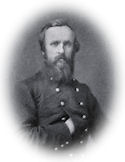
R. B. Hayes.

Mrs. Hayes.