Following the American Civil War Sesquicentennial with day by day writings of the time, currently 1863.

The American Civil War

October 9.—Twelve hundred men of the Confederate forces near Pensacola, landed on Santa Rosa Island, four miles from Fort Pickens, at two o’clock A. M., under command of the Confederate General Anderson, and attacked the camp of the Sixth regiment New York Volunteers, (Wilson’s Zouaves.) Wilson’s men were surprised, and driven out of a portion of their camp, which was plundered and burned by the Confederates; but two companies of regulars, under Major Vodges, sent from Fort Pickens to support Wilson, drove the rebels to their boats, and inflicted upon them a considerable loss. Maj. Vodges was taken prisoner. The Union loss was fourteen killed and Twenty-nine wounded. No numbers are given of the rebel loss, but it was described by themselves as ” very severe.” —(Docs. 34 and 73.)

—Charges and specifications preferred against General Fremont by Colonel F. P. Blair are published. The charges include neglect of duty and unofficer-like conduct, disobedience of orders, conduct unbecoming an officer and a gentleman, extravagance and waste of the public moneys, and despotic and tyrannical conduct. Among the specifications are the alleged failure of Fremont to repair to St. Louis and enter upon his duties—his neglecting to reinforce Lyon, Becken, and Mulligan—his suffering Brigadier-General Hurlburt, “a common drunkard,” to continue in command—his refusing to see people who sought his presence on matters of urgent business—his violation of Presidential orders in the matter of his 30th of August proclamation—his encouragement of officers to hold meetings, and write letters for publication in praise of himself and in denunciation of all who differ from him—his persistency in keeping disreputable persons in his employ, and his unjust suppression of the St. Louis Evening News.

—Colonel De Villiers, the military instructor of Colonel Ellsworth, who was taken prisoner in Western Virginia, and made his escape from Richmond in disguise, was made a Brigadier-General.—Baltimore American, Oct. 11.

—A treaty of amity, commerce, and navigation, and for the surrender of fugitive criminals, between the United States and the Republic of Venezuela, is officially proclaimed. Its liberal commercial, civil and religious features are calculated to consummate its objects, namely:—a firm, inviolable, and universal peace, and a true and sincere friendship between the two countries. There is a mutual agreement that the citizens of each shall be prohibited from applying for or taking any commission or letters of marque, to act as privateers against the commerce of either republic, from any prince or state with which the United States or Venezuela may be at war. It is also declared unlawful for any foreign privateers, who have commissions from any prince or state, in enmity with either nation, to fit out their ships in the ports of cither, to sell their prizes, or in any manner to exchange them; neither shall they be allowed to purchase provisions, except such as shall be necessary to their going to the next port of that prince or state from which they have received their commissions.

—The Forty-fifth regiment of New York Volunteers, under the command of Colonel Amsberg, left their encampment for the seat of war.—The Thirty-seventh regiment of Ohio Volunteers, commanded by Colonel Siebert, left Camp Dennison for the Kanawha valley.— Ohio Statesman, Oct. 10.

—About six o’clock this morning General Smith’s division at Chain Bridge, above Washington, D.C., advanced and occupied prominent positions in the neighborhood of Lewinsville, Va. On the advance arriving at Langsley’s, the hitherto outpost of the army, the division was divided, a portion continuing up Little Rock Run turnpike, occupying Prospect Hill. The other part of the division took the new artillery road, and occupied Smoots’ and Maxwell’s hills, a mile and a half east of Lewinsville. The batteries were drawn up in prominent positions, and the infantry placed in situations to support them. After remaining about three hours waiting in vain for the rebels to make an attack—in fact, inviting them to it— the skirmishers advanced and occupied Lewinsville, the rebels retreating. A portion of the troops under Brigadier-General Porter also advanced and occupied Miner’s Hill, to the right of Fall’s Church, and commanding that village and Barrel’s Hill, which latter was in possession of rebel pickets. General McClellan and staff, accompanied by Captain Barker’s McClellan Dragoons, crossed Chain Bridge early this morning, spending the whole day in reconnoissance from the new positions taken by the Federal troops.

—The ship John Clark, anchored in Lynn Haven Bay, having dragged her anchor in a storm to within a mile and a half of the shore, was opened upon by a rebel battery of five guns with shot and shell. The U. S. steamer Daylight went to the rescue, and engaged the battery with three guns, drove the rebels from their works, and assisted the captain of the Clark to get his ship to sea.—(Doc. 74.)
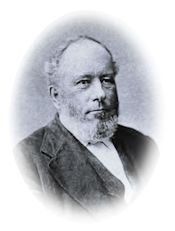
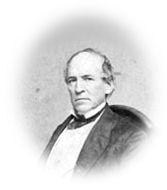
Oct. 7. We were today mustered into the service of the United States, by Captain John M. Goodhue, U. S. A. The company is designated as Company B, and the regiment as the 25th Massachusetts volunteers. I suppose we are now stuck for three years -unless sooner shot.

TUESDAY 8

The great review came off today, 108 pieces of Artillery and the 6400 Cavalry. Julia went with Capt Mew, H N Jr went on his ow[n] hook. I was at the “White House” this morning with Doct Dyer of Chicago. Mr Lincoln passed us on the steps. He stoped and shook hands with both of us. He was going to the Review. Have spent most of the day at Home, wrote to Brother C R and to Thos Bourne of Lyons. Mrs Everitt and Servt called this evening, she had her “white Slave” child with her. The Servt is the mother. Mrs E bought them both [for] $1000.

______

The three diary manuscript volumes, Washington during the Civil War: The Diary of Horatio Nelson Taft, 1861-1865, are available online at The Library of  Congress.

October 8th.—A review of the artillery at this side of the river took place to-day, which has been described in very inflated language by the American papers, the writers on which—never having seen a decently-equipped force of the kind—pronounce the sight to have been of unequalled splendour; whereas the appearance of horses and men was very far from respectable in all matters relating to grooming, cleanliness, and neatness. General Barry has done wonders in simplifying the force and reducing the number of calibres, which varied according to the fancy of each State, or men of each officer who raised a battery; but there are still field-guns of three inches and of three inches and a-half, Napoleon guns, rifled 10 lb. Parrots, ordinary 9-pounders, a variety of howitzers, 20-lb. Parrot rifled guns, and a variety of different projectiles in the caissons. As the men rode past, the eye was distressed by discrepancies in dress. Many wore red or white worsted comforters round their necks, few had straps to their trousers; some had new coats, others old; some wore boots, others shoes; not one had clean spurs, bits, curb-chains, or buttons. The officers cannot get the men to do what the latter regard as works of supererogation.

There were 72 guns in all; and if the horses were not so light, there would be quite enough to do for the Confederates to reduce their fire, as the pieces are easily handled, and the men like artillery and take to it naturally, being in that respect something like the natives of India.

Whilst I was standing in the crowd, I heard a woman say, “I doubt if that Russell is riding about here. I should just like to see him to give him a piece of my mind. They say he’s honest, but I call him a poor pre-jewdiced Britisher. This sight’ll give him fits.” I was quite delighted at my incognito. If the caricatures were at all like me, I should have what the Americans call a bad time of it.

On the return of the batteries a shell exploded in a caisson just in front of the President’s house, and, miraculous to state, did not fire the other projectiles. Had it done so, the destruction of life in the crowded street—blocked up with artillery, men, and horses, and crowds of men, women, and children — would have been truly frightful. Such accidents are not uncommon—a waggon blew up the other day “out West,” and killed and wounded several people; and though the accidents in camp from firearms are not so numerous as they were, there are still enough to present a heavy casualty list.

Whilst the artillery were delighting the citizens, a much more important matter was taking place in an obscure little court house—much more destructive to their freedom, happiness, and greatness than all the Confederate guns which can ever be ranged against them. A brave, upright, and honest judge, as in duty bound, issued a writ of habeas corpus, sued out by the friends of a minor, who, contrary to the laws of the United States, had been enlisted by an American general, and was detained by him in the ranks of his regiment. The officer refused to obey the writ, whereupon the judge issued an attachment against him, and the Federal brigadier came into court and pleaded that he took that course by order of the President. The court adjourned, to consider the steps it should take.

I have just seen a paragraph in the local paper, copied from a west country journal, headed “Good for Russell,” which may explain the unusually favourable impression expressed by the women this morning. It is an account of the interview I had with the officer who came “to trade” for my horse, written by the latter to a Green Bay newspaper, in which, having duly censured my “John Bullism” in not receiving with the utmost courtesy a stranger, who walked into his room before breakfast on business unknown, he relates as a proof of honesty (in such a rare field as trading in horseflesh) that, though my groom had sought to put ten dollars in my pocket by a mild exaggeration of the amount paid for the animal, which was the price I said I would take, I would not have it.

October 8.—Brig.-Gcn. Robert Anderson, in command of the department of the Cumberland, at Louisville. Kentucky, on account of ill health, relinquished his command to Brig.-Gen. Sherman.—Army Order.

—A party of rebels under the command of Captain Holliday, advancing upon Hillsboro, Kentucky, were attacked and defeated by fifty Home Guards, of Flemingsburg, under the command of Lieut. Sadler and Sergeant Dudley. The rebels were discovered encamped on the premises of Colonel Davis, two miles from Hillsboro, when the Home Guards opened fire upon them. The engagement lasted about twenty minutes, resulting in a loss of eleven killed, twenty-nine wounded, and twenty-two prisoners of the rebels, and three killed and two wounded of the Home Guards.—(Doc. 71.)

—About five o’clock this afternoon Capt. Barney of the New York Twenty-fourth regiment, advanced three miles beyond Falls Church, on the Leesburg (Va.) turnpike, with ten men, where he surprised a picket guard of Stewart’s rebel cavalry, killing three and taking one prisoner, five horses and equipments, thirteen navy pistols, four sabres, one carbine and telescope. A white horse was killed which has been often seen by our pickets, and believed to belong to Capt. Powell, of Stewart’s cavalry. The capture was made within half a mile of the rebel camp, and was so sudden that they had no time to draw their pistols.—Boston Traveller, October 10.

—A grand review of artillery and cavalry was held at Washington, in the presence of the various heads of the departments and others. An accident occurred to one of the artillery caissons by an explosion of its contents; happily without any serious damage.

—The Follett Battery of Flying Artillery, Massachusetts Volunteers, arrived in New York, and took up quarters at the Harlem railroad depot Dexter H. Follett is the captain of the battery.

—A singular artillery battalion is now being organized at Richmond, Indiana. It is to consist of six hundred men, with one hundred guns; the guns to have the capacity of carrying a two-pound ball two and a half miles. A portion of the guns required by this battalion will be made in Richmond. They will be of steel barrels, and of very superior workmanship.— Louisville Journal, October 8.

—The Twenty-second regiment of Massachusetts Volunteers, under the command of Colonel Henry Wilson, Senator from Massachusetts, left their camp at Lynnfield and passed through Boston, en route for the seat of war. In Boston they were hospitably entertained by the city, and at the close of the repast were presented with a flag, the lion. Robert C. Winthrop making the presentation speech.— (Doc. 72.)

—In the Admiralty Court at Portland, Me., Judge Ware delivered an able opinion, condemning the British schooner Wm. Arthur, seized on the ground that she intended to run the blockade.

MONDAY, OCTOBER 7, 1861.

Went for Doct Piper this morning for Willie. He has I think only a bad cold on his lungs and will soon be well. I was on the Ave this morning, saw it filled with Cavalry for one mile. I was at the Pat office in Col James room. He is anxious to have me in his room, as 1st Assistant. Fixed up my Aquarium this afternoon in our dining room. It began to rain about dark with constant thunder and lightening. Tomorrow there is to be a grand Review of 4000 Cavalry by Genl McClellan.

______

The three diary manuscript volumes, Washington during the Civil War: The Diary of Horatio Nelson Taft, 1861-1865, are available online at The Library of  Congress.

Monday, 7th.—Our tents, which had been left behind for some cause unknown to me, arrived. We were very glad to see them, for it had been raining almost constantly for the last two days, and as our battalion was camping in a low, flat place, we had mud and water in abundance.

B. A. Hancock. (Company E) was appointed assistant commissary in McNairy’s Battalion.

October 7.—Colonel Matthews, encamped with four hundred Home Guards about Twenty miles from Hermann, Missouri, was compelled to abandon his camp; he having received intelligence that a large body of rebels were marching to attack him.—N. Y. Tribune, October 9.

—Capt. Michael Berry, late of the steamship Marion, was arrested in New York by detective Raynor, of Brooklyn, and sent to Fort Lafayette on charge of treason. The exact nature of the charge preferred against Capt. Berry has not transpired, but it is supposed that he was acting as a confidential agent for Jeff. Davis. His sympathy for the Southern Confederacy, and the Palmetto flag especially, is notorious, and the only wonder is, that he was not conducted to prison long ago. His sailing under the rebel flag, and his open avowal of. sympathy for the enemies of the Union at Charleston and elsewhere, rendered him a dangerous man; but he is now placed in a position where he cannot act against the Union cause, even if he felt ever so much disposed to do so. His movements of late have been characterized with much secresy, and there is no knowing how much aid and comfort he has extended to the enemy, but henceforward it is presumed Capt. Berry will occasion little trouble or uneasiness.—N. Y. Herald, October 8.

—Fifty-seven released prisoners, taken at the battle of Bull Run, were returned to Fortress Monroe, from Richmond. They were released because their wants could not be supplied by the rebel Government.

—General Fremont, accompanied by General McKinstry, left Jefferson City for Sedalia, Mo., with the determination of following Gen. Price.—At Saratoga, N. Y., a large Union meeting was held, at which eloquent and stirring speeches were made by Lyman Tremaine, Benjamin Nott, and the Rev. A. D. Mayo, the Unitarian preacher.

—The gunboats Tyler and Lexington had an active engagement to-day, with the rebel shore batteries at Iron Banks, three miles above Columbus, Ky. The boats left Cairo, Ill., at nine o’clock, for down-river reconnoissance, and arriving at Lucas Bend, got sight of the rebel gunboat Jeff. Davis, which, on chase being given, put about with all possible despatch for Columbus. The Lexington and Conestoga, while in chase, and throwing shot, were suddenly fired upon by masked batteries on each side of the river. The shots, however, generally fell short. A battery of rifled cannon on the Iron Bunks, threw balls over and around the gunboats, cutting close, but fortunately doing no damage. Parties on board represent the scene for a time as particularly exciting. Shot and shell were flying in uncomfortable proximity, making the air ring with music. The guns of the boats were admirably manned, every shot going home, and the shells bursting in the air over the rebel quarters, causing a great .commotion among them. The boats finally drew off and returned to Cairo.—Cincinnati Commercial.

Oct. 6.

After dinner yesterday we drove out to the camp of the Rhode Island 2nd, to see the friend of our infancy and of hay-loft and cow-stall memory—Col. Frank Wheaton, son of Dr. Wheaton of Pomfret, Connecticut, to whose farm-house Mother took us all to board, the summer after Father’s death. It is about twenty years (!) since we all played together. You know it was for him that Mary got that ugly scar across her nose, in her anxiety to reach him through a glass window, and they two at the age of about seven were married in state and went to housekeeping in the cow-stall on apples and flagroot. He says he remembers it all most distinctly and still claims Mary as “his wife by right” though he has had one, and is engaged to a second.

He was very much pleased to find that he had met you too, for he was mustering-in officer at Albany when you were there, and swore in, part of the 16th. He and the others were “delighted with Adjutant Howland, who used to come to their office nearly every day and always had his muster rolls right.”

I was sorry to hear that the mare “Lady Jane” was so sick and I send George Carr out to camp to see if he can do anything for her. As he has known her from early youth he may understand her insides better than others do. You may be surprised at my being able to get a pass for George, but not more than I was! A mere statement of the case dissolved all the adamantine walls round the Provost Marshal, and is only another proof of our being “noble-hearted women of luck.”

A. H. W. writes:

How funny it is that you should have met the Wheatons again. It is one of the queer ways in which people turn up. I wonder if they remember the little school which Mother held for us every day in the porch of their father’s house in Pomfret, and the yellow hymn book, and the tunes of

Our Father in Heaven

We hallow Thy name,”


and

“God is in Heaven, would He hear

If I should tell a lie?”


—and then how at times we used to see who could eat the most ears of corn! And the skeleton in his father’s office, what a corner of horrors that was!

Camp near Fairfax C. H., October 6, 1861.

Your letter of October 1st was received on yesterday, and I am very much gratified at the cheerful feeling which it manifests. It shows, too, that you are giving a very commendable attention to the business under your charge, and give promise, if the war lasts, of your being a first rate business woman. You have your mind set in the right direction, for it seems as if the war would be interminable, and the sooner you learn how to take care of yourself the better it will be. Times are very dull with us here. Our troops are but a mile or so distant from the enemy,—so near that our pickets, it is said, occasionally meet and converse with theirs, swap newspapers, tobacco, whisky, etc. Judging from the newspapers, one would think we were on the eve of a battle every day, but here there seems little apprehension of it. We may have a battle, but then again we may not. On the whole, the soldiers would just as lief fight as not. We are going to have a sermon this evening, and I will bid you good-bye to listen to it. Kiss our dear little boys for me, and remind them of me. I should regard their forgetting me as the saddest loss sustained by my absence from home. Think of me often, Love. My fondest hope, the dearest wish of my heart, is to be with you again. Remember me to the servants, and to Fitz and his wife, to Annie, Rachel and my friends.