Following the American Civil War Sesquicentennial with day by day writings of the time, currently 1863.

The American Civil War

Sept. 23.—At Fortress Monroe, Va., Ross Winans, one of the Baltimore members of the Legislature, having taken the oath of allegiance, was this morning released.—Commodore Stringham was relieved by Captain Goldsborough.— Baltimore American, Sept. 24.

—This night a successful effort to burn the barn and haystacks around Munson’s Hill, Va., was made by Major Frank Lemon and Lieut. Chas. Dimoud, of the California regiment. At the forge of some blacksmiths they made some fifty or more conical slugs, and with these and a Sharp’s rifle they started for the line of our pickets, built a fire, and commenced heating shot. One of them with a cloth would drop the shot into the muzzle of the rifle, and the Major, being the best shot, blazed away. At the second shot the hay-ricks were in a blaze. In two more shots the barn caught. Out rushed the rebels, and made for the hill.

—Lieutenant Wilson, with a squad of the Fourth Cavalry, proceeded to Unity, a small place in the northern part of Anne Arundel County, Md., and seized a quantity of sabres, pistols, and muskets, in possession of secessionists in the neighborhood. They were a portion of the arms given to a volunteer company raised at the time of the John Brown raid.

—Five Hundred of the Fourth Ohio, with one piece of artillery; and Ringgold’s cavalry, seventy-five in number, under Colonel Cantwell; and four hundred of the Eighth Ohio, under Colonel Parke, make an advance from New Creek toward Romney, Va. They drove the rebels, seven hundred strong, out of Mechanicsburg Gap, and advancing stormed the town, causing the enemy, whose force numbered fourteen hundred infantry and cavalry, to retreat to the mountains with a loss of about thirty-five killed and a large number wounded. The National loss was three killed and ten wounded.

—At St. Louis, Mo., Charles G. Ramsay, the proprietor of the Evening News, was arrested this afternoon by order of the Provost-marshal, and taken to head-quarters for examination. His offence is publishing an editorial article today, entitled “The Fall of Lexington,” reflecting in bitter terms on the campaign of the military authorities in the department of the West. His paper has been suppressed, and all the manuscript found in the office was seized, and the building is now in possession of a provost guard.—(Doc. 58.)
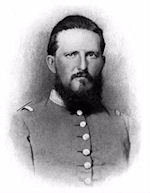
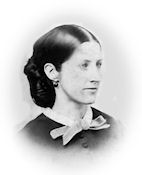
Camp near Fairfax C. H., September 22, 1861.

I am indebted to you for much pleasure afforded by your sweet letter of 16th inst. I know, Love, my presence is sadly missed at home, but not more than in my lonely tent I miss my dear wife and her fond caress. I am sure, too, you are not more eager in your wish for my return, than I am to be with you. But I feel sure you would not have me abandon my post and desert our flag when it needs every arm now in its service for its defence. To return home, all I have to do is to resign my office, a privilege which a man in the ranks does not enjoy. Then your wish and mine is easily fulfilled, but in thus accomplishing it I would go to you dishonored by an exhibition of the want of those qualities which alike grace the citizen and the soldier. An imputation of such deficiency of manly virtues I should in times past have resented as an insult. Would you have me merit it now? I think not. My love for you, if no other tie bound me to life, is such that I would not wantonly throw my life away. But my duty must be met, whatever the expense, and I must cling to our cause until the struggle ends in our success or ruin, if my life lasts so long. I trust I have that obstinacy of resolution which will make my future conform to such sentiments of my duty. Mrs. Jackson took leave of us some days since, as the General was not able to get quarters for her in a house near our present encampment. I rode, between sunset and breakfast next morning, some thirty miles to secure the services of a gentleman to meet her at Manassas and escort her home. In return for this hard night’s ride she sent me by the General her thanks in the message that she “hoped I might soon see my wife.” You hope so too, don’t you, Monkey? I was well paid for my trouble in the consciousness of having merited her gratitude.


I stopped at Mr. Newman’s camp the other day to see him, but learned from Deacon that he was at home, and that little Mary was dead. I sympathized deeply with them in the sad bereavement. I learned from the Rev. Dr. Brown, who reached here from Richmond this morning, that he saw Matthew at Gordonsville, on his way here. I suppose he will come to see me when he arrives.

Yesterday I was down the road some ten miles, and, from a hill in the possession of our troops, had a good view of the dome of the Capitol, some five or six miles distant. The city was not visible in consequence of the intervening woods. We were very near, but it will cost us many gallant lives to open the way that short distance. I have no means of knowing, but do not think it probable the effort will be made very soon, if at all. I saw the sentinel of the enemy in the field below me, and about half a mile off, and not far on this side our own sentinels. They occasionally fire at each other. Mrs. Stuart, wife of the Colonel who has charge of our outpost, stays here with him. Whilst there looking at the Capitol I saw two of his little children playing as carelessly as if they were at home. A dangerous place, you will think, for women and children. Remember me to Fitzgerald and his wife, and say that I am very grateful for what they have done for me. And now, Love, I will bid you good-bye again. Kiss little Matthew and Galla for me.

Sept. 11th, 1861.

Where do you think I am writing? In the Patent Office, where we heard the other day that a large number of sick men had been brought from the 19th Indiana regiment. We found them in a dirty and forlorn condition and have come to do what we can. The whole regiment, nearly, is down with sickness from great exposure when they first arrived, they say. The assistant-surgeon of the regiment and the matron are here all the time, and a number of Washington women come in to help every day.

From G’s letter to the Sanitary Commission Fair’s paper this account of the hospital is taken:—

“One of the first extemporized hospitals of the war was in the top story of the Patent Office, where the 19th Indiana regiment was brought, nearly every man of them. The great, unfinished lumber room was set aside for their use, and rough tables—I can’t call them beds—were knocked together from pieces of the scaffolding. These beds were so high that it was impossible to reach them, and we had to make them up with brooms, sweeping off the mattresses, and jerking the sheets as smooth as we could. About six men could be accommodated on one table. These ran the whole length of the long room, while on the stacks of marble slabs, which were some day to be the floor, we spread mattresses, and put the sickest men. As the number increased, camp-beds were set up between the glass cases in the outer room, and we alternated —typhoid fever, cog-wheels and patent churns —typhoid fever, balloons and mouse-traps (how many ways of catching mice there are!)—typhoid fever, locomotives, water-wheels, clocks,—and a general nightmare of machinery.

Here, for weeks, went on a sort of hospital picnic. We scrambled through with what we had to do. The floors were covered with lime dust, shavings, nails, and carpenters’ scraps. We had the rubbish taken up with shovels, and stacked in barrels at one end of the ward. The men were crowded in upon us; the whole regiment soaked with a malignant, malarial fever, from exposure, night after night, to drenching rains, without tents. There was so much of this murderous, blundering want of prevision and provision, in the first few months of the war—and is now, for that matter.

Gradually, out of the confusion came some system and order. Climbing up to the top of the Patent Office with each loaf of bread was found not to be an amusing occupation, and an arrangement of pulleys was made out of one of the windows, and any time through the day, barrels of water, baskets of vegetables and great pieces of army beef, might be seen crawling slowly up the marble face of the building.

Here, for weeks, we worked among these men, cooking for them, feeding them, washing them, sliding them along on their tables, while we climbed up on something and made up their beds with brooms, putting the same powders down their throats with the same spoon, all up and down what seemed half a mile of uneven floor;—coaxing back to life some of the most unpromising,—watching the youngest and best die.

I remember rushing about from apothecary to apothecary, in the lower part of the city, one Sunday afternoon, to get, in a great hurry, mustard, to help bring life into a poor Irishman, who called me Betty in his delirium, and, to our surprise, got well, went home, and at once married the Betty we had saved him for.

By-and-by the regiment got through with the fever, improvements came into the long ward, cots took the place of the tables, and matting covered the little hills of the floor. The hospital for the 19th Indiana became the “U. S. General Hospital at the Patent Office,” and the “volunteers for emergencies” took up their saucepans and retired.”

“Mountain View,” September 22.—Came down here with Mr. _____, a few days ago. Spent this day not quite so profitably as I desired. The ride to the “old chapel,” where we had service, is so long, that we spent a great deal of time upon the road. Bishop Meade delivered a most interesting address. He mentioned with great feeling the death of Mr. John A. “Washington, of Mount Vernon, who fell at “Cheat Mountain” a few days ago, while, with some other officers, he was observing the movements of Rosecranz. It is heart-rending to hear of the number of valuable lives which are lost in this cruel war.

Sept. 22.—This evening, eight pickets of the Iowa Seventh regiment, out at the Cross Roads, a mile and a half from Eliott’s Mills, eight miles above Columbus, Ky., were suddenly approached by fifty or sixty rebel cavalry. The pickets fired, when the rebels turned and fled. Two or three of their number were seen to fall, but were carried off on their horses. One of their horses was killed. The accoutrements and pistols fell into the hands of the Iowa boys, and a riderless horse from among them also fell into their hands. Their wounded and dead were carried away. The rebels returned the fire before fleeing, but did no damage.

—A skirmish took place near Hunter, Mo., four miles below Norfolk. Three of the National troops and four horses were lost—N. Y. Tribune, Sept, 24.

—General A. S. Johnston, of the Confederate Army, having assumed command at Memphis, Tenn., issued a proclamation relative to the armed occupation of Kentucky.—(Doc. 57.)

SATURDAY 21

Nothing new has occured recently although we are surrounded on all sides with elements which may be put in motion any how carrying destruction and death to thousands. Heavy cannonading over the River almost every day is heard from the Forts, practicing and getting the range of their guns. Have been at home most of the day fixing up things and preparing to sell out. Was on the Ave in the morning with Julia.

______

The three diary manuscript volumes, Washington during the Civil War: The Diary of Horatio Nelson Taft, 1861-1865, are available online at The Library of  Congress.

Post image for “ ‘Hark! Was that a gun?’ The comical aspect of terror which is thus elicited forms an inexhaustible source of amusement to us all.”—War Letters of William Thompson Lusk.

Headquarters 79th Regiment,

Camp Advance, Va. Co. K.

September 21st, 1861.

Dear Cousin Lou:

Let me see — it is a long time since I wrote you, but I am not forgetful. I must thank you many times for your kindness in writing me away off here. Perhaps you think it not very far, only four miles off from Washington; yet it is so, for we are quite shut off from all communication with the outer world. My goodness, how I did cheer Mrs. Gen. Smith the other day on passing her carriage as the Regiment was returning from the field where its colors had been restored!

I am not quite certain that Mrs. Brigadier-Gen. Smith was beautiful, yet I thought her so, for she had little hands, white teeth, and was not shouldering a musket. If you will visit camp, Cousin Lou, I’ll crown you Queen of Beauty and vote you lovelier than a thousand Mrs. Brigadier-Gen. Smiths. Tell Cousin Henry and Dr. Grant that their visit to me, while on Kalorama Heights, first taught me that there was still remaining communication with the world. The result of the lesson was, that I bought a looking-glass and combed the snarls out of my hair.

It is raining to-night, so I am shut in my tent. Field life agrees with me excellently, so that as yet I have hardly had an ill day. Our Regiment has been unusually healthy, there having been no deaths from sickness in it since it first left New-York. A captain of the 19th Indiana Regiment was telling me that they had lost 25 of their number from disease already, although they have not been out here so long as we by two months. This I suppose is partly owing to the fact that the city soldiers endure change of climate better than country ones; and something I believe is due to our surgeon Dr. McDonald. The Doctor says that you are one of the few women for whom he has an unbounded admiration.

You would laugh if you could hear the conversations between our Chaplain and the profane physicians. Our parson is a love of a little man from some back country village, accustomed to be kissed (?), admired, and petted by the ladies of his congregation, and to be regarded as a model of eloquence by the men. Fired with patriotic zeal he volunteered his services on the opening of the war, to his country, and left the peace of home for the horrid din of Mars. But the horrid din of Mars he finds, to his astonishment, not nearly so agreeable as being kissed (?) and petted in his own quiet village. So he has grown petulant, thinks himself unappreciated, and calls all the men hardened sinners because they sometimes look incredulous when he answers their” Why?” with, “It is so for I say so.” Shocking unbelievers! Dear little parson tells us weekly not to fear to die, but to face death bravely, as we are certain of being transported instantly to scenes of heavenly joy. Yet our little parson whenever an alarm occurs, rushes to his tent, secures his bag, and trots off in all haste to the nearest place of shelter. Taking advantage of this little weakness, the Doctor is in the habit of explaining to him in a horridly lucid way, the dreadful nature of gunshot wounds. Then some one will suddenly jump up, assume a listening attitude and cry: “Hark! Was that a gun?” The comical aspect of terror which is thus elicited forms an inexhaustible source of amusement to us all. He reminds me of the Chaplain of the story, who bade the soldiers before the battle not to fear, as they would assuredly that night, if they fell, sup in Paradise. He himself however, ran away when the first shot was fired. An indignant hearer of his morning discourse reminded him of his encouraging promises. “No thankee,” said he, “don’t talk to me, I never did like suppers.” All of which story you can anywhere find better told in the newspapers.

Next to the parson, our greatest source of entertainment is the article called “nigger,” a thing I never saw until I came to “Ole Virginny.” We own an African of the Pongo species, a sort of half idiotic monkey-man, partially possessing the gift of speech, and totally possessing the gift of doing nothing. I consider it a curious study to see how, when he is ordered to perform any service, he manages most ingeniously not to do it at all. You should see the Pongo, though, in the Highland costume. “The What Is It ?” will have to retire from business.

Good-bye dear Cousin Lou.

Very affec’y.,

W. T. Lusk,
Lieut. Co. K. 79th Regt.

SEPTEMBER 21ST.—The Secretary has authorized me to sign passports “for the Secretary of War.” My son attends to his letters. I have now an opportunity of seeing more. I have authority to order transportation for the parents of soldiers, and for goods and provisions taken to the camps.

September 21.—General Lane’s command surprised a superior force of rebels at Papinsville, Missouri, and, after a severe engagement, routed them, losing seventeen killed, and a large number wounded. The rebels lost forty killed, and one hundred prisoners, and all their tents, wagons, and supplies.

The gang of rebels who recently sacked the town of Humboldt, Kansas, was defeated by a force from Fort Scott, and their leader, Mathias, killed. On his person was found an order from Ben McCulloch for the enrolment of the Quapaw Indians.—National Intelligencer, Sept. 28.

—The British schooner Revere, of and from Yarmouth, N. S., with a cargo of salt fish, arrived at Boston, Mass., in charge of Henry W. Wells, master’s mate, and a prize crew from the United States steamer Cambridge. The Revere was captured while attempting to run the blockade at Beaufort, N. C.—N. Y. World, Sept. 23.

—The steamer War Eagle returned to Jefferson City, Mo., from an expedition on the Missouri River this evening. This steamer, together with the steamer Iatan, with the Indiana Twenty-second and Eighteenth regiments aboard, accompanied the steamers White Cloud and Des Moines, with the Indiana Twenty-sixth, as high up the river as Cambridge, where they captured the steamer Sunshine, seized a short time since by Green. They encountered no rebel troops. Union flags were flying at Glasgow. The White Cloud and Des Moines went on up the river to reinforce Lexington. While all four boats were lying up for the night, a short distance below Glasgow, two detachments were sent out to reconnoitre. They encountered each other, each mistaking the other for the enemy, fired, and before their mistake was discovered, four men were killed and several wounded. Among the wounded was Major Gordon Tanner, of the Twenty-second.—(Doc. 55.)

—A Large and enthusiastic meeting of the citizens of Westchester County, in favor of maintaining the integrity of the Union, was held at Lake Mohican. The Hon. John B. Haskin made a most eloquent and stirring speech to the assemblage, and declared his determination to sink all party differences and to support the Government in all honorable acts for a vigorous prosecution of the war and the preservation of the best Government ever vouchsafed to man. Eloquent speeches were also made by Messrs. Depew, Bailey, and Ferris.

—Edward D. Baker, United States Senator from Oregon, was appointed a Major-General of Volunteers in the National army.

—This morning John Bateman, a citizen of Portland, Maine, arrived at New York in custody of the deputy marshal. The prisoner charged with high treason, with using seditious language against the United States of America and the President thereof, treasonable complicity with Southern rebels and their agents in Liverpool and other parts of Europe. It is stated that letters and papers were found in the baggage and on the person of the accused, justifying the vigorous measures adopted. He was sent to Fort Lafayette.—N. Y. Times, September 22.

—Gen. Robert Anderson assumed command of the State and Federal troops in Kentucky and issued a spirited proclamation, calling upon Kentuckians of all parties to assist in repelling the invaders of the State. Gov. Magoffin also issued a proclamation, directing Gen. Thomas L. Crittenden to call out the State troops to resist the invasion of the State, and Gen. C. accordingly called out the militia.—(Doc. 56.)

—The Fourth regiment of Vermont Volunteers, under the command of Colonel Edwin H. Stoughton, left its encampment at Brattleboro for the seat of war. The regiment numbers one thousand and eighty rank and file. Colonel Stoughton is a native of Vermont, and a West Point officer, having graduated from the Military Academy in 1854, and being breveted Second Lieutenant in the Forty-second Infantry, July 1, 1859.

FRIDAY 20

At the Indiana Hospital (Pt office) today, 100 Patients. Made Box for Piano. Got a Deed from the Land Office for Mr Pollok of Lyons. Attended the Parade with Julia of the Regulars on F[ranklin] Square. Called with her upon the Woodburys, 12th St, refined educated people and much devoted to the sick soldiers. Troops are pouring in rapidly now, from five to six Regiments pr day arrive by the Cars. Large numbers have gone over the river this week. An attack on the City expected.

______

The three diary manuscript volumes, Washington during the Civil War: The Diary of Horatio Nelson Taft, 1861-1865, are available online at The Library of  Congress.