Following the American Civil War Sesquicentennial with day by day writings of the time, currently 1863.

The American Civil War

London, September 20, 1861

I deeply sympathise with you in your trials about the part you ought to play in the war. Much as I value your assistance during my absence on this side, I should be very reluctant to continue it at the cost of your own convictions of your duty. If you feel that the crisis demands it, I pray that you set aside every other consideration at once. .. . Whichever way you determine, you will know that I appreciate your motives, and that you will have under every circumstance my sympathy and my prayers.

The late modicum of good news has helped us here a good deal. People were beginning to believe that the slaveholding generals were demigods, on Aristotle’s or Longinus’s principle (I forget which), that mystery is a source of the sublime. The London Times at last frankly admits that if split up we shall no longer be a terror to Europe so that there is no need of going any farther for a reason to explain its crooked policy. Mr. Russell’s last letter went far to justify your inference. He has seen a little light and is willing to admit that we are not so badly off after all. . . .

SEPTEMBER 20TH.—Col. J. A. Washington has been killed in a skirmish. He inherited Mount Vernon. This reminds me that Edward Everett is urging on the war against us. The universal education, so much boasted of in New England, like their religion, is merely a humbug, or worse than a humbug, the fruitful source of crime. I shall doubt hereafter whether superior intelligence is promotive of superior virtue. The serpent is wiser than the dove, but never so harmless. Ignorance is bliss in comparison with Yankee wisdom.

September 20.—At Lexington, Mo., Colonel Mulligan surrendered to the rebel general, Price, after a fifty-nine hours’ fight without water; the only supply—from the river—having been cut off by the rebels, after a severe fight. The camp ground contained no springs or wells, and embraced ten acres, with breastworks around it, except the river front. The rebels procured bales of hemp and rolled them in advance, and under their cover succeeded in securing a position in the rear. They made but few assaults, their object being to surround the fort and cut off supplies of water, and this accomplished, wait till necessity compelled Mulligan to yield. Previous to the surrender, Colonel Mulligan offered to take a position on a level spot of ground and give General Price the odds of four to one in a fair open fight, but he declined. After the surrender the rebels mounted the breastworks, mad with joy, and trailed the National flag in the dust. A large amount of gold, supposed to be a quarter of a million, fell into the possession of the rebels. It had previously been buried by Colonel Mulligan, but was unearthed by the enemy. The brave Colonel wept like a child when he found himself compelled to surrender. —(Doc. 33.)

—The rebels troops evacuated Mayfield, Ky., this day. They numbered about seven thousand, under the command of General Cheatham, were nearly all armed, but poorly clothed and indifferently fed.

Mayfield is a small town, the seat of Graves County, on the railroad from Paducah to Union City, and midway between the two places. It is about thirty-six miles east of Columbus, Ky. —Chicago Tribune.

—A Federal scouting party from the Thirty-fourth N. Y. regiment at Darnestown, Md., went across the Potomac near the mouth of the Seneca, and were attacked by a superior party of the rebels. One of the Nationals was killed outright and several were wounded; one of the latter was shot through the cheek, but fled, pursued by the attacking party; on reaching a creek he threw off his gun and plunged in himself laying on his back and resting his head upon a stone with his mouth and nostrils above the water. He avoided his pursuers, and after three hours’ submersion he crawled to the shore of the river; his companions, who were concealed on the Maryland side, discovered and rescued him while making a vain attempt to swim across.

A skirmish took place below Fort Holt near Cairo, Ill., between company I, of the Tenth regiment, and a small party of rebels, in which the latter were routed.—Ohio Statesman, September 24.

—Colonel Crittenden, from Indiana, who was the first to bring a regiment from another State into Western Virginia in aid of the Federal Government, and the first to come to the aid of Kentucky, passed through Louisville, with his regiment well armed and equipped. The troops were enthusiastically received at different points on the route—Baltimore American, September 21.

—Two changes have been made in Jeff. Davis’s Cabinet; Robert M. T. Hunter, of Virginia, has been made Secretary of State in place of Robert Toombs, of Georgia; and Braxton Bragg, of Louisiana, has succeeded Leroy P. Walker, of Alabama, as Secretary of War.—N. Y. World, September 21.

—A Grand Union meeting was held at Newark, N. J. Speeches were made by Daniel S. Dickinson and others. Large delegations from the surrounding towns were present. Resolutions were adopted, deprecating party movements as unpatriotic and prejudicial to the public interest; and proposed an inauguration of a people’s Union movement throughout the State. A committee was appointed for that purpose.

Post image for Neutrality of Kentucky.–Richard R. Hancock, Second Tennessee Cavalry.

Notwithstanding Kentucky had been claiming to be neutral, she had not only allowed Federal soldiers to camp upon her soil, but her citizens were organizing and arming themselves to aid the Federal Government.

On the 10th instant General G. H. Thomas assumed command of a Federal brigade which had been previously assembled at Camp Dick Robinson, in Garrard County, Kentucky.

General U. S. Grant, with two regiments of infantry and four pieces of artillery, had taken possession of Paducah, Kentucky, as early as the 6th of September.

Owing to the menacing movements of the Federals down the Mississippi River, the Confederates (by order of General L. Polk, who was then in command of the Second Department) landed at Hickman, Kentucky, on the night of the third, and at Columbus about the 5th.

It had been, and was still, the policy of the Confederacy to respect the neutrality of Kentucky so long as the same was respected by the Federal Government, as the following dispatches will show:

Richmond, September 4, 1861.

General Polk, Memphis, Tennessee:

News has reached here that General Pillow has landed his troops at Hickman, Kentucky. Order their prompt withdrawal from Kentucky.

L. P. Walker, Secretary of War.

After explaining to the President that a previous movement of the Federals down the Mississippi River had been the cause of his ordering General Pillow into Kentucky, General Polk received the following dispatch:

Richmond, September 4, 1861.

General Polk:

The necessity justifies the action.

Jefferson Davis.

The following dispatches and replies will explain themselves:

Nashville, September 13, 1861.

To His Excellency Jefferson Davis:

On the 4th instant I sent John Marshall, Andrew Ewing and Dr. Rowling as commissioners from Tennessee to Kentucky. They returned last night, and think it of the highest importance that our troops be withdrawn They say withdrawal secures to us majority in the State. If not withdrawn, overwhelming majority against us and a bloody contest. They think our withdrawal secures withdrawal of Federal troops and saves the State. They are able and reliable men. I submit their report for your consideration.

Isham G. Harris.

_____

Richmond, September 13, 1861.

Governor Harris, Nashville, Tennessee:

Movement to Columbus was reported to me as a defensive measure, rendered necessary by the descent of Federal troops. As a necessity it was sanctioned. If they can be safely withdrawn, it would conform to my declared policy of respect for the neutrality of Kentucky. General A. S. Johnston has been directed to confer with you at Nashville. Security to Tennessee and other parties of the Confederacy is the primary object. To this all else must give way.

Jefferson Davis.

_____

Knoxville, September 14, 1861.

Adjutant-General Cooper, [Richmond]:

Governor Harris and General Buckner telegraphed me if possible to arrest the movement of which I apprised you on the 10th. It is too late to arrest. To withdraw would be unfortunate, unless the Federal forces which menace us will agree to withdraw. I have informed Governor Maguffin (of Kentucky), through Governor Harris, I will withdraw on this condition.

F. K. Zollicoffer,

Brigadier-General.

_____

Richmond, September 14, 1861.

General Zollicoffer, Knoxville. Tennessee:

Your letter of the 10th received. The military consideration clearly indicates the forward movement which you propose. The political condition of Kentucky affects the determination of this question. Of that you are better informed than ourselves, and as you are supposed to have conferred with General A. S. Johnston, the matter is left to your discretion.

S. Cooper,

Adjutant and Inspector- General.

The following is an extract from a letter, dated Clarksville, September 15th, written by the Hon. G. A. Henry and addressed to President Davis:

The neutrality of Kentucky has been all the time a cloak to enable the Lincoln party there to hide their real designs to arm the friends of Lincoln and to disarm the Southern Rights party. We ought to strike now. A step backward would be fatal, in my opinion.

While at Knoxville our battalion was transferred from the State to the Confederate service.

Some of Allison’s Company, who went home from Camp McGinnis and Livingston, returned to camp at Knoxville on the 18th.

Having set out from Knoxville on the 17th, General Zollicoffer arrived at Cumberland Ford, or Camp Buckner, on the 19th, and on the same date he wrote to General A. S. Johnston, Columbus, Kentucky, thus:

An advance force set out last night [under Colonel J. A. Battle], about eight hundred strong, entered liarboursville, eighteen miles  from here, about daylight, where they found about three hundred of the enemy, and a fight ensued, in which we killed twelve and took two prisoners. We lost one killed, Lieutenant Powell, of Colonel Cummings’ Regiment, one fatally wounded, and three slightly wounded. The enemy fled precipitately. The number of his wounded unknown.

Cross Lanes, Near Gauley River, Below
Summersville, Virginia, September 19,
Thursday A. M., [1861].

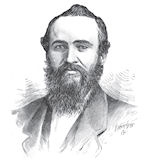
Dearest: — I fear you do not get the letters I have written the last ten days, as we are out of the reach of mail facilities. I got your letter of the 5th about forty miles north of here out of a waggon-train that I stopped. You can always know of my welfare from the correspondence in the Gazette and [the] Commercial. They are informed directly from headquarters. I see their correspondents daily. Colonel Scammon being at the head of a brigade (a very little one), Colonel Matthews commands our regiment. On the day of the fight, and most of the time since, I have had an independent command. Most [of] the time almost a regiment, made up from our regiment, the Thirtieth, and small parties of cavalry. I have thus far been the sole judge advocate also of this army; so I am very busy. We tried three cases yesterday. It is a laborious and painful business. And after writing so much I would not write you but for my anxiety to have you know how much I think of and love you. Love and kisses to all the boys.

My impression is that the enemy has left our bailiwick entirely, but there are rumors of re-enforcements, etc., etc. If so, we shall have another fight within ten days. With anything like management and decent luck, we shall surely beat them. But there is a great deal of accident in this thing. Not enough to save them unless they do better than heretofore.

Dr. Joe is well. All of us getting thin and tough. Matthews has lost twenty-five pounds, Dr. Joe five pounds. I have lost five to eight. The soldiers generally from ten to twenty pounds. I never was so stout and tough. You need not send my pants unless you see somebody coming direct or get a chance with Mr. Schooley’s things. I am well fixed. Dr. McDermott is here, one week from Ohio. We now get news by way of Kanawha in two days from Cincinnati.

You need have no fear of my behaviour in fight. I don’t know what effect new dangers might have on my nerves, but the other day I was several minutes under a sharp guerrilla fire — aimed particularly at Captain Drake and myself (being on horseback), so I know somewhat of my capacity. It is all right. In the noisy battle, for it was largely noise, none of our regiment was under fire except the extreme right wing of my little command; two were wounded, and I could hear the balls whistle away up in the air fifty feet over my head; but it amounted to nothing. A portion of Colonel Lytle’s men caught nearly all the danger, and they were under a very severe fire.

It is beautiful weather — lovely moonlight nights. A great many well cultivated farms; plenty of fruit, vegetables, and food. Good-bye again. The paymaster is expected soon. I shall be able to send you lots of money if he does [come], as I now spend next to nothing. Kisses for all. Dearest, I love you so much.


Affectionately,

Rutherford.

P. S. — This letter is so incoherent by reason of interruptions. Joe wants me to say that we had peaches and cream just now.

Mrs. Hayes.

Cross Lanes, September 19, 1861.

Dearest: — It is a lovely moonlight evening. I mailed you a letter this morning, but as Lieutenant Wall of Captain Mcllrath’s company has resigned to go with the navy, and will go to Cincinnati tomorrow, I thought I would say a word further while our band plays its finest tattoo tunes. They are sweet, very. You see by the enclosed the scrape I am in. I have tried four or five cases on general orders, and here comes an order making me permanently a J. A. [judge-advocate]. It is not altogether agreeable. I shall get out of it after a while somehow. For the present I obey. It is pleasant in one respect as showing that in my line I have done well. Lieutenant Wall will, I hope, call and see you. He is a good soldier and we are sorry to lose him. If this reaches you before other letters from here and Birch River, you may know that two older and longer ones are after you.

One thing in the new appointment: If I can’t get out of it, you may see me one of these days, sooner than you otherwise would, as it confers some privileges, and that would be sweet. Love to all.

Affectionately,

R. B. Hayes.

P. S. — We hear tonight of the death of Colonel Lorin Andrews at Kenyon.1 We feel it more deeply than in most cases.

He was my classmate — a fellow student of Colonel Matthews. He took a great interest in our efforts to get a place in the war, and rejoiced with us when we got a fine regiment. McCook gave me Andrews’ spurs when he left for home, to wear until his return. Alas! we are not to see him. He was an earnest, true man. Hail and farewell! We have been so full of humor tonight and this saddens us. Good-bye again, dearest.

R.

Mrs. Hayes.

__________

1Lorin Andrews born at Ashland, Ohio, April 1, 1819. Studied law, but soon gave up the practice to devote himself to work of education. He was President of Kenyon College at the outbreak of the war and was the first man in Ohio to offer his services to the country. He was colonel of the Fourth O. V. I. in the first campaign of the war and “died, a martyr to the Union, September 18, 1861.”

September 19th.—A painful piece of news came to us yesterday—our cousin, Mrs. Witherspoon, of Society Hill, was found dead in her bed. She was quite well the night before. Killed, people say, by family sorrows. She was a proud and high-strung woman. Nothing shabby in word, thought, or deed ever came nigh her. She was of a warm and tender heart, too; truth and uprightness itself. Few persons have ever been more loved and looked up to. She was a very handsome old lady, of fine presence, dignified and commanding.

“Killed by family sorrows,” so they said when Mrs. John N. Williams died. So Uncle John said yesterday of his brother, Burwell. “Death deserts the army,” said that quaint old soul, ”and takes fancy shots of the most eccentric kind nearer home.”

The high and disinterested conduct our enemies seem to expect of us is involuntary and unconscious praise. They pay us the compliment to look for from us (and execrate us for the want of it) a degree of virtue they were never able to practise themselves. It is a crowning misdemeanor for us to hold still in slavery those Africans whom they brought here from Africa, or sold to us when they found it did not pay to own them themselves. Gradually, they slid or sold them off down here; or freed them prospectively, giving themselves years in which to get rid of them in a remunerative way. We want to spread them over other lands, too—West and South, or Northwest, where the climate would free them or kill them, or improve them out of the world, as our friends up North do the Indians. If they had been forced to keep the negroes in New England, I dare say the negroes might have shared the Indians’ fate, for they are wise in their generation, these Yankee children of light. Those pernicious Africans! So have just spoken Mr. Chesnut and Uncle John, both ci-devant Union men, now utterly for State rights.

It is queer how different the same man may appear viewed from different standpoints. ”What a perfect gentleman,” said one person of another; “so fine-looking, high-bred, distinguished, easy, free, and above all graceful in his bearing; so high-toned! He is always indignant at any symptom of wrong-doing. He is charming—the man of all others I like to have strangers see—a noble representative of our country.” “Yes, every word of that is true,” was the reply. “He is all that. And then the other side of the picture is true, too. You can always find him. You know where to find him! Wherever there is a lookingglass, a bottle, or a woman, there will he be also.” “My God! and you call yourself his friend.” “Yes, I know him down to the ground.”

This conversation I overheard from an upper window when looking down on the piazza below—a complicated character truly beyond La Bruyere—with what Mrs. Preston calls refinement spread thin until it is skin-deep only.

An iron steamer has run the blockade at Savannah. We now raise our wilted heads like flowers after a shower. This drop of good news revives us.¹

______

¹ By reason of illness, preoccupation in other affairs, and various deterrent causes besides, Mrs. Chesnut allowed a considerable period to elapse before making another entry in her diary.

September 19.—At Louisville, Ky., this morning, the United States Marshal seized the office of the Louisville Courier, arrested ex-Governor Morehead, Reuben T. Marrett, one of the proprietors of the Courier, and Martin W. Barr, telegraphic news-reporter for the New Orleans press, on charges of treason or complicity with treason.—National Intelligencer, Sept. 21.

—The brig Hannah Eastel, with a forged clearance from New York for St. Thomas, having a large and valuable cargo, was seized at Elizabethport, N. J., this afternoon. The captain and crew escaped.—N. Y. Herald, Sept. 20.

—The Seventh regiment of New Jersey Volunteers left Trenton, this afternoon, for the seat of war near Washington. The regiment is commanded by Colonel Joseph N. Revere, and numbers seven hundred and fifty men, who have been mustered and equipped during the last thirty days.

—This afternoon, about four o’clock, a skirmish occurred beyond Bardstown Junction, Ky., between the Boone Guards, Company H, Captain Paul Byerly, and a secession company, supposed to be the Bitterwater Blues. None of the Boone Guards were hurt, and, if any injury was done on the rebel side, the darkness concealed it. The secessionists made only a running fight, and a very poor one too.—Louisville Journal, Sept. 20.

—An immense Union meeting was held at Bangor, Me., this evening. Over five thousand people attended. The meeting was addressed by some of the most prominent citizens, and the greatest enthusiasm was manifested.

—The Quebec (Canada) Mercury wishes the South to persevere in its course, in order to “break up the hitherto boastful Union;” and it desires that England and France may recognize the confederacy as the speediest way of destroying the Government. After that work is accomplished, that paper thinks that England will, in a little time, by productions of cotton in India, make herself independent of the Southern States in regard to that staple, and that, it further says, would lead to the emancipation of the slaves, and the final overthrow of both sections.—N. Y. Herald, Sept. 18.

WEDNESDAY 18

Delightful day bright & cool. M. 70. Went over to the Depot to see about freight to NY. Went from there to the Western Wharves “Morgan & Rhinehart” on the same errand. Visited the Govt “Corrall,” 3000 horses and some 2000 mules there and acres of Govt Wagons. On my return purchased 6 dry goods boxes on the Ave for packing furniture, intend to have a sale of our bulky articles soon. Wife and children will go to L[ong] I[sland] for the present, or until times are better.

______

The three diary manuscript volumes, Washington during the Civil War: The Diary of Horatio Nelson Taft, 1861-1865, are available online at The Library of  Congress.

Sept. 18th.—I have been greatly interested in a letter, which has been sent me, written by my nephew, Lt. W. B. N., to his wife, the day after the battle of Manassas. I copy it here because I want his little relations, for whom I am writing this diary, to have a graphic description of the fight, and to know what their family and friends suffered for the great cause.

“Centreville, July 22,1861.

“My dear _____:—For the last four days we have never been longer than two hours in any one place, have slept upon the ground in good weather and bad, eaten nothing but crackers and fried bacon, and rested little at any time; for all of which privations and a thousand others we have been more than compensated (thanks to the just God who governs the councils of history and decrees the destiny of nations) in the glorious results of yesterday. On the morning of the 17th, we had received reliable information that the enemy was advancing, over 50,000 strong, and were not surprised, at five o’clock in the morning, to hear the fire of our pickets, who were slowly retiring before the advancing foe. The order was given to pack. In ten minutes baggage was packed, tents struck, and the wagons driven to the rear; and the whole command forward to line of battle. In a few minutes the glittering bayonets of the enemy lined the neighbouring hills. From the heavy signal-guns being fired at intervals along our line—commencing at Germantown and stretching along to Fairfax Court-House—it was evident that the enemy was endeavouring to surround our little band; but our “Little Trump,” as the men call Beauregard, was not to be taken by any such game. Every preparation was made to deceive the enemy, by inducing him to believe that we meditated a vigorous resistance. Meantime our column defiled through a densely wooded road, and was far on the way to Centreville when the enemy discovered his mistake. He followed on very cautiously. To our troop, with Kemper’s Battery, was assigned the post of honour, and charged with the duty of covering the retreat. We were the last to leave the village, and as we went out at one end of the street, his column appeared at the other. We halted at this place about four o’clock in the afternoon, and again made show of battle—slept until twelve o’clock at the heads of our horses. We silently left the place, the enemy’s pickets being within hailing distance of our own. At daybreak we were across Bull Run, having marched very slowly to keep pace with the infantry. We found beds of leaves in the woods, wrapped ourselves in our blankets, and slept for an hour or two, until we were aroused by the roar of the enemy’s guns as he opened his batteries upon our lines. For two mortal hours shot and shell flew thick along our whole line. This day’s work was evidently intended only to draw the fire of our artillery, and show where our batteries were, in consequence of which our gunners were ordered not to fire a single shot, unless within point-blank range. After thus opening the ball, two dense masses of infantry were sent to defile to the right and left, to make two separate attacks. It was indeed a beautiful sight as they came down in perfect order, and with the stealthy step of veterans. They came nearer and yet nearer, and yet no shot from our guns. Our men began to mutter, and say that we were preparing for another retreat. But in a few moments the appointed time arrived. A single shot from the Washington Artillery gave the signal of death, and for half an hour there was nothing but a continuous sheet of flame along the right of our lines. The enemy fell back, rallied, and charged again, with a like result. Again they rested, and rushed forward, but old Virginia was true to herself, and the gallant Seventeenth and Eighteenth Regiments charged them with the bayonet, and drove them back in utter confusion. The cavalry were held in reserve, and although within range of the artillery, and constantly experiencing the sensation which men may be supposed to indulge, who know there is a hidden danger hovering in the air, without knowing where it is to light, took no part in the action. Our time came yesterday, however. Our troop was for four hours in the hottest of the fight, and every man in it won the applause and approbation of the whole camp. The action commenced at eight o’clock on the sweet Sabbath morning. The enemy commenced with quite a heavy cannonade upon our right, which proved to be a mere feint, to distract our attention, as his main attack was directed to our left wing. At ten o’clock the enemy had crossed the river on our left, and then the fighting commenced in earnest. From the hill on which we stood, we could see, from the smoke and dust, though at the distance of several miles, how the fight was waging on our left. Some thought the enemy was retreating; others that our men had fallen back. It was an hour of painful interest. At eleven o’clock an aid-de-camp rode up in a gallop, and said our men were retiring—the cavalry was ordered to the left. We were temporarily attached to Radford’s regiment—ours was the first company, and mine was the first platoon. On we dashed in a gallop, and as we passed within range of a battery of rifled cannon a ball was fired at us which passed between Wickham and myself, knocking up a cloud of dust. Without wavering in their ranks, the men and horses dashed forward at a gallop. As we reached the scene of action the sight was discouraging in the extreme. The enemy had at first the advantage of every attacking party. He had concentrated his forces for an attack upon one point. The First Louisiana Regiment and the Fourth Alabama, attacked in flank and centre by 30,000 men, were literally cut to pieces. They refused to surrender, but retired slowly, disputing every inch of ground. As we rode up we could meet parts of companies which had been utterly overwhelmed—the men wounded, their arms broken, while some of them were carrying off their dead in blankets. Everything looked like retreat. We were ordered up to within five hundred yards of the enemy’s artillery, behind a hill which afforded some protection against their destructive fire. For one hour the fire raged with incessant fury. A ball passed over the hill and through our ranks, grazing one of our men. A shell exploded just under Radford’s horse, and every minute shot and shell were continually whistling by us. I can give you no conception of that awful hour. Not a man shrank from his post. Two of our men were taken exceedingly sick, one fainting from the heat and excitement. Such calmness and composure I never witnessed. To make the matter worse, despondency, if not despair, was fast writing itself upon every face. The fire was evidently approaching us. Our friends were retiring, and the whispered rumour passed from lip to lip that our artillery ammunition was running low. In a moment, however, a cloud of dust in our rear showed the approach of our wagons, coming up at a dashing rate, with a fresh supply. Our reinforcements now commenced pouring in. Georgia, South Carolina, Alabama, Mississippi, and Tennessee swept by in their glittering array with the calm light of battle on their faces, and their bayonets gleaming in the quiet Sabbath sunshine. No man faltered, no man lagged behind. Neither the groans of the dying nor the shrieks of the wounded, as they passed by in crowded ambulances, seemed to produce any impression except to fix the determination upon the countenances of all, to win or to die upon the field. The tide now seemed to ebb, just enough to keep us from despair. The firing did not advance, although the explosion of their shells was terrific in the extreme. A gleam of hope, too, gradually broke in upon us, when Kemper’s Battery, which had been posted in our centre, galloped up and opened a destructive fire upon our extreme left. The advance was evidently checked, when a loud cheer in the front told us that something unusual had happened. What was it? Was it the triumph of our enemies over our poor stricken friends; or was it some advantage gained by courage in defence of right? The suspense was awful. Men stood straight in their stirrups and stretched their eyes as if they could pierce the rugged bosom of the barren hill which raised its scarred front between them, An aid passed up. His message is written on his face, and before he speaks a word a wild shout breaks from the throats of thousands. When he speaks, another, another and another round of cheers told the story to our hitherto sinking hearts. The Fourth Virginia Regiment had taken Sprague’s Rhode Island Battery of six pieces, at the point of the bayonet. Scarcely had the echo of our cheers died away when again the noise of shouting broke upon the air. What was it? Had the enemy rallied and retaken the guns? Fear struggled with hope. But no: the gallant Twenty-seventh, envious of the glorious achievement of the Fourth, at a single dash had charged a regiment of regulars, swept them from the field, and taken every gun in Sherman’s Battery. The firing of musketry and the rattling of bayonets was now terrible beyond description. For one hour there was an incessant cracking of rifles, without a single moment’s pause. The enemy were evidently retiring, and unless reinforced from the left and centre, the day was ours.


“To prevent this, our field telegraph had already given the signal for movement upon our own right, and a heavy fire of musketry and artillery told us that Bonham’s Brigade, to which we had been attached in the morning, had crossed the run and were pouring it into the enemy’s centre. The South Carolina boys dashed up the hill in face of a murderous fire, bayoneted their gunners, and took quiet possession of their central battery. It was three o’clock, and the day was ours. The Washington Artillery galloped up the hill on which we were posted, and opened a perfect Vesuvius of shot and shell upon the receding foe. Colonel Lay then rode up and told us that the time for us to act had arrived. Our whole body of cavalry, 2,700 strong, now rushed like the wind to the front. It was indeed a brilliant spectacle, as, with slackened rein and sabres drawn, the whole command dashed past. The whole line resounded with continued cheering. The force was divided into different detachments. Colonel Radford, with six companies, was ordered to cross a short distance below the enemy’s extreme right, and intercept his column. Our company was in front, and I was riding in front of my platoon, when, after crossing the swamp, we came suddenly on a detachment of the enemy concealed in the bushes, with their pieces levelled. The Colonel ordered the charge, and our boys rushed on. Poor B. F. was at my side when we rode over two of them, and they grounded their arms to E. W., who was just in our rear. We galloped on in pursuit of the rest, who retreated across a field, towards the road on which the enemy was retreating. Fontaine was just behind me. Saunders, a fine young fellow, just twenty-four years of age, and splendidly mounted, dashed by us. The enemy had concealed themselves behind a fence; we rode up, and I demanded their surrender; they made no reply. I ordered Saunders to fire; before he levelled his carbine the whole squad poured in a volley. Saunders fell dead at my feet, and Edmund Fontaine reeled in his saddle, exclaiming, “Save me, boys; I am killed!” He was caught in the arms of his cousin, who was just in my rear. Three of my platoon fired, and the two who had shot Fontaine and Saunders fell dead in their tracks. We were now in full view of the enemy’s columns, passing in rapid and disorderly retreat along the road, with two pieces of artillery, a large number of baggage-wagons, and some officers’ carriages. Colonel Radford, who is a soldier of experience, knew the strength of the enemy and ordered a halt, commanding the men to form. But such a thing was utterly impossible. The men seemed perfectly delirious with excitement, and with a wild shout of, “The guns, the guns !” our whole company rushed pell-mell upon the battery, which proved to be another detachment of the Rhode Island Artillery. Such a scene of wild excitement I never witnessed. My platoon had been detached from the company, and the company from the regiment. There were two caissons and two guns; the guns behind the caissons. My platoon, which was furthest down the road, rushed upon the men who guarded them. One fellow was standing on the caisson, whipping the horses to make them run; they had become so much alarmed that they stood perfectly still, and trembled. I made a blow at him with my sabre, knocked him off the caisson, and he was shot twice before he reached the ground. Meantime W. (who behaved admirably), with the main body, crossed the road higher up, and when the main body of the regiment came up, our company, with some of the Alexandria cavalry, had killed and wounded every man at the guns, and driven the infantry supports in rapid retreat. When we left we expected to be supported by infantry and artillery, and you may imagine our astonishment when, with not quite 300 men, we found that we had nearly cut into the enemy’s column, and upon looking one hundred yards down the road, we found them preparing to open on us with two guns supported by six regiments of infantry. The Colonel at once ordered a retreat, so we shot the horses to the caissons, so as to block up the road, and retreated, not, however, before they had poured in upon us four rounds of grape and canister at one hundred and fifty yards’ distance. How we escaped a perfect massacre I cannot say. Had they not been so close to us the slaughter would have been terrible. Four of our men were killed. Captain Radford, brother of the Colonel, was literally blown to pieces. I escaped without a scratch, (as did all the rest of the officers,) excepting quite a severe bruise caused by my horse having pressed my leg against the wheel to the gun-carriage. We brought off several prisoners, a great many pistols, and several horses. Just ahead of the guns was a very handsome open carriage. As soon as they saw us, such a rush! It is suspected, or rather hoped, that Wilson, of Massachusetts, (who was, it is known, on the field,) was in it. One of our men, Linkey by name, took it into his head that General Scott was in it, pursued and overtook it, but at the distance of thirty steps fired his musketine, with eighteen buck-shot, right into the back window.

“As we returned, a melancholy mistake occurred. Bowles, our second lieutenant, who was carrying poor Fontaine to the hospital, with one or two others, met a detachment of four of the Appomattox cavalry, who hailed him. It is said that, instead of giving the signal agreed upon in our camp, by raising the hand to the top of the head, he took them for the enemy, and answered “Federal troops.” They fired and he fell dead. Our company received, upon its return, the congratulations of every officer on General Bonham’s staff, to whom Colonel R. had spoken of the conduct of our men. To-day it has been raining incessantly. Our column pushed on this morning to this place. Our company was assigned the advance-guard, and this morning at ten o’clock, I had the honor of occupying the city of Centreville. The citizens tell us that about twelve o’clock last night the cry passed through the camp that the Virginia horsemen were upon them, when they left in wild confusion. Our triumph has been complete. In two days our noble army has driven them back to Alexandria, captured forty-two guns, many colors, and how many prisoners I will not venture to say. After we reached this place, we were ordered to explore the surrounding country in quest of fugitives. We took eighteen prisoners, and got back just at night, very wet. You never saw such a collection of property as was left in their flight. Hundreds of muskets, gun carriages, wagon horses; thousands of knapsacks, oil-cloths and blankets, hogsheads of sugar, barrels of pork, beans, etc.; in short, every thing you can conceive. We found to-day over five hundred splendid army overcoats.

“The men are amusing themselves to-night reading letters, of which there were thousands left on the field. Some of them were directed to Mr. So-and-So, expected at Manassas Junction. Some asked for a piece of the floor of the house in which Ellsworth was killed, with blood on it; while others confidently express the belief that Beauregard’s scalp was to be carried to Washington. When I tell you that we supped to-night on Yankee crackers, Yankee coffee, and a nice beef-tongue, actually left on the hearth of one of the officers’ quarters, in a kettle, ready to be set on the fire— that this is written with a Yankee pencil, given me by one of the men, and on Yankee paper, taken from their wagons, and that I am sitting on a Yankee camp-stool, and writing by a Yankee candle, you can form some idea of the utter rout. I have a pincushion for L., picked up on the field, a needle-case for K., and a sword taken from a Vermont volunteer, for W. Our troops occupy Fairfax Courthouse to-day. I will try and see you soon. Good-night. God bless and protect you. I feel that he has protected me in the last few days, in answer to the prayers of a pious wife. I hope that I feel grateful for my preservation.”
Wednesday, 18th—There were more enrollments today, and there is some hope now of raising a company. The weather has become settled and everybody seems more cheerful. We have drill twice a day now, and have a good drill ground out on the town commons.