Following the American Civil War Sesquicentennial with day by day writings of the time, currently 1863.

The American Civil War

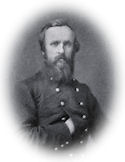
Post image for “…within twenty-two miles of Knoxville.”–Richard R. Hancock, Second Tennessee Cavalry.

Saturday, 14th.— In the saddle early, we again took up the line of march eastward. Passing through Wartburg, we soon arrived at Camp Schuyler, where we found the other two companies, A and D. They had been sent to this camp from Huntsville, the 25th of August. These two companies, having been previously notified to be ready to move, now fell in, and the whole battalion continued moving eastward.

We camped for the night in Anderson County, within twenty-two miles of Knoxville.

London, September 14, 1861

Your last letter containing principally suggestions on the cotton matter, reached me this week. Also a bundle of newspapers. At present I am busy in another direction, so that I can’t yet take up the subject you recommend, but when my immediate bubbles have burst, or have expanded brilliantly, I mean to see what I can do here. Yet I confess I do not promise myself much from the effort. The main principles which you aim at demonstrating, that the American monopoly of cotton is in fact a curse both to America and to Great Britain, and its destruction might be made the cause of infinite blessings to the whole range of countries under the torrid zone, this principle is and has always been an axiom here. It needs no proof, for the cotton-merchants themselves are the most earnest in asserting it. The real difficulty with regard to cotton does not lie there. It is never the hope of a future good, however great, that actuates people, when they have immediate evils such as this want of cotton will produce right before their eyes. Nor should I answer any real question by proving that in two years the world will be infinitely benefitted by our war, when what they alone ask is whether meanwhile England will not be ruined. My own belief is that she will be ruined. This next winter will, I fear, be a dreadful one in this country in any case, nor will it be bettered if they make war on us. It is not as if the cotton manufacture alone suffered, but the tariff and the war have between them cut off the whole American trade, export and import, and the consequence has been a very bad season, with a prospect of frightful pressure in the winter. Whole counties will have to be supported by subscription.


This is my idea of the real cotton problem in this country. I have no doubt that the suffering interests will make a violent push to solve it by urging the Government to attack our blockade. But that is merely the last struggle of a drowning man. The Government will not do it, I think, and most Englishmen speak of the idea as preposterous. If they did, it would only complicate matters still more and I doubt whether even then they got their cotton. The winter over, the new era will dawn on us; that cursed monopoly will be broken and with it the whole power of the South; the slave-trade will then be ended and slavery with it, for the negro will be of no use; and we may expect sunnier days and renewed prosperity. This is the only view that I could advocate, and this, a generally acknowledged truth, is at best but small comfort to a starving people.


Meanwhile we are getting on in these parts. Lord Russell has just answered the Chief’s Note, by refusing to dismiss Bunch; acknowledging that he acted under instructions; justifying the step as one which implied nothing and in which even pirates might be admitted to join (i.e. the neutral flag matter); accepting the responsibility for its acts and the consequences; but at the same time declaring that the Ministry has no present intention of recognizing the Southerners, or of leaving their old position.

Of course Seward will revoke Bunch’s exequatur, but that need make no trouble. But it is by no means so clear what also may result from this. By a pure accident it was discovered that the British Government were secretly entering into connections with the insurgents, and they are now compelled to acknowledge that they have really been acting behind our backs. This is no pleasant acknowledgment to make, for evidently secrecy was their object, and the implication is direct against their good faith. They feel that they have been found out, and this for an Englishman is anything but pleasant. The affair will hardly end here.

I have been lately hunting up the newspapers. The other day I called on the editors of the Spectator and had a long talk with them. I mean to call on or write to Hughes, the Tom Brown man, who has vigorously taken our side. The Star too we are in with. Miss Martineau writes for the News and she is an invalid, not to be seen. I may very likely myself turn up some of these days in the lists. . . .

Birch River, Between Summersville and
Sutton, Virginia, September 14, 1861.

Dear Uncle : — I have no time to write letters. We are getting on finely. Our battle on the 10th at Gauley River, you have no doubt heard all about. Nothing but night prevented our getting Floyd and his whole army. As it was, we entirely demoralized them; got all their camp equipage even to their swords, flag, and trunks (one of the best of which the general gave me). I had an important and laborious part assigned me. An independent command of four companies to be the extreme left of our attacking column. We worked down and up a steep rocky mountain covered with a laurel thicket. I got close enough just at dark to get two men wounded and four others struck in their garments.

This is not a dangerous business; after tremendous firing of cannon and musketry, we lost only thirteen killed, about fifteen badly wounded and fifty or sixty slightly wounded. The enemy are no match for us in fair fighting. They feel it and so do our men. We marched rapidly seventeen miles, reaching their vicinity at 2:30 or 3 P. M. We immediately were formed and went at them. They were evidently appalled. I think not many were killed. Governor Floyd was wounded slightly.

On yesterday morning I was sent on a circuitous march to head off parties hastening to join Wise or Floyd. Four companies of my regiment, two companies of Colonel Ewing’s, and a squadron of Chicago cavalry are under my command. We marched up Gauley River to Hughes Ferry. There we were fired on by a lot of guerrillas concealed in rocks. It was more dangerous than the battle. Three of us who were mounted and in advance were decidedly objects of attention, but fortunately none were hit. We chased them off, getting only one.

I am now here relieving a small party of our folks who are entrenched and who have been in constant dread of an attack. We are without tents and expect to return to the battle-ground in six days.

In the battle only one commissioned officer was killed, Colonel Lowe. One acquaintance of yours, Stephen McGroarty, an Irish Democratic orator, formerly of Toledo, now of Cincinnati (a captain), was shot through the body, but kept on his feet until the fight was stopped by the darkness. He will recover. One of my comforts is that my horse has come out in better plight than ever. I think he never looked so well and spirited as he did today as we marched over Birch Mountain.

If no disaster overtakes us at Washington, we shall soon see signs of yielding by the South. The letters, diaries, etc., etc., found in Floyd’s trunks and desks, show that their situation is desperate. Thousands are in their army who are heartily sick of the whole business.

We retook a large part of the plunder taken from Colonel Tyler as well as prisoners. The prisoners had been well treated, very. The young men in Floyd’s army of the upper class are kind-hearted, good-natured fellows, who are [as] unfit as possible for the business they are in. They have courage but no endurance, enterprise, or energy. The lower class are cowardly, cunning, and lazy. The height of their ambition is to shoot a Yankee from some place of safety.

My regards to all. Send this to Mother and Lucy.

Sincerely,

R. B. Hayes.

P. S. — The enclosed picture of a lieutenant in the army we routed is for Laura.

S. Birchard.

September 14.—Last night an expedition from the United States steam frigate Colorado, under the command of Lieutenant John H. Russell, cut out the rebel privateer Judah, from under the guns of the forts at Pensacola Navy Yard, and totally destroyed her by fire. The National loss was three killed and fifteen wounded.— (Doc. 49.)

—The Philadelphia Inquirer, of this morning says: “It is understood that the property of Robert Tyler, a traitor, was seized yesterday at Bristol, Pa., by order of the Government of the United States. This property includes real estate and household goods. Robert Tyler first appeared before the public of Pennsylvania about twenty years ago, in the character of a lawyer without clients, and with no very good references as to his past career, he married the daughter of Thomas Cooper, the celebrated actor, having become acquainted with her at Bristol, the residence of her father. He took up his abode at that place during the summer months, and became an active orator in behalf of the Irish cause, in the excitement which preceded the riots of 1844. He won many friends by his oratorical powers. He was afterward appointed Clerk of the Supreme Court of Pennsylvania, a position worth ten or twelve thousand dollars per annum. While thus in the service of the Government, he lost no opportunity, during the early stages of this rebellion, to uphold the South and denounce the North. His denunciations became so violent, that immediately after the fall of Sumter he was obliged to leave the city, and now holds a subordinate position in the Treasury Department of the so-called Confederate Government at Richmond. His treason has availed him but little.”

—Considerable excitement was created at Kansas City, Mo., to-day, by the appearance of rebel scouts. A company of twenty mounted men was sent over from Kansas City in the morning, who discovered a rebel camp of from two hundred to three hundred men, some six miles distant from the Missouri River. An additional force was detailed in the afternoon, who killed seven of the rebels and took six prisoners, with the same number of horses, and destroyed their barracks. Only one of the Union men was wounded.—N. Y. Herald, September 21.

—A Detachment of Col. Young’s Cavalry, under Captain White, arrested three spies, today, near Port Tobacco, Maryland, and brought them to Washington, D. C. On their persons was found topographic and other information designed for transmission to the enemy.—N. Y. Times, September 18.

September 13.—In Western Virginia the rebels commenced to advance yesterday morning on both pikes toward Elkwater and Cheat Mountain summit. They succeeded in surrounding the fort on the summit and cut the telegraph wire. They continued to advance on Elkwater until within two miles of the National troops, when a few shells from Loomis’s battery dispersed them. Skirmishing was kept up all night, and this morning two regiments were sent to cut their way through to the summit. They succeeded in this expedition, the rebels retreating in all directions.

Two rebel officers who were spying around the camp at Elkwater this morning were surprised by our pickets and shot. The body of one of them was brought into camp, and proved to be that of Col. John A. Washington, of Mount Vernon, Virginia.—(Doc. 48.)

—General Sturgis of the National army with a regiment of infantry, two companies of cavalry, and one of artillery, took possession of St. Joseph’s, Missouri.

—The Second regiment of Delaware Militia, left Wilmington for Cambridge, Maryland.— Baltimore American, September 16.

—A Fight took place at Booneville, Mo., this morning between a party of rebels under Colonel Brown and the Home Guards under Captain Eppstein, which terminated in the victory of the latter. The Home Guards held their intrenchments against the rebels, one thousand strong, who were driven back with a loss of twelve killed and thirty wounded. The Home Guards lost only one killed and four wounded. Among the killed of the rebels were Col. Brown and Capt. Brown.—National Intelligencer, September 17.

—A Union meeting was held at Fairfield, Connecticut, this evening, at which patriotic addresses were made by Rev. Dr. Osgood of New York, Rev. Mr. Stimson of Fairfield, and John H. Glover. The following resolutions offered by Dr. Osgood were unanimously adopted:

Resolved, That the great practical question now at issue before the people of this country lies between supporting or destroying the Government of the United States, and that all good citizens and patriots are called to rally to its support, without distinction of party, and do all in their power to put down the rebellion and treason that are now in arms against our rulers, our Constitution, and our laws.

Resolved, That we appoint delegates, without distinction of party, to represent the town of Fairfield at the great Union meeting at Bridgeport to-morrow.

—The Provost-marshal of Baltimore, Md., this morning, before break of day, arrested Mayor Brown, Ross Winans, Charles H. Pitts, Lawrence Sangster, S. T. Wallis, and T. P. Scott, members of the Maryland Legislature, F. H. Howard, editor of the Exchange, and delivered them at Fort McHenry. He also arrested Messrs. Dennison, Quinlan, and Dr. Lynch, members of the Legislature from Baltimore County; Henry M. Warfield, Dr. J. Hansom, Thomas and John C. Brune, members of the Legislature from Baltimore City; also Thomas J. Hall, Jr., editor of the Baltimore South. All the arrests were made pursuant to orders from the United States War Department.—N. Y. Evening Post, September 13.

—The rebels appeared to-day in large numbers in Shepherdstown, Virginia, and commenced firing on the Unionists on the Maryland side of the Potomac.

Several cannon were brought out. When the Unionists, under command of Colonel Anderson, brought two of their guns to bear upon them from London Hill, opposite the town, and opened with ball and grape they soon silenced the rebel battery and destroyed several houses. A flag of truce was sent from the rebels, proposing a cessation of firing.—N. Y. Herald, Sept. 10.

—This afternoon the rebel steamer Yorktown ran within three miles of Newport News, Va., and opened fire upon the camp and blockading squadron, which consisted of the Savannah, Cumberland, and the gunboat Louisiana. She fired twenty-five shells, one of which exploded near the Savannah. Other shells fell considerably short. The guns of the Cumberland and Savannah could not reach the Yorktown, but a couple of shells from Sawyer’s gun on shore caused her to retire. One of the shells exploded three-fourths of a mile beyond the steamer.

About four o’clock a party sent out to cut fuel encountered two hundred Confederate Cavalry and an equal number of Infantry about three miles from Newport News. The teamsters left their wagons and galloped to give the alarm, but no further demonstration was made, and the wagons were afterward brought into camp.—National Intelligencer, September 16.

Camp Norfolk, September 12, 1861.

Agreeable to our very short notice we packed our knapsacks, put three days rations in our haversacks, were carried across the river to Bird’s Point in two boats (our whole regiment), and just at dark started out through the woods. ‘Twas a confounded, dark, dirty, narrow road, and I was right glad when the word “halt” was given and preparations made for bunking in for the night. The next morning we started again along down the river, the gunboats, two of them, keeping a couple of miles ahead of us. We started with a couple of pieces of field artillery, but the road got so bad that we had to leave it after about three miles. We advanced about five miles when the gunboats, which were about a mile and one-half ahead of us, opened mouth, and thunder! what a rumpus they did keep up. We could not see them for the thick brush between us and the river, but we thought sure our little fight had come at last. We were drawn up in the front yard of some secesher’s deserted house (a fine one), and the colonel with a small party went ahead to reconnoiter. While they were gone we ate our dinners, and made ready for the expected march and fight. But the colonel on his return, scooted us back to our morning’s starting place. Whew, but that was a sweating old march. About an hour after we started back, 15 of our cavalry scouts were run in, through the place where we took dinner, by 60 or 70 secesh cavalry. Three or four were wounded and our boys say that they killed several of the Rebels. The gunboats came up in the p.m. reported fighting the “Yankee” and two land batteries, one of which was but three and one half miles below us (and some say but one and one half miles) and had 16 guns. They crippled the dam’d “Yankee” although the latter carries 84’s, while ours hadn’t but 64’s. Our boats were not touched. A deserter came up from Columbus yesterday afternoon and says that our boats killed 200 in the fight. (I believe he is a liar and a spy). We have had it sweet the last day and two nights. Rained like sixty and we have no tents. There is no shelter but a few trees and you know they amount to nothing in heavy rains. It is amusing to see the boys figure at night for dry beds. Every thing, gates, cordwood, rails, cornstalks, weeds and panels of fence and boards are confiscated, and genius is taxed its utmost to make the sleeping as comfortable as possible. Milo Farewell, Hy. Johnson and myself sleep on an armful of cornstalks thrown on a floor of rails. With nothing between us and the clouds. Sid., (Sidney Stockdale) and Theo. each had three sticks of four foot cord wood for a couch, with their feet resting in a mudpuddle. We are further out than any other regiment now. I tell you I like this, and feel like knocking down any man that I hear grumble. None of our boys do that I hear of. We will have our tents here this p.m. though I would rather be without them; they are so much trouble. I know we will have no dirtier time than we have had the last two days, and until it gets cold I would rather not have tents if it is the same all the time. I fell in love with Paducah while I was there, and I think I will settle there when the war is over. I never saw so many pretty women in rtiy life. All fat, smooth-skinned small boned, highbred looking women. They hollered “Hurrah for Jeff” at us, some of them, but that’s all right. I could write until to-rnorrow morning about Paducah, but I must go and confiscate some corn for dinner.

12th.—Part of the truth relating to the story of yesterday’s fight has come to light. The fact is, these “great fights,” “great victories,” “great number of prisoners,” “great numbers killed,” are the greatest humbugs of the times, and as a specimen I put on record here the stories with the facts of yesterday. At 8 o’clock A. M. a body of soldiers passed up the turnpike. They were followed by batteries of artillery, and a few companies of cavalry. What does all this mean? was asked. And everyone wishing to be wise, an answer was soon manufactured satisfactory “to all concerned.” “Four thousand infantry and artillery had passed (Lie No. 1, there were only 2,000), to take a fort about seven miles off.” (Lie No. 2, there was no fort near.) About 12 o’clock we began to hear frequent reports of artillery, and by 2 P. M. the firing was brisk, and we could see the smoke of the shells exploding in the air from four to five miles away. About 3 o’clock we got orders to march on double-quick to the support of our troops, who were said to be retreating. (Truth No. 1.) Off we went on a full run, all vieing to see who could get there first. We had gone about a mile, when we were told to push forward, that one of our regiments was surrounded and being cut to pieces. (Lie No. 3.) On we went for another half mile, when “Halt, the rebels are retreating,” (lie No. 4,) and in a few minutes, “We must change our position, for the rebels were flanking us.” (Lie No. 5.) A few minutes later, our officers ordered us back to camp; we had gained a great victory. (Lie No. 6.)

Now these are the generalities of statements of the “great victory” of yesterday, which are being proclaimed to-day loud-mouthed. Let me put here the particulars, that in future when I hear of our great victories, I may refer to these, and draw some conclusion as to the probability of their truth.

In the morning, about two thousand men from Gen. Smith’s division, with a few pieces of artillery, passed up the pike to reconnoitre, in other words to examine the country and to ascertain what they could of the whereabouts of the enemy. They made their reconnoissance and started for camp. When they had marched about a quarter of a mile on their return, the rebels opened fire on them from a masked battery. Our artillery replied quickly and with spirit, our shot and shell mowing down hazels, oak grubs and saplings. These’ were all the enemy they saw. But above the heavy brush, in which the enemy’s batteries were masked, the smoke from their guns could be distinctly seen, and into this brush we fired without knowing the effects of our shot, though it is said that we silenced their battery. After about an hour thus spent our force retired, with the loss of some twenty or thirty men in killed and wounded, without capturing the battery which they had silenced, or without taking time to bring away even our own killed and wounded! What a “glorious victory!” So glorious that we must rush back to camp to announce it, leaving the enemy to look after our killed and wounded! A few such victories would ruin us. Gen. McClellan visited us to-day; made a speech, and promised us the luxury of a fight soon unless the rebels run. The appreciation of his kind promise was manifested by most unmistakable signs of joy.

Lenox, Sept. 12, 1861.

To-day has been very beautiful. Such floating clouds and corresponding shadows, such liquid blue on the distant hills and such gold green on the nearer meadows! We saw it to advantage at sunset, from Mrs. Sedgwick’s house. Only Miss Catherine was at home, and we saw her in her own little parlor, hung with photographs and engravings and one or two old choice portraits. But the picture from the window was best of all. . . . We had a charming drive one day with the Warners (of the “Wide, Wide World”) to Tyringham, the Shaker settlement below Lee, which name reminds me of the story we heard of the loyalty of that little village. It had already sent its full proportion to the army. But that dreadful night when the news of disaster at Bull Run came, the baker told the Warners “Nobody couldn’t eat nothin’ and nobody couldn’t sleep none.” That very midnight sixty men of Lee started in the cars for New York and enlisted for the war. … I had a chance of seeing Mrs. Kemble to-day as she drove by, silks and lace and birds of paradise, several I should think by the size. She is the great woman of the place here. Her daughter, Mrs. Wistar, was with her—strikingly like her, and yet young, fair, simple and beautiful. She came back yesterday from New York with Julia Butler the sister. They had been down to see their father in Fort Lafayette.

.  .  .  .  .  .

In consequence of complaints made of the treatment of the political prisoners, Dr. Bellows, the President of the Sanitary Commission, inspected Fort Lafayette and reported to the Secretary of State Oct. 31, 1861 —” Every man has his own cot, plenty of blankets and abundance of food. They were in better condition in all respects than our own men in the field. They have many acres for play-ground. They complained of nothing though I gave them abundant opportunity.”

.  .  .  .  .  .

Sarah C. Woolsey, writing from Lenox, says;

. . . I was highly diverted by a story Mrs. Kane told Jenny Yardley of Mrs. Kemble. She was playing whist the other night with Mrs. Ellery Sedgwick as a partner, and became really furious because Mrs. Sedgwick played so badly. Finally, just as her rage had reached its height, Mrs. Sedgwick remarked, “I do not know what is the matter with me! somehow I can’t play well, or talk straight, or do anything right this evening, and it is strange, for I certainly do know how to play whist.” Whereupon the majestic Fanny exploded: “Well, I am glad to hear that. It is a comfort to know that one has for a partner an inattentive genius and not a born fool!”

Mrs. Kemble was most friendly with the various members of the family, though unexpected at times, as for instance when she remarked to Harry Yardley, while Lilly Woolsey was his guest, “Mr. Yardley, you have a very handsome young woman at your house; I do not refer to Mrs. Yardley.” However, the people in Lenox seemed used to these little bursts. They never resented them and only made a good story of it all, which they enjoyed.

September 12.—Captain Kid’s Cavalry company from New Creek, and a company of Infantry from Fort Pendleton, made a descent upon a camp of secessionists at Petersburg, Hardy County, Virginia. One shot from a twelve-pounder scattered the rebels like chaff. Several of them were killed and wounded and a number of prisoners taken. The camp and all its equipage destroyed. Three six-horse teams, twenty horses, six thousand bushels of corn, and a lot of guns and uniforms were captured. The expedition was entirely successful and gallantly conducted.

—A skirmish occurred at Black River, twelve or fifteen miles southwest of Ironton, Mo., between three companies of Indiana Cavalry under Major Gavitt, and a body of secessionists under the notorious Ben. Talbot, in which five of the rebels were killed and four taken prisoners, and thirty-five horses and a quantity of arms captured. The balance scattered in all directions, and being familiar with the county, eluded pursuit.

—The anniversary of the battle of Baltimore was celebrated in that city to-day with more than ordinary demonstrations on the part of the loyal citizens. The National flag was displayed from the public buildings, hotels, and all loyal newspaper offices, numerous private houses, shipping, etc., and the various camps. Gen. Dix issued an order for firing salutes and dress parades in honor of the day at the various camps at three o’clock. The New York Fifth regiment, Zouaves, made a grand dress parade from their fortified camps on Federal Hill through the city, passing around the different monuments. The Association of Old Defenders made their usual parade with their old flag, which they have not deserted as yet. The only demonstration of a character contrary to the patriotic spirit of the day was in the manner in which a few secession storekeepers arranged their goods to indicate their Southern principles, such as hanging out rolls of red and white flannel, or, as in one instance, displaying three flannel shirts—two red ones with a white one in the centre.—N. Y. Tribune, Sept. 13.

—The city authorities of Louisville, Ky., seized a large number of the concealed arms recently in possession of the State Guard.— N. Y. Tribune, September 13.

—General Buckner, at Russellville, Kentucky, issued an address to the people of that State, calling upon them to rally for their own defence against the usurpations of Abraham Lincoln and the “insane despotism of Puritanical New England.” The address abounds in misrepresentation, as to the policy of the National Government.—(Doc. 44.)

—A meeting of prominent citizens was held at the Astor House, New York, with a view to “organize some plan to advance the movement for the abolition of slavery.”—N. Y. Times, September 13.

—The following despatch was received tonight at the head-quarters of the Army at Washington, D. C.:

St. Louis, September 12, 1861. Col. E. D. Townsend, Assistant Adjutant-Gen.: The report of Gen. Pope to-day from Hunneville, says he made night marches on Green last Sunday, who, however, got notice of his approach, but was successful in completing the dispersion of three thousand rebel forces, leaving behind them much baggage, provisions, and forage; also the public property seized by Green at Shelberne. Gen. Pope’s infantry was too much fatigued to pursue. The horsemen, however, followed in pursuit ten or fifteen miles, until the enemy scattered. The railroad east of Brookfall is open, and no more secession camps will be made within twenty miles. Gen. Grant telegraphs that the first gun is in position at Fort Holt, Kentucky.

J. C. Fremont,

Major-General Commanding.

—The Legislature of Kentucky passed a series of resolutions, authorizing the governor to call out the military force of that State to expel and drive out the Southern invaders.— (Doc. 45.)

—A detachment of three hundred men from the Fourteenth Indiana, and Twenty-fourth and Twenty-fifth Ohio regiments, dispersed three Tennessee regiments under General Anderson to-day, on the west side of Cheat Mountain, Va., completely routing them, killing eighty and obtaining most of their equipments. The National loss was eight killed.—N. Y. Herald, Sept. 17.

—Two slaves, the property of Thomas L. Snead, a secessionist of St. Louis, Missouri, were manumitted this day in accordance with, the proclamation of General Fremont of August 30th.—(Doc. 46.)

—A resolution passed the Board of Aldermen of Louisville, Ky., providing for the appointment of a committee from both boards of the General Council with instructions to inquire into the loyalty to the Union of the members of that department of the city government.— Louisville Journal, September 13.

—An order was issued prohibiting the carrying of the Baltimore Exchange in the United States mails. It is the worst secession sheet in America, and ought to have been stopped long before the Journal of Commerce and News were touched.—N. Y. World, September 13.

September 11th.—A soft-voiced, round-faced, rather good-looking young man, with downy moustache, came to my room, and introduced himself this morning as Mr. H. H. Scott, formerly of Her Majesty’s 57th Regiment. “Don’t you remember me? I often met you at Cathcart’s Hill. I had a big dog, if you remember, which used to be about the store belonging to our camp.” And so he rattled on, talking of old Street and young Jones with immense volubility, and telling me how he had gone out to India with his regiment, had married, lost his wife, and was now travelling for the benefit of his health and to see the country. All the time I was trying to remember his face, but in vain. At last came the purport of his visit. He had been taken ill at Baltimore, and was obliged to stop at an hotel, which had cost him more than he had anticipated; he had just received a letter from his father, which required his immediate return, and he had telegraphed to New York to secure his place in the next steamer. Meantime, he was out of money, and required a small loan to enable him to go back and prepare for his journey, and of course he would send me the money the moment he arrived in New York. I wrote a cheque for the amount he named, with which Lieutenant or Captain Scott departed; and my suspicions were rather aroused by seeing him beckon a remarkably ill-favoured person at the other side of the way, who crossed over and inspected the little slip of paper held out for his approbation, and then, taking his friend under the arm, walked off rapidly towards the bank.

The papers still continue to abuse me fante de mieux; there are essays written about me; I am threatened with several farces; I have been lectured upon at Willard’s by a professor of rhetoric; and I am a stock subject with the leaden penny funny journals, for articles and caricatures. Yesterday I was abused on the ground that I spoke badly of those who treated me hospitably. The man who wrote the words knew they were false, because I have been most careful in my correspondence to avoid anything of the kind. A favourite accusation, indeed, which Americans make against foreigners is, “that they have abused our hospitality,” which oftentimes consists in permitting them to live in the country at all at their own expense, paying their way at hotels and elsewhere, without the smallest suspicion that they were receiving any hospitality whatever.

To-day, for instance, there comes a lively corporal of artillery, John Robinson, who quotes Sismondi, Guizot, and others, to prove that I am the worst man in the world; but his fiercest invectives are directed against me on the ground that I speak well of those people who give me dinners; the fact being, since I came to America, that I have given at least as many dinners to Americans as I have received from them.

Just as I was sitting down to my desk for the remainder of the day, a sound caught my ear which, repeated again and again, could not be mistaken by accustomed organs, and placing my face close to the windows, I perceived the glass vibrate to the distant discharge of cannon, which, evidently, did not proceed from a review or a salute. Unhappy man that I am! here is Walker lame, and my other horse carried off by the West-country captain. However, the sounds were so close that in a few moments I was driving off towards the Chain Bridge, taking the upper road, as that by the canal has become a sea of mud filled with deep holes.

In the windows, on the house-tops, even to the ridges partially overlooking Virginia, people were standing in high excitement, watching the faint puffs of, smoke which rose at intervals above the tree-tops, and at every report a murmur—exclamations of “There, do you hear that?”—ran through the crowd. The driver, as excited as any one else, urged his horses at full speed, and we arrived at the Chain Bridge just as General McCall—a white haired, rather military-looking old man—appeared at the head of his column, hurrying down to the Chain Bridge from the Maryland side, to reinforce Smith, who was said to be heavily engaged with the enemy. But by this time the firing had ceased, and just as the artillery of the General’s column commenced defiling through the mud, into which the guns sank to the naves of the wheels, the head of another column appeared, entering the bridge from the Virginia side with loud cheers, which were taken up again and again. The carriage was halted to allow the 2nd Wisconsin to pass; and a more broken-down, white-faced, sick, and weakly set of poor wretches I never beheld. The heavy rains had washed the very life out of them; their clothing was in rags, their shoes were broken, and multitudes were foot-sore. They cheered, nevertheless, or whooped, and there was a tremendous clatter of tongues in the ranks concerning their victory; but, as the men’s faces and hands were not blackened by powder, they could have seen little of the engagement. Captain Poe came along with dispatches for General McClellan, and gave me a correct account of the affair.

All this noise and firing and excitement, I found, simply arose out of a reconnaissance made towards Lewinsville, by Smith and a part of his brigade, to beat up the enemy’s position, and enable the topographical engineers to procure some information respecting the country. The Confederates worked down upon their left flank with artillery, which they got into position at an easy range without being observed, intending, no doubt, to cut off their retreat and capture or destroy the whole force; but, fortunately for the reconnoitring party, the impatience of their enemies led them to open fire too soon. The Federals got their guns into position also, and covered their retreat, whilst reinforcements poured out of camp to their assistance, “and I doubt not,” said Poe, “but that they will have an encounter of a tremendous scalping match in all the papers to-morrow, although we have only six or seven men killed, and twelve wounded.” As we approached Washington the citizens, as they are called, were waving Federal banners out of the windows and rejoicing in a great victory; at least, the inhabitants of the inferior sort of houses. Respectability in Washington means Secession.

Mr. Monson told me that my distressed young British subject, Captain Scott, had called on him at the Legation early this morning for the little pecuniary help which had been, I fear, wisely refused there, and which was granted by me. The States have become, indeed, more than ever the cloacina gentium, and Great Britain contributes its full quota to the stream.

Thus time passes away in expectation of some onward movement, or desperate attack, or important strategical movements; and night comes to reassemble a few friends, Americans and English, at my rooms or elsewhere, to talk over the disappointed hopes of the day, to speculate on the future, to chide each dull delay, and to part with a hope that to-morrow would be more lively than to-day. Major-General Bell, who commanded the Royals in the Crimea, and who has passed some half century in active service, turned up in Washington, and has been courteously received by the American authorities. He joined to-night one of our small reunions, and was infinitely puzzled to detect the lines which separated one man’s country and opinions from those of the other.