Following the American Civil War Sesquicentennial with day by day writings of the time, currently 1863.

The American Civil War

September 18.—The Louisville Courier, having been found to be an advocate of treasonable hostility to the Government and authorities of the United States, -was excluded from the mails and post-offices of the United States until further orders.—Post Office Order.

The Seventh regiment of Connecticut Volunteers, numbering one thousand and seventy-two men left New Haven for the seat of war near Washington. The regiment is commanded by Colonel A. A. Terry.—N. Y. Commercial Advertiser, Sept. 19.

A correspondent Washington says that the Government has just discovered that the rebels are carrying on a contraband trade between Worcester County, Maryland, and Virginia. Large supplies of army stores have been transported to the rebels’ lines by this route. The necessary measures have been taken to stop the traffic.—A regiment has just passed down Pennsylvania avenue, headed by a soldier who 1ost a leg at the battle of Stone Bridge. He carried his musket strapped to his back. The spectacle excited the greatest enthusiasm among our citizens.

—The new gunboat Sagamore was launched to-day from Sampson’s yard, East Boston, Mass. Her keel was laid sixty days ago.—N. Y. Herald, Sept. 19.

—Yesterday a skirmish took place between the Home Guard and some of Gen. Zollicoffer’s men at Barboursville, Ky., without resulting in any damage. It was resumed to-day, when seven rebels and one of their horses were killed. One of the Home Guards received six wounds, and another was taken prisoner. The Home Guards numbered thirty-seven, and the rebels three hundred.—Two miles of the Covington and Lexington Railroad were torn up yesterday near Cyantheana.

September 17.—A fight took place at Mariatown, Mo., between six hundred Federals under Colonels Montgomery and Johnson and four hundred rebels, in which the latter were completely routed with a loss of seven killed, and one hundred horses and all their tents and supplies captured. The Nationals lost two privates killed and six wounded. Col. Johnson, while riding at the head of his command, was pierced by nine balls and instantly killed. Three bullets took effect in his head, two buck-shot in the neck, one bullet in the left shoulder, one in the left thigh, one in the right hand, and one in the left. He died, urging his men to fight for the Stars and Stripes.—Buffalo Courier, September 23.

—The Legislature of Maryland was prevented from organizing at Frederick by the arrest of its clerk and several of the members. During the evening the Union members of the House and Senate met in caucus and resolved that, the action of the Senators present in not assembling having virtually brought the Legislature to an end, they would return to their homes and not attempt again to assemble.

—This evening a train on the Ohio and Mississippi road, containing a portion of Colonel Torchin’s Nineteenth Illinois regiment, while passing over a bridge near Huron, Ind., one hundred and forty-three miles west of Cincinnati, fell through, killing and wounding over one hundred soldiers.—Louisville Courier, September 10.

—A large concourse of citizens from all parts of the State assembled at Hartford, Conn., today, to listen to Hon. D. S. Dickinson and others. General James T. Pratt presided. All the political parties of the State were represented, and places of business were closed during the meeting. Mr. Dickinson’s speech was one of his best efforts, and had a powerful effect. Senator Latham, of California, sent a letter of apology for his absence, full of patriotic spirit. Thomas Francis Meagher sent a despatch as follows: ” I cannot go to Hartford to-day. I go to the war. Talking is over. Fight is the word.” —National Intelligencer, September 20.

—Two fights occurred at Blue Mills Landing, Mo., to-day. The first was between five hundred of the Third Iowa regiment, with one piece of artillery, under Lieutenant-Colonel Scott, and about four thousand rebels. After a desperate struggle of an hour’s duration, in which Scott lost one hundred and twenty killed and wounded and all his horses, he retreated slowly half a mile, dragging his cannon by hand. He subsequently took a position with his howitzer on an eminence, and waited for the enemy to renew the attack. But he was not pursued. Not long afterward Colonel Smith’s command, with four pieces of cannon, approached Blue Mills by another road and engaged and routed the rebels as they were about crossing the Missouri River.—(Doc. 53.)

—The Fifteenth regiment (Elmira Engineers) N. Y. S. V., under the command of Colonel C. B. Stuart of Geneva, left Elmira for the seat of war.—N. Y. Herald, Sept. 22.

—Clement Smyth, the Roman Catholic Bishop of Dubuque, Iowa, in a letter to the Adjutant-General of that State, held the following language: “I ever avoid all matters of a political nature as foreign to my sacred duties, yet in this present hour of trial, when the honer and the happiness of our nation are at stake; when some prejudiced mind may construe my silence into a disrespect for you, whose friendship I highly prize, or into a criminal opposition to our National Government— the Government of the United States, the only one to which I owe fealty—it may not be departing too far from my usual course to say that my feelings and sentiments are for the Union, and though peace is now the darling object of my ambition, yet I would not consent to purchase peace at the sacrifice of principle.”

—At Washington the following order was issued to-day from the War Department:

The commanding officer at Hatteras Inlet, N. C., is hereby authorized to accept the services of such loyal North Carolinians—not to exceed one regiment—as in his neighborhood may volunteer to take up arms for the United States, and to designate regular officers to muster them into the service. The recruits will be organized in the first instance into a battalion or regiment according to numbers. The mustering officer will make timely requisition for arms and other necessary supplies. The commanding officer will, on the recommendation of the volunteers, propose such persons as officers as he may deem suitable, to officer the companies that may, if approved, be commissioned by the President.

L. Thomas, Adj.-Gen.

—The anniversary of Washington’s Farewell Address was celebrated by Cassius M. Clay’s Washington Guards. Professor Amasa McCoy, Secretary of the Guards, delivered an Oration on “The London Times on the Rebellion and the war against the National Constitution.”

—The Continental Guard, Forty-eighth regiment N. Y. S. V., under the command of Colonel James H. Perry, left Fort Hamilton this morning for the seat of war. The regiment numbers about one thousand men, well equipped and armed with Enfield rifles. The uniform is the United States regulation. A considerable number of the men were formerly members of the Seventy-first. About sixty recruits, not yet uniformed, were left in charge of the camp, near Fort Hamilton, under Lieutenant Wallace. Colonel Perry, the commandant of the regiment is well-known as a West Point graduate. N. Y. Evening Post, Sept 17.

September 16th.—It is most agreeable to be removed from all the circumstance without any of the pomp and glory of war. Although there is a tendency in the North, and, for aught I know, in the South, to consider the contest in the same light as one with a foreign enemy, the very battle-cries on both sides indicate a civil war. “The Union for ever”—”States rights “— and “Down with the Abolitionists,” cannot be considered national. McClellan takes no note of time even by its loss, which is all the more strange because he sets great store upon it in his report on the conduct of the war in the Crimea. However, he knows an army cannot be made in two months, and that the larger it is, the more time there is required to harmonize its components. The news from the Far West indicated a probability of some important operations taking place, although my first love—the army of the Potomac—must be returned to. Any way there was the great Western Prairie to be seen, and the people who have been pouring from their plains so many thousands upon the Southern States to assert the liberties of those coloured races whom they will not permit to cross their borders as freemen. Mr. Lincoln, Mr. Blair, and other Abolitionists, are actuated by similar sentiments, and seek to emancipate the slave, and remove from him the protection of his master, in order that they may drive him from the continent altogether, or force him to seek refuge in emigration.

Fairfax C. H., September 16, 1861.

I did not write my regular Sunday letter to you on yesterday. As usual, after breakfast I left the camp on duty, and did not return until dinner, when, very tired, I slept a couple of hours. Very soon I got orders to leave again for a ride of thirteen miles, and did not get back until bedtime. This morning we all left for our new encampment, where all are comfortably quartered.

I received your letter of 9th inst. a few days since. Indeed, Love, the perusal of your letters gives me more pleasure than I ever received from any other source. Should I not be happy to know there is some one in the world who loves me so well and looks with such deep interest to my fate? To be with you again is the wish which lies nearest my heart. But the duty to which my life is now devoted must be met without shrinking. Before the war is done many, I fear, must fall, and I may be one of the number. If so, I am resigned to my fate, and I bequeath to you our dear little boys in the full assurance that you will give to my country in them true and useful citizens. I wish, Love, the prospect were brighter, but indeed I see no hope of a speedy end of this bloody contest.

Norfolk, September 16, 1861.

We are still here at Norfolk and now in camp for we don’t know how long. We got tents the day after the date of my last, and splendid ones they are. They are full 10 feet high and 15 feet across. They each accommodate about 15 men. Since we have been here we have been out scouting three times. The first time we were down the river about five miles. That was the time our gunboats had the fight with the “Yankee” and the land batteries. Two days afterward a body of the enemy’s cavalry came up almost to our camp, and after dinner we were sent out to look them up. We were scooting along through a thick wood when one of our cavalry men came back half scared out of his wits (we had about 20 of the cavalry ahead acting as scouts) and reported a whole mess of men just over a rise of ground ahead of us. Our company was in the van, and the column came into line on us and our cavalry tried to draw the enemy back on our position, but Mr. Enemy “drawed” the other way and again we missed our little fight. Last Saturday we started out again at noon and went down the river 10 miles where we thought sure we’d find secesh, but he had again left. We had 2,000 men this time and 6 pieces of artillery. We had stopped to rest when a cloud of dust was observed rising on our side of the river about four miles from us. Some of the boys had glasses with them and made out the cause to be a body of cavalry. Our right was marched a few hundred yards to the front and placed in line of battle with the left at the river bank and our right extending along an edge of woods and fronting a cornfield and open pass between it and the river. A splendid place (for our side) for a fight. Our gunboat then started down the river, fired at and dispersed one body they saw and then slipped a few shells into Columbus and returned. We were within four or five miles of Columbus where there are (our colonel says) 26,000 troops, and on ground where the secesh were encamped but lately with 16 pieces of artillery. We started back at dusk and got home about 10 o’clock; some of the boys pretty tired. I stand these little trips like a horse and would rather go every day than lay around camp. Yesterday (Sunday) the “Yankee” came up and shelled the woods where we were the day before. She tried to throw some shells into our camp but they didn’t reach us by a mile and a half. One of our gunboats has to lay here all the time or the “Yankee” would make us skedaddle out of this on double quick. Don’t talk about furloughs. They are played out. A dispatch came this last week to Colonel Oglesby that his wife was dying. He went up to Cairo but General McClernand showed him an order from McClellan, vetoing furloughs, no matter for what. So the colonel had to return here. I’d like very much to go home but I’ll enjoy it all the more when this business is finished. The 17th is encamped just opposite us on Island No. 1, but we can’t get to see them. Our boys are in good spirits. Sid. and Sam and Theo. are now all right. Milo Farewell thinks he has the dumb ague. Fred Norcott is sick in Cairo. Charley Cooper is also sick I have heard. I am all right. My office is sergeant, two grades below private. Our company goes out on picket to-night.

September 16.—An expedition from Hatteras Inlet, under the command of Lieutenants Maxwell and Eastman, of the steamer Pawnee, visited Ocracoke Inlet and destroyed Fort Oregon, a fine fortification at that place. The expedition was entirely successful.—(Doc. 51.)

—The gunboat Conestoga captured the steamers V. R. Stephenson and Gazelle, on the Cumberland River, Ky. The Stephenson had fifty tons of iron aboard. The Gazelle was without a cargo.—Louisville Journal, September 19.

—Ship Island, near the mouth of the Mississippi River, was evacuated by the rebels and immediately taken possession of by the National forces.—(Doc. 52.)

—Major French, the commanding officer at Key West, published the following important order; its promulgation caused a vast amount of commotion among the secessionists:

Headquarters U. S. Troops

Key West Florida, September 16, 1861

I. Within ten days from this date all male citizens of the Island of Key West who have taken the oath of allegiance will send their names to these head-quarters to be registered.

II. Within thirty days from this date all the citizens of this island are required to take the oath of allegiance to the United States.

III. At the termination of sixty days all citizens of this island who have failed or refused to take the oath of allegiance to the United States will be removed from Key West. This will also apply to their families and the families of these who have left the island to join the Confederate States.

Wm. H. French,

Brevet-Major U. S. A., Commanding.

—The Washington Grays, Forty-seventh regiment N. Y. S. V., commanded by Colonel Henry Moore, left East New York for the seat of war.—N. Y. Times, September 17.

—There was an interesting ceremony at General Smith’s camp near Washington, this afternoon. Some days ago, General McClellan gave directions that the flags of the Seventy-ninth should be restored to the regiment. This afternoon the regiment marched to the parade-ground of the brigade, for the purpose of receiving the banners, which were escorted to the field by the Third Vermont regiment. The two regiments being drawn up in line, facing each other, the colors were saluted, and then transferred from the Vermont to the Highland regiment. On transferring the banners, General Smith thus addressed them:

Soldiers of the Seventy-ninth: By direction of the Major-General commanding, I restore to your custody the banners of the regiment. Since you have been under my command yon have earned them. I hope that when any opportunity offers you will prove yourselves worthy of them.

The Seventy-ninth then saluted the colors, and a salvo of artillery from Captain Mott’s battery of thirty-two pounders also greeted them. After these ceremonies the troops were reviewed by General Smith, the two regiments warmly cheering each other as they marched from the field.—N. Y. Times, September 17.

—Governor Hicks of Maryland issued his proclamation exhorting the observance of the last Thursday in this month, as appointed by the President of the United States, as a day of fasting, humiliation, and prayer. — Baltimore American, September 18.

—General Price commenced an attack on the intrenchments at Lexington, Mo., commanded by Colonel Mulligan, this morning. The fight lasted all day, and was very severe. General Price assaulted the works, and was repulsed with severe loss.—N. Y. Herald, September 20.

—The Forty-sixth regiment of Pennsylvania Volunteers, Colonel Knipe, left Harrisburg for the seat of war, being the first instalment of the last requisition on Governor Curtin. The regimental colors were presented by Governor Curtin.

The Second Buffalo regiment, under command of Colonel D. D. Bidwell, left for New York.

The Forty-third regiment N. Y. S. V., under the command of Colonel Francis L. Vinton, left Albany to-night for the scat of war. They are a fine body of men, fully equipped and armed. —N. Y. Times, September 17.

—The Provost-marshal’s Police seized over two hundred muskets and a lot of ammunition, to-day, which were found buried in the establishment of Messrs. Egerton & Keys, on North street, at Baltimore, Md. The guns are of Harper’s Ferry manufacture. The Police also seized a lot of muskets at the armory of the Independent Greys, on North High street.—Baltimore American, September 17.

—The Fremont Rifle regiment N. Y. S. V., under the command of Colonel Rudolph Rosa, left their encampment at Turtle Bay Brewery, New York, for the seat of war on the Potomac. —N. Y. Times, September 18.
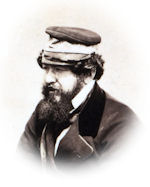
Post image for “General Albert Sidney Johnston assumed command of this department…”–Richard R. Hancock, Second Tennessee Cavalry.

Sunday, 15th.— The battalion1 passed on through Knoxville and encamped about one mile and a half east of town, at Camp Cummings.

On the above date General Albert Sidney Johnston assumed command of this department (No. 2), which embraced the States of Tennessee and Arkansas and that part of Mississippi west of the New Orleans, Jackson and Great Northern and Central Railroad; also the military operations in Kentucky, Missouri, Kansas, and the Indian country immediately west of Missouri and Arkansas, by issuing the following order from department headquarters, at Nashville, Tennessee:

By virtue of special orders, No. 149, of September 10, 1861, from the Adjutant and Inspector General’s office at Richmond, the undersigned assumes command of the military department thereby created.

A. S. Johnston, General

Brigadier-General F. K. Zollicoffer had been in command of the District of East Tennessee since about the first of August, with headquarters at Knoxville.

His brigade was now composed of nine regiments of infantry and four battalions of cavalry….

Churchwell’s Regiment, as well as other portions of Zollicoffer’s Brigade, was totally unarmed. Only a part of his brigade was now at Knoxville, for on the 16th instant Zollicoffer writes thus to A. S. Johnston;

There are probably by this time four regiments at Cumberland Ford [Kentucky] and a fifth at the gap fifteen miles this side. A sixth will probably be moved up by the 21st or 22d.

________

1 As J. J. Odom and I were on the puny list, we stopped to rest and take dinner with a Frenchman, within four miles of Knoxville. The family were great “Rebs,” so it seemed to be with pleasure that they did all they could to make us comfortable.

It so happened that our host was a preacher. Some other French families who lived in the neighborhood had collected there to hear him preach. As some of them did not understand English, he preached in French. I “heard but did not understand ” a single word of that sermon. We had a splendid dinner, and we had now been soldiering long enough to appreciate a good dinner. Among other nice things, a glass of wine of their own make was served to each.

Odom and I went to camp late that afternoon.

15th.—I am alone to-night, and tired enough to lie and sleep for twenty-four hours, did not the scenes around call up associations which banish repose, and yet invite it. In the deep, deep woods, in a deep, deeper valley, with a mountain rising high on either side of me, and the semi-roaring babble of a large mountain brook, leaping over stones and precipices just in front of my lonely tent; the night speaks of the wildness of nature, and carries back my imagination to the times when the red man revelled here in the luxury of his mountain hunt. The song of the catydid talks to me of the rural home of my childhood, while the scream of the screech-owl right over my head awakens mingled feelings of aboriginal wildness, and of the ruins of civilization. The night is still, and over the mountain comes the strain of vocal music, with the accompaniment of a martial band, from more than a mile away, where with a regiment of Vermonters our chaplain is holding religious exercises, and “Dundee’s sacred strain,” mellowed by the distance, is in harmony with all around me. These are my nearest settled neighbors to-night, and so far away that I am outside of all their guards, yet near enough to hear the “Halt! who comes there?” of the picket, as he hails the rock, loosened from above, as it comes rushing down the mountain side. The tattoo of the night drums, too, as it comes rumbling over the mountains, and calls the soldier to his hard, but welcomed bed, awakens in the reflecting mind sad stories of the passions of men; of happy homes, deserted; of families, once united, now separated, perhaps forever; of the once freeman, to whom the dungeon now denies all hope of liberty again; of a country, once a unit, which held the world at bay, now an object of the ridicule or pity of nations which but a few short months before trembled at her power; of reflections which, I fear, must convince that “war is the normal condition of man.” There were threats of an attack on us yesterday and to-day. My hospital was in an exposed position, and my sick must be moved. At dark I commenced moving to a more secure place; selected this beautiful ravine ; got my tents here, but not deeming it best to disturb the sick by moving them in the night, am here alone to take care of my tents and stores. And how beautifully the moon sheds its reflections over this quiet little valley, and brightens, as with myriads of diamonds, the ripplings of the little mountain streams! How deliciously sweet the fresh odor of the clean grass, untainted by the stench of the camp. But hark! I hear at this moment, from Fort Corcoran, “the three guns,” a signal of approaching danger, and in another moment the “long roll” may summon us to scenes of trouble. I am still stubborn in the belief that the enemy is only making a feint, and that we shall have no fight here. The long roll does not call me. The “three guns” must have made a false alarm, and so I will retire and “bid the world good-night.”

September 15th, 1861.—All the troops are not sent to Virginia, the Dixie Yeomen have been incorporated into the Fifth Florida Regiment and they have gone to Palatka to be drilled. So far the troops, which have been sent had been drilling for some time and were considered fit for service but these fresh companies have to learn.

Brother Junius went to Palatka, and we miss him very much but it is not like he was going away off. Palatka is so much nearer than Virginia, and then, too, they are fighting in Virginia. I must tell you my Diary what happened to Buddy. (I forgot, Mother says I must call him Cousin William.) But this is what happened. He has been practising medicine in this county for twelve years and everybody loves and trusts him. When the men composing the Dixie Yeomen came forward to be sworn into the Confederate service, first one man and then another, until nearly all had spoken, said he could not take the oath nor sign the Roster unless Doctor William Bradford would consent to resign and stay at home. Some of these men grew quite eloquent about it. They said they could not leave their wives and children unless the doctor would stay with them. “I should be obliged to desert,” said one man, “if Doctor Bill was not in call, when my home folks got sick.” So after much discussion he consented to resign. I know his mother rejoices in this for she has consumption and is never well. His young wife and baby need him, too, but then so many wives and babies have to suffer. This is a great compliment to our doctor and Father and Mother are delighted. He is their adopted son, you know. They love him as if he was their very own and no brother could be dearer to me.

September 15.—The British brig Mystery, of St. Johns, N. B., was seized by the Surveyor of the port of New York, to-day, under suspicion of having run the blockade at Georgetown, S. C. Letters of instruction and the charter party, found on board, clearly show that there was a plan to land a cargo of ice at that rebel port, but the Consular certificate at Havana proves that the Mystery entered the latter port on the 7th of August, with the identical cargo of ice, and two days afterward cleared for Matanzas, where she received a cargo of sugar, and then sailed for the North, coming into the port of New York.—N. Y. Times, September 17.

—The Second regiment, of Kansas Volunteers, arrived at Leavenworth, from Holla, Mo. —Ohio Statesman, September 21.

—Col. F. P. Blair, Jr., was ordered by the Provost-marshal, at St. Louis, Mo., to report himself under arrest on the general charge of using disrespectful language when alluding to superior officers.—Louisville Journal, Sept. 17.

—About three o’clock this afternoon a force of five hundred rebels attacked a portion of the troops under Col. Geary, stationed about three miles above Harper’s Ferry, on the Potomac. Col. Geary commanded in person, and the fight lasted about three hours. The enemy were driven from every house and breastwork, and no less than seventy-five of them are reported, as killed and wounded. The National loss is one killed and a few slightly wounded. The troops behaved like veterans. Companies B, D, and I, of the Twenty-eighth Pennsylvania regiment, and two companies of the Thirteenth Massachusetts, were engaged in the conflict. During the fight a rebel was seen taking aim at Col. Geary, when the colonel grasped a rifle from a soldier and shot him on the spot.—(Doc. 50.)

—The Thirty-ninth Ohio, Colonel Groesbeck; Third Iowa, Lieutenant-Colonel Scott; Sixteenth Illinois, Colonel Smith, with a force of the Missouri State Militia and Iowa State troops, under Colonels Craynon and Edwards; three hundred regulars and irregular cavalry and six pieces of artillery, under Captain Madison, left St. Joseph and Chillicothe, Mo., in two columns for Lexington, to-day, on their way to reinforce Colonel Mulligan.—N. Y. Herald, September 20.

—This morning the Abbé McMaster, proprietor and editor of the Freeman’s Appeal, a peace organ of New York city, was arrested by the United States Marshal, Mr. Murray, and sent to Fort Lafayette, on a charge of treasonable matter contained in his paper.—N. Y. Herald, September 17.