Following the American Civil War Sesquicentennial with day by day writings of the time, currently 1863.

The American Civil War

(18th) On the day after my arrival the rain fell in torrents. The weather is as uncertain as that of our own isle. The torrid heats at Washington, the other day, were succeeded by bitter cold days; now there is a dense mist, chilly and cheerless, seeming as a sort of strainer for the even down pour that falls through it continuously. The family after breakfast slipped round to the little chapel which forms the extremity of one wing of the house. The coloured people on the estate were already trooping across the lawn and up the avenue from the slave quarters, decently dressed for the most part, having due allowance for the extraordinary choice of colours in their gowns, bonnets, and ribbons, and for the unhappy imitations, on the part of the men, of the attire of their masters. They walked demurely and quietly past the house, and presently the priest, dressed like a French cure, trotted up, and service began. The negro houses were of a much better and more substantial character than those one sees in the south, though not remarkable for cleanliness and good order. Truth to say, they were palaces compared to the huts of Irish labourers, such as might be found, perhaps, on the estates of the colonel’s kinsmen at home. The negroes are far more independent than they are in the south. They are less civil, less obliging, and, although they do not come cringing to shake hands as the field hands on a Louisianian plantation, less servile. They inhabit a small village of brick and wood houses, across the road at the end of the avenue, and in sight of the house. The usual swarms of little children, poultry, pigs, enlivened by goats, embarrassed the steps of the visitor, and the old people, or those who were not finely dressed enough for mass, peered out at the strangers from the glassless windows.

When chapel was over, the boys and girls came up for catechism, and passed in review before the ladies of the house, with whom they were on very good terms. The priest joined us in the verandah when his labours were over, and talked with intelligence of the terrible war which has burst over the land. He has just returned from a tour in the Northern States, and it is his belief the native Americans there will not enlist, but that they will get foreigners to fight their battles. He admitted that slavery was in itself an evil, nay, more, that it was not profitable in Maryland. But what are the landed proprietors to do? The slaves have been bequeathed to them as property by their fathers, with certain obligations to be respected, and duties to be fulfilled. It is impossible to free them, because, at the moment of emancipation, nothing short of the confiscation of all the labour and property of the whites would be required to maintain the negroes, who would certainly refuse to work unless they had their masters’ land as their own. “Where is white labour to be found? Its introduction must be the work of years, and meantime many thousands of slaves, who have a right to protection, would canker the land.

In Maryland they do not breed slaves for the purpose of selling them as they do in Virginia, and yet Colonel Carroll and other gentlemen who regarded the slaves they inherited almost as members of their families, have been stigmatised by abolition orators as slave-breeders and slave-dealers. It was these insults which stung the gentlemen of Maryland and of the other Slave States to the quick, and made them resolve never to yield to the domination of a party which had never ceased to wage war against their institutions and their reputation and honour.

A little knot of friends and relations joined Colonel Carroll at dinner. There are few families in this part of Maryland which have not representatives in the other army across the Potomac; and if Beauregard could but make his appearance, the women alone would give him welcome such as no conqueror ever received in liberated city.
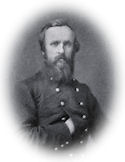
August 18. Sunday.—Last night, about ten or eleven, five companies of Colonel Moor’s (Second German Regiment) Twenty-eighth Regiment arrived from Clarksburg under Lieutenant-Colonel Becker. My partner, L. Markbreit, is sergeant-major. This morning, raining hard. Exciting rumors and news. A Tennessee regiment and force coming through the mountains east of Sutton—a battery of four guns, one thirty-two-pounder!! What an anchor to drag through the hills! Absurd! Danger of all provisions below here with vast stores being taken by the enemy. We are ordered to cook three days’ rations and be ready to move at a moment’s warning, with forty rounds of ammunition. All trains on the route to Sutton are ordered back or to take the way to Buchanan [Buckhannon] via Frenchtown. Eighty thousand rations are ordered to same place from here. All is war. I pack my portmanteau and prepare to move. Oh, for a horse which wouldn’t founder, or get lame, or stumble! At night no order to move yet.

_______

HEADQUARTERS, 23D REG’T, O. V. INF., U. S. A.,

August 17, 1861.

DEAREST:—Your letter to Dr. Joe did me much good. Bless the boys. I love to read your talk about them.

I had just started this letter when a dispatch came from Captain Zimmerman. He had a little brush with some guerrillas in the mountains twenty-five miles from here and had three men wounded. This is the first blood of our regiment shed in fight. He scattered the rascals without difficulty, making some prisoners. We have had a picquet wounded on guard and accidental wounding but no fighting blood-letting before. This is the expedition I expected to go with when I wrote you last, but the accounts of the enemy not justifying the sending of more than one company, I was not sent.

There is a general rising among the Rebels. They rob and murder the Union men, and the latter come to us for help. We meet numbers of most excellent people. We have out all the time from two to six parties of from ten to seventy-five or one hundred men on scouting duty. There are some bloody deeds done in these hills, and not all on one side. We are made happy today by the arrival of Captain McMullen with an excellent company of artillery—four mountain howitzers and complete equipments. They will be exceedingly useful. Lieutenant-Colonel Matthews is nearly one hundred miles south of us with Colonel Tyler and others. The road between here and there is so infested with “bushwhackers” that we have no communication with him except by way of Gallipolis in Ohio. He has been ordered to return here but deems it unsafe to attempt it.

Colonel Scammon has fallen in love with Joe. He says if his qualities were known he would get a high place in the Regular Army medical staff, and brags on him perpetually. We have very few of our own men sick, but numbers in the hospital of other regiments.

My new horse doesn’t turn out any tougher than the other. But Captain McMullen says he has one which I am to try tonight. I shall get a “Webby” that can stand hard work and poor fare one of these days.

How about the pants? If they are reasonably good blue, put a light blue stripe down the outside seam and send them to me when you have a chance. I don’t care about the color. The blue stripe is enough uniform for this latitude. Hard service for duds. I am well supplied—rather too much of most things.

August I8. Sunday P.M.—Since writing the above we have received word that the enemy in force is coming towards us through the mountains to the southeast, and have been ordered to prepare three days’ rations and to be ready to march at a moment’s notice to attack the enemy. I am all ready. My little knapsack contains a flannel shirt, one of those you gave me, two pairs of socks, a pair of drawers, a towel, the what-you-may-call-it you made for me to hold scissors, etc., etc. This is enough. We are to go without tents or cooking utensils. A part of Colonel Moor’s Second German Regiment are to go with us. Markbreit is among them. They reached here last night.

It will be a stirring time if we go, and the result of it all by no means clear. I feel no apprehension—no presentiment of evil, but at any rate you know how I love you and the dear boys and Grandma and all will take care that I am not forgotten. You will know by telegraph long before this reaches you what comes of the anticipated movements. I suspect we are misinformed. At any rate, good-bye, darling. Kisses for all.

Affectionately,

R.

MRS. HAYES.

August 18th.—Found it quite exciting to have a spy drinking his tea with us—perhaps because I knew his profession. I did not like his face. He is said to have a scheme by which Washington will fall into our hands like an overripe peach.

Mr. Barnwell urges Mr. Chesnut to remain in the Senate. There are so many generals, or men anxious to be. He says Mr. Chesnut can do his country most good by wise counsels where they are most needed. I do not say to the contrary; I dare not throw my influence on the army side, for if anything happened!

Mr. Miles told us last night that he had another letter from General Beauregard. The General wants to know if Mr. Miles has delivered his message to Colonel Kershaw. Mr. Miles says he has not done so; neither does he mean to do it. They must settle these matters of veracity according to their own military etiquette. He is a civilian once more. It is a foolish wrangle. Colonel Kershaw ought to have reported to his commander-in-chief, and not made an independent report and published it. He meant no harm. He is not yet used to the fine ways of war.

The New York Tribune is so unfair. It began by howling to get rid of us: we were so wicked. Now that we are so willing to leave them to their overrighteous self-consciousness, they cry: “Crush our enemy, or they will subjugate us.” The idea that we want to invade or subjugate anybody; we would be only too grateful to be left alone.  We ask no more of gods or men.

Went to the hospital with a carriage load of peaches and grapes. Made glad the hearts of some men thereby. When my supplies gave out, those who had none looked so wistfully as I passed out that I made a second raid on the market. Those eyes sunk in cavernous depths and following me from bed to bed haunt me.

Wilmot de Saussure, harrowed my soul by an account of a recent death by drowning on the beach at Sullivan’s Island. Mr. Porcher, who was trying to save his sister’s life, lost his own and his child’s. People seem to die out of the army quite as much as in it.

Mrs. Randolph presided in all her beautiful majesty at an aid association. The ladies were old, and all wanted their own way. They were cross-grained and contradictory, and the blood mounted rebelliously into Mrs. Randolph’s clear-cut cheeks, but she held her own with dignity and grace. One of the causes of disturbance was that Mrs. Randolph proposed to divide everything sent on equally with the Yankee wounded and sick prisoners. Some were enthusiastic from a Christian point of view; some shrieked in wrath at the bare idea of putting our noble soldiers on a par with Yankees, living, dying, or dead. Fierce dames were some of them, august, severe matrons, who evidently had not been accustomed to hear the other side of any question from anybody, and just old enough to find the last pleasure in life to reside in power—the power to make their claws felt.

August 18.—The privateer Jeff. Davis was wrecked this evening on the St. Augustine (Fla.) bar. The Charleston Mercury gives though following particulars of the loss: On Friday evening, the 16th inst., Captain Coxetter was off St. Augustine, but the wind having increased to half a gale, he could not venture in. He remained outside the bar the whole of Saturday without observing any of Lincoln’s fleet. On Sunday morning at half-past six, while trying to cross the bar, the Jeff. Davis struck, and though every possible exertion was made to relieve her by throwing the heavy guns overboard, yet the noble vessel, after her perilous voyage, and the running of innumerable blockades, became a total wreck. All the small-arms and clothing of the crew, with many valuable sundries, were, however, saved. On the arrival of the bravo but unfortunate crew in St. Augustine, they were received with a kindness that they never can forget. The town bells rang out a joyous peal of welcome, and the people vied with each other in their courtesies to the shipwrecked ones. Thanks to the noble hospitality of the Floridians, the men soon recovered from their fatigue. They arc expected to arrive in Charleston on Wednesday next. The name of the privateer Jeff. Davis had become a terror to the Yankees. The number of her prizes and the amount of merchandise which she captured has no parallel since the days of the Saucy Jack.

—To-day a company of Federal troops took possession of the Northwest Democrat, published at Savannah, Mo. The Democrat boldly carried at the head of its columns the name of Jeff. Davis for President, and of Claib. Jackson for Vice-President.—N. Y. Commercial Advertiser, August 26.

—Major-general John E. Wool arrived at Fortress Monroe yesterday morning. He was met at the wharf by Gen. Butler and staff and Col. Dimmick, who escorted him to the headquarters of Gen. Butler. An order was issued for all officers to report at four o’clock in the afternoon for review and to turn over the command to Gen. Wool. In consequence of a heavy rain, however, the review was postponed until this morning, when Gen. Wool assumed command of the post.—National Intelligencer, August 20.

—F. K. Zollicoffer, the rebel general at Knoxville, Tennessee, issued an order, expressing his gratification at the “increasing evidences of confidence” in East Tennessee, and declaring that “no act or word will be tolerated calculated to alarm or irritate those who, though heretofore advocating the National Union, now acqu’esce in the decision of the State and submit to the authorities of the Government of the Confederate States.”—(Doc. 194.)

—The Twenty-second Regiment of Indiana Volunteers, under the command of Col. Jefferson C. Davis, Indiana representative in Fort Sumter during its bombardment, passed through Terre Haute, on its way to St. Louis, Mo.— N. Y. Evening Post, August 21.

—This afternoon, between three and four o’clock, a body of three hundred rebel cavalry came down to the landing of the Ferry opposite Sandy Hook, Md., when two companies of Gordon’s Second Massachusetts Regiment fired and the rebels retreated. It is known that two were killed and five wounded. The Confederates are still hovering on the outskirts of Harper’s Ferry, watching the movements of the Federal troops.—National Intelligencer, August 21.

—The First Wisconsin Regiment returned to Milwaukee, from the seat of war, and was welcomed with the greatest enthusiasm. A collation was served and patriotic speeches were made by M. H. Carpenter, and Judge A. D. Smith.—Daily Wisconsin, August 19.

—A Scouting party, composed of the Lincoln Cavalry, under Lieut. Gibson, while to-day in the neighborhood of Pohick Church, some twelve miles from Alexandria, Va., encountered a company of secession cavalry. A slight skirmish ensued, during which private Irwin, belonging to Philadelphia, was killed. One of the Confederates was seen to fall from his horse, but his friends succeeded in carrying off his body.—National Intelligencer, August 19.

Maryland,

Camp Causten, Aug. 17th, 1861.

My dear Mother:

This has been a busy and painful week for the officers of the Highland Regiment. You have seen various accounts of our troubles in the papers, but they contain nothing authentic, although perhaps about as much as an outsider can understand. The mutiny of Thursday is only the legacy of a quarrel begun among the officers before the Regiment left for the seat of war. The quarrel ended after the battle of Bull Run, in the resignation of several of the officers whose ambition was disappointed as to governing the affairs of the Regiment. Not content with withdrawing their services, these men resolved to undermine the Regiment itself. Their plans were well laid. In an underhand way they conveyed papers among the men purporting that as State Militia they were entitled to return home at the expiration of three months service, but that an effort would be made to detain them for the war. By going home, it was represented the men would receive a grand ovation, would meet their families, and be enabled to tell their tale of the Bull Run battle. Those who had had enough of fighting could resume their old employments, while the greater part who were ready to re-enlist for the war, would be entitled to the re-enlistment bounty of $30. A Government which would give $30 bounty for re-enlisted three month soldiers must place a high value upon them. “Now,” the men were told, “a secret plan has been formed to prevent your return home at all. Lieut.-Col. Elliott has received from Government $10,000.00 to sell you all for the war, and to cheat you of your rights and privileges.” Some little things occurred which, as far as the men were concerned, seemed corroborative of these statements, viz: — An order which had been issued by the Secretary of War for us to return to New-York to recruit was recalled as inexpedient on the day the three-month service of our men expired. This was sufficient for them. They believed they had been sold; and the train which had been carefully laid exploded upon our being ordered, not into the boat for home, but onto the road into Maryland. Since the battle, owing to the loss through resignations or deaths, of our Colonel, Major and 9 of the 10 Captains, besides that of many of the Lieutenants, we were left in a condition peculiarly unfavorable to discipline; and this much is to be said, that the companies of Captain Ellis (my own) and that of Captain Elliott, which were provided with officers, obeyed their orders, and refused to join the mutineers. The mutiny commenced in the morning by the men’s refusing to strike their tents as commanded. They were to have been struck at 5 a.m. and the Regiment was to move at 6 o’clock. Col. Stevens repeated the orders, but they were still silently and sullenly neglected. He then went among the men and used all his powers of persuasion, but they had been told that they had the law on their side, and, if they only persevered, they would be able to return home as a militia regiment. Col. Stevens next went to each company singly and read the articles of war, appending to them such remarks as would enforce in the men the danger of their course; but by this time, the camp, left without sentry, became exposed to the whiskey dealers,who made good use of their opportunities. Soon a scene of the wildest confusion took place. The soldiers, throwing off all authority, presented the hideous and disgusting spectacle of a debauched and drunken Helotry. It was a time trying to one’s nerves — more trying far than the musketry or cannonading of Bull Run. The Colonel ordered the officers to strike the tents themselves. This we did amid the jeers, the taunts, and the insults of an infuriated mob. One man brought me his gun, cocked it, showed me it was capped, and reminded me it was intended for one officer at least to die, should our release be attempted. Still we worked quietly on, obeying our orders. Some of the Lieutenants were allowed to take down the tents undisturbed, but on leaving them a moment, they were again pitched by the men. Everywhere we were threatened, and it became equally necessary to show neither fear of the men, nor, on the other hand, to allow ourselves any act of violence which would precipitate bloodshed. Luckily for us, when the men were most maddened by drink, an old country quarrel broke out among them, viz: — the feud between the Orangemen and the Ribandmen, which we only know of through English novels, and history. We were not, however, altogether forgotten. Names neither poetical, decent, or complimentary were freely bestowed upon us. Finally afternoon advanced, and nothing was gained. The Colonel called on the men for the last time to render obedience. Soberness and reflection had begun their work upon a few. These fell into their places, and were stationed around the Camp as a guard over the others. Still, though thus yielding, their sympathies were either extended to their mutinous comrades, or else they were too fearful to render much assistance. It was necessary for the officers to be everywhere, and I confess I was quite exhausted when a body of cavalry and a line of infantry appeared, coming toward us. This was a great relief. The mutineers, all unconscious, were surrounded, and, when it was too late to resist, obeyed the orders issued, a death penalty being promised to those who wavered. You have seen in the papers the punishment awarded to the Regiment — the taking of our colors and the disgrace from which we are suffering.

Dear Mother, I feel heartsick and much depressed. I begin to repent bitterly of having cast my lot with a foreign Regiment. Our men have not the feelings of Americans, and cannot, when a reverse comes, be inspired to renewed efforts by enthusiasm for the cause. I am eager for another battle in order that we may have an opportunity to regain our colors, yet dread to risk it now that our men are much demoralized. I wish old Connecticut had a place for me.

Col. Stevens, who is an able man, thinks though, in less than a month he can make us once more the finest Regiment in the field. These stories regarding the Lieut.Col. are simply absurd. I have just received a letter from you. I endorse fully the bravery of Gen’l Tyler. His chief fault was his paying the Connecticut Volunteers the high compliment of believing they could fight like veterans, a compliment not at all to the taste of the Connecticut boys.

Good bye, dear mother.

Love to sisters and all.

Affec’y.,
W. T. Lusk.

_______

Note. — Dr. Lusk once said that at the time of the mutiny among the 79th Highlanders he had one of the narrowest escapes of his life. A drunken soldier pointed a rifle at his head and fired, but a friend seeing the danger, knocked the muzzle of the gun in the air, just in time to avert catastrophy. In narrating this episode Dr. Lusk remarked with characteristic modesty, “You know I never was very brave, but when the men refused to strike the tents, the officers had to do it themselves.”

On the 17th August I returned to Baltimore on my way to Drohoregan Manor, the seat of Colonel Carroll, in Maryland, where I had been invited to spend a few days by his son-in-law, an English gentleman of my acquaintance. Leaving Baltimore at 5.40 P.m., in company with Mr. Tucker Carroll, I proceeded by train to Ellicott’s Mills, a station fourteen miles on the Ohio and Baltimore railroad, from which our host’s residence is distant more than an hour’s drive. The country through which the line passes is picturesque and undulating, with hills and valleys and brawling streams, spreading in woodland and glade, ravine, and high uplands on either side, haunted by cotton factories, poisoning air and water; but it has been a formidable district for the engineers to get through, and the line abounds in those triumphs of engineering which are generally the ruin of shareholders.

All these lines are now in the hands of the military. At the Washington terminus there is a guard placed to see that no unauthorised person or unwilling volunteer is going north; the line is watched by patrols and sentries; troops are encamped along its course. The factory chimneys are smokeless; half the pleasant villas which cover the hills or dot the openings in the forest have a deserted look and closed windows. And so these great works, the Carrolton viaduct, the Thomas viaduct, and the high embankments and great cuttings in the ravine by the river side, over which the line passes, have almost a depressing effect, as if the people for whose use they were intended had all become extinct. At Ellicott’s Mills, which is a considerable manufacturing town, more soldiers and Union flags. The people are Unionists, but the neighbouring gentry and country people are Seceshers.

This is the case wherever there is a manufacturing population in Maryland, because the workmen are generally foreigners, or have come from the Northern States, and feel little sympathy with States rights’ doctrines, and the tendencies of the landed gentry to a Conservative action on the slave question. There was no good-will in the eyes of the mechanicals as they stared at our vehicle; for the political bias of Colonel Carroll was well known, as well as the general sentiments of his family. It was dark when we reached the manor, which is approached by an avenue of fine trees. The house is old-fashioned, and has received additions from time to time. But for the black faces of the domestics, one might easily fancy he was in some old country house in Ireland. The family have adhered to their ancient faith. The founder of the Carrolls in Maryland came over with the Catholic colonists led by Lord Baltimore, or by his brother, Leonard Calvert, and the colonel possesses some interesting deeds of grant and conveyance of the vast estates, which have been diminished by large sales year after year, but still spread over a considerable part of several counties in the State.

Colonel Carroll is an immediate descendant of one of the leaders in the revolution of 1776, and he pointed out to me the room in which Carroll, of Carrolton, and George Washington, were wont to meet when they were concocting their splendid treason. One of his connections married the late Marquis Wellesley, and the colonel takes pleasure in setting forth how the daughter of the Irish recusant, who fled from his native country all but an outlaw, sat on the throne of the Queen of Ireland, or, in other words, held court in Dublin Castle as wife of the Viceroy. Drohoregan is supposed to mean “Hall of the Kings,” and is called after an old place belonging, some time or other, to the family, the early history of which, as set forth in the Celtic authorities and Irish antiquarian works, possesses great attractions for the kindly, genial old man—kindly and genial to all but the Abolitionists and black republicans; nor is he indifferent to the reputation of the State in the Revolutionary War, where the “Maryland line” seems to have differed from many of the contingents of the other States in not running away so often at critical moments in the serious actions. Colonel Carroll has sound arguments to prove the sovereign independence and right of every State in the Union, derived from family teaching and the lessons of those who founded the Constitution itself.

August 17. Saturday.—Dispatches came last [night] from Colonel Matthews. He can’t return as ordered for fear of losing his command between Summersville and Sutton; rumors of Wise, etc., etc. Colonels Tyler and Smith go with him nine miles back towards Gauley Bridge to fortify. The colonel thinks this is a mistake of judgment and is disgusted with it. I think Colonel Scammon is right.

Lieutenant Rice’s men report that three men named Stout were taken near Jacksonville by some of Captain Gaines’ men and part of his command and that afterwards Gaines’ men killed them, alleging orders of Captain Gaines, etc., etc. This is too bad. If any of my men kill prisoners, I’ll kill them.

Captain McMullen with four mountain howitzers arrived this morning—12-pounders. Good! My horse, not Webb first but Webb second, by hard riding foundered or stiffened. Mem.:— Lend no horse; see always that your horse is properly cared for, especially after a hard ride.

_______

HEADQUARTERS 23D REG’T, O. V. INF., U. S. A.,

August 17, 1861.

DEAR UNCLE:—We are kept very busy, hunting up guerrillas, escorting trains, etc., etc. Attacking parties are constantly met on the roads in the mountains, and small stations are surrounded and penned up. We send daily parties of from ten to one hundred on these expeditions, distances of from ten to forty miles. Union men persecuted for opinion’s sake are the informers. The Secessionists in this region are the wealthy and educated, who do nothing openly, and the vagabonds, criminals, and ignorant barbarians of the country; while the Union men are the middle classes—the law-and-order, well-behaved folks. Persecutions are common, killings not rare, robberies an every-day occurrence.

Some bands of Rebels are so strong that we are really in doubt whether they are guerrillas or parts of Wise’s army coming in to drive us out. The Secessionists are boastful, telling of great forces which are coming. Altogether, it is stirring times just now. Lieutenant-Colonel Matthews is nearly one hundred miles south of us with half our regiment, and is not strong enough to risk returning to us. With Colonels Tyler and Smith, he will fortify near Gauley Bridge on [the] Kanawha.

Dr. Rice is here sick in charge of Dr. Joe. He got in safely from a post that was invested about thirty miles west. He will get well, but has been very sick. This is the healthiest country in the world. I have not been in such robust health for a great while. My horse is not tough enough for this service. I had better have taken Ned Jr., I suspect, although there is no telling. The strongest horses seem to fail frequently when rackabones stand it well. The Government has a good many horses, and I use them at pleasure. When I find one that will do, I shall keep it. . . .

Sincerely,

R. B. HAYES.

S. BIRCHARD.

_______

WESTON, VIRGINIA, August 17, 1861.

DEAR MOTHER:—Nothing new to tell you. We are kept more busy than heretofore with watching and hunting after the robbers who are plundering the Union men in our neighborhood. We have rumors of invading forces from eastern Virginia strong enough to drive us out, but we know nothing definite about them. Captain McMullen arrived safely with my box. His company of artillery is a great addition to our strength.

Our men are very healthy and busy enough to keep them out of mischief. Dr. Joe finds a number of old ladies who do all in their power to make our sick soldiers comfortable. One poor fellow who was thought to be gone with consumption is picking up under their nursing and strengthening food, and will, perhaps, get well. None of our regiment are seriously ill. We were never in so healthy a country. . . . .

The war brings out the good and evil of Virginia. Some of the best and some of the worst characters I ever heard of, have come under our notice during the last fortnight. It is not likely that we shall move from here for some weeks. We are required to send expeditions to protect Union neighborhoods and wagon trains, and to drive off scamps almost every day. We are probably doing some good to the better sort of people in this country, besides the general good which we are supposed to be doing in the cause of the country.

My love to all.—Affectionately,

R. B. HAYES.

MRS. SOPHIA HAYES.

August 17.—At Clarksburg, Virginia, this day, Gen. Rosecrans issued the following order in reference to the arrest and discharge of prisoners:

Headquarters Army of Occupation

Clarksburg, Western Va., Saturday, Aug. 17, 1861.

Great looseness and irregularity prevail in the arrest and discharge of prisoners. Much care and discretion must be exercised in the arrest of persons merely suspected, and proofs obtained if possible; but when proofs exist, and particularly when taken with arms in hand, or with any evidence of intention or preparation to pursue other than a perfectly peaceable course, no prisoner whatever will be released, but as soon as practicable he will be forwarded, with a full statement of his case, to these head-quarters. By order of

Brig.-gen. Rosecrans.

Geo. L. Hartsuff,

Assistant Adjutant-General.

—At Louisville, Ky., a peace meeting, called by prominent secessionists for this evening, was held at the Court House in that city. As the crowd entered the hall, many were singing the Star-Spangled Banner. James Speed, a Unionist, was called to the chair, and James Trabue, secessionist, was also nominated by the persons calling the meeting. A division of the house took place, when Speed was declared elected. The secessionists, about one hundred in number, then withdrew shouting for the Southern Confederacy. Speeches were made by Messrs. Speed, Wolf, Harlan, and others, and resolutions were adopted with but one dissenting voice.

The seceders from the meeting reorganized at Concert Hall. James Trabue was called to the chair, and John Bell appointed Secretary. On motion, Wm. Garvin, Wm. Atwood, Samuel Casseday, Wm. Inman, and A. L. Shotwell were appointed a Committee on Resolutions, who, after retirement, reported a series of resolutions, which were adopted unanimously.—(Doc. 191.)

—Yesterday, and to-day the Eighteenth, Twenty-second, Twenty-fourth, and Thirty-third Indiana Regiments left for St. Louis, Mo. Eight companies of a cavalry regiment left for the same destination on Monday last.— Western New Yorker, August 22.

—The statement, several days ago, that the rebels were slowly moving their forces to the line of the Potomac, with a view of entering Maryland and encouraging and supporting the revolutionary spirit in that State with an ultimate design on Washington, is now repeated with increased assurance of its truth, and with inch evidences as cannot be disregarded.

With a view of meeting all possible contingencies which may arise in connection with this subject, the Administration issued an order urgently requesting the governors of the several loyal States to forward immediately to Washington all volunteer regiments or parts of regiments, that are now enrolled within their respective States.

—To-night, between the hours of nine and ten o’clock, a remarkable phenomenon was visible in the western sky. The moon was surrounded by a halo of red, white and blue, extending a distance of seven or eight degrees. The colors were distinctly marked, presenting a beautiful appearance, and attracted the attention of a large number of citizens of Jersey City. The colors were visible about ten minutes.

—Despatches were received at St. Louis, Mo., to-day, stating that a train conveying troops on the Hannibal and St. Joseph Railroad, was fired into by secessionists, near Palmyra, and one soldier killed and several wounded. Gen. Pope immediately sent orders to General Hurlburt to take such force as he deemed necessary to Marion County, and quarter them on the people, and levy a contribution of horses, mules, provisions, and such other things as may be useful to the soldiers, to the amount of ten thousand dollars, on the inhabitants of the county, and five thousand dollars on the citizens of Palmyra, as a penalty for this outrage.—Baltimore American, August 19.

—The Sixteenth Regiment of Massachusetts Volunteers, under the command of Colonel Powell T. Wyman, left their encampment at North Cambridge for the seat of war. Colonel Powell and a majority of the staff and line officers are graduates of West Point. Quarter-master Livermore is a son of Hon. Isaac Livermore, of Cambridge, and Gov. Banks (now Gen. Banks) has a brother in the regiment in the person of Capt. Gardner Banks, of Company H.—N. Y. Times, August 19.

—Governor Yates issued a proclamation to the people of Illinois, stating that he has obtained instructions from the Secretary of War to accept all companies that offer themselves for three years’ service; and announcing that all companies which shall report fully organized within twenty days from the 17th inst. will be received; that orders for the transportation, sustenance, and equipment of troops have already been given; that equipments of the best quality will be furnished in the shortest practicable period, and that arms will be procured as soon as possible.—(Doc. 192.)

—Nurses in the army were ordered to receive forty cents per day and one ration.—(Doc. 193.)

I remained in Baltimore a few days, and had an opportunity of knowing the feelings of some of the leading men in the place. It may be described in one word—intense hatred of New England and black republicans, which has been increased to mania by the stringent measures of the military dictator of the American Warsaw, the searches of private houses, domiciliary visits, arbitrary arrests, the suppression of adverse journals, the overthrow of the corporate body—all the acts, in fact, which constitute the machinery and the grievances of a tyranny. When I spoke of the brutal indifference of the police to the poor officer previously mentioned, the Baltimoreans told me the constables appointed by the Federal general were scoundrels who led the Plug Uglies in former days—the worst characters in a city not sweet or savoury in repute—but that the old police were men of very different description. The Maryland Club, where I had spent some pleasant hours, was now like a secret tribunal or the haunt of conspirators. The police entered it a few days ago, searched every room, took up the flooring, and even turned up the coals in the kitchen and the wine in the cellar. Such indignities fired the blood of the members, who are, with one exception, opposed to the attempt to coerce the South by the sword. Not one of them but could tell of some outrage perpetrated on himself or on some members of his family by the police and Federal authority. Many a delator amici was suspected but not convicted. Men sat moodily reading the papers with knitted brows, or whispering in corners, taking each other apart, and glancing suspiciously at their fellows.

There is a peculiar stamp about the Baltimore men which distinguishes them from most Americans — a style of dress, frankness of manner, and a general appearance assimilating them closely to the upper classes of Englishmen. They are fond of sport and travel, exclusive and high-spirited, and the iron rule of the Yankee is the more intolerable because they dare not resent it, and are unable to shake it off.

I returned to Washington on 15th August. Nothing changed; skirmishes along the front; McClellan reviewing. The loss of General Lyon, who was killed in an action with the Confederates under Ben McCullough, at Wilson’s Creek, Springfield, Missouri, in which the Unionists were with difficulty extricated by General Sigel from a very dangerous position, after the death of their leader, is severely felt. He was one of the very few officers who combined military skill and personal bravery with political sagacity and moral firmness. The President has issued his proclamation for a day of fast and prayer, which, say the Baltimoreans, is a sign that the Yankees are in a bad way, as they would never think of praying or fasting if their cause was prospering. The stories which have been so sedulously spread, and which never will be quite discredited, of the barbarity and cruelty of the Confederates to all the wounded, ought to be set at rest by the printed statement of the eleven Union surgeons just released, who have come back from Richmond, where they were sent after their capture on the field of Bull Run, with the most distinct testimony that the Confederates treated their prisoners with humanity. Who are the miscreants who tried to make the evil feeling, quite strong enough as it is, perfectly fiendish, by asserting the rebels burned the wounded in hospitals, and bayoneted them as they lay helpless on the field?

The pecuniary difficulties of the Government have been alleviated by the bankers of New York, Philadelphia, and Boston, who have agreed to lend them fifty millions of dollars, on condition that they receive the Treasury notes which Mr. Chase is about to issue. As we read the papers and hear the news, it is difficult to believe that the foundations of society are not melting away in the heat of this conflict. Thus, a Federal judge, named Garrison, who has issued his writ of habeas corpus for certain prisoners in Fort Lafayette, being quietly snuffed out by the commandant, Colonel Burke, desires to lead an army against the fort and have a little civil war of his own in New York. He applies to the commander of the county militia, who informs Garrison he can’t get into the fort as there was no artillery strong enough to breach the walls, and that it would require 10,000 men to invest it, whereas only 1400 militiamen were available. What a farceur Judge Garrison must be! In addition to the gutting and burning of newspaper offices, and the exercitation of the editors on rails, the republican grand juries have taken to indicting the democratic journals, and Fremont’s provost marshal in St. Louis has, propria motu, suppressed those which he considers disaffected. A mutiny which broke out in the Scotch Regiment 79th N. Y. has been followed by another in the 2nd Maine Regiment, and a display of cannon and of cavalry was required to induce them to allow the ringleaders to be arrested. The President was greatly alarmed, but McClellan acted with some vigour, and the refractory volunteers are to be sent off to a pleasant station called the “Dry Tortugas” to work on the fortifications.

Mr. Seward, with whom I dined and spent the evening on 16th August, has been much reassured and comforted by the demonstrations of readiness on the part of the people to continue the contest, and of confidence in the cause among the moneyed men of the great cities. “All we want is time to develope our strength. We have been blamed for not making greater use of our navy and extending it at once. It was our first duty to provide for the safety of our capital. Besides, a man will generally pay little attention to agencies he does not understand. None of us knew anything about a navy. I doubt if the President ever saw anything more formidable than a river steamboat, and I don’t think Mr. Welles, the Secretary of the Navy, knew the stem from the stern of a ship. Of the whole Cabinet, I am the only member who ever was fairly at sea or crossed the Atlantic. Some of us never even saw it. No wonder we did not understand the necessity for creating a navy at once. Soon, however, our Government will be able to dispose of a respectable marine, and when our army is ready to move, co-operating with the fleet, the days of the rebellion are numbered.”

“When will that be, Mr. Secretary?”

“Soon; very soon, I hope. We can, however, bear delays. The rebels will be ruined by it.”

Post image for “There must be great imbecility too, somewhere, in the management of our affairs.”–Journal of Surgeon Alfred L. Castleman.

16th-—I am still at Barnum’s, and having transferred my sick to the charge of Mr. S., I have a little more time to think, and to journalize my thoughts. I have looked around a little to-day, and my observations have almost made me wish I had no country. When every right which freemen hold dear is at stake, to see men calculating the pecuniary cost of preserving them, sickens the heart, and shakes our confidence in human nature. When the poorer classes are laboring day and night, and exposing their lives in the cause of that government on which the rich lean for protection in the possession of their wealth, to see these loud mouthed patriotic capitalists’ cheating them in the very clothes they wear to battle, the soul revolts at the idea of human nature civilized into a great mass of money-makers. May we not expect, ere long, that these same patriots will be found opposing the war because it will require a tax on the riches which they shall have amassed from it, to defray its expenses ? We shall see.

There must be great imbecility too, somewhere, in the management of our affairs. We are 20,000,000 of people fighting against 6,000,000.[1] We boast that we are united as one man, whilst our enemies are divided. Congress has voted men and money ad libitum. We boast of our hundreds of thousands of soldiers in the field, whilst the rebel army is far inferior. Yet Sumter yielded to the superiority of numbers. Pickens dares not venture out of her gates, on account of the hosts surrounding her. At Big Bethel we fought against great odds in numbers. At Martinsburg we were as one to three. At Bull Run the united forces of Beauregard and Johnston bore down on and almost annihilated our little force; whilst even in the west we see the brave Lyon sacrificed, and Sigel retreating before superior numbers. And yet we seem insecure even in the defences of our great cities. We are in daily apprehension of an attack on Washington. Baltimore is without an army. St. Louis is in danger, and even Cairo defended by a handful of men compared to the number threatening to attack her. Surely the god of battles cannot have made himself familiar to our leaders.


[1] I assume that the slave population are not of those against whom we fight.