Following the American Civil War Sesquicentennial with day by day writings of the time, currently 1863.

The American Civil War

August 16.—Colonel Hecker, with his regiment, surprised a body of rebels-, four hundred strong, near Fredericktown, Mo., early this morning. He captured all their camp equipage, and his men ate the breakfast which had just been prepared by the rebels. Twelve prisoners were also taken.—General Prentiss took command of all the forces at Ironton, Mo.—N. Y. World, August 20.

—A New battery, erected by the rebels at a point a mile or two below Aquia Creek, Va., opened fire on the steamer Pocahontas, but inflicted no damage. This is the fourth battery which has been erected at that point. Officers report that, unless the Government takes immediate action to expel the rebels from these positions on the bank of the river, navigation will be completely closed. The enemy’s batteries already command a large part of the Potomac.—Louisville Journal, August 19.

—In the United States Circuit Court, sitting in the city of New York, the Grand Jury brought in a presentment against the Journal of Commerce, Daily News, Day Book, Freeman’s Journal, and Brooklyn Eagle, as aiders and abettors of treason, and recommended that the Court, in its judicial capacity, take cognizance of them. The Judge said he would turn over the presentment to Judge Wilson, at the October term.—(Doc. 189.)

—A Serious affray occurred at Saybrook, Conn., this afternoon. A number of prominent secessionists of the State had called a “peace meeting,” to commence at three o’clock, when a peace, or secession flag was to be raised, and several speeches were to be made. Among the speakers who were announced, and on hand, was W. W. Eaton, of Hartford. The fact becoming known in New Haven, about ninety residents of that city came up on the train this morning. On reaching Saybrook the New Haven boys marched in procession to the flag-staff, upon which it was rumored that a secession flag was to be raised, surrounded it, and immediately proceeded to hoist the Stars and Stripes, when Judge Colyer of Hartford, and a noted secessionist of Saybrook, with others, undertook to prevent the Stars and Stripes from being raised, and cut the halyards, and it is said also made an attempt to use the knife upon some of the New Haven boys, when a desperate affray commenced between the secessionists and Unionists, which resulted in Judge Colyer having one of his cheeks dreadfully cut, and the great peace advocate of Saybrook faring little better. Mr. Eaton was deterred from making his prepared speech; and quiet being restored, Capt. Joseph R. Hawley, of the returned First Regiment, whoso bravery at Bull Run has been frequently alluded to, made a capital Union speech, which was enthusiastically received by the assemblage. About forty of the New Haven boys returned home this evening, while fifty remained to watch movements for the night, and probably take care of the flag-staff so that no secession flag should be raised upon it. The flag which the secessionists intended to hoist was a white one with the word “Peace” inscribed thereon.— N. Y. World, August 17.

—The President declared by proclamation that, as their rebellious populations had failed to disperse and return to their duty as bidden in his proclamation of Feb. 28, the States of South Carolina, North Carolina, Georgia, Alabama, Florida, Mississippi, Louisiana, Texas, Virginia, Tennessee, and Arkansas were in a state of insurrection, and that all commercial intercourse with them “is unlawful, and will remain unlawful until such insurrection shall cease, or has been suppressed.”—(Doc. 190.)

—Fifty-eight Thousand Dollars were seized by U. S. troops at Genevieve, Missouri, and taken to St. Louis.—N. Y. Herald, August 18.

—All safe-conducts, passes, etc., hitherto granted to enter or go beyond the U. S. army lines in Virginia, were revoked by general order.—Army Order, No. 4.
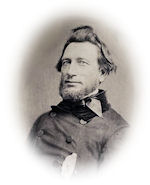
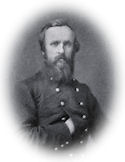
Post image for Unanticipated Kindness of Baltimoreans.–Journal of Surgeon Alfred L. Castleman.

15th.—I wish to record, what I have omitted, an acknowledgment to many of the people of Baltimore during our stay here, for such kindness as I never expected to meet with amongst strangers. On the morning of our arrival, at the depot, in this city, I was detained some time in looking after the sick who were brought forward, and in getting them into conveyances to the depot where we were to re-embark. The regiment marched forward and left me, so that I must pass through the city alone. I armed myself well, expecting to be insulted at every corner, and, perhaps, to meet with personal violence. My dress showed me to be a member of the regiment which had just passed. Scarcely a rod did I walk without being accosted with kind greetings and “Godspeeds;” scarcely a corner did I pass without being stopped by gentlemen, inviting me to their houses to partake of their hospitality, in the shape of a cup of coffee, a breakfast, a little rest. Ladies, as I passed, would come to the door, or send out their servants to know if they could do anything for the comfort of myself or regiment.

Since I have been left here with the sick of the regiment, their kindness and attention have, if possible, been even more marked. The house which I use for both hospital and headquarters, is constantly crowded by ladies, gentlemen, children, pressing in to see what they can do for the relief of the sufferers. The tables groan under the delicacies brought in, and citizens beg for permission to take my sick and care for them at their houses. Nor is this done from the novelty of seeing a regiment pass through. There are always from ten to twenty thousand volunteer troops here, and from one to twenty new regiments pass through daily.

I confess to myself that this is a discouraging feature in the war. This is a Southern city, and this is a type of Southern character. They become interested, and their whole heart is wrapped up in the subject. It is a representation of the character of the people against whom we fight, and on this earnestness for what they believe to be right, is based much of their opinion that the Southerner will prove himself so far superior to the Northern man in battle. I fear there is more truth in it than we of the North are willing to admit. Whatever may be the result of the struggle now going on, to the people of Baltimore I shall ever remember that I am under deep obligations for their kindness to me personally, as well as to the sufferers under my care, and for their interest in the cause which I believe to be not only right, but sacred. I leave Baltimore with much regret, and beg its kind citizens to remember that at least one soldier, a recipient of their kindness, will ever treasure in his heart a grateful remembrance of them.

August 15. Thursday.—A bright, lovely day and the prettiest evening of the month. The bright moonlight exhibits the landscape enough to show its loveliness and the lights and shadows. The hills and woods are very picturesque. It makes me long for wife and boys and friends behind. How Lute would enjoy roaming with me through camp tonight.

More rumors of attacks by guerrillas, or “bushwhackers” as they are here called, on our couriers and trains. A courier and captain and some wagoners are reported killed or taken below Sutton.

My box containing pistols and sash, etc., by mistake sent from Clarksburg to Buckhannon. Made arrangements to send Lieutenant Richardson and two men with ambulance after it.

WESTON, VIRGINIA, August 15, 1861.

Thursday Morning.

DEAREST L—:—We had four days of rain ending yesterday morning—such rain as this country of hills and mountains can afford. It was gloomy and uncomfortable but no harm was done. It cleared off beautifully yesterday morning and the weather has been most delicious since. This is a healthful region. Nobody seriously sick and almost everybody outrageously healthy. I never was better. It is a luxury to breathe. Dr. Joe—but don’t he go into the corn? He has it three times a day, reminding me of Northampton a year ago and your order for supper on our return from Mount Holyoke.

Our regiment has had divers duties which keep up excitement enough to prevent us from stagnating. Colonel Matthews and right wing is fifty miles south. Captain Drake and Captain Woodward, with their companies, spent the four rainy days scouring the steepest hills and deepest gullies for the rascals who waylay our couriers and wagon trains. They captured three or four of the underlings, but the leaders and main party dodged them. Captain Zimmerman and his company have gone west forty miles to escort provisions to Colonel Moor (Second German Regiment of Cincinnati in which Markbreit is Lieutenant) and to clean out an infected neighborhood between here and there. A sergeant and six men are at Clarksburg escorting a prisoner destined for Columbus. Lieutenant Rice and twenty men are escorting cattle for Colonel Tyler’s command south of here. A part of our cavalry are gone west to escort a captain and the surgeon of the Tenth to Glenville, thirty-seven miles west. On Saturday I go with Captain Drake’s company to meet Captain Zimmerman’s company returning from the west, and with the two companies, to go into the hills to the south to hunt for a guerrilla band who are annoying Union men in that vicinity. I shall be gone almost a week so you will not hear from me for some time. The telegraph is now extended south to a station near where I am going to operate, so that we are in reach of humanity by telegraph but not by mail.

Dr. Joe has got the hospital in good condition. A church (Methodist South) in place of the court-house for the merely comfortable, and a private house for the very sick. None of our regiment are seriously ill. The sick are devolved upon us from other regiments—chiefly lung complaints developed by marching, measles, or exposure. Very few, if any, taken here. Divers humane old ladies furnish knickknacks to the hospital and make glad the poor fellows with such comforts as women can best provide.

We find plenty of good Union men, and most of our expeditions are aided by them. They show a good spirit in our behalf. A large part of our friends in the mountains are the well-to-do people of their neighborhoods and usually are Methodists or other orderly citizens.

Good-bye, dearest. I love you very much. Kiss the boys and love to all. Tell Webby that during the rain the other night, dark as pitch, my horse, Webb, fell down the hill back of the camp into the river. Swam over to the opposite shore, and at daylight we saw him frisking about in great excitement trying to get back to his companion Birch. When we got him he was not hurt or scratched even. He stumbles a little, which doesn’t do for a riding horse, so I have taken a government horse which looks very much like him; same color and size but not quite so pretty, and given Webb to Uncle Joe for an ambulance horse. I shall call my new horse Webb, so there are to be two Webbys in the regiment. My next horse I shall call Ruddy. Love to Grandma.

Affectionately,

R.

MRS. HAYES.

August 15th.—Mrs. Randolph came. With her were the Freelands, Rose and Maria. The men rave over Mrs. Randolph’s beauty; called her a magnificent specimen of the finest type of dark-eyed, rich, and glowing Southern woman-kind. Clear brunette she is, with the reddest lips, the whitest teeth, and glorious eyes; there is no other word for them. Having given Mrs. Randolph the prize among Southern beauties, Mr. Clayton said Prentiss was the finest Southern orator. Mr. Marshall and Mr. Barnwell dissented ; they preferred William C. Preston. Mr. Chesnut had found Colquitt the best or most effective stump orator.

Saw Henry Deas Nott. He is just from Paris, via New York. Says New York is ablaze with martial fire. At no time during the Crimean war was there ever in Paris the show of soldiers preparing for the war such as he saw at New York. The face of the earth seemed covered with marching regiments.

Not more than 500 effective men are in Hampton’s Legion, but they kept the whole Yankee army at bay until half-past two. Then just as Hampton was wounded and half his colonels shot, Cash and Kershaw (from Mrs. Smith Lee audibly, ”How about Kirby Smith?”) dashed in and not only turned the tide, but would have driven the fugitives into Washington, but Beauregard recalled them. Mr. Chesnut finds all this very amusing, as he posted many of the regiments and all the time was carrying orders over the field. The discrepancies in all these private memories amuse him, but he smiles pleasantly and lets every man tell the tale in his own way.

August 15.—At Arlington, Va., sixty noncommissioned officers and privates of the Second Maine Regiment of Volunteers, having formally and positively, in the presence of the regiment, refused to do any further duty whatever, alleging that they were not legally in the service of the United States, were, with the approval of the General-in-Chief, transferred, in arrest, from the regiment, as no longer worthy to serve with it, to be sent to the Dry Tortugas, in the Gulf of Mexico, there to perform such fatigue service as the officers commanding might assign them, until they should by their future conduct show themselves worthy to bear arms.—Army Orders.

—The Twenty-third Regiment of Indiana Volunteers, under the command of Col. Sanderson, left the camp near New Albany, for Indianapolis, and thence for the seat of war in Missouri.—Louisville Journal, August 16.

—Govenor Buckingham, of Connecticut, calls upon “the loyal and patriotic citizens of that State to organize in companies for four regiments of infantry.”—(Doc. 187.)

—Upon the refusal of Colonel Burke, the officer in command at Fort Lafayette in New York harbor, to produce his prisoners in court in response to a writ of habeas corpus, Judge Garrison of Kings Co., N. Y., who issued the writ, made formal application to General Duryea of the militia in Brooklyn to ascertain what force could be obtained by the county to execute the writ. General Duryea informed the sheriff that about fourteen hundred men could be raised, but that the county was in possession of no artillery sufficiently powerful to make an impression on the works, and that it would require between five and ten thousand men to take them.—N. Y. Evening Post, August 15.

—This afternoon the steamer Resolute was ordered from Aquia Creek to Matthias Point, Va., for the purpose of reconnoitring. Seeing a bateau filled with barrels on shore just below the point, a boat was sent from the Resolute with six men, to bring off the bateau. No sooner had the boat touched the beach than a volley of musket balls was opened upon them from a secession force concealed in the woods, killing three of the men instantly, namely—John James Fuller, of Brooklyn, master’s mate, who, it was subsequently ascertained, was pierced by two balls; George Seymour, captain of the gun, of New York, by seven, and Thomas Tully, of Boston, by two balls. Earnest Walter, a native of England, was wounded in the head. Another volley was fired by the enemy as they moved their position, or as soon as they had time to reload. The Resolute was about seven hundred yards from the shore, and fired in the midst of the rebels one shot of canister and nine of shrapnell. The scene on board the small boat is described as heart-sickening—the dead lying outstretched in it, covered with their own blood. The boat was towed a short distance from the shore by one of the crew named Sanderson, who quietly slipped into the water for that purpose, and thus concealed himself from the enemy. The other uninjured man lay in the boat, horrified by the scene through which he had just passed, while the wounded man helped Sanderson to row the boat toward the Reliance, from which assistance was immediately rendered.—(Doc. 188.)

WEDNESDAY, AUGUST 14, 1861.

Got up this morning and went to market. Doct Barnes and Lieut Gould to Breakfast. Doct Vanslyck to dinner. The “27th” left this morning for V.A. I was at the Pat office awhile & on the Ave. Witnessed this evening the quelling of a mutiny among the 79th Regt. A strong force of Infantry and Cavalry and four pieces of Artillery were brought to bear upon them when they “fell in” and were paraded on 14th St, the ring leaders picked out, 36 in number who will be punished, some of them probably shot. Gov Stevens is now their Col.

______

The three diary manuscript volumes, Washington during the Civil War: The Diary of Horatio Nelson Taft, 1861-1865, are available online at The Library of  Congress.

Post image for “The fire was effective, the cavalry retreated and we marched on unharmed.”—War Letters of William Thompson Lusk.

Meridian Hill, Washington.

Aug. 11th, 1861.

My dear Mother:

I have been overjoyed by a visit from Hunt, who has now probably returned home and reports me hearty and well. I have been fortunate in meeting several friends most unexpectedly during the last few days. Miss Woolsey was at our encampment on some errand of mercy yesterday evening. I saw her for a few moments, and promised to call upon her and Mrs. Howland soon, which I shall do if allowed to leave the camp. The laws are very strict though now, and I doubt whether I shall be able to leave the camp for some time to come. We are now going through a stage dreaded by all officers in the army, viz: that immediately following upon pay-day. Notwithstanding the utmost precautions the men contrive to obtain liquor, and when intoxicated are well-nigh uncontrollable, so that the utmost vigilance is needful. As the number of our officers is but small we are kept almost constantly active. When the money is once spent we will then breathe more freely. To-morrow I am to be the officer commanding the Guard, so I am scribbling a few lines rapidly to-night, as I shall be too busy to attend to such things to-morrow, and the following day too exhausted to do much after twenty-four hour’s exertion. You see all the labors of an officer generally are compressed into short seasons of unexampled labor, and long periods of repose. We have now a new Colonel — Governor Stevens of Washington Territory. He seems to be a first class man. His advent among us was inaugurated by an order for us young officers to leave the pleasant rooms we occupied when Hunt was with us, and to return to our tents. This was as it should be; and other strict measures toward officers and men show that he is the right sort of a commander for a Regiment like ours, requiring a strong firm hand to govern it. I trust we may continue to be satisfied with him as our chief officer.

I begin to regard it as a little doubtful as to whether we really return to New York. Military men regard such a movement as unprecedented, and as affording a dangerous example. We will see how it is to end. You ask me regarding Gen’l Tyler! I will answer with all candor that he acted with the utmost bravery on the day of the fight. It was owing to his prompt and energetic action that once, after our Regiment was scattered, when weary and exhausted, having also (Elliott assisting) the additional burden of our wounded Captain to bear away, we escaped a cavalry charge in which many of our men were taken prisoners. When the cavalry came in sight, and all was in confusion, you could hear his quick, sharp voice rallying the disheartened to make such a stand as alone would ensure them victory. The men rallied, poured a volley of musketry into the foe galloping upon us, at the same time giving them two fatal shots from a couple of artillery pieces which luckily were in our possession— at which time I must mention the activity displayed by Ned Harland too. The fire was effective, the cavalry retreated and we marched on unharmed. Such things should shut the mouths of slander. Gen’l Tyler unfortunately played a leading part in a fatal engagement, and consequently must bear an undue share of blame. His great fault seems to have been an overweening confidence in our strength, and a great undervaluation of the enemy. Since the fight I regret to say a spirit of bitterness pervades his conversation as well as his official report of the battle.

I have just seen Lieut.-Col. Elliott, and feel more reason to hope we may return, as was before promised. Give the best of love to all,

And believe me,

Very Affec’y-,

William T. Lusk.

Camp Harmon, August —, 1861.

I had a chance to show my gallantry last week. I was directed one night to pass a Mr. Pendleton and his party through, our line of sentinels. I reached the party about ten o’clock, and found the party consisting of an old gentleman driving the carriage, and in it the wife of his son with three or four children. She told me they were going to stay a mile beyond, with a lady to whom she had a letter, and were on their way to Virginia from Washington. Knowing the difficulty they would have in passing the sentinels of the other camps, I volunteered to accompany them. But when they reached the house where they expected to stay all night I delivered their letter and was told they could not be taken in, as the house was full of sick people, and that there was no other house in the village where there was any prospect of getting them in. The only chance then was to take the road and run the chance of getting into a farm-house or travel all night. I went with them, and succeeded in getting them lodging at a farm-house three miles further on. She was profuse in her expressions of gratitude, and I took leave of them and walked back four miles to our camp, which I reached about one o’clock, well paid for my trouble in feeling conscious that I had done a good deed.

August 14.—Jefferson Davis, at Richmond, Va., issued a proclamation, notifying all residents of the “Confederate” States, who do not acknowledge the authority of the same, to leave the “Confederacy” in forty days from the date of the proclamation.—(Doc. 182.)

—Robert Muir, of Charleston, S. C., and cousin of the British consul at Now Orleans, was arrested on board the steamer Africa at New York, just as she was leaving, as bearer of despatches from Jeff. Davis to the British Government. Several papers, showing he was such a person, were found on him.—National Intelligencer, August 16.

—Col. Farnham, of the N. Y. Fire Zouaves, died this evening at Washington of wounds received in the battle of Bull Run.—Idem.

—Proclamation of martial law, as follows, was made in St. Louis, Missouri:

Head-Quarters Western Department,

St. Louis, August 14.

I hereby declare and establish martial law in the city and county of St. Louis. Major J. McKinstry, United States Army, is appointed provost-marshal. All orders and regulations issued by him will be respected and obeyed accordingly.

(Signed) J. C. Fremont,

Major-General Commanding.

Provost-marshal McKinstry thereupon issued a proclamation calling upon all good citizens to obey the rules it has been deemed necessary to establish, in order to insure and preserve the public peace, accompanied with the assurance that the civil law will remain in force, and the military authority only be used when civil law proves inadequate to maintain the public safety; and that any violation of the order will be followed by prompt punishment, regardless of persons or positions.—(Doc. 183.)

—This afternoon at St. Louis, Provost-marshal McKinstry suppressed the publication of the War Bulletin and the Missourian, two newspapers which had been “shamelessly devoted to the publication of transparently false statements respecting military movements in Missouri.”—St. Louis Democrat, August 15.

—General Fremont ordered a re-organization of the United States Reserve Corps in St Louis, to comprise five regiments of infantry, with a reserve of two companies to each two squadrons of cavalry, and two batteries of light artillery, the troops to be required to enlist for the war, subject to the same regulations and receive the same pay as volunteer regiments.—N. Y. World, August 15.

—The First Fire Zouaves (Eleventh N. Y. V.) arrived in New York City, and were discharged on furlough. Previous to the discharge they were addressed in front of the City Hall by Gen. Prosper M. Wetmore.—N. Y. Evening Post, August 15.

—A mutiny broke out in the camp of the New York Seventy-ninth Regiment near Washington. Among their alleged grievances are, that it is proposed to attach them to the Sickles Brigade to which they object, and that they were promised a furlough in order to see to the comfort of their families, to reorganize, and to elect officers to fill existing vacancies; and as it appeared likely that this furlough would not be given, they refused to obey orders. A detachment of regular soldiers was sent to their camp, to act as circumstances might require. The result was the arrest of forty or fifty who took a more active part in the insubordination. These were taken into Washington City about eight o’clock P. M., and confined as prisoners, whilst the remainder of the regiment were marched to the Navy Yard under a strong guard of cavalry. —(Doc. 184.)

—The First Regiment of Minnesota Volunteers, numbering nearly eight hundred muskets, passed through Baltimore, Md., this morning, on their return home after three months’ service in the cause of the General Government. They have been operating in the region of country near Harper’s Ferry, Va.—Baltimore American, August 14.

—Bishop Whittingham of Maryland issued a pastoral letter to the clergy and laity of his diocese, with reference to the approaching fast-day.— (Doc. 185.)

—The question of retaliation and the exchange of prisoners is agitated in the Southern States. New Orleans papers of to-day contain an elaborate article on the subject.—(Doc. 186.)

13th.—H. S. S. arrived at my hospital to-day, with orders, as I was sick, to take charge of and bring forward all the men left here. From the tenor of our Colonel’s letter of instructions to his messenger, I should take him to be a little “miffed” at the men’s not being sent forward earlier. What in the name of heaven can he wish to do with sick men in camp? However, I have no discretion, but shall turn over the men to S., and see how he will carry out instructions. I had already sent forward to-day, before his arrival, quite a number, leaving me only ten here.