Following the American Civil War Sesquicentennial with day by day writings of the time, currently 1863.

The American Civil War

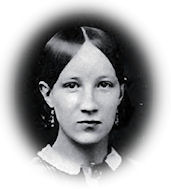
Post image for “Ready and glad to go as far south as hospitals have been established.”—Woolsey family letters, Georgeanna Muirson Woolsey to Eliza.

Wednesday.

My dear Eliza: You must feel that I am ready and glad to go anywhere and at any time with you and dear Joe. You will probably go with him to Washington, at any rate. You and I could be companions for each other at the hotel as long as the regiment camps near the city, and, judging from the way the other regiments have been disposed of, that is likely to be the arrangement for them for some time. We should be able to see them every day and perhaps go even farther south. Since Joe has taken the sick under his care we perhaps shall be able to be a part of the regiment, as other women have been, and may keep together in this way, doing what we can.

You know we three have travelled over rough roads together before, and have now only to take up our little bundles and commence our march again. We shall like it and we will do it if possible. Two of our bands of nurses have been sent on from the Hospital already, and with a letter of introduction from our association (which is accepted by government) I shall probably be able to go where I please, as far south as hospitals have been established; and so we may be able perhaps to keep up with the Sixteenth. If you can, don’t you think you had better come down and be introduced to Dr. Elizabeth Blackwell and others, and go for a few days to one of the hospitals opened to us, so that you may be able to give references from our association, if necessary? It may save you some delay and be useful to you in other ways. I am ready, or shall be at the shortest notice, to do as you say. I cannot tell you how we all feel about this. We shall try and not feel at all, only our hearts are with you and Joe always.

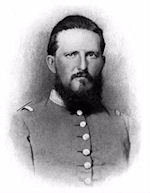
Post image for “I told (the Secretary) my desire was to serve the cause, and not myself. I suppose he was incredulous.”—A Rebel War Clerk’s Diary at the Confederate States Capital, By John Beauchamp Jones

JUNE 17TH—To-day there was a rumor in the streets that Harper’s Ferry had been evacuated by Gen. Joseph E. Johnston, and, for the first time, I heard murmurs against the government. So far, perhaps, no Executive had ever such cordial and unanimous support of the people as President Davis. I knew the motive of the evacuation, and prepared a short editorial for one of the papers, suggesting good reasons for the retrograde movement; and instancing the fact that when Napoleon’s capital was surrounded and taken, he had nearly 200,000 men in garrison in the countries he had conquered, which would have been ample for the defense of France. This I carried to the Secretary at his lodgings, and he was so well pleased with it he wanted me to accompany him to the lodgings of the President, in the same hotel, and show it to him.

This I declined, alleging it might be too late for the press. He laughed at my diffidence, and disinclination on such occasions to approach the President. I told him my desire was to serve the cause, and not myself. I suppose he was incredulous.

—A letter from Cronstadt, Russia, written by the mate of a ship, says: “There is a Charleston ship lying alongside of us that hoisted the flag of the Confederate States, and for so doing I understand that the captain was arrested and placed in the guard-house of the Russian officers. They would not acknowledge or in any way recognize the flag of the rebels.” —Boston Journal, July 12.

—Lieut. George H. Butler with others proceeded from Fortress Monroe to Big Bethel to bring away the remains of Major Winthrop. At Little Bethel a picket took their message to Colonel Magruder, who sent Captain Kilsen, of Louisiana, to receive them. Two hours after Colonel Magruder came, and they were handsomely received. With Colonel Magruder were Colonel De Rusey, brother of the Chief of the Engineers at Fortress Monroe, Colonel Hill, of North Carolina, and other late officers of the army. None of Lieutenant Butler’s party were permitted to go near the batteries. The body of Major Winthrop was taken up by Colonel Magruder’s men and escorted to the wagon by a force of three hundred, who fired a volley. Most of them had shot guns. An escort was offered to Hampton, but Lieutenant Butler declined it. Colonel Magruder and others spoke in the highest terms of Major Winthrop’s bravery. He was distinctly seen for some time leading a body of men to the charge, and had mounted a log and was waving his sword and shouting to his men to “Come on!” when a North Carolina drummer-boy borrowed a gun, leaped on the battery, and shot him deliberately in the breast. He fell nearer to the enemy’s works than any other man went during the fight. He wore the sword of Colonel Wardrop of the Massachusetts Third, and it was supposed that it was Colonel Wardrop who fell. The sword was sent to North Carolina as a trophy. —N. Y. Evening Post, June 19.

—In the Wheeling (Va.) Convention Mr. Dorsey, of Monongalia, moved that the Declaration of Independence be put upon its passage, calling for the yeas and nays. It was unanimously adopted: Yeas, 56—not a vote in the negative. Thirty members were absent on leave, and the Declaration was signed by fifty-six, the same number as signed the National Declaration of Independence.—(Doc. 256.)

—Three hundred Federal troops, under Capt. Gardner, of the Pennsylvania First Regiment, had a skirmish at Edwards’ Ferry, with a considerable force of secessionists. The fight lasted nearly three hours, when the rebels fled, having had fifteen to twenty of their number killed and wounded, one private in Capt. Gardner’s command was killed, and three or four were wounded slightly. The fight occurred from across the river. The attack was made by the enemy with a view to taking possession of the Ferry. The news was brought to Washington by Capt. Gardner’s First Lieutenant, who was engaged in the action.—N. Y. Times, June 20.

—This morning, at St. Louis, Mo., a part of Col. Kallman’s Regiment of reserve corps were returning from the North Missouri Railroad, when opposite the Recorder’s Court-room on Seventh street, between Olive and Locust, a company near the rear of the column suddenly wheeled and discharged their rifles, aiming chiefly at the windows of the Recorder’s Court and the second story of an adjoining house, killing four citizens, mortally wounding two, and slightly injuring one. The statements regarding the cause of the firing were very conflicting —one being that a pistol shot was fired from the window of a house on the corner of Seventh and Locust, which took effect in the shoulder of one of the captains, when he gave word to fire; another, that a soldier accidentally discharged his rifle in the ranks, at which the whole company became frightened and discharged a full volley into the crowd on the sidewalk and windows of houses. The Recorder’s, Court was in session, crowded with prisoners and spectators. Police officer Pratt was shot in the side, and died in ten minutes. Deputy Marshal Franzo received three balls in the legs and arms. The window just behind Recorder Peers’ desk was riddled with bullets, and broken glass scattered over his desk.—Sandusky Register, June 18.

—In honor of the day—the anniversary of the battle of Bunker Hill—the Charlestown City Guard, comprising two companies of the Massachusetts Fifth, gave a grand entertainment at their camp near Alexandria, Va. Under the pleasant shade of a luxuriant grove long tables were spread with dainties quite unusual in that part of the land. Many of the dishes were furnished by the generous ladies of Massachusetts, and vividly recalled the good living of that dear old State—ever true to liberty and constitutional law. The edibles disposed of, sentiments were the order of the hour. The memory of Warren was appropriately toasted, and there were a dozen patriotic speeches from the officers and friends of the Guard, which, coming from the shadow of the solid column commemorating the glory of Warren and his heroic comrades, always honor the day with peculiar enthusiasm. At this time, and in sight of the spot where Ellsworth —who has been well denominated the Warren of the great struggle in which we are now involved—gave his life a willing sacrifice to his country, the proceedings of this afternoon were exceedingly fitting—and honorable to the Guard.

At Boston, Mass, the anniversary was observed with more than usual manifestations of patriotism. At the monument in Charlestown there was a civic and military gathering. The Stars and Stripes were raised on a flag-staff about 40 feet above the shaft, making the height 260 feet from the ground. Gov. Andrew and others made eloquent speeches appropriate to the occasion.—Washington Star, June 20.

—Gen. Lyon issued a strong proclamation, pointing out the determined efforts of the Governor and Legislature to force the State out of the Union, and the unconstitutionality of the military bill. He rehearsed the result of the conference with Governor Jackson, and stated that attempts to execute the provisions of the military bill had imposed most exasperating hardships on peaceful and loyal citizens, with persecutions and proscriptions of those opposed to its provisions. Complaints of these acts, he said, had been received by him as commander of the Federal forces, and also sent to Washington with appeals for relief from Union men who, in many instances, had been driven from the State. He gave his orders received from the President, stating that it devolved upon him to stop them summarily by the forces under his command, with such aid as might be required from Kansas, Iowa, and Illinois.—(Doc. 257.)

—An expedition of 300 Zouaves, commanded by Lieutenant-Colonel Warren, and accompanied by Capt. Smith, of the United States Topographical Corps, left Fortress Monroe to make a reconnoissance in the vicinity of Big Bethel and up the route to Yorktown.—N. Y. Times, June 19.

—At 4 P. M., as a train with telegraph constructors and 660 of the First Ohio Regiment went up the Loudon and Hampshire Railroad, Va., they were fired upon by a rebel battery stationed on a hill at a curve in the road, near Vienna, a small station about 15 miles from Alexandria. The battery consisted of three 6-pounders, and was worked by a company from Alexandria. Its first fire was very destructive. The men were immediately brought out of the car and formed and returned the fire, when, by some mismanagement the train returned to Alexandria and left them. They were however brought off in good order. Six were killed and nine wounded. Two of the wounded subsequently died. The rebels also had six killed. The rebel battery was supported by 800 infantry and 200 cavalry. Directly after the retreat of the Ohio troops, a regiment of South Carolinians, with a battery of six pieces, arrived upon the scene of action. Shortly after their appearance, an alarm was raised by the supposed approach of a large body of Union troops, when the whole rebel force beat a sudden retreat through Vienna, in the direction of Fairfax Court House. A resident of Vienna, who saw them pass two hours after the action, estimated them at two thousand.—(Doc. 258.)

—Near Independence, Missouri, a detachment of Union troops, under Captain Stanley, with a flag of trace, visited the camp of the State troops to ascertain the purposes of Captain Holloway, the rebel officer. During the conference Captain Stanley suspected movements were being made with the design of attacking him, and ordered his detachment to retreat. While retreating they were fired on by the State troops, at an order given by a private; but their fire was so irregular they killed their own commander, Captain Holloway, and J. B. Clanahan, and severely wounded several more of their own men. Captain Stanley’s men did not fire, they having received orders not to do so under any circumstances. Captain Stanley retreated to Kansas City and reported the affair, when Captain Prince, with a strong body of troops, attacked and routed the State forces, capturing thirty horses and a large quantity of baggage.—N. Y. Herald, June 20.

—Gen. Lyon left Jefferson City, Mo., for Booneville. He landed four miles below the town and opened a heavy cannonade against the rebels, who retreated and dispersed into an adjacent wood, whence, hidden by brushes and trees, they opened a brisk fire on our troops. General Lyon then ordered a hasty retreat to the boats; and the rebels, encouraged by this movement, rallied and followed the troops into a wheatfield, and were thus drawn from cover. General Lyon halted, faced his troops about, and, bringing the whole force of his artillery to bear, opened a murderous fire on the rebels, many of whom were killed, and the balance fled in all directions, leaving their arms on the field. General Lyon then moved forward and took possession of Booneville. Governor Jackson viewed the battle from a distant hill, and fled for parts unknown after the defeat of his forces. General Price was not in the battle, and his absence is thus accounted for: Sunday morning the pickets brought a report that seven steamboats were coming up the river with Union troops. A consultation was immefliately had between Gov. Jackson and Gen. Price, and the Governor ordered the State troops to disband, they not being able to sustain themselves against such force. General Price then went home; the troops, however, were determined to have a fight. Col. Marmaduke then became disaffected, and resigned. A few hours later the report about the steamboats proved untrue, and the Governor ordered the troops to prepare for resistance, appointing Mr. Little to command.—There is no reliable account as to the number of killed, wounded, or taken prisoners, though the killed are stated at 800. It is stated that General Lyon’s force had the State troops in a position where they could have killed them in large numbers. He ordered the firing to cease, and halted to make them prisoners.—St. Louis .Republican, June 18.—(Doc. 258½.)

—Col. Boernstein, commanding the Federal force at Jefferson City, Mo., issued a proclamation establishing a Provisional Government in consequence of the absence of the proper authorities. He promised protection to life and property, and urged the Union men, four companies, to assist him.—(Doc. 259.)

—The First Regiment of Massachusetts Volunteers, pioneers of the three years’ enlistments from that State, arrived at Washington and took quarters in Woodward’s buildings, Pennsylvania avenue. The regiment numbers 1,050 men, and is fully provided with camp equipage—Sibley and Wall tents, army wagons, &c. The uniform is the standard gray, furnished by the State—the muskets the Springfield rifle.

General Patterson crossed the Potomac at Williamsport, and marched down the Virginia banks of the Potomac towards Harper’s Ferry. —National Intelligencer, June 18.
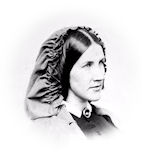
Post image for William Howard Russell’s Diary: On dueling in Mississippi.—Train to Memphis.—Soldiers or volunteers heading to Corinth.

June 16th.—I was compelled to send my excuses to Governor Pettus, and remained quietly within the house of my host, entreating him to protect me from visitors and especially my own confrères, that I might secure a few hours even in that ardent heat to write letters to home. Now, there is some self-denial required, if one be at all solicitous of the popularis aura, to offend the susceptibilities of the irritable genus in America. It may make all the difference between millions of people hearing and believing you are a high-toned, whole-souled gentleman or a wretched ignorant and prejudiced John Bull; but, nevertheless, the solid pudding of self-content and the satisfaction of doing one’s work are preferable to the praise even of a New York newspaper editor.

When my work was over I walked out and sat in the shade with a gentleman whose talk turned upon the practises of the Mississippi duello. Without the smallest animus, and in the most natural way in the world, he told us tale after tale of blood, and recounted terrible tragedies enacted outside bars of hotels and in the public streets close beside us. The very air seemed to become purple as he spoke, the land around a veritable “Aceldama.” There may, indeed, be security for property, but there is none for the life of its owner in difficulties, who may be shot by a stray bullet from a pistol as he walks up the street.

I learned many valuable facts. I was warned, for example, against the impolicy of trusting to small-bored pistols or to pocket six-shooters in case of a close fight, because suppose you hit your man mortally he may still run in upon you and rip you up with a bowie knife before he falls dead; whereas if you drive a good heavy bullet into him, or make a hole in him with a “Derringer” ball, he gets faintish and drops at once.

Many illustrations, too, were given of the value of practical lessons of this sort. One particularly struck me. If a gentleman with whom you are engaged in altercation moves his hand towards his breeches pocket, or behind his back, you must smash him or shoot him at once, for he is either going to draw his six-shooter, to pull out a bowie knife, or to shoot you through the lining of his pocket. The latter practice is considered rather ungentlemanly, but it has somewhat been more honoured lately in the observance than in the breach. In fact, the savage practice of walking about with pistols, knifes, and poniards, in bar-rooms and gambling-saloons, with passions ungoverned, because there is no law to punish the deeds to which they lead, affords facilities for crime which an uncivilised condition of society leaves too often without punishment, but which must be put down or the country in which it is tolerated will become as barbarous as a jungle inhabited by wild beasts.

Our host gave me an early dinner, at which I met some of the citizens of Jackson, and at six o’clock I proceeded by the train for Memphis. The carriages were of course, full of soldiers or volunteers, bound for a large camp at a place called Corinth, who made night hideous by their song and cries, stimulated by enormous draughts of whiskey and a proportionate consumption of tobacco, by teeth and by fire. The heat in the carriages added to the discomforts arising from these causes, and from great quantities of biting insects in the sleeping places. The people have all the air and manners of settlers. Altogether the impression produced on my mind was by no means agreeable, and I felt as if I was indeed in the land of Lynch law and bowie knives, where the passions of men have not yet been subordinated to the influence of the tribunals of justice. Much of this feeling has no doubt been produced by the tales to which I have been listening around me—most of which have a smack of manslaughter about them.

CAMP JACKSON, Sunday, June 16, 1861.

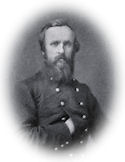
DEAREST L—:—Morning work done and waiting till Dr. Hoge begins, I write to my darling wife and boys. Would you like to know our daily routine. (Mem.:—Colonel King commanding State troops and my superiors, Colonels Rosecrans and Matthews, all having gone home, I am now in command of all at this post, eighteen companies United States troops and sixteen companies State troops, in all three thousand men and upwards. A sudden responsibility for a civilian, but the duties are chiefly such as a civilian can easily do, so it is strange rather in appearance than reality). First, at 5 A. M., gun fired and reveille sounded, calling all men to roll-call. I was up and dressing. Owing to bright light in a tent, sound sleeping in the cool air, etc., etc., this I did not find difficult. In a few minutes all the captains call at my tent to report themselves and the condition of their men.

I sit at a table looking towards the front entrance of the tent; an orderly on my right to go errands; a clerk at a table on the left to write; an adjutant ditto to give orders and help me guess what ought to be done in each case, and a sentinel slowly pacing back and forth in front of the entrance whose main employment is telling men to take off their hats before entering on the surroundings. The first business is looking over the orders of the day, and telling the adjutant to see them carried out. These are as to guards and such, which are stereotyped with slight alterations to suit circumstances—such as guarding wells, fixing new sentinels where men are suspected of getting out, etc., etc. Next comes issuing permits to go out of camp to town and to parties to go bathing in the Scioto one and one-half miles distant. Then comes in, for an hour or more, the morning reports of roll-call, showing the sick, absent, etc., etc., all to be looked over and corrected; and mistakes abound that are curious enough. Once we got all the officers returned as “under arrest.” One captain lost a lieutenant, although he was present as plainly as Hateful W. Perkins was in Pease’s anecdote. Then rations are returned short; on that point I am strong, and as the commissary is clever, we soon correct mistakes. Then we have difficulties between soldiers, very slight and easily disposed of; but troubles between soldiers and the carpenters whose tools disappear mysteriously, and farmers in the neighborhood who go to bed with roosts of barnyard fowl and wake up chickenless and fowlless, are more troublesome. The accused defenders of their country can always prove an alibi by their comrades, and that the thing is impossible by the sentinels whose beat they must have passed.

Since writing the above, I have waited under a tree, with a flag raised, three quarters of an hour for Dr. Hoge’s congregation, but for some reason he did not come, and an audience of one thousand were disappointed, possibly(?), however, not all disagreeably. I have sent five men and a sergeant to arrest two deserters in Columbus (not of our regiment) belonging to Captain Sturgess’ company of Zanesville; one sergeant and two men to see safely out of camp two men who were about to have their heads shaved for refusing to take the oath of allegiance; a lieutenant and ten men to patrol the woods back of the camp, to prevent threatened depredations on a farmer. This all since I began writing. The wind is rising and the dust floats in on my paper, as you see. As yet, we eat our meals at Colonel King’s quarters—plain good living. Guard-mounting is a ceremonious affair at 9 A. M. At 12 M., drum-beat and roll-call for dinner; at 6 P. M., ditto for supper; at 7 P. M., our band calls out the regiment for a parade; not yet a “dress parade,” but a decidedly imposing affair, notwithstanding. The finale is at 10 P.M.

The evenings and night are capital. The music and hum, the cool air in the tent, and open-air exercise during the day, make the sleeping superb. We have cots about like our lounge, only slighter and smaller, bought in Dayton. Our men are fully equal to the famous Massachusetts men in a mechanical way. They build quarters, ditches, roads, traps; dig wells, catch fish, kill squirrels, etc., etc., and it is really a new sensation, the affection and pride one feels respecting such a body of men in the aggregate.

We are now feeling a good deal of anxiety about Colonel Rosecrans. He is said to be appointed a brigadier. If it were to take effect six weeks or three months hence, we would like it if he should be promoted; but now we fear some new man over us who may not be agreeable, and we do not like the difficulties attendant upon promotion. The governor says we shall not lose Colonel Rosecrans, and we hope he is right.

I enclose a letter in the Cleveland Herald written by some one in one of our Cleveland companies. With Colonel Rosecrans in command, we should have no trouble with our men. We have reconciled them as, I think, perfectly, or as nearly so as men ever are with their officers. But if Colonel Rosecrans goes, we are between Scylla and Charbydis you know—officers at our head whom we may not like, or men under us who do not like us; but it will all come right. I am glad I am here, and only wish you were here.

I was in at Platt’s last evening an hour or so. Laura was expecting Platt by the late train, but as he has not yet come out here, I suspect he did not arrive. Love to all. Kiss the boys. I enjoyed reading your talk about them and their sayings.

Affectionately,

R. B. HAYES.

MRS. HAYES.

Post image for “I do not believe there is a woman among us who would not give up every thing but the bare necessaries of life for the good of our cause.”—Diary of a Southern Refugee.

16th.—Rumours are abundant to-day of a Federal force approaching Strasburg. We are not at all credulous of the flying reports with which our ears are daily pained, and yet they make us restless and uneasy. We thank God and take courage from the little successes we have already had at Pigs Point, Acquia Creek, Fairfax Court-House, and Philippi. These are mere trifles, they say; well, so they are, but they are encouraging to our men, and show that we can hold our own.

A most decided revolution is going on in our social system throughout our old State: economy rules the day. In this neighbourhood, which has been not a little remarkable for indulging in the elegancies of life, they are giving up desserts, rich cake, etc. The wants of the soldiers are supplied with a lavish hand, but personal indulgences are considered unpatriotic. How I do admire their self-denying spirit! I do not believe there is a woman among us who would not give up every thing but the bare necessaries of life for the good of our cause.

16th, Night.—I can scarcely control myself to sit quietly down and write of the good news brought by the mail of to-day; I mean the victory—on our side almost bloodless victory—at Bethel. It took place on the 10th. Strange that such brilliant news was so long delayed! The enemy lost 200 men, and we but one. He, poor fellow, belonged to a North Carolina regiment, and his bereaved mother received his body. She lives in Richmond. It seems to me that Colonel Magruder must have displayed consummate skill in the arrangement of his little squad of men. His ” blind battery ” succeeded admirably. The enemy had approached in two parties from Fortress Monroe, and, by mistake, fired into each other, causing great slaughter. They then united and rushed into the jaws of death, or, in other words, into the range of the guns of the blind battery. I feel sorry, very sorry, for the individual sufferers among the Yankees, particularly for those who did not come voluntarily; but they have no business here, and the more unsuccessful they are the sooner their government will recall them. I do believe that the hand of God was in this fight, we were so strangely successful. How we all gathered around M. M. as she read the account given in the paper; and how we exulted and talked, and how Mr. P. walked backwards and forwards, rubbing his hands with delight!

The camp at Harper’s Ferry is broken up. General Johnston knows why; I am sure that I do not. He is sending out parties of troops to drive off the Yankees, who are marauding about the neighbouring counties, but who are very careful to keep clear of the “Ferry.” The Second Regiment, containing some of our dear boys, has been lately very actively engaged in pursuit of these marauders, and we are kept constantly anxious about them.

Post image for A Diary of American Events – June 16, 1861

—This afternoon J. G. Morrison, Jr., and several of his friends, unfurled the Star-Spangled Banner on the Maryland abutment of the bridge lately destroyed at Harper’s Ferry. The cherished symbol of the Union was hailed with delight by the people of Harper’s Ferry, and particularly by the women, who flocked to the opposite bank and saluted it by the waving of handkerchiefs and other manifestations of joy.—Baltimore American, June 20.

—General Joseph H. Lane, of Kansas, was appointed a Brigadier-General in the army of the United States.—N. Y. Tribune, June 20.

—A recconoissance of the Loudon and Hampshire Railroad, in Va., was made under Col. Powers, accompanied by the First Regiment of Connecticut troops. All the bridges were found safe, and the train returned. When two miles east of Vienna, a man in ambush fired on the train, wounding George Busbee, of the Connecticut Life Guards. Gen. Tyler was standing beside the wounded man, on an open car. The shot was evidently intended for him. The train was stopped as soon as possible, and the companies were divided to scour the woods, and search the neighboring farm-houses, etc., to make a circuit of a mile. Two men were arrested, named Walker and McMills, in the home of the latter. All the evidence that could be obtained, tended towards criminating Walker, who, with the other prisoner and a negro witness, was brought to Alexandria. The train was within three miles of 900 rebel troops, and six miles of Fairfax Court House, where, it is understood, there are 2,500 troops, besides recent arrivals.—N. Y. Times, June 17

Post image for “He did not move and I ran my bayonet into his side an inch or so.”–Army letters of Oliver Willcox Norton.

Camp Wright, Hulton, Penm.,
Saturday, June 15, 1861.

Dear Father:—

Our camp this week has been the scene of a good deal of confusion and uneasiness. I clip an extract from this morning’s Dispatch that explains the cause.

We have been told by some officers that “We were accepted; we were going to Chambersburg; we were not accepted; we were accepted for three years; those who would not enlist for the war would be sent home; they would be kept here till their three months expires; that Companies A, B, C, F and I only, would go for the war, and the rest would be disbanded,” and within ten minutes Major Schlaudecker has told me “that none of the companies would go; that we would all go together, one way or the other.”

Acting on the statement that our company would not go, I went this morning and put my name on Company B’s roll for the war. Our Captain said “No man should leave his company till it was disbanded.” The Colonel said “Any man who chose could enlist in any company in the regiment to go for the war. Captains notwithstanding.” “Father said I might and mother said I shouldn’t,” and I concluded I would do as I was a mind to.

The statement that the companies could not be filled in time to report according to orders, is probably the true one, and so that performance will not amount to much.

Such a feeling pervades the minds of the soldiers that discipline is played out. Company K refused to turn out to roll call the other morning, and day before yesterday, not a man of them appeared on dress parade. Company F would not come out on parade yesterday.

Night before last a row broke out in a beer saloon near the depot and some of the Pittsburgh boys cleaned out the whole thing, broke in the doors and windows, smashed up the glass and furniture. A crowd collected and Colonel Grant was obliged to call out Companies B, G and I with their guns to disperse them. Company G charged down the road and across the railroad track through the thickest of them. They made quite a determined stand on the track, and some six or eight were wounded before they would leave. A man stood before me and I called to him twice to stand back. He did not move and I ran my bayonet into his side an inch or so. He started then. He was awful mad. The wound was not a serious one, only a flesh wound, but he swears he will shoot the man who stabbed him. He has been hanging round our quarters with a revolver several times lately, and pointed out a man who, he says, stabbed him, but he has got the wrong man. I think I am safe enough unless some one peaches. Only three or four in our company know who it was. M. W. Goold pricked one man, Godfrey. Wheeler and others pricked some, but none were seriously hurt. I have carried a revolver for a day or so, and I think I am all right.

The way we have been treated is enough to make a preacher swear, almost. We are cheated in our rations about half the time. Our clothes are all dropping off from us. We don’t know whether we are accepted or not, or that we will ever get any pay.

We have been practicing at target shooting lately. Our guns beat everything I ever saw to shoot. The balls are very heavy, eleven to the pound. We were shooting at “Old Jeff” yesterday, at forty rods, and over half the boys hit him. We broke his back, legs, arms, and knocked his teeth out. This morning, since I commenced writing, nineteen of us have been shooting at a target at twelve rods. Thirteen balls struck the board, nine inside the ring and four hit the center. I call that good shooting. I, of course, am not among the best, though I hit inside the ring. One ball went plumb through an oak tree, nine inches in diameter.

The orders this morning are that we must commence drilling again, and have every man attending to his duties or lying in the guard house.

I hope you will write as often as you can. It seems to me my letters are like “angels’ visits.” My health is excellent. It never was better. I am in the river every day. The river is about one hundred rods wide here, with a swift current. I rolled up in my blanket the other night and slept under an apple tree. I slept first-rate, did not wake till reveille, nor take the least cold. The boys are all getting considerably copper-colored in the hot sun. The weather is warm and dry. The Dispatch says the thermometer stood at 102 yesterday at noon.

P. S.—At 12 m. It is definitely settled now that we are to stay in the State service the remainder of the three months. No companies will leave the regiment. According to past experience, we expect this changed in a couple of hours.

Post image for “Men are constantly enlisting.”—Caroline Cowles Richards.

June, 1861.—There was a patriotic rally this afternoon on the campus of Canandaigua Academy and we Seminary girls went. They raised a flag on the Academy building. General Granger presided, Dr Coleman led the choir and they sang “The Star Spangled Banner.” Mr Noah T. Clarke made a stirring speech and Mr Gideon Granger, James C. Smith and E. M. Morse followed. Canandaigua has already raised over $7,000 for the war. Capt. Barry drills the Academy boys in military tactics on the campus every day. Men are constantly enlisting. Lester P. Thompson, son of “Father Thompson,” among the others.

A young man asked Anna to take a drive to-day, but Grandmother was not willing at first to let her go. She finally gave her consent, after Anna’s plea that he was so young and his horse was so gentle. Just as they were ready to start, I heard Anna run upstairs and I heard him say, “What an Anna!” I asked her afterwards what she went for and she said she remembered that she had left the soap in the water.

June.—Dr Dagget’s war sermon from the 146th Psalm was wonderful.

Post image for “I hardly thought I would have been able to stand forty miles’ walk so well. Last night I felt very tired, but this evening entirely recovered.”–Letters from Elisha Franklin Paxton.

Winchester, June 15, 1861.

On Tuesday last we marched on foot from Harper’s Ferry to Shepherdstown, thence seven miles farther up the Potomac. There we remained a day and a half, when we were ordered to this place, on foot again, and reached here, forty miles, in a day and a half. How long we remain here, or when we move again, I have not an idea. I hardly thought I would have been able to stand forty miles’ walk so well. Last night I felt very tired, but this evening entirely recovered. The last three nights I have slept in the open air on the ground, and never enjoyed sleep more. I saw Capt. Jim White to-day, and his college boys. Lexington has been well drained of its youth and manhood. I heartily wish, Love, that I was with you again, I hardly know what I would not give for one day with wife and little ones. But I must not think of it. I would soon make myself very unhappy if I suffered my mind to wander in that direction. I ought to be grateful to Omnipotence for such a love as that which you give me. Blood and kindred never made a stronger tie. We have just received orders to hitch up again—for what destination I do not know. Harper’s Ferry has been abandoned by our forces, and hereafter direct your letters to the address below. Kiss the dear little baby boys for their absent papa, and for yourself accept the best love of a fond husband.