Following the American Civil War Sesquicentennial with day by day writings of the time, currently 1863.

The American Civil War

Post image for A Diary of American Events – June 15, 1861

—Privateer No. 1—of the Confederate States—(the Savannah) captured May 3d, by U. S. brig Perry, arrived in the port of New York.—(Doc. 251.)

—The obstructions of the Baltimore and Ohio Railroad at Point of Rocks, Md., were removed, and the road was re-opened to Harper’s Ferry for the first time this morning since the occupation and obstruction of the road by the secessionists. The immense boulder, weighing about one hundred tons, thrown from the Point of Rocks upon the road by the Confederate troops, was removed last night by blasting, and the track now passes over its crushed fragments, which served to fill up the depression in the bed of the road, caused by its fall. An immense mass of the rock projects into the canal, leaving sufficient space, however, for the passage of the canal boats. The culverts which were attempted to have been blown up are now fully repaired, the solid character of the work rendering the attempted destruction but partial in extent.—Baltimore American, June 15.

—The First Massachusetts Regiment, under the command of Colonel Cowdin, left Boston for the seat of war.—(Doc. 252.)

—Jefferson City, Mo., was occupied by Gen. Lyon, in command of the Union force, who was warmly welcomed by the mass of the citizens. Gen. Lyon there learned that Gov. Jackson and the whole military and civil government of the State had fled to Booneville, forty miles above, and that they have not far from fifteen hundred men there, the most of them armed with their own rifles and shot-guns, six or eight iron cannon, and are throwing up earthworks to protect the town from attack, both by river and by land.—N. Y. Herald, June 20.

—An experiment with Sawyer’s American rifled cannon was made at the Rip Raps, in Hampton Roads. Seven of eleven 48-pound shells exploded a short distance from the rebel camp, on Sewall’s Point, and one of them over their intrenchments. It created a sensation among the secessionists. A house near the secession banner displayed a white flag.—N. Y. Times, June 18.

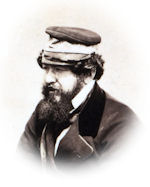
Post image for William Howard Russell’s Diary: Vicksburg.—News of Great Bethel.—Train to Jackson.—Great moral degradation.—The Capital of Mississippi.—Governor Pettus.


Friday, June 14th.—Last night with my good host from his plantation to the great two-storied steamer General Quitman, at Natchez. She was crowded with planters, soldiers and their families, and as the lights shone out of her windows, looked like a walled castle blazing from double lines of embrasures.

The Mississippi is assuredly the most uninteresting river in the world, and I can only describe it hereabout by referring to the account of its appearance which I have already given—not a particle of romance in spite of oratorical patriots and prophets, can ever shine from its depths, sacred to cat and buffalo fish, or vivify its turbid waters.

Before noon we were in sight of Vicksburg, which is situated on a high bank or bluff on the left bank of the river, about 400 miles above New Orleans and some 120 miles from Natchez.

Mr. MacMeekan, the proprietor of the “Washington,” declares himself to have been the pioneer of hotels in the far west; but he has now built himself this huge caravanserai, and rests from his wanderings. We entered the dining saloon, and found the tables closely packed with a numerous company of every condition in life, from generals and planters down to soldiers in the uniform of privates. At the end of the room there was a long table on which the joints and dishes were brought hot from the kitchen to be carved by the negro waiters, male and female, and as each was brought in the proprietor, standing in the centre of the room, shouted out with a loud voice, “Now, then, here is a splendid goose! ladies and gentlemen, don’t neglect the goose and apple-sauce! Here’s a piece of beef that I can recommend! upon my honour you will never regret taking a slice of the beef. Oyster-pie! oyster-pie ! never was better oyster-pie seen in Vicksburg. Run about, boys, and take orders. Ladies and gentlemen, just look at that turkey! who’s for turkey ?”—and so on, wiping the perspiration from his forehead and combating with the flies.

Altogether it was a semi-barbarous scene, but the host was active and attentive; and after all, his recommendations were very much like those which it was the habit of the taverners in old London to call out in the streets to the passers-by when the joints were ready. The little negroes who ran about to take orders were smart, but now and then came into violent collision, and were cuffed incontinently. One mild-looking little fellow stood by my chair and appeared so sad that I asked him “Are you happy, my boy?” He looked quite frjghtened. “Why don’t you answer me?” “I’se afeered, sir; I can’t tell that to Massa.” “Is not your master kind to you?” “Massa very kind man, sir; very good man when he is not angry with me,” and his eyes filled with tears to the brim.

The war fever is rife in Vicksburg, and the Irish and German labourers, to the extent of several hundreds, have all gone off to the war.

When dinner was over, the mayor and several gentlemen of the city were good enough to request that I would attend a meeting, at a room in the railway-station, where some of the inhabitants of the town had assembled. Accordingly I went to the terminus and found a room filled with gentlemen. Large china bowls, blocks of ice, bottles of wine and spirits, and boxes of cigars were on the table, and all the materials for a symposium.

The company discussed recent events, some of which I learned for the first time. Dislike was expressed to the course of the authorities in demanding negro labour for the fortifications along the river, and uneasiness was expressed respecting a negro plot in Arkansas; but the most interesting matter was Judge Taney’s protest against the legality of the President’s course in suspending the writ of habeas corpus in the case of Merriman. The lawyers who were present at this meeting were delighted with his argument, which insists that Congress alone can suspend the writ, and that the President, cannot legally do so.

The news of the defeat of an expedition from Fortress Monroe against a Confederate post at Great Bethel, has caused great rejoicing. The accounts show that there was the grossest mismanagement on the part of the Federal officers. The Northern papers particularly regret the loss of Major Winthrop, aide-decamp to General Butler, a writer of promise. At four o’clock p.m. I bade the company farewell, and the train started for Jackson. The line runs through a poor clay country, cut up with gulleys and watercourses made by violent rain.

There were a number of volunteer soldiers in the train; and their presence no doubt attracted the girls and women who waved flags and cheered for Jeff. Davis and States Rights. Well, as I travel on through such scenes, with a fine critical nose in the air, I ask myself “Is any Englishman better than these publicans and sinners in regard to this question of slavery?” It was not on moral or religious grounds that our ancestors abolished serfdom. And if to-morrow our good farmers, deprived of mowers, reapers, ploughmen, hedgers and ditchers, were to find substitutes in certain people of a dark skin assigned to their use by Act of Parliament, I fear they would be almost as ingenious as the Rev. Dr. Seabury in discovering arguments physiological, ethnological, and biblical for the retention of their property. And an evil day would it be for them if they were so tempted; for assuredly, without any derogation to the intellect of the Southern men, it may be said that a large proportion of the population is in a state of very great moral degradation compared with civilised Anglo-Saxon communities.

The man is more natural, and more reckless; he has more of the qualities of the Arab than are to be reconciled with civilisation; and it is only among the upper classes that the influences of the aristocratic condition which is generated by the subjection of masses of men to their fellow-man are to be found.

At six o’clock the train stopped in the country at a railway crossing by the side of a large platform. On the right was a common, bounded by a few detached wooden houses, separated by palings from each other, and surrounded by rows of trees. In front of the station were two long wooden, sheds, which, as the signboard indicates, were exchanges or drinking saloons; and beyond these again were visible some rudimentary streets of straggling houses, above which rose three pretentious spires and domes, resolved into insignificance by nearer approach. This was Jackson.

Our host was at the station in his carriage, and drove us to his residence, which consisted of some detached houses shaded by trees in a small enclosure, and bounded by a kitchen garden. He was one of the men who had been filled with the afflatus of 1848, and joined the Young Ireland party before it had seriously committed itself to an unfortunate outbreak; and when all hope of success had vanished, he sought, like many others of his countrymen, a shelter under the stars and stripes, which, like most of the Irish settled in Southern States, he was now bent on tearing asunder. He has the honour of being mayor of Jackson, and of enjoying a competitive examination with his medical rivals for the honour of attending the citizens.

In the evening I walked out with him to the adjacent city, which has no title to the name, except as being the State capital. The mushroom growth of these States, using that phrase merely as to their rapid development, raises hamlets in a small space to the dignity of cities. It is in such outlying expansion of the great republic that the influence of the foreign emigration is most forcibly displayed. It would be curious to inquire, for example, how many men there are in the city of Jackson exercising mechanical arts or engaged in small commerce, in skilled or manual labour, who are really Americans in the proper sense of the word. I was struck by the names over the doors of the shops, which were German, Irish, Italian, French, and by foreign tongues and accents in the streets; but, on the other hand, it is the native-born American who obtains the highest political stations and arrogates to himself the largest share of governmental emoluments.

Jackson proper consists of strings of wooden houses, with white porticoes and pillars a world too wide for their shrunk rooms, and various religious and other public edifices, of the hydrocephalic order of architecture, where vulgar cupola and exaggerated steeple tower above little bodies far too feeble to support them. There are of course a monster hotel and blazing barrooms—the former celebrated as the scene of many a serious difficulty, out of some of which the participators never escaped alive. The streets consist of rows of houses such as I have seen at Macon, Montgomery, and Baton Rouge; and as we walked towards the capital or State-house there were many more invitations “to take a drink” addressed to my friend and me than we were able to comply with. Our steps were bent to the State-house, which is a pile of stone, with open colonnades, and an air of importance at a distance which a nearer examination of its dilapidated condition does not confirm. Mr. Pettus, the Governor of the State of Mississippi, was in the Capitol; and on sending in our cards, we were introduced to his room, which certainly was of more than republican simplicity. The apartment was surrounded with some common glass cases, containing papers and odd volumes of books; the furniture, a table or desk, and a few chairs and a ragged carpet; the glass in the windows cracked and broken; the walls and ceiling discoloured by mildew.

The Governor is a silent man, of abrupt speech, but easy of access; and, indeed, whilst we were speaking, strangers and soldiers walked in and out of his room, looked around them, and acted in all respects as if they were in a public-house, except in ordering drinks. This grim, tall, angular man seemed to me such a development of public institutions in the South as Mr. Seward was in a higher phase in the North. For years he hunted deer and trapped in the forest of the far west, and lived in a Natty Bumpo or David Crocket state of life; and he was not ashamed of the fact when taunted with it during his election contest, but very rightly made the most of his independence and his hard work.

The pecuniary honours of his position are not very great as Governor of the enormous State of Mississippi. He has simply an income of £800 a year and a house provided for his use; he is not only quite contented with what he has but believes that the society in which he lives is the highest development of civilised life, notwithstanding the fact that there are more outrages on the person in his State, nay, more murders perpetrated in the very capital, than were known in the worst days of mediæval Venice or Florence; —indeed, as a citizen said to me, “Well, I think our average in Jackson is a murder a month;but he used a milder name for the crime.

The Governor conversed on the aspect of affairs, and evinced that wonderful confidence in his own people which, whether it arises from ignorance of the power of the North, or a conviction of greater resources, is to me so remarkable. “Well, sir,” said he, dropping a portentous plug of tobacco just outside the spittoon, with the air of a man who wished to show he could have hit the centre if he liked, “England is no doubt a great country, and has got fleets and the like of that, and may have a good deal to do in Eu-rope; but the sovereign State of Mississippi can do a great deal better without England than England can do without her.” Having some slight recollection of Mississippi repudiation, in which Mr. Jefferson Davis was so actively engaged, I thought it possible that the Governor might be right; and after a time his Excellency shook me by the hand, and I left, much wondering within myself what manner of men they must be in the State of Mississippi when Mr. Pettus is their chosen Governor; and yet, after all, he is honest and fierce; and perhaps he is so far qualified as well as any other man to be Governor of the State. There are newspapers, electric telegraphs, and railways; there are many educated families, even much good society, I am told, in the State; but the larger masses of the people struck me as being in a condition not much elevated from that of the original backwoodsman. On my return to the Doctor’s house I found some letters which had been forwarded to me from New Orleans had gone astray, and I was obliged, therefore, to make arrangements for my departure on the following evening.

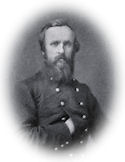
CAMP JACKSON, NEAR COLUMBUS,

Friday P. M., June 14, 1861.

DEAR UNCLE:—I received from Cincinnati two letters from you, and am very sorry to hear of your ill health. If you are not likely to come here soon, let me know, and I will certainly visit Fremont, when I can get leave to go home. The business here will require attention for a few days yet, before we get into an established routine. I shall probably leave here in about a week, and can then, if you wish it, visit you one day. If you were well, you would enjoy a few days here. Laura could send you out in the morning, and there are hosts of conveyances back.

I enjoy this thing very much. It is open-air, active life, novel and romantic. Hotter than Tophet in the sun, but a good breeze blowing all the time.

Our arrangement of regimental matters has turned out to be a capital one so far. We are in command of the whole camp, and, as Colonel Rosecrans is absent, Matthews and I are starring it. What we don’t know, we guess at, and you may be sure we are kept pretty busy guessing.

My want now is a good horse. A small or medium-sized animal of good sense, hardy and kind, good looking enough, but not showy, is what I want. A fast walk, smooth trot, and canter are the gaits. I don’t object to a pacer if he can walk and gallop well. Don’t bother yourself to find one, but if you happen to know any, let me know. I am busy or I would write more.

Sincerely,

R. B. HAYES.

S. BIRCHARD.


CAMP JACKSON, NEAR COLUMBUS,
Friday P. M., June 14, 1861.
DEAR UNCLE:—I received from Cincinnati two letters from you, and am very sorry to hear of your ill health. If you are not likely to come here soon, let me know, and I will certainly visit Fremont, when I can get leave to go home. The business here will require attention for a few days yet, before we get into an established routine. I shall probably leave here in about a week, and can then, if you wish it, visit you one day. If you were well, you would enjoy a few days here. Laura could send you out in the morning, and there are hosts of conveyances back.
I enjoy this thing very much. It is open-air, active life, novel and romantic. Hotter than Tophet in the sun, but a good breeze blowing all the time.
Our arrangement of regimental matters has turned out to be a capital one so far. We are in command of the whole camp, and, as Colonel Rosecrans is absent, Matthews and I are starring it. What we don't know, we guess at, and you may be sure we a
CAMP JACKSON, NEAR COLUMBUS,

Friday P. M., June 14, 1861.

DEAR UNCLE:—I received from Cincinnati two letters from you, and am very sorry to hear of your ill health. If you are not likely to come here soon, let me know, and I will certainly visit Fremont, when I can get leave to go home. The business here will require attention for a few days yet, before we get into an established routine. I shall probably leave here in about a week, and can then, if you wish it, visit you one day. If you were well, you would enjoy a few days here. Laura could send you out in the morning, and there are hosts of conveyances back.

I enjoy this thing very much. It is open-air, active life, novel and romantic. Hotter than Tophet in the sun, but a good breeze blowing all the time.

Our arrangement of regimental matters has turned out to be a capital one so far. We are in command of the whole camp, and, as Colonel Rosecrans is absent, Matthews and I are starring it. What we don't know, we guess at, and you may be sure we are kept pretty busy guessing.

My want now is a good horse. A small or medium-sized animal of good sense, hardy and kind, good looking enough, but not showy, is what I want. A fast walk, smooth trot, and canter are the gaits. I don't object to a pacer if he can walk and gallop well. Don't bother yourself to find one, but if you happen to know any, let me know. I am busy or I would write more.

Sincerely,

R. B. HAYES.

S. BIRCHARD.
re kept pretty busy guessing.
My want now is a good horse. A small or medium-sized animal of good sense, hardy and kind, good looking enough, but not showy, is what I want. A fast walk, smooth trot, and canter are the gaits. I don't object to a pacer if he can walk and gallop well. Don't bother yourself to find one, but if you happen to know any, let me know. I am busy or I would write more.
Sincerely,
R. B. HAYES.
S. BIRCHARD.
Post image for A Diary of American Events – June 14, 1861

—A signal balloon was seen at a considerable elevation over beyond the chain bridge, on the Leesburgh Road, at night, supposed to have been sent up by the rebels, for the purpose of communicating intelligence to secesionists in or near Washington.— Washington Star, June 15.

—A little fight occurred near Seneca’s Mill, on the Maryland side of the Potomac, 28 miles above Washington. Lient.-Col. Everett, in command of three companies of District Volunteers, 200 men, (a detachment of Col. Stone’s column,) started in canal boats from Georgetown, D.C., and were obliged to leave after a few miles up, the rebels having cut the dam. At Seneca the detachment was fired upon by 100 cavalry, on the Virginia side of the river. Col. Everett marched his men into the dry bed of the canal, and, sheltered by the opposite bank, returned the cavalry fire. Shots were exchanged for some time across the Potomac, a distance of seven-eighths of a mile. None of Col. E.’s men were injured. Two Virginia troopers were shot, one thought to be killed, as well as the commander, supposed to be Capt. Shreves. Upon the fall of their leader, the cavalry retreated. During the fight bullets were flattened on stones near our men, who lay down in perfect shelter.—N. Y. Express, June 17.

—John A. Dix, Major-General of the New York State forces, was appointed Major-General in the army of the United States.—N. Y. Tribune, June 14.

—At Rochester, N. Y., a flag was raised upon the court-house. The ceremonies were commenced with a prayer by the Rev. Dr. Dewey, followed by the hoisting of the flag, during the playing of the “Star-Spangled Banner.” Speeches were then made by Judge John C. Chumasero, Roswell Hart, and H. B. Ellsworth. —Rochester Express, June 14.

—On the representation of certain Irish-women of Alexandria, that their husbands, who had never been naturalized, and were therefore British subjects, had been impressed into the rebel service, Lord Lyons instructed the British consul at that point to make an investigation, and, if satisfied of the truth of the statements, to demand their release of the commanding general.—N. Y. World, June 15.

—Harper’s Ferry, Md., was finally evacuated by the Confederate forces. This step had so often been predicted, and denied with such confident assertions of the impregnable fortifications erected there and of the determination of the Confederate leaders to make it the chosen point for a desperate stand, that the first reports were received with doubts and incredulity. Confirmatory statements, however, of the withdrawal of pickets from all points above and below the Ferry, of the burning of the railroad bridge, and the destruction of provisions they were unable to carry off; finally not only confirmed the evacuation, but gave to it somewhat of the aspect of a hurried retreat. The troops left in two columns—one column going toward Winchester with the intention of joining the force at Manassas Junction; the other retreating through Loudon county toward Leesburg. Before leaving Harper’s Ferry the Confederates destroyed all the public property in the vicinity. The fine bridge, including the Winchester span, over one thousand feet in length, was burnt. An attempt was made to blow up the piers. The Government Armory buildings were burnt.

The machinery had previously been removed to Richmond. The railroad bridge at Martinsburg and the turnpike bridge over the Potomac at Shepherdstown were also destroyed.—Baltimore American, June 15.—(Doc. 264.)

—Gov. Jackson, of Missouri, having learned that Gen. Lyon was on the way to attack him at Jefferson city, evacuated that place. Soon after sunrise but few of the rebels were to be found in the town. Orders were given by Governor Jackson for the destruction of the Moreau Bridge, four miles down the Missouri, and Gen. Sterling Price attended to the demolition of the telegraph. All the cars and locomotives that could be used were taken by the rebels in their flight, and as fast as they crossed streams they secured themselves from pursuit by burning the bridges. They were quite cautious in concealing their place of destination from the loyal men of Jefferson, but certain remarks made it pretty certain that they were bound for Booneville, forty miles above, and one of the strongest secession towns in the State.—N. Y. Herald, June 20.

Post image for “Our captains impress me, as a body, most favorably.”—Diary of Rutherford B. Hayes

Thursday, June 13, Colonel William S. Rosecrans appeared and assumed the command. Our regiment was paraded after retreat had been sounded. The long line looked well, although the men were ununiformed and without arms. We were lucky in having a band enlisted as privates at Ashland.

Colonel Rosecrans is a spirited, rapid talker and worker and makes a fine impression on officers and men. Appointments of regimental staff officers were made. . . . Guards or sentinels detailed. Men lectured on manners and behavior, etc., etc.

There are many good singers in camp, and as we are not reduced to order yet, the noises of the camp these fine evenings and the strangeness have a peculiar charm. How cold the nights are! I am more affected as I look at the men on parade than I expected to be; not more embarrassed. I am not greatly embarrassed, but an agreeable emotion, a swelling of heart possesses me. The strongest excitement was when I saw the spirit and enthusiasm with which the oath was taken.

Our captains impress me, as a body, most favorably. Captain McIlrath is a large, fine-looking man, six feet three and a half inches high; has been a chief of police in Cleveland—one of the best in his vocation; takes great pride in his company and has it in a fine state of discipline—the best of any in camp. Captain Skiles has served in Mexico, is apparently a man of fine character, a member of church. Captain Moore is a New England-farmer-like man, shrewd and trusty. Captain Zimmerman is a conscientious, amiable, industrious man and has a stout set of men from the iron region, Mahoning County.

Post image for Wretched Southern news and a life lost.—Woolsey family letters; Eliza Woolsey Howland to Joseph Howland at Albany.

8 Brevoort Place, June 13, 1861.

We are waiting for our travellers who are due now at any moment by the “Adriatic.” Abby and I came down this morning from Fishkill leaving a lovely summer morning behind us, but bringing some of it in the shape of flowers, strawberries and vegetables. Mother has everything in nice order for the girls, cribs for the babies, little novelties and conveniences for the girls, plenty of lovely flowers, etc., etc. It will be a tight squeeze to accommodate them all, but it will be done, with Mother’s usual faculty, and there would have been a place for you, too, if you could have come. . . . How wretched the Southern news is; such bungling and such frightful and unnecessary loss of life. That battle of Bethel must injure us very much and give strength to the rebels. I suppose you have seen the death of poor Theodore Winthrop — one of its victims. It has shocked us all and brought the matter very close.


Major Winthrop was shot in the fight at Great Bethel, June 10th, 1861. From the Yale College Obituary Record this extract is taken:

“While gallantly leading a charge on the battery he fell mortally wounded and died in a few minutes. His body was buried near the spot where he fell. It was subsequently disinterred, and after obsequies in New York City was brought to New Haven, where, on the 28th of June, 1861, with unusual demonstrations of respect from military, civic and academic bodies, and from the people-at-large, it was laid to rest in the burial-place of his father.”

All the students and faculty marched in procession to the grave.

As the coffin was brought through New York it was taken to the Seventh Regiment Armory. There Mother and G. saw it resting on a gun carriage, when they went for a last farewell. They had, so short a time before, helped to pack and buckle on his knapsack!

Post image for “…out on a reconoitering expedition..,”–Army Life of an Illinois Soldier, Charles Wright Wills.

Cairo, June 13, 1861.

I am converted to the belief that Cairo is not such a bad place after all. The record shows that less deaths have occurred here in seven weeks among 3,000 men, than in Villa Ridge (a higher, and much dryer place with abundant shade and spring water), in five weeks among 1,000. There has been but one death here by disease in that time, and that with miserable hospital accommodations. The soldiers lie like the d___l about Cairo. The days are hot of course, but we do nothing now between 8 a.m. and 9 p.m. but cook and eat, so that amounts to not near as much as working all day at home. The mosquitoes and bugs are furious from 6 p.m. to 11, but we are drilling from 7 p.m. to nearly 9, and from that to 11 we save ourselves by smoking, which we all do pretty steadily. The nights after 11 are splendidly cool, so much so that we can cover ourselves entirely in our blankets, which is a block game on the mosquitoes, and sleep like logs. I believe those Camp Mather boys are hard sticks from the accounts we get of their fingers sticking to chickens, vegetables, etc. The citizens here say that the boys have not taken a thing without permission, or insulted a citizen. “Bully for us.”

We had a little fun yesterday. At 8 p.m. we (the Peoria and Pekin companies) were ordered to get ready for marching in ten minutes. So ready we got (but had to leave knapsacks, canteens and blankets) and were marched down to the “City of Alton,” which had on board a six pounder and one 12 pound howitzer. We cast off, fired a salute of two guns and steamed down the Mississippi. After five miles the colonel (Oglesby) called us together, told us that he was out on a reconoitering expedition, and his information led him to think we should be forced into a little fight before we got back. We were then ordered to load and keep in our places by our guns. At Columbus we saw a secesh flag waving but passed on a couple of miles farther where he expected to find a secesh force. Failed and turned back. At Columbus the flag was still waving and the stores all closed, and quite a crowd collected on the levee, but one gun though, that we could see. The colonel ordered the flag down. They said they wouldn’t do it. He said he would do it himself then. They answered, “We’d like to see you try it.” We were drawn up then round the cabin deck guards next the shore in two ranks, with guns at “ready,” and the captain jumped ashore and hauled down the serpent. We were all sure of a skirmish but missed it. Flag was about 15×7, with eight stars and three stripes. I send you some scraps of it. They raised another flag one hour after we left and sent us word to “Come and take it.” The ride on the river was the best treat I’ve had for two years.

Post image for A Diary of American Events – June 13, 1861

—By proclamation of Jefferson Davis, this day was observed as a fast-day throughout the States in rebellion against the U. S. Government.—N. Y. Times, June 2.

—The United Turner Rifles, Twentieth Regiment N. Y. S. V., Colonel Max Weber, left New York for Fortress Monroe and the army of Southeastern Virginia. In their march through the city they were drawn up in front of the City Hall, where a flag was presented to them by Samuel B. Ruggles, in behalf of Mrs. Charles E. Strong and other ladies of New York.—(Doc. 248.)

—Brigadier-General Schenck has been assigned to the Second Michigan Regiment now in Washington. He is thus attached to the Military Department of Washington, the chief of which is General Mansfield.—Conflicting statements having been made, it is proper to say—while Major-General Banks superseded General Cadwalader in command of the Department at Annapolis, the latter has been assigned to command a new division to cooperate with General Patterson in the progressing action against Harper’s Ferry.—Rochester Union, June 14.

—The steamer Iatan, with the Second Battalion of the First Regiment of Missouri volunteers, under command of Lieutenant Colonel Andrews, one section of Totten’s light artillery and two companies of regulars, under Captain Lathrop, and the steamer J. C. Swon, with the First Battalion of the First Regiment, under Colonel Blair, and another section of Totten’s battery, and a detachment of pioneers, and General Lyon and staff, numbering 1,500 men all told, left St. Louis for some point up the Missouri River, supposed to be Jefferson city. They had horses, wagons, and all necessary camp equipage, ammunition, and provisions for a long march.—Louisville Journal, June 14.

—The troops which started from Washington on Monday, left the vicinity of Tenlytown the next day, and are now beyond Rockville; the National Rifles, under Major Smead, the Slemmer Guards, Capt. Knight, and the Cameron Guards, accompanied by Capt. Magruder’s battery of U. S. Artillery, with three field-pieces, being in advance. The troops have taken the river route, and will be followed immediately by the First Pennsylvania and New York Ninth Regiments, which were at Rockville on Tuesday. What is called the river route is the road which diverges from the Frederick Road outside of Rockville, and passes through Poolesville direct to Edwards’ Ferry and on to Leesburg, Va. For several weeks past the Edwards’ Ferry route has been a general thoroughfare for secessionists from Maryland, and also for military stores, provisions, etc. The Fifth Battalion D. C. Volunteers took boats at the Chain Bridge yesterday morning at eight o’clock, and proceeded towards Edwards’ Ferry. This battalion is commanded by Lieut.-Col. Everett.— Washington Star, June 12.

—The Third Michigan Regiment, numbering 1,040 men, left Grand Rapids this morning for the seat of war. They are a fine body of men fully armed, equipped, and ready for service.—N. Y. Commercial Advertiser, June 13.

—The Sixth Regiment N. Y. S. V., Colonel William Wilson’s Zouaves, left New York for Fort Pickens. Previous to its departure the regiment was presented with a set of colors by the ladies of the Relief Committee.—(Doc. 249.)

—A portion of Montgomery’s men, under Capt. Jamison, armed with Sharp’s rifles and revolvers, reached Wyandotte, Kansas, from Lawrence under orders from Col. Mitchell. Montgomery, with several hundred mounted men, will at once take possession of the Kansas side of the Missouri line, so as to be ready to meet Gov. Jackson’s forces whenever they make a movement from Independence towards Kansas City. The militia and volunteer companies are ready to march to the order, as soon as the orders are sent.—St. Louis Democrat, June 18.

—The largest meeting ever known in Dover, Delaware, was held there to-day. Chancellor Harrington presided. The following, among other resolutions, was adopted unanimously: Resolved, That, considering the sentiments embodied in the foregoing resolution, incompatible with the views of James A. Bayard, now Senator, as expressed in his last speech in the Senate, and his recent addresses to the people of Delaware, we most respectfully request him to resign.

Not less than three thousand persons were at the meeting, and great enthusiasm prevailed. A resolution was also passed requesting the Governor to call the Legislature together.—Rochester Union, June 14.

—An attack was made by the rebels on the outpost of the Pennsylvania Fifth regiment at Alexandria, in which a private of company G was wounded in the arm. His arm was amputated.—N. Y. Commer. Advertiser, June 14.

—Gen. Beauregard ordered the Fairfax Court-House Company, Capt. Ball, recently prisoners in Washington, to leave the State of Virginia, because they took the oath of allegiance to the United States. Those of them who may be induced to violate it, will, of course, be excepted from the operation of this order.—N. Y. World, June 15.

Post image for “The camp is yet higgledy-piggledy…”—Rutherford B. Hayes

COLUMBUS, June 12, 1861.

DEAR FORCE:—You can’t regret more than I do the issue of this business, so far as you are concerned. I have tried to get two companies (so as to include you and Company A of G.G. [Guthrie Greys]) admitted. Failing in that, I tried one, but the thing is all settled, and the governor fears to disturb the elements again.

Our regiment promises to be an exceedingly pleasant one. We are the first regimental officers on the ground. Our colonel will command in this camp until a brigadier-general arrives. We are the best known persons, and the struggle is to get into our regiment from all quarters. The camp is yet higgledy-piggledy and will require some labor to bring it up. But all goes on rapidly. We have been busy as bees a large part of the time in the scorching sun; but so far, it [is] great fun. I enjoy it as much as a boy does a Fourth of July.

Sincerely,

R.B. HAYES

M. F. FORCE, ESQ.

Post image for “Her house has been searched, furniture broken, and many depredations committed since she left home; books thrown out of the windows during a rain: nothing escaped their fury.”—Diary of a Southern Refugee.

The Briars, June 12.—We are now in the beautiful Valley of Virginia, having left Chantilly on the 8th. The ride through the Piedmont country was delightful; it looked so peaceful and calm that we almost forgot the din of war we had left behind us. The road through Loudoun and Fauquier was picturesque and beautiful. We passed through the villages of Aldie, Middleburg, and Upperville. At Middleburg we stopped for an hour, and regaled ourselves on strawberries and cream at the house of our excellent brother, the Rev. Mr. K. At Upperville we spent the night. Early next morning we went on through the village of Paris, and then began to ascend the Blue Ridge, wound around on the fine turnpike, paused a moment at the top to “view the landscape o’er,” and then descended into the “Valley.” The wheat, which is almost ready for the reaper, is rich and luxuriant, foreshadowing an abundant commissariat for our army. After driving some miles over the delightful turnpike, we found ourselves at this door, receiving the warm-hearted welcome of the kindest of relatives and the most pleasant of hosts. Our daughters were here before us, all well, and full of questions about “home.” This is all very delightful when we fancy ourselves making a voluntary visit to this family, as in days gone by, to return home when the visit is over, hoping soon to see our friends by our own fireside; but when the reality is before ns that we were forced from home, and can only return when it pleases our enemy to open the way for us, or when our men have forced them away at the point of the bayonet, then does our future seem shadowy, doubtful, and dreary, and then we feel that our situation is indeed sorrowful. But these feelings must not be indulged; many are already in our situation, and how many more are there who may have to follow our example! Having no houses to provide for, we must be up and doing for our country; idleness does not become us now—there is too much to be done; we must work on, work ever, and let our country’s weal be our being’s end and aim.

Yesterday we went to Winchester to see my dear S., and found her house full of refugees: my sister Mrs. C., and her daughter Mrs. L., from Berkeley County. Mrs. C.’s sons are in the army; her eldest, having been educated at the Virginia Military Institute, drilled a company of his own county men during the John Brown raid; he has now taken it to the field, and is its commander; and Mr. L. is in the army, with the rank of major. Of course the ladies of the family were active in fitting out the soldiers, and when an encampment was near them, they did every thing in their power to contribute to the comfort of the soldiers; for which sins the Union people around them have thought proper to persecute them, until they were obliged to leave home—Mrs. L. with two sick children. Her house has been searched, furniture broken, and many depredations committed since she left home; books thrown out of the windows during a rain: nothing escaped their fury.

Winchester is filled with hospitals, and the ladies are devoting their energies to nursing the soldiers. The sick from the camp at Harper’s Ferry are brought there. Our climate seems not to suit the men from the far South. I hope they will soon become acclimated. It rejoices my heart to see how much everybody is willing to do for the poor fellows. The ladies there think no effort, however self-sacrificing, is too great to be made for the soldiers. Nice food for the sick is constantly being prepared by old and young. Those who are very sick are taken to the private houses, and the best chambers in town are occupied by them. The poorest private and the officer of high degree meet with the same treatment. The truth is, the elite of the land is in the ranks. I heard a young soldier say, a few nights ago, that his captain was perhaps the plainest man, socially, in the company, but that he was an admirable officer. We heard a good story about a wealthy young private whose captain was his intimate friend, but not being rich, he could not afford to take a servant to camp; it therefore fell to the lot of the privates to clean the captain’s shoes. When the turn of the wealthy friend came, he walked up, cap in hand, with an air of due humility, gave the military salute, and said, with great gravity, ” Captain, your shoes, if you please, sir.” The ludicrousness of the scene was more than either could stand, and they laughed heartily. But the wealthy private cleaned the captain’s shoes.