Following the American Civil War Sesquicentennial with day by day writings of the time, currently 1863.

The American Civil War

Post image for “Some whole companies say that they will not go.”–Army letters of Oliver Willcox Norton.

Camp Wright, Hulton, Penn.,
Sunday, June 9, 1861.

Dear Sister L.:—

I wish you could just step in and see us here, say on a dress parade. We are in just as beautiful a place as I ever saw. The lovely Alleghany rolls along at the foot of the hill, and the little country seats nestled in quiet nooks, the new buildings in camp, the groves and orchards, the lane that leads to the river, and the beautiful mountain rising up on the other side of the river, make a picture I never saw equalled.

I wrote to H. yesterday that we were accepted and were to be mustered in immediately. The Colonel received a telegram last night from the Secretary of War, saying that we would be taken for three years, unless sooner discharged, or we would be sent home. That you see materially alters the case. I don’t know how it will work. Some whole companies say that they will not go. We shall know in a day or two. I hardly know what to do. It seems a long time to live such a life, but if I am needed, I must go. If our company goes as a company, I shall go too. If not, you may look for me home soon.

I just wish I could have seen you last night instead of reading your letter. I thought perhaps you were having a good time about the time I was reading that letter. I sincerely hope the choice you have made is a good one. Give my respects to C and tell him, I think, as matters stand, the sooner he and I become acquainted the better. I would like to have him write to me.

I think from what you write, that vegetation must be more advanced here than there. Potatoes and corn are six inches high, and clover in bloom. I saw strawberries and cherries in market yesterday.

H. B. wrote the other day that his folks had adopted a daughter about fifteen years old, and that L. C. was a secessionist. He had a big fuss with the boys who put up a Union flag near his house, threatened the life of some, sued others, and was bound over himself to appear at court to answer for his rabid conduct.

Well, I must stop. I hope you will not wait so long before writing again. I am so anxious to hear from you often. If there is anything you expected to see, that is omitted, you may hear it in the future. My address is Camp Wright, Pittsburgh.

Post image for “…report to the adjutant-general at Columbus, Monday morning.”—Diary of Rutherford B. Hayes

June 7, 1861, I received a dispatch from Governor Dennison asking me if I would accept the majority in a regiment of which William S. Rosecrans was to be colonel and Judge Matthews lieutenant-colonel. I read it to Lucy, consulted with my old law partner [Ralph P. Buckland], who happened to be visiting Cincinnati, and thereupon replied that I would accept as proposed. Late in the afternoon of the next day I received a dispatch from the governor, addressed to Judge Matthews and myself, directing us to report to the adjutant-general at Columbus, Monday morning. Not being able to find Judge Matthews in the city, on the next day (Sunday, P. M.), I rode out to Judge Matthews’ residence at Glendale, took tea with him and his family and friends (Mrs. Matthews and mother, and Mr. and Mrs. Todd), and rode into the city arriving a few minutes before 9 P. M. I bid good-bye to my family (my mother, mother-in-law, Mrs. Webb, Lucy, and the boys), and at 9:30 P. M. we took the cars by way of Dayton for Columbus.

Post image for A Diary of American Events – June 9, 1861

—A detachment of the Rhode Island Regiment finished building a floating bridge on the Potomac, near Georgetown, by which thousands of men could be transported across in a few hours. Capt. Medlar, Provost-marshal of Alexandria, seized army supplies consisting of uniforms and cavalry swords, to the value of fifteen hundred dollars.—N. Y. World, June 10.

—Two prisoners were captured yesterday by four privates of Company B, Michigan Regiment, one mile this side of Berke Station, and thirteen miles from Alexandria, Va., on the Orange and Alexandria Railroad. One of the prisoners is a corporal in a cavalry company, and the other a private in the Governor’s Guards of Richmond, which is also a cavalry company. The Michigan men while scouting approached near Berks Station, when they saw a number of stacks of muskets. They put back and were pursued by the two cavalry, but sought refuge in ambush, and succeeded in capturing their prisoners and brought them to Alexandria, where they are treated with exceeding kindness. They appear to be quite contented, and one of them, who is a physician, is writing a statement of his experience. The names of the prisoners are Dr. Thomas M. Flemming and Samuel Green.

Seven thousand yards of cassinet and other military goods were seized at the Adams Express office to-day, consigned to Point of Rocks, via Alexandria and London Railroad, valued at about $10,000.

Expedition, the first number of the soldiers’ newspaper, printed by the Pennsylvania Fifth Regiment, appeared this evening. It is printed in fine style on the old Alexandria Sentinel press, and is full of interesting information regarding the condition of the soldiers, &c. It is edited by Lieutenant Ely, of Lebanon county. Several columns are devoted to German literature.—N. Y. Courier & Enquirer, June 10.

—In the last number of the Danville (Ky.) Review, Rev. Dr. Breckinridge discusses the southern rebellion in temperate but forcible language. He traces the origin and progress of the insurrection, and demonstrates not only that the rebel leaders are bent upon the accomplishment of selfish ends, but that the latent loyalty of the masses of the southern people needs but the protection of the Federal Government to be able to assert itself, to the utter discomfiture of Jeff Davis and his fellows. Dr. Breckinridge is the uncle of the late Vice-President of the United States.—N. Y. Evening Post, June 22.

—All day the Naval Brigade, under the direction of a company of United States marines, were engaged off Fortress Monroe, Va., practising the management of eight or ten scows, each carrying twenty-four oars, and capable of transporting 180 men each, besides the rowers. When this marine drill was concluded every oar was carefully muffled, and the scows, manned each by a coxswain and twenty-six rowers from the Naval Brigade, glided out from the fort, and rowed in the harbor to the mouth of Hampton River, and up the stream. At about midnight they were moored on the hither shore in Hampton, and just below the remains of the bridge destroyed in the rebel retreat two weeks previously. The stream at that point is from sixty to one hundred yards in width. In the afternoon orders were given for a concerted movement of forces from Newport News, and from the camps at Fortress Monroe, against a position that the rebels had taken up at or near Great Bethel, in York county, a place about 12 miles northwest of Fortress Monroe. In accordance with the terms of the order three companies of Duryea’s regiment, under Capt. Kilpatrick, went forward from Hampton on the Bethel road at 10 P. M., and soon after the remainder of Duryea’s regiment, and the New York Third, Col. Townsend, followed, and were ferried over Hampton Creek by the boats of the Naval Brigade previously taken round from Fortress Monroe. Meantime, 5 companies, each from the Vermont First Regiment, and the Massachusetts Fourth, under Lieut.-Col. Washburne; six companies of the N. Y. Seventh, Col. Bendix, and a squad of regulars with 2 howitzers, under Lieut. Greble, moved forward from the position at Newport News, to form a junction on the road with the men from Fortress Monroe.

Post image for William Howard Russell’s Diary: Visit to Mr. M’Call’s plantation.—Irish and Spaniards.—The planter.

June 8th.—According to promise, the inmates of Mr. Burnside’s house proceeded to pay a visit to-day to the plantation of Mr. M’Call, who lives at the other side of the river some ten or twelve miles away. Still the same noiseless plantations, the same oppressive stillness, broken only by the tolling of the bell which summons the slaves to labor, or marks the brief periods of its respite! Whilst waiting for the ferryboat, we visited Dr. Cotmann, who lives in a snug house near the levee, for, hurried as we were, ‘twould nevertheless have been a gross breach of etiquette to have passed his doors; and I was not sorry for the opportunity of making the acquaintance of a lady so amiable as his wife, and of seeing a face with tender, pensive eyes, serene brow, and lovely contour, such as Guido or Greuse would have immortalized, and which Miss Cotmann, in the seclusion of that little villa on the banks of the Mississippi, scarcely seemed to know, would have made her a beauty in any capital in Europe.

The Doctor is allowed to rave on about his Union propensities and political power, as Mr. Petigru is permitted to indulge in similar vagaries in Charleston, simply because he is supposed to be helpless. There is, however, at the bottom of the Doctor’s opposition to the prevailing political opinion of the neighborhood, a jealousy of acres and slaves, and a sentiment of animosity to the great seigneurs and slave-owners, which actuate him without his being aware of their influence. After a halt of an hour in his house, we crossed in the ferry to Donaldsonville, where, whilst we were waiting for the carriages, we heard a dialogue between some drunken Irishmen and some still more inebriated Spaniards in front of the public-house at hand. The Irishmen were going off to the wars, and were endeavoring in vain to arouse the foreign gentlemen to similar enthusiasm; but, as the latter were resolutely sitting in the gutter, it became necessary to exert eloquence and force to get them on their legs to march to the head-quarters of the Donaldsonville Chasseurs. “For the love of the Virgin and your own sowl’s sake, Fernandey, get up and cum along wid us to fight the Yankees.” “Josey, are you going to let us be murdered by a set of damned Protestins and rascally niggers?” “Gomey, my darling, get up; it’s eleven dollars a month, and food and everything found. The boys will mind the fishing for you, and we’ll come back as rich as Jews.”

What success attended their appeals I cannot tell, for the carriages came round, and, having crossed a great bayou which runs down into an arm of the Mississippi near the sea, we proceeded on our way to Mr. M’Call’s plantation, which we reached just as the sun was sinking into the clouds of another thunderstorm.

The more one sees of a planter’s life the greater is the conviction that its charms come from a particular turn of mind, which is separated by a wide interval from modern ideas in Europe. The planter is a denomadized Arab;—he has fixed himself with horses and slaves in a fertile spot, where he guards his women with Oriental care, exercises patriarchal sway, and is at once fierce, tender, and hospitable. The inner life of his household is exceedingly charming, because one is astonished to find the graces and accomplishments of womanhood displayed in a scene which has a certain sort of savage rudeness about it after all, and where all kinds of incongruous accidents are visible in the service of the table, in the furniture of the house, in its decorations, menials, and surrounding scenery.

It was late in the evening when the party returned to Donaldsonville; and when we arrived at the other side of the bayou there were no carriages, so that we had to walk on foot to the wharf where Mr. Burnside’s boats were supposed to be waiting—the negro ferryman having long since retired to rest. Under any circumstances a march on foot through an unknown track covered with blocks of timber and other impedimenta which represented the road to the ferry, could not be agreeable; but the recent rains had converted the ground into a sea of mud filled with holes, with islands of planks and beams of timber, lighted only by the stars—and then this in dress trousers and light boots!

We plunged, struggled, and splashed till we reached the levee, where boats there were none; and so Mr. Burnside shouted up and down the river, so did Mr. Lee, and so did Mr. Ward and all the others, whilst I sat on a log affecting philosophy and indifference, in spite of tortures from mosquitoes innumerable, and severe bites from insects unknown.

The city and river were buried in darkness; the rush of the stream, which is sixty feet deep near the banks, was all that struck upon the ear in the intervals of the cries, “Boat ahoy!” “Ho! Batelier!” and sundry ejaculations of a less regular and decent form. At length a boat did glide out of the darkness, and the man who rowed it stated he had been waiting all the time up the bayou, till by mere accident he came down to the jetty, having given us up for the night. In about half an hour we were across the river, and had per force another interview with Dr. Cotmann, who regaled us with his best in story and in wine till the carriages were ready, and we drove back to Mr. Burnside’s, only meeting on the way two mounted horsemen with jingling arms, who were, we were told, the night patrol;—of their duties I could, however, obtain no very definite account.

Camp Wright, Hulton, Penn.,
Saturday, June 8, 1861.

Dear Sister H.:—

You will see by the date of this that I have left Camp Wilkins and am now at the new camp called Camp Wright. We arrived here to-day. Oh, I tell you we have a splendid place, fifteen miles from Pittsburgh on the south bank of the Alleghany. The barracks of the Erie regiment are sheds seventy-five feet long and twenty feet wide. They stand in a row with an alley ten feet wide between each two. Each shed is divided by a partition running through the middle, making two long rooms ten feet wide. Each company occupies one room in one shed and one in the next shed across the alley.

At the head of the alley are the Captain’s quarters, overlooking his whole company. The railroad runs between the camp and the river and on the other side of the railroad is the parade ground, a beautiful meadow of ninety acres. The barracks are built on a side-hill so that the upper end rests on the ground and the other is some six feet from the ground. The floor descends about seven feet in the seventy-five, making quite a slope. The tables are wide boards hung on hinges to the side of the wall. We are to sleep on the bare floor. We have just the best of spring water and it tastes good after drinking the nasty river water which we had so long in Pittsburgh.

There is a large orchard in camp and a grove of beautiful shade trees. A little brook runs through a shady hollow down on one side, and every one seems delighted at the change from the foul, dirty camp to this beautiful place.

But we are not to stay here long. Colonel McLane received a dispatch from Washington yesterday, saying that we were accepted by the Government, and were to be mustered into the United States service immediately, those who are willing for three years and the others for three months from this time, those who will not enlist for three months to be sent home. I shall not enlist for three years now. I will wait till my three months are up. We are to be uniformed and equipped immediately. We expect to be ordered to Western Virginia or Harper’s Ferry, though, for good reasons, we are not told where we are going.

A large amount of cartridges were sent off from the arsenal Thursday night, and troops are moving south from all directions, showing that something is to be done and that soon, too. Perhaps the war movements will not be so interesting to you, so I will tell you of a visit I paid to a glass factory yesterday. I never was in one before and it was quite a sight to me. A dozen or more great furnaces were filled with boiling glass, and a boy would run up and stick in a long rod, give it a turn and take out a dumpling of the red-hot liquid and hold it over an iron die, when another would cut it off with a pair of shears and bring down a lever on it, pressing it into a mold, and then pull it back and turn out a beautiful salt-cellar or sugar-bowl like yours, or a tumbler, a lamp, a sauce-dish, or whatever the mold happened to be. At another place they were blowing bottles and glass jars, such as they have to hold candy in shop windows. A man takes a hollow rod, runs it in the furnace and brings out a little wad of glass, then blows it a little and it swells out just like a bubble. He then whirls it over his head a few times and blows a little more, rolls it round on an iron plate to make it round, clips it off with a pair of shears, and another man stabs a fork into the bottom of it, and heating it, passes it to another who shapes the neck and mouth. They would make twenty in the time it takes me to tell you how they make one. One of the workmen kindly handed me his pipe and told me to blow a bottle. I did, two or three of them, and blew some glass bubbles, a piece of one of which I send to you. I think you never saw thinner glass, at least I never did.

While I was down to the river yesterday, I saw a curiosity—a tree growing downwards. The roots were in the top of the river bank, and the trunk hung right down and the branches curved upward.

John Beauchamp Jones avatar.  No image of Jones has been found online.

JUNE 8TH—This morning Col. Bledsoe came in with his letters, some fifty in number, looking haggard and worn. It was, indeed, a vast number. But with one of his humorous smiles, he said they were short. He asked me to look over them, and I found them mainly appropriate responses to the letters marked for answer, and pretty closely in accordance with the Secretary’s dictation. In one or two instances, however, he had been unable to decipher the Secretary’s most difficult chirography—for be had no idea of punctuation. In these instances he had wholly misconcieved the meaning, and the replies were exactly the reverse of what they were intended to be. These he tore up, and wrote others before submitting any to the Secretary.

I had only written some thirty letters; but mine were longer—longer than there was any necessity for. I told the colonel that the Secretary had a partiality for “full” letters, especially when addressing any of his friends; and that Major Tyler, who had returned, and was then sitting with the Secretary, rarely dismissed one from his pen under less than three pages. The colonel smiled, and said when there was nothing further to say, it was economy to say nothing. He then carried his letters into the Secretary’s office, clearing his throat according to custom on passing a door. I trembled for him; for I knew Mr. Walker had an aversion to signing his name to letters of merely two or three lines. He returned again immediately, saying the Secretary was busy. He left the letters, however.

Presently Major Tyler came out of the Secretary’s room with several voluminous letters in his own handwriting, duly signed. The major greeted the colonel most cordially; and in truth his manners of a gentleman are so innate that I believe it would be utterly impossible for him to be clownish or rude in his address, if he were to make a serious effort to be so.

The major soon left us and reentered the Secretary’s office; but returned immediately bearing the colonel’s fifty letters, which he placed before him and then retired. The very first one the colonel’s eye rested upon, brought the color to his face. Every line in it had been effaced, and quite a different answer substituted in pencil marks between the lines! “I wrote that,” said the colonel, “according to his own dictation.” And as every letter carried in its fold the one to which it was a reply, he exhibited the Secretary’s words in pencil marks. The colonel was right. The Secretary had omitted the little word “not”; and hence the colonel had written to the Georgian : “Your company of cavalry is accepted.” The Secretary refused almost uniformly to accept cavalry, and particularly Georgia cavalry. I took blame to myself for not discovering this blunder previously. But the colonel, with his rapid pen, soon wrote another answer. About one-half the letters had to be written over again; and the colonel, smiling, and groaning, and perspiring so extravagantly that he threw off his coat, and occupied himself several hours in preparing the answers in accordance with the Secretary’s corrections. And when they were done, Mr. S. S. Scott, who was to copy them in the letter-book, complimented the colonel on their brevity. In response to this, the colonel said, unfortunately, he wished he, Scott, were the secretary. Scott abused every one who wrote a long letter.

Post image for A Diary of American Events – June 8, 1861

—The bridges at Point of Rocks and Berlin, on the Potomac, River, were burned by order of Johnston, the rebel general. Neither of them were railroad bridges.—N. Y. Herald, June 10.

—The Sanitary Commission was authorized by the Secretary of War, and approved by the President. Its aim is to help, by cautious suggestion, in the laborious and extraordinary exigencies of military affairs, when the health of the soldiers is a matter of the most critical importance. The commission consists of the Rev. Dr. Bellows, Prof. A. D. Bache, LL. D., Prof. Wolcott Gibbs, M. D., Prof. Jeffries Wyman, M. D., W. H. Van Buren, M. D., Dr. S. G. Howe, Dr. Wood, U. S. A., Col. Cullum, U. S. A., and Major Shires, U. S. A.—N. Y. Commercial, June 10.

—Some disunion troops from Leesburg, Va., burnt four bridges on the Alexandria, Loudon, and Hampshire Railroad, at Tuscarora, Lycoline, Goose Creek, and Beaver Dams, being the balance of the bridges from Leesburg to Broad Run.—N. Y. World, June 15.

—The ceremony of the presentation of a Confederate flag, from the ladies of Baltimore to the members of the Maryland Guard, now in Virginia, took place in the Capitol grounds, at Richmond, Va. Mrs. Augustus McLaughlin, the wife of one of the officers of the late United States Navy, who brought the flag from Baltimore, concealed as only a lady knows how, was present, and received the compliments of a large number of ladies and gentlemen who surrounded her upon the steps of the monument, from which the address was made. The presentation speech was made by the Hon. J. M. Mason. Accompanying the flag is the inscription: “The ladies of Baltimore present this flag of the Confederate States of America to the soldiers composing the Maryland Regimen; now serving in Virginia, as a slight testimonial of the esteem in which their valor, their love of right, and determination to uphold true constitutional liberty, are approved, applauded, and appreciated by the wives and daughters of the monumental city.”—(Doc. 289.)—Richmond Dispatch, June 10.

—Gov. Hicks, of Maryland, issued a proclamation calling upon all persons having arms belonging to ‘that State, to surrender them.—(Doc. 240.)

—This morning a detachment of Federal troops from Annapolis, on one of the steamers of the Ericsson line, made their appearance in Miles River, and landed at the ferry, the nearest point to Easton, Md. On landing they proceeded to arrest Messrs. Thomas and William Holliday, whom they compelled to inform them where the armory for the safe-keeping of the guns was located. They also arrested Charles G. Kerr, Esq., late of the Exchange newspaper, and a Mr. Roberts, and several others. The military then proceeded on their search for arms, and succeeded in finding a number of muskets, and several iron field-pieces, all of which they put on the steamer and removed to Annapolis. Two of the old iron field-pieces were some time since removed from Cambridge, where they were planted for the defence of that place in the war of 1814. Before going to Miles River Ferry they stopped at the farm of Capt. Ogle Tilghman, a few miles below, but did not find the proprietor at home. They reported to Mrs. T. that they were from Richmond, and had come for the purpose of offering arms to the inhabitants, at the same time asking if there were any in the house. There were none but the private arms of Capt. T., which they did not disturb. While the detachment was drawn up on the boat, one of the soldiers placed the muzzle of his musket under his chin for a rest for his head, when the weapon accidentally discharged. The ball passed out through the top of his head, killing him instantly, and then passed through the hurricane deck in close proximity to two soldiers who were there. The detachment consisted of 250 men of the N. Y. 13th Regiment, under Col. Abel Smith.—Baltimore Sun, June 11.

—General T. A. Morris, commanding the United States troops at Philippi, issued a proclamation announcing that Western Virginia is now free from the enemies to her peace, the United States forces having routed the secessionists at Philippi, causing them to flee for refuge to the passes of the mountains; and he therefore calls upon all loyal Virginians to come to the support of the United States Government, and serve in defence of their own soil.—(Doc. 241.)

—The New Orleans Catholic Standard says: “Let no Southern child be educated outside the limits of the Confederate States. We have excellent schools and colleges at Richmond and Norfolk in Virginia; at Charleston and Columbia in South Carolina; at Savannah and Augusta in Georgia; at St. Augustine in Florida; at Mobile in Alabama; at Bay St. Louis, Pass Christian, Sulphur Springs, Vicksburg, and Natchez in Mississippi; at Fort Smith, Helena, and Little Rock in Arkansas; at Marksville, and Memphis in Tennessee; at Galveston, New Braunfels, San Antonio, Brownsville, and Liberty in Texas; and at St. Michael’s Grand Coteau; Vermillionville, Thibodeaux, Donaldsonville, Natchitoches, Avoyelles, Alexandria, Shreveport, Iberville, Algiers, and New Orleans in Louisiana. The social bonds between us and the Catholics at the North have been severed by them. We acknowledge them no longer as our countrymcn. They and their institutions have no claims upon us.”

—The Burlington (Vt.) Times, of this date, contains an extended narrative of the movements of the First Vermont Regiment at Fortress Monroe and its vicinity.—(Doc. 242.)

—Addresses to the People of the United States and to the people of Kentucky, signed by J. J. Crittenden, Jas. Guthrie and others, members of the Border State Convention, lately in session at Frankfort, Ky., were published. Only the States of Kentucky and Missouri were represented; one gentleman was irregularly present from Tennessee. To the people of the United States the Convention says that, “in its opinion, the obligation exists to maintain the Constitution of the United States and to preserve the Union unimpaired;” and suggests that something “ought to be done” to quiet “apprehension within the slave States that already adhere to the Union,” To the people of Kentucky they say that the proper course for that State “to pursue, is to take no part in the controversy between the Government and the seceded States but that of mediator and intercessor,” and ask if this “is not an attitude worthy of a great people.” —(Doc. 243.)

Post image for William Harold Russell’s Diary: War-rumors, and military movements.—Governor Manning’s slave plantations.—Fortunes made by slave-labor.—Frogs for the table. —The forest.—Cotton and sugar.—A thunderstorm.

June 7th.—The Confederate issue of ten millions sterling, in bonds payable in twenty years, is not sufficient to meet the demands of Government; and the four millions of small Treasury notes, without interest, issued by Congress, are being rapidly absorbed. Whilst the Richmond papers demand an immediate movement on Washington, the journals of New York are clamoring for an advance upon Richmond. The planters are called upon to accept the Confederate bonds in payment of the cotton to be contributed by the States.

Extraordinary delusions prevail on both sides. The North believe that battalions of scalping Indian savages are actually stationed at Harper’s Ferry. One of the most important movements has been made by Major-General McClellan, who has marched a force into Western Virginia from Cincinnati, has occupied a portion of the line of the Baltimore and Ohio railway, which was threatened with destruction by the Secessionists; and has already advanced as far as Grafton. Gen. McDowell has been appointed to the command of the Federal forces in Virginia. Every day regiments are pouring down from the North to Washington. General Butler, who is in command at Fortress Monroe, has determined to employ negro fugitives, whom he has called “Contrabands,” in the works about the fort, feeding them, and charging the cost of their keep against the worth of their services; and Mr. Cameron, the Secretary of War, has ordered him to refrain from surrendering such slaves to their masters, whilst he is to permit no interference by his soldiers with the relations of persons held to service under the laws of the States in which they are in.

Mr. Jefferson Davis has arrived at Richmond. At sea the Federal steamers have captured a number of Southern vessels; and some small retaliations have been made by the Confederate privateers. The largest mass of the Confederate troops have assembled at a place called Manassas Junction, on the railway from Western Virginia to Alexandria.

The Northern papers are filled with an account of a battle at Philippi, and a great victory, in which no less than two of their men were wounded and two were reported missing as the whole casualties; but Napoleon scarcely expended so much ink over Austerlitz as is absorbed on this glory in the sensation headings of the New York papers.

After breakfast I accompanied a party of Mr. Burnside’s friends to visit the plantations of Governor Manning, close at hand. One plantation is as like another as two peas. We had the same paths through tasselling corn, high above our heads, or through wastes of rising sugar-cane; but the slave quarters on Governor Manning’s were larger, better built, and more comfortable-looking than any I have seen.

Mr. Bateman, the overseer, a dour strong man, with spectacles on nose, and a quid in his cheek, led us over the ground. As he saw my eye resting on a large knife in a leather case stuck in his belt, he thought it necessary to say, “I keep this to cut my way through the cane brakes about; they are so plaguey thick.”

All the surface water upon the estate is carried into a large open drain, with a reservoir in which the fans of a large wheel, driven by steam-power, are worked so as to throw the water over to a cut below the level of the plantation, which carries it into a bayou connected with the lower Mississippi.

In this drain one of my companions saw a prodigious frog, about the size of a tortoise, on which he pounced with alacrity; and on carrying his prize to land he was much congratulated by his friend. “What on earth will you do with the horrid reptile?” “Do with it! why, eat it to be sure.” And it is actually true, that on our return the monster ‘crapaud’ was handed over to the old cook, and presently appeared on the breakfast-table, looking very like an uncommonly fine spatch-cock, and was partaken of with enthusiasm by all the company.

From the draining-wheel we proceeded to visit the forest, where negroes were engaged in clearing the trees, turning up the soil between the stumps, which marked where the mighty sycamore, live oak, gumtrees, and pines had lately shaded the rich earth. In some places the Indian corn was already waving its head and tassels above the black gnarled roots; in other spots the trees, girdled by the axe, but not yet down, rose up from thick crops of maize; and still deeper in the wood negroes were guiding the ploughs, dragged with pain and difficulty by mules, three abreast, through the tangled roots and rigid earth, which will next year be fit for sowing. There were one hundred and twenty negroes at work; and these, with an adequate number of mules, will clear four hundred and fifty acres of land this year. “But it’s death on niggers and mules,” said Mr. Bateman. “We generally do it with Irish, as well as the hedging and ditching; but we can’t get them now, as they are all off to the wars.”

Although the profits of sugar are large, the cost of erecting the machinery, the consumption of wood in the boiler, and the scientific apparatus demand a far larger capital than is required by the cotton planter, who, when he has got land, may procure negroes on credit, and only requires food and clothing till he can realize the proceeds of their labor, and make a certain fortune. Cotton will keep where sugar spoils. The prices are far more variable in the latter, although it has a protective tariff of 20 per cent.

The whole of the half million of hogsheads of the sugar grown in the South is consumed in the United States, whereas most of the cotton is sent abroad; but in the event of a blockade the South can use its sugar ad nauseam, whilst the cotton is all but useless in consequence of the want of manufacturers in the South.

When I got back, Mr. Burnside was seated in his verandah, gazing with anxiety, but not with apprehension, on the marching columns of black clouds, which were lighted up from time to time by heavy flashes, and shaken by rolls of thunder. Day after day the planters have been looking for rain, tapping glasses, scrutinizing aneroids, consulting negro weather prophets, and now and then their expectations were excited by clouds moving down the river, only to be disappointed by their departure into space, or, worse than all, their favoring more distant plantations with a shower that brought gold to many a coffer. “Did you ever see such luck? Kenner has got it again! That’s the third shower Bringier has had in the last two days.”

But it was now the turn of all our friends to envy us a tremendous thunder-storm, with a heavy, even downfall of rain, which was sucked up by the thirsty earth almost as fast as it fell, and filled the lusty young corn with growing pains, imparting such vigor to the cane that we literally saw it sprouting up, and could mark the increase in height of the stems from hour to hour.

My good host is rather uneasy about his prospects this year, owing to the war; and no wonder. He reckoned on an income of £100,000 for his sugar alone; but if he cannot send it North it is impossible to estimate the diminution of his profits. I fancy, indeed, he more and more regrets that he embarked his capital in these great sugar-swamps, and that he would gladly now invest it at a loss in the old country, of which he is yet a subject; for he has never been naturalized in the United States. Nevertheless, he rejoices in the finest clarets, and in wines of fabulous price, which are tended by an old white-headed negro, who takes as much care of the fluid as if he was accustomed to drink it every day.
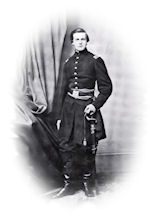
Post image for “You may be more interested to know a little about the House of Commons. My diplomatic privilege gives me the entree there, and I have used it twice.”–Adams Family Letters…Charles Francis Adams To His Son .

London, June 7, 1861

For after all that may be said, there is not and cannot be any assimilation of manners and social habits between Americans and English people. All intercourse with the aristocratic class is necessarily but formal. We are invited everywhere, and dine out almost every day, but this brings us no nearer. Everybody is civil, but each one has his interests in England, so that a stranger is but an outsider at best. . . .

You may be more interested to know a little about the House of Commons. My diplomatic privilege gives me the entree there, and I have used it twice. The last time was at the close of the debate on the budget, when it was generally understood that the fate of Mr. Gladstone, if not of the whole Cabinet hung on the decision. More than six hundred members were present, and the array showed great equality on the two sides of the House. I had attended on the Monday before and had made up my mind that if the division should follow, the opposition would prevail by a decided vote. The ministry however had influence enough to command an adjournment, and on Thursday the case stood differently. The attack was neither so vigorous nor so confident, whilst the defence was bolder and more strenuous. The first effective stroke came from Lord John Russell, which I did not get in time to hear. The next was from Mr. Cobden, which was plain, direct and evidently telling on the House. The decisive blow came, however, from Mr. Gladstone, who stood like a bull in the arena surrounded by dogs. He began by tossing the very last one who had attacked him, and he went on with every one in turn, until he had them all sprawling on the ground. He is by all odds the best speaker I have heard, and though I cannot think him a very great man, I must award him the palm as a skilful debater. Lord Palmerston is evidently powerful more from his character, talents and position, than from any oratorical qualities. The ministry triumphed by fifteen majority only.

The characteristic of the House is that it is in essence a real deliberative body, whilst our House has ceased to be one. We speak to the people and not to the audience. Hence we make orations and not speeches. I know not how this can be remedied in America. Some members of Parliament tell me that this is perceptibly growing even here. So it must be, in proportion to the control which the people exercise over their representatives. . . .

John Beauchamp Jones avatar.  No image of Jones has been found online.

JUNE 7TH.—We have a Chief of the Bureau of War, a special favorite, it is said, of Mr. Davis. I went into the Secretary’s room (I now occupy one adjoining), and found a portly gentleman in a white vest sitting alone. The Secretary was out, and had not instructed the new officer what to do. He introduced himself to me, and admitted that the Secretary had not assigned him to duty. I saw at a glance how the land lay. It was Col. A. T. Bledsoe, lately of the University of Virginia; and he had been appointed by the President, not upon the recommendation of the Secretary. Here was a muss not larger than a mustard-seed; but it might grow, for I knew well how sensitive was the nature of the Secretary; and he had not been consulted. And so I took it upon myself to be cicerone to the stranger. He was very grateful,—for a long time. Col. B. had graduated at West Point in the same class with the President and Bishop Polk, and subsequently, after following various pursuits, being once, I believe, a preacher, became settled as a teacher of mathematics at the University of Virginia. The colonel stayed near me, aiding in the work of answering letters; but after sitting an hour, and groaning repeatedly when gazing at the mass of papers constantly accumulating before us, he said he believed he would take a number of them to his lodging and answer them there. I saw nothing more of him during the day. And once or twice, when the Secretary came in, he looked around for him, but said nothing. Finally I informed him what I had done; and, without signifying an assent, he merely remarked that there was no room in his office for him.